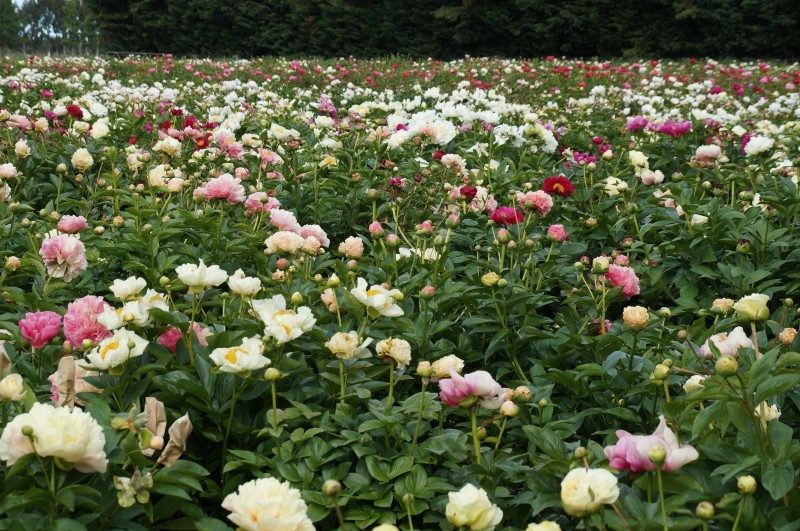
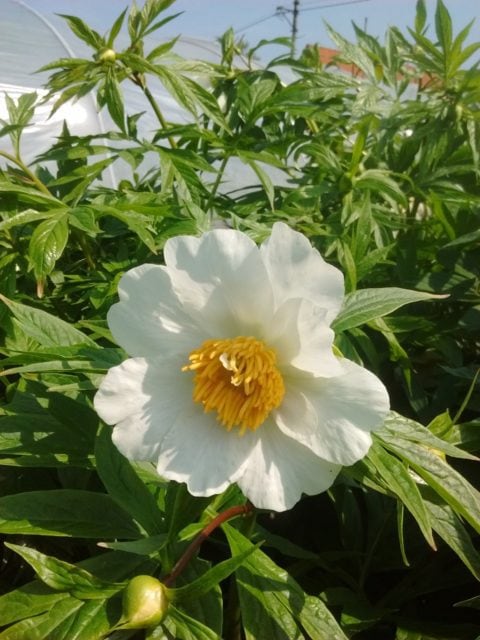
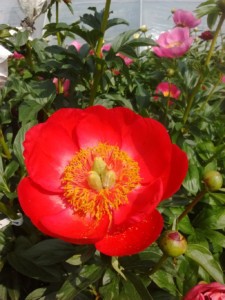
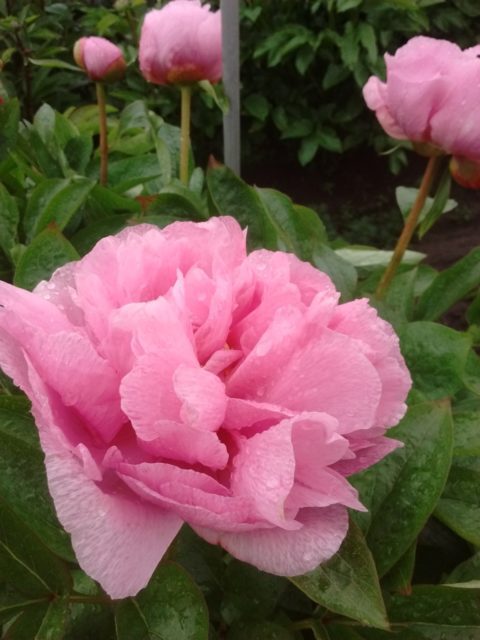
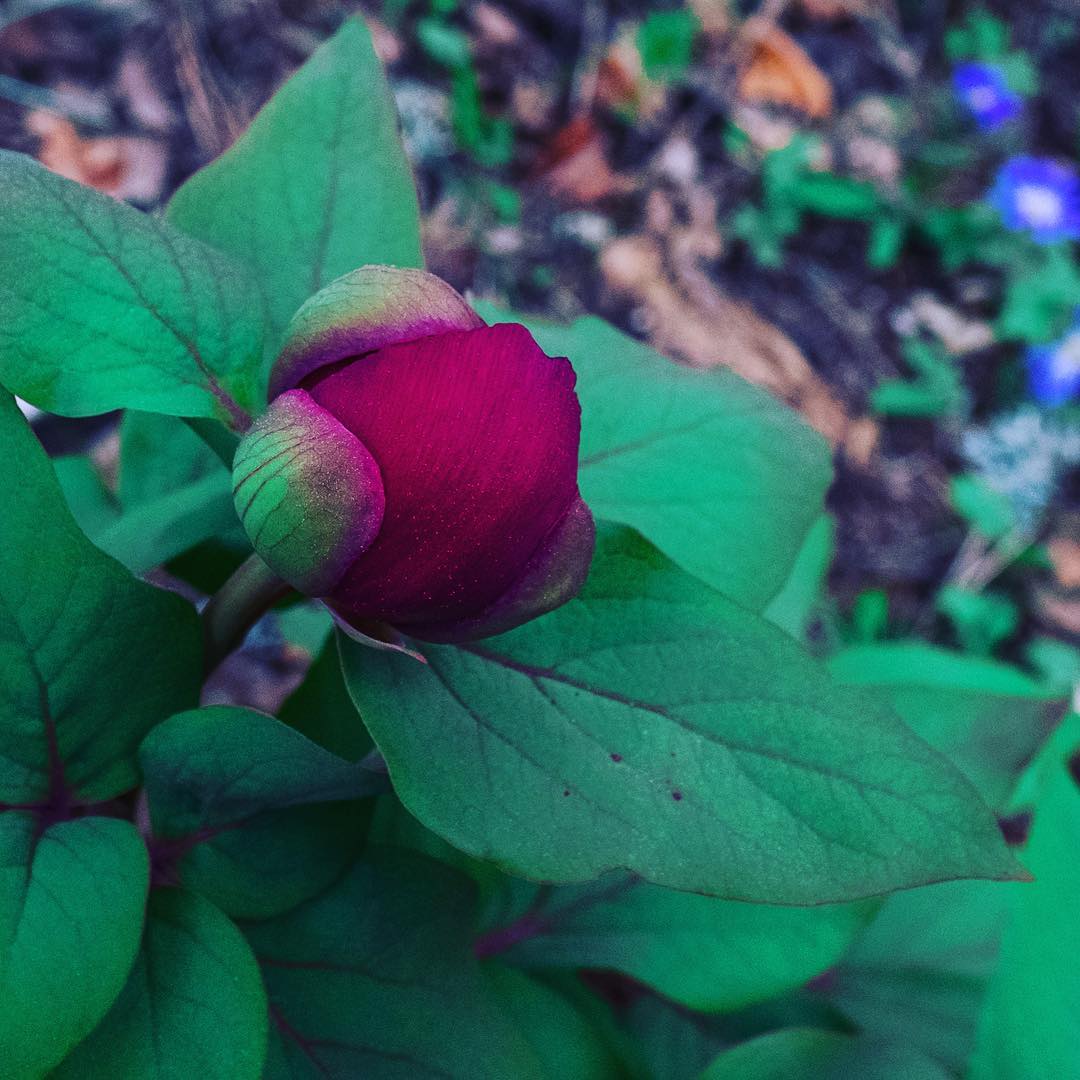
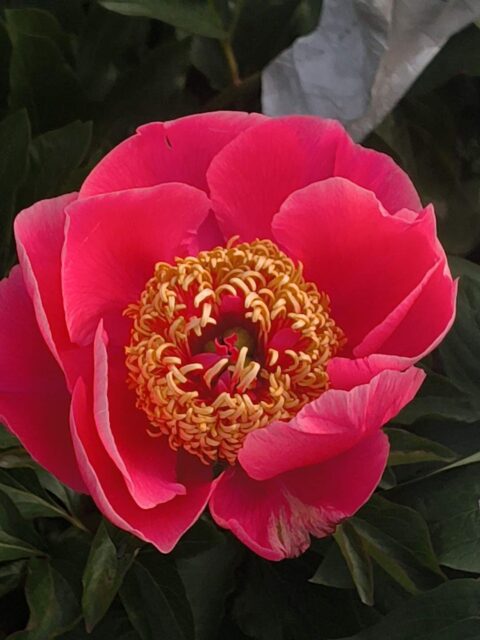
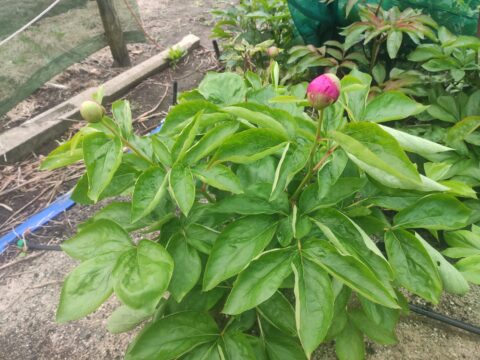
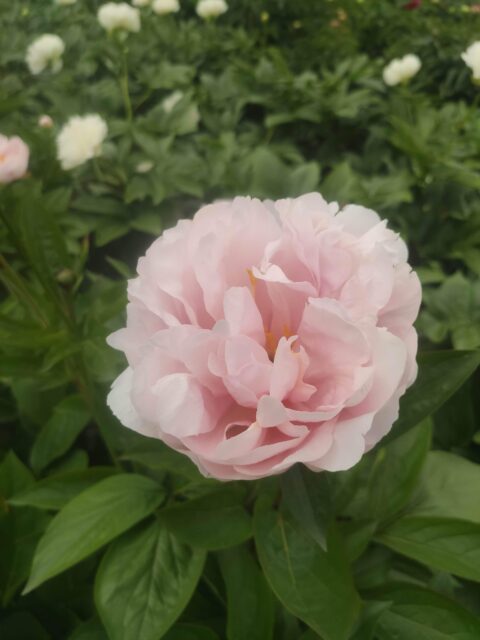
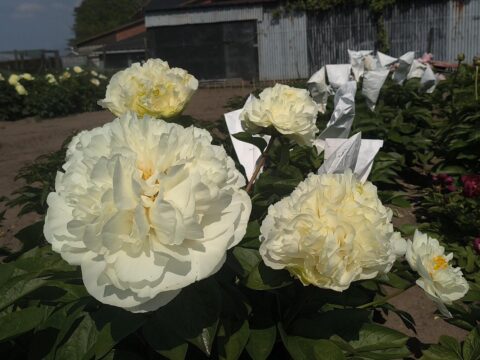
Two years since our last peony hybridizing overview (read it here), I thought it might be interesting to write down our progress. Many people are pursuing this same hobby, although often with different aims. My personal goal in this respect is good herbaceous cut flowers, although I also appreciate good garden plants.
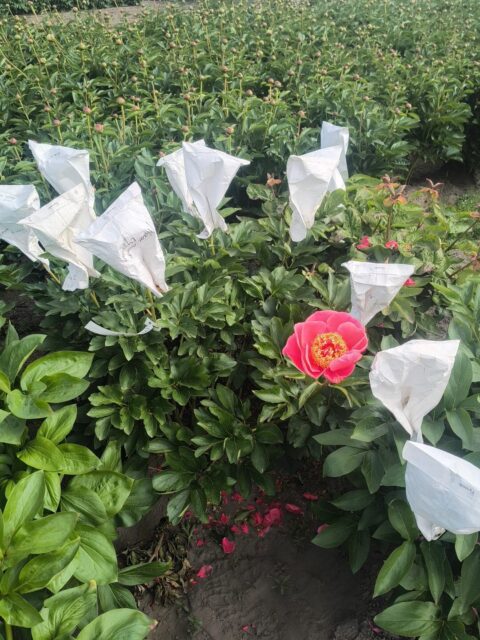
This year I’ve made some 600-700 individual protected crosses within some 80 combinations. Open pollinated seeds are not collected, except in those few rare cases where a plant normally doesn’t give any seeds and previous efforts of crossing with it were in vain. We still follow two broad lines in selecting crosses, first is the species-hybrid line, whilst the other is hybrid-hybrid.
Species-hybrid crosses
I try to make as many crosses with the species plants I’m able to grow, and thus always with one of the parents being an advanced herbaceous hybrid. It has been noted before that this line involves a lot of work with very little results and this year again confirmed it. Below you can see the seed results in the table, but usually the large number of attempts are not registered.
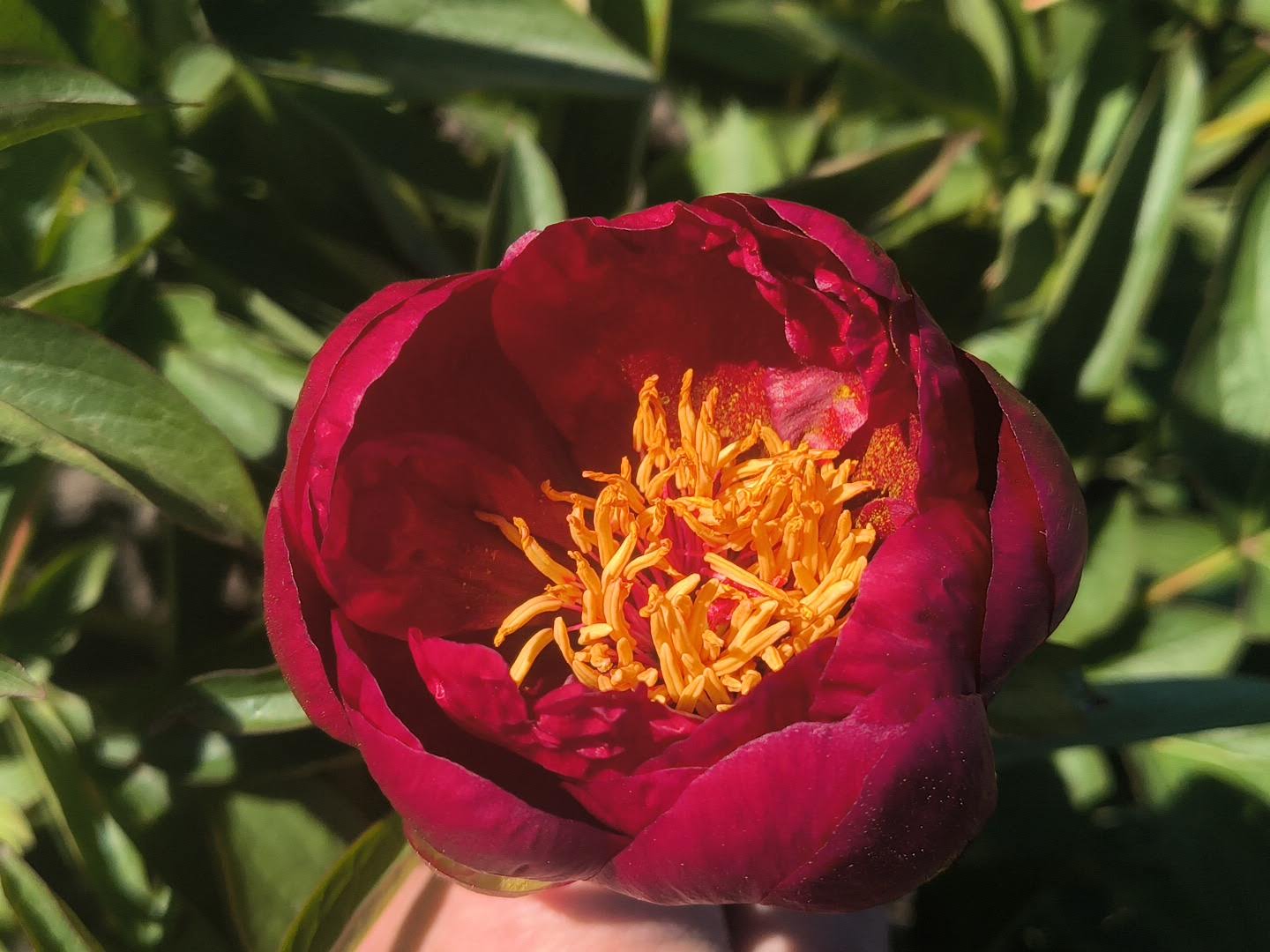
I got many seeds from crosses with P. officinalis ssp banatica (a dark red form), P. wittmanniana and P. x litvinskajae. A good number also from P. arietina ‘kustae’ (a flared selection from Serbia which bloomed for the very first time). I also did get a few seeds with pollen of P. peregrina ‘Vasyl’ (a pink form, also a first-time bloomer), though not very much and it has always surprised me that I’m quite unable to get seeds from crosses with pollen of the usual red P. peregrina despite years of trying with several true plants from nature. And it also has to be noted that P. peregrina is known to be a very fertile companion for P. lactiflora varieties, which I did not expect from a tetraploid species on a diploid mother.
I got few to no seeds from crosses with pollen from P. cambessedesii, P. wendelboi, P. clusii, P. x lagodechiana, P. mairei, P. japonica, P. archibaldii and P. broteri. The poor results from P. clusii, not a single seed, were disappointing for example as I tried pollen of it on nearly 100 flowers and this on different highly fertile plants I’m growing, both tetraploid and diploid. In the comparable case of P. japonica pollen, a single seed was fortunately found.
The reverse crosses with the species as mother also gave a few seeds. Special mention should be made of an apparently very fertile P. obovata alba which bloomed for the second time and the only flower on it gave me seeds yet again (last year the father in the cross was White Sunset). And: I finally got some seeds from crossing with P. mascula ssp mascula, also after many years trying with different plants.
Some species plants were lost this year, as happens almost every year, I regret losing P. sterniana, P. macrophylla and P. saueri this time.
From previous years I have (young) hybrid plants with P. parnassica, P. coriacea (through Lavender Baby), P. morisii, P. obovata alba, P. arietina from Turkey, P. officinalis ssp officinalis and P. wendelboi. I have continued working with plants from the first two since those are the only ones of blooming size.
The plants from P. parnassica are not the easiest ones and these are already the very few that survived after all. Only one of them ‘Parnassos001 (PVBM002 x parnassica) can be considered ‘normally’ growing and, as far as I can already see, the seedlings thereof tend to be fast growing, but none of blooming size as yet, although I’m sure next year they will be. A few Dreamtime x P. parnassica finally flowered for the first time as well after some 8 years, it may even be more. All dark reds, but not particularly attractive plant-wise.
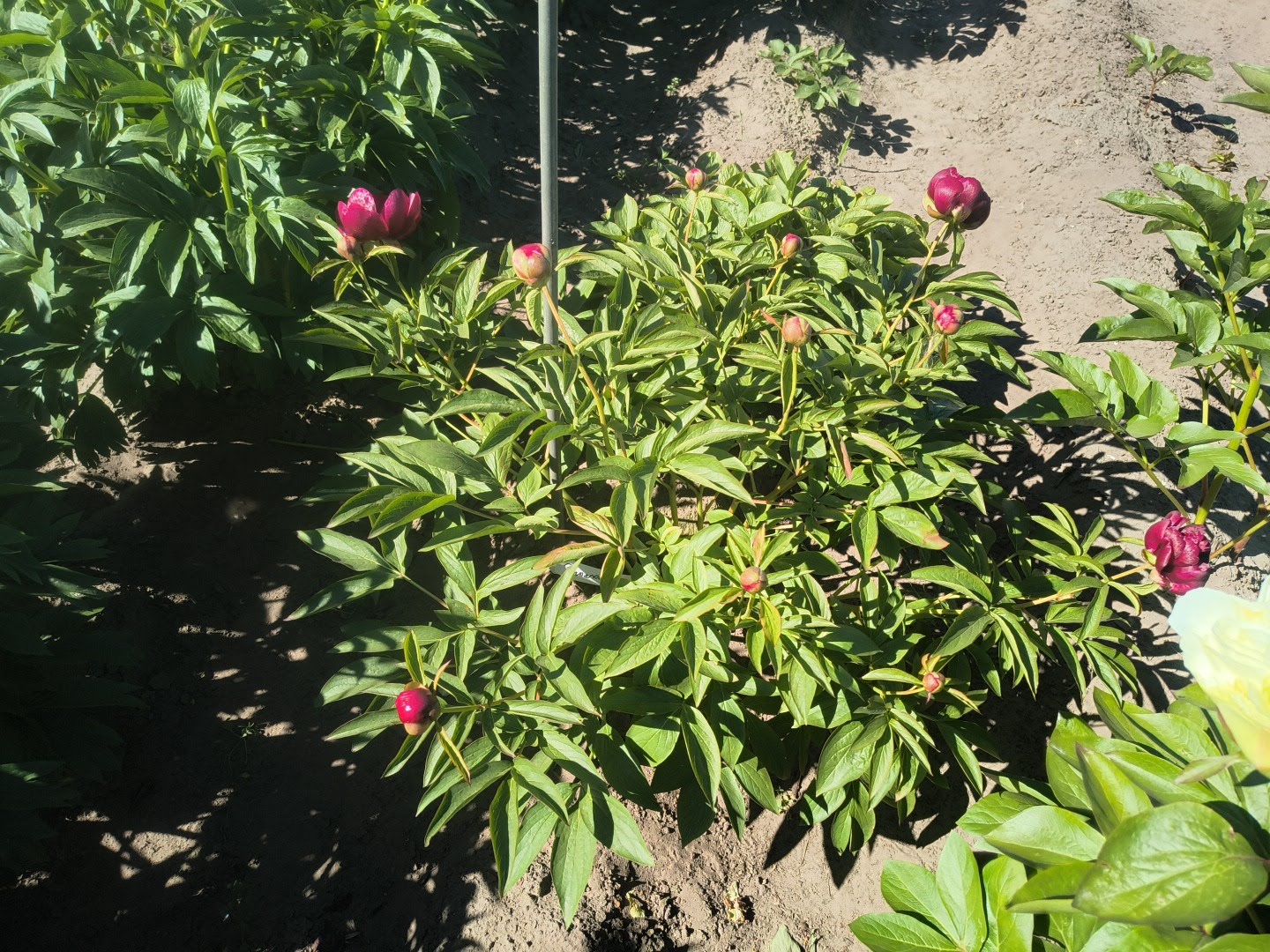
Within the P. coriacea series I’ve worked a lot with CF001 (Pink Vanguard x Lavender Baby) because it has beautiful large double lavender flowers, unfortunately on stems too weak. Very floriferous, it is also very adventitious, so easy to propagate. I already have many seedlings growing of it (one and two years old now, guess the first ones may bloom in 2028) and tried new combinations this year, and you can see that crosses with it tend to easily result in seeds. From these series Forever Yours has been registered in the past. There is another one which may be good enough to bring to market, (BBY x Kato001) 001. BBY is Bill’s Best Yellow, which is nowadays known as Vanilla Schnapp’s. Kato001 is from that same (Pink Vanguard x Lavender Baby) seedling pool. The resultant plant is nearly full double and has average to good stem strength, remaining upright. Buds are well closed and it is of average height. It is also highly fertile, the seed pods are usually so heavy that they often bring down the stems, something the large open flowers don’t even do.


Hybrid-hybrid crosses
The easier line of work, here the first seeds from the fourth generation of our work have been harvested. That has taken a long time (we are at year 18), but we really expect much better results in these later generations. The reason for that is quite simple. Suppose you cross with the aim of a beautiful double flower (not uncommon). Now say that some 10% of seedlings fall into that category, meaning you would only need 10 seedlings for success (on average that is, because in fact you would need at least 29 seedlings for a 95% certainty in this case, but let’s keep it simple). Now take another requirement: tall plants. Suppose 10% again, thus exactly the same. However when you combine the two in just one generation: 10% of 10% is only 1% of plants that will fullfil both requirements simultaneously. So on average 100 seedlings are needed instead of 10 (and here 299 seedlings are at least needed for that same 95% certainty, a number which not every amateur hybridizer will be able to grow). Adding another goal and you will on average need 1,000 plants and so on… If your wishing list is too lengthy you’ll probably end up with nothing because you would need to grow tens of thousands of seedlings and that is only possible for a very few large-scale hybridizers that want to bring plants to market soon. It also easily explains why so many newly registered plants with beautiful flowers are somehow lacking some other qualities you’d expect them to have. Far easier it is to aim for less in one generation, then combine the best plants of those in a second generation (F2) and the results will be that a far larger proportion of the resultant seedlings will have that good quality of the parents: perhaps 80% with beautiful double flowers. If you now take the same 10% having good stems, you will already have 8 seedlings meeting both requirements in F2. Use those 8 again to get another 100 seedlings in the third generation (F3) and you’ll probably get a good number of seedlings combining three good qualities. That’s why it is far more interesting to go through several generations instead of trying huge numbers of crosses in only one generation. Of course, the main objection against this way of working is that it takes a lot of patience: some 4-5 years before you can use plants from that next generation and perhaps even more as you’d better evaluate them well for other flaws. We have made the mistake in the past of using a great looking new seedling immediately only to find the following years that it actually fell short of the bar.
The two most used plants (as mother) in our crosses remain the same: Old Faithful and PVBM003 (Pink Vanguard x Buoy Master). The former is well-known (I’ve written about it before), whilst the latter was one of the first good seedlings here and it has been propagated ever since, so I now have a good number of plants to work with.
Pollen was applied onto them from the species mentioned above and very often from ‘Invictus’ (Strong Coral x Grand Massive) an unregistered single white which I especially like because of its parentage, glossy leaflets, well shaped buds, good growth, and drought tolerance. In smaller numbers other pollens were also applied, the results are variable of course.
Perhaps one plant deserves some further attention: Andreas Maschke. This is one of the most fertile intersectional backcross plants. I’m not using Andreas Maschke to cross with tree peonies or other intersectionals as is suggested by other hybridizers. Andreas Maschke is already 75% herbaceous and only 25% shrubby. But I actually want seedlings with more herbaceous characteristics because in my experience only those have a good vase life once cut. The few seedlings I have of Andreas Maschke (both as mother or father) are as a result only 12.5% shrubby. They are too young to say much about them.
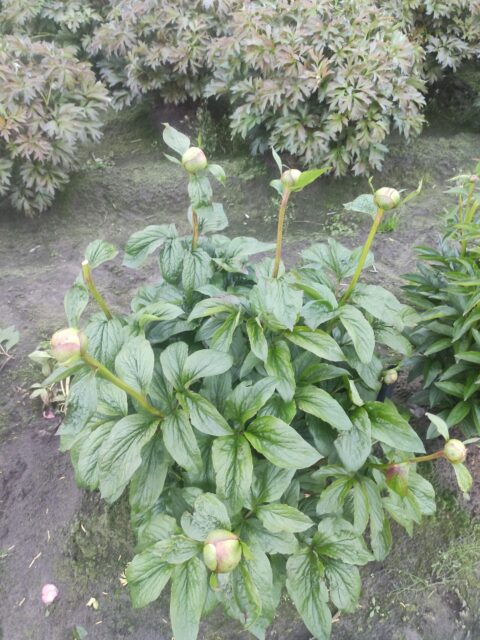
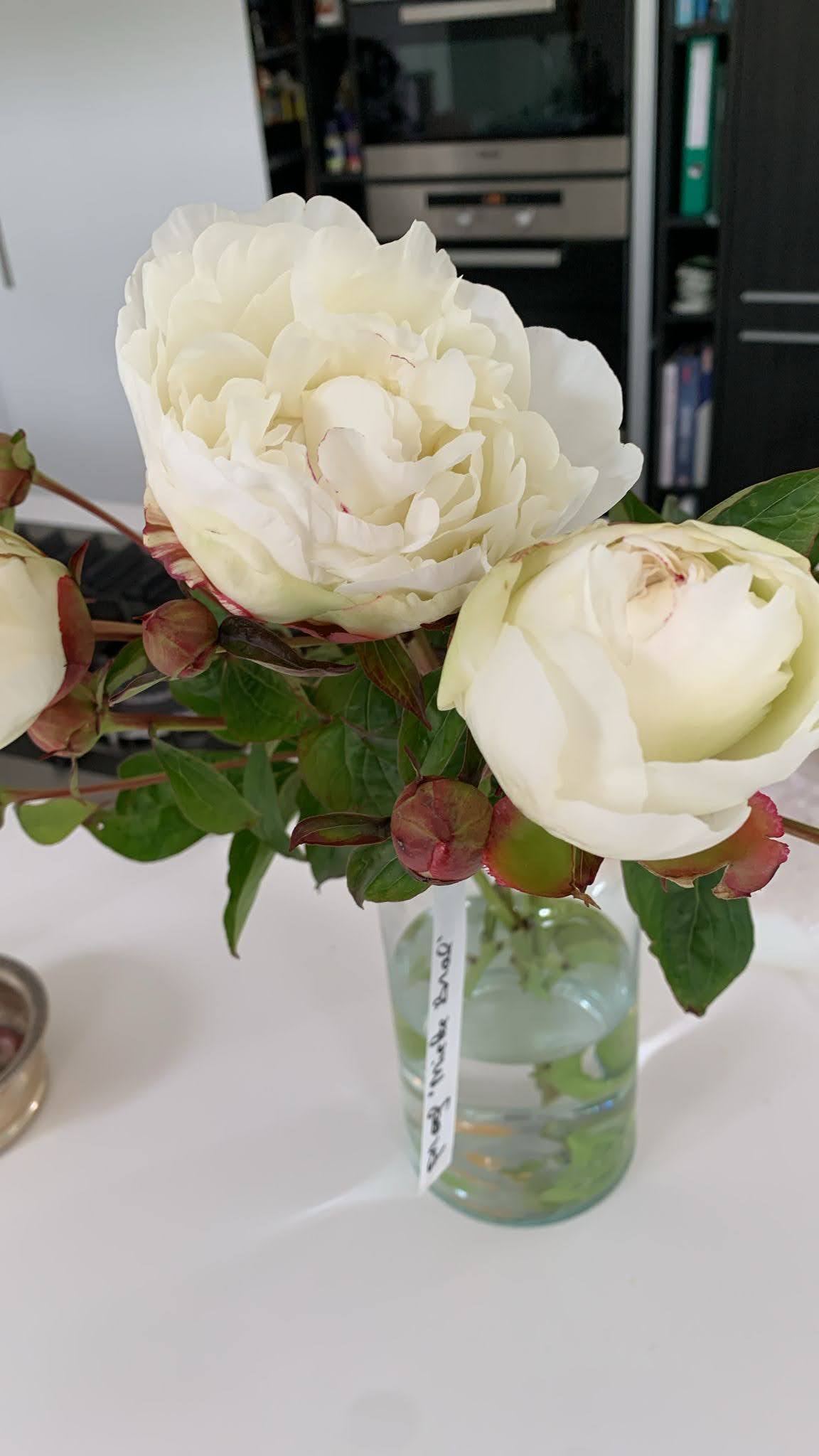
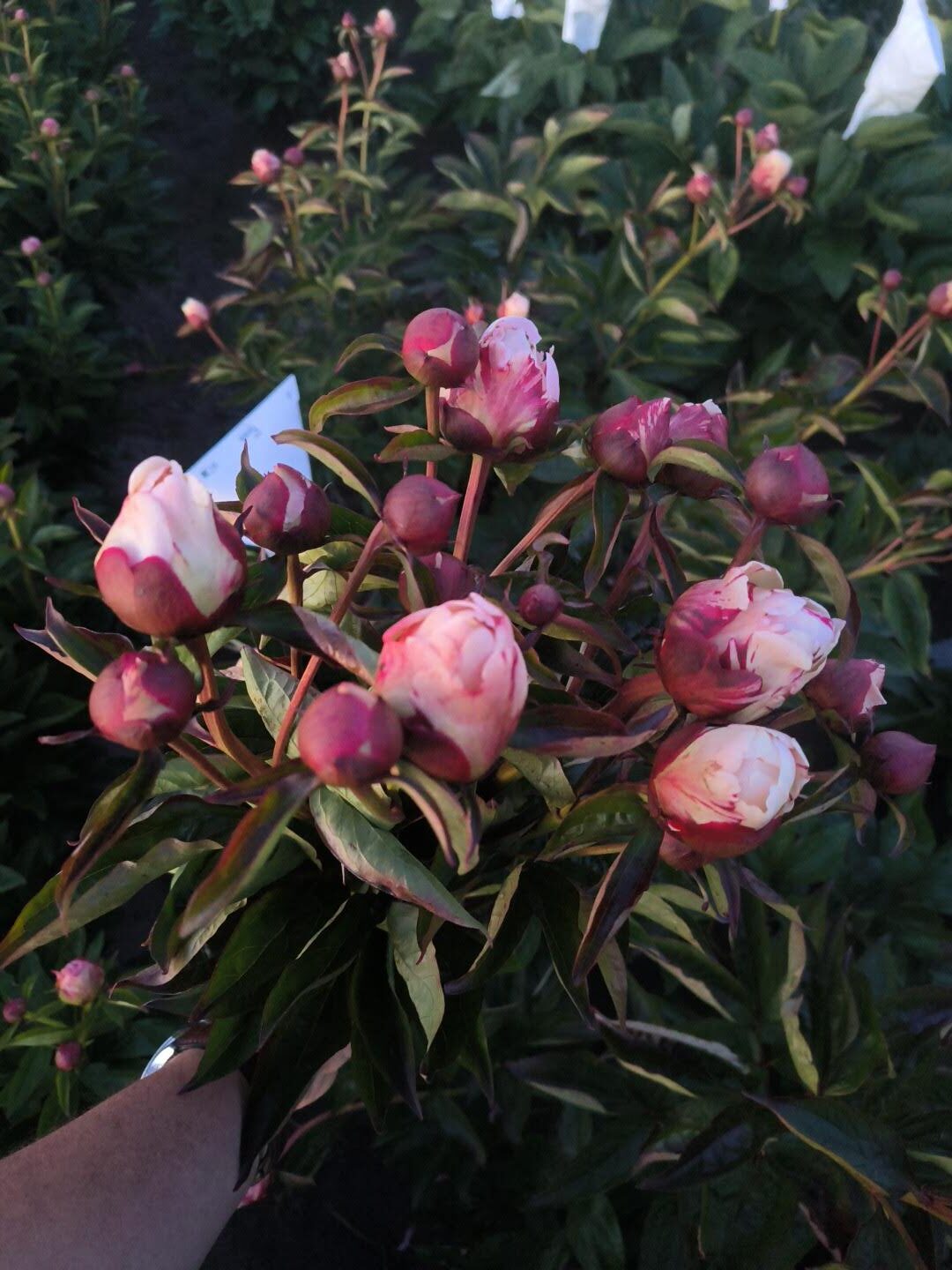
Within my more mature first blooming seedlings there was one series of plants from a particular combination that really stood out from the rest. In fact the results are so good that I consider it my best combination so far: Old Faithful x Thijs001. Thijs001 is from (Dreamtime x Mieke Bral). Mieke Bral is from (Carl G. Klehm x open). So this series is actually the first third generation of my own making that I’m growing. Several of them bloomed for the first time. I had already given up crossing with Thijs001; it has open buds and the flower shape is poor, so it cannot ever be registered. But these results sure made me change my mind and at the end of the season I tried the last pollen I could still collect of it on Old Faithful again. Thijs001 isn’t all bad by the way, it has extremely sturdy stems, earliness, high fertility and a very fine plant habit. If there are any hybridizers out there that would like to use this plant, just ask me, I really feel wonderful results can be had with it. Out of six first blooming plants of this cross, there were four marked for further evaluation. Two of these are doubtful (one for sturdiness, the other for the strange flower), but the others I could see no flaw in them. Next year another half dozen should come into first bloom, several of them already show exemplary plant habit.
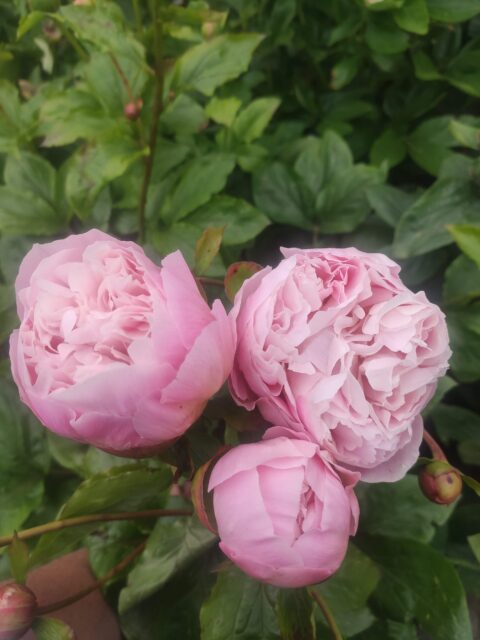
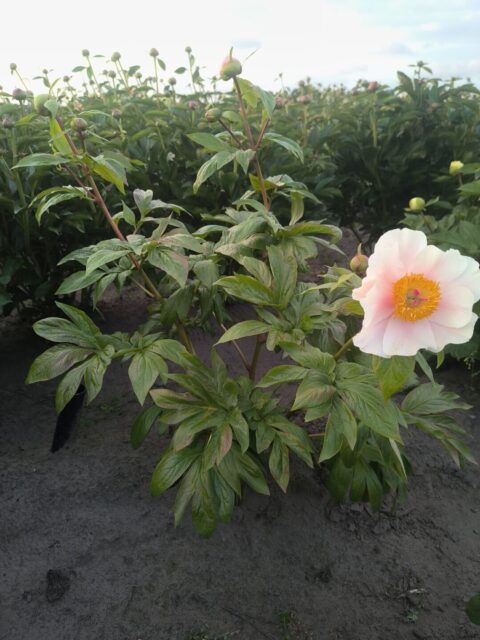
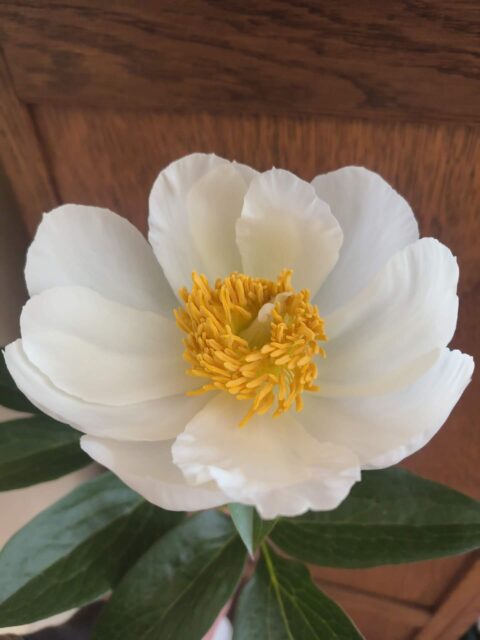
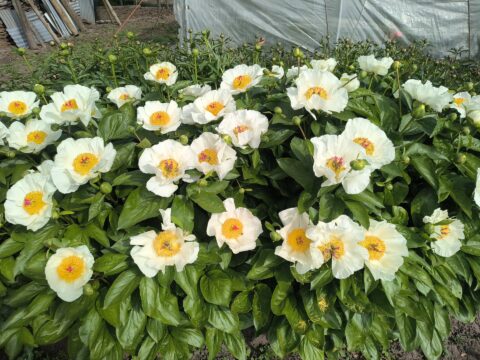
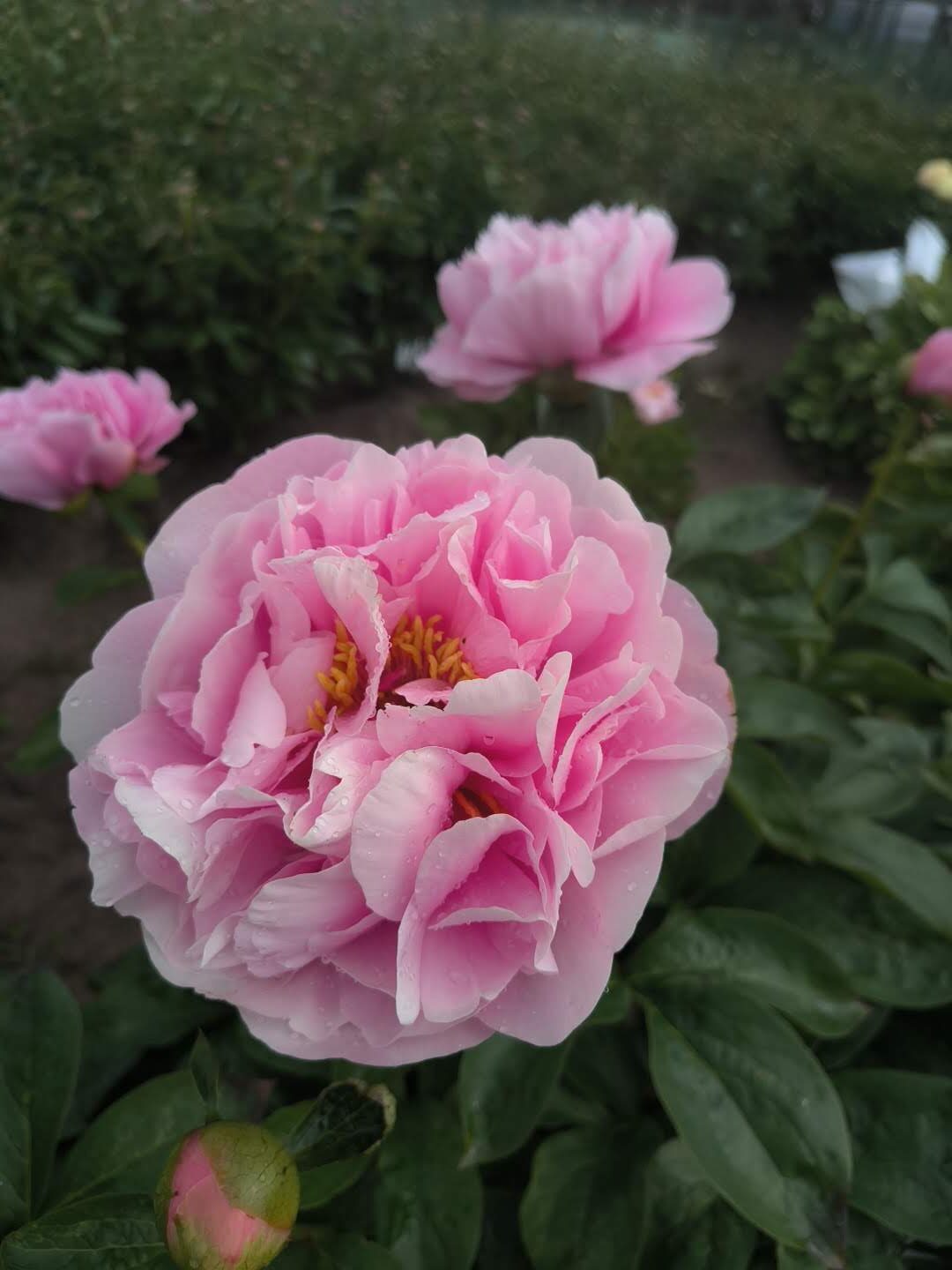
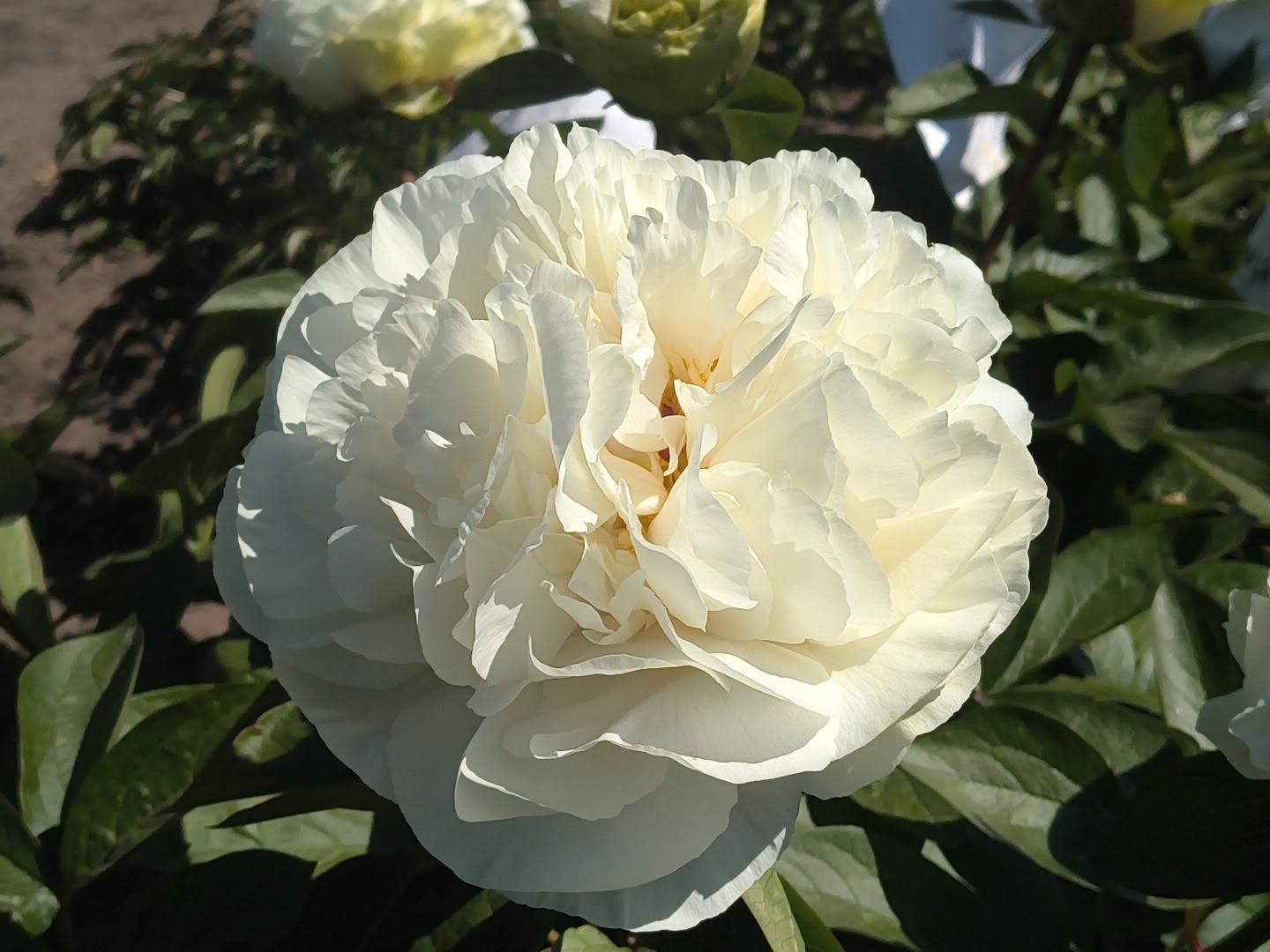
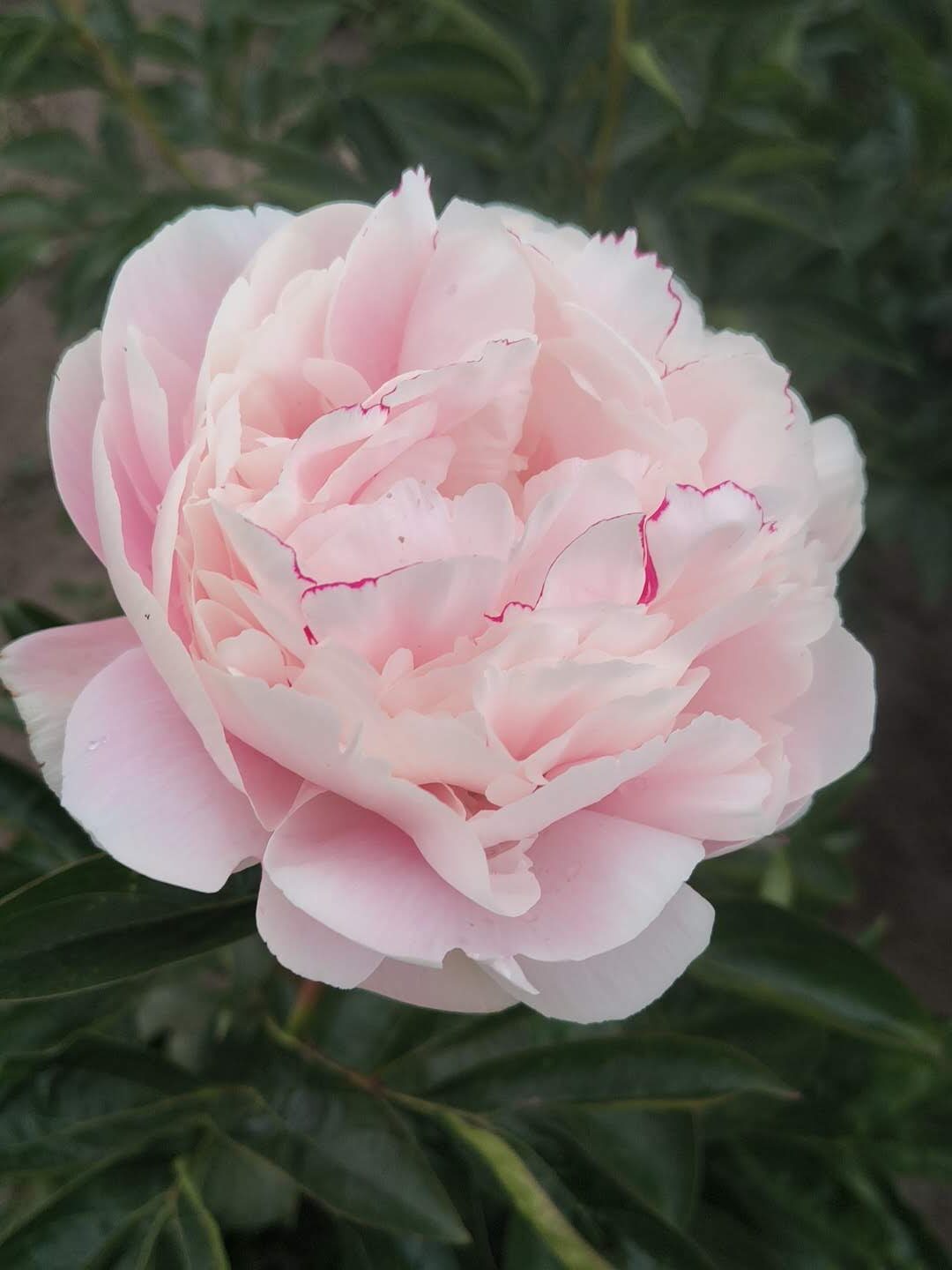
OFT001 was the first to bloom. It showed a beautifully shaped bud which was slightly pale pink. Upon opening it turned out to be mostly white with the outher rings of petals pale pink, fading to white subsequently. Flower shape impeccable and the flower held for an unusually long time before petal fall, definitely a plus as a cut flower. There aren’t too many peony varieties where the flowers hold for longer than a week. A few that come to mind are Command Performance and Cytherea, neither exactly very alluring for futher hybridization (they are not very fertile). Old Faithful itself also has an excellent vase life, although the fact that it tends to open very fast clearly is a disadvantage as cut flower. The one flower left to bloom fully on OFT001 held out for 12 days… Next to that: stems perfectly upright and strong. It wasn’t too tall though, we’ll see if that changes in the future.
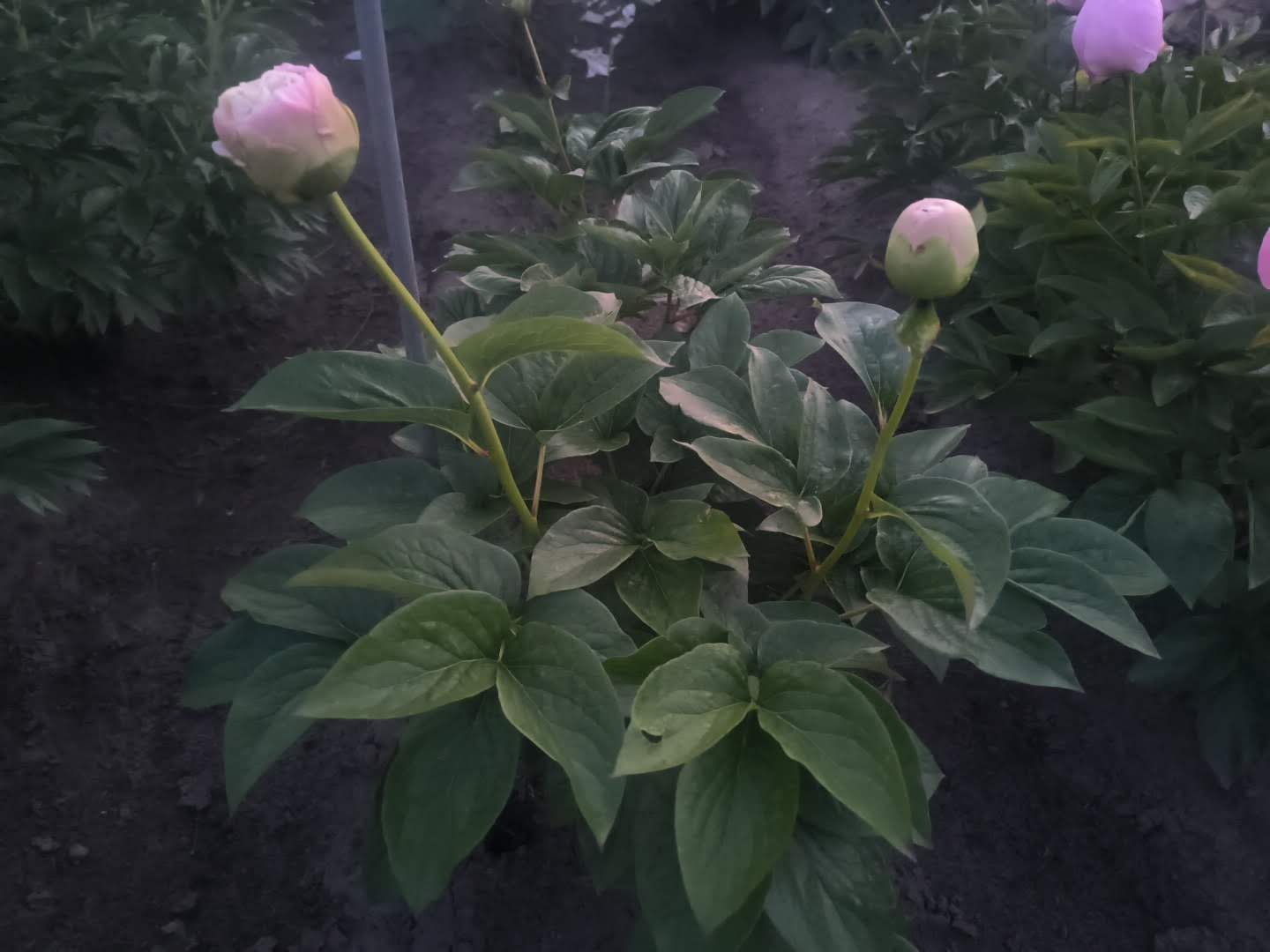
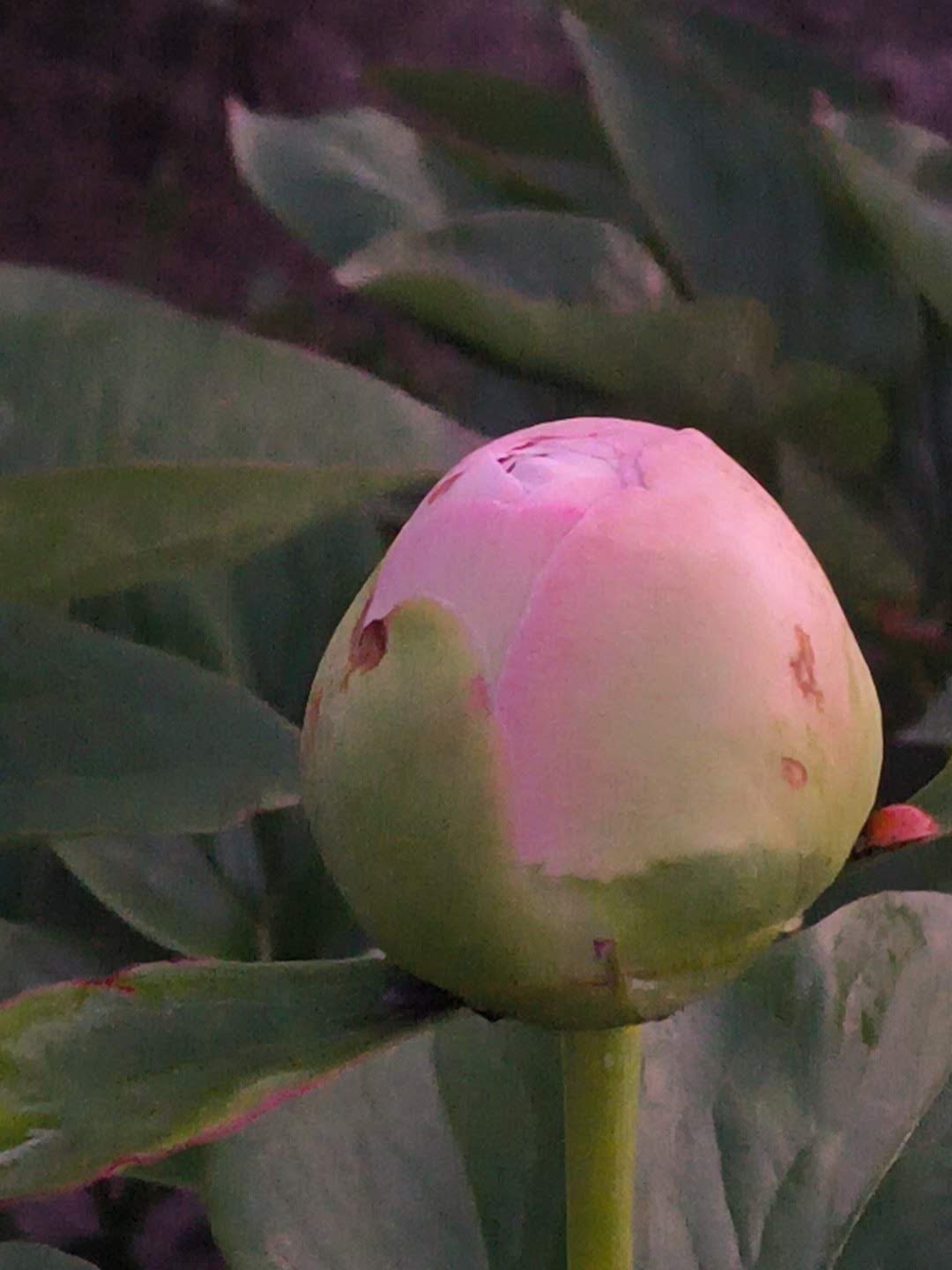
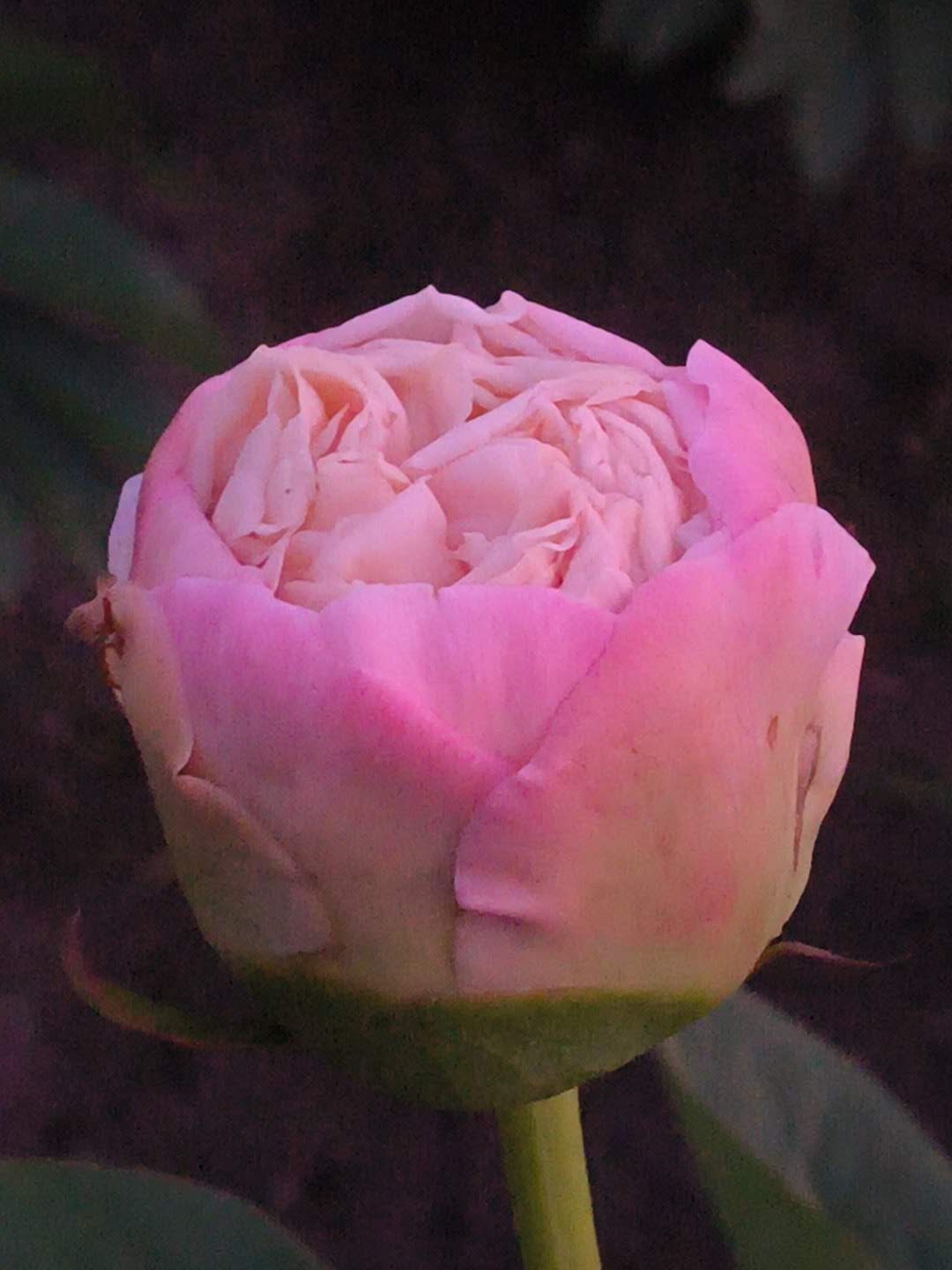


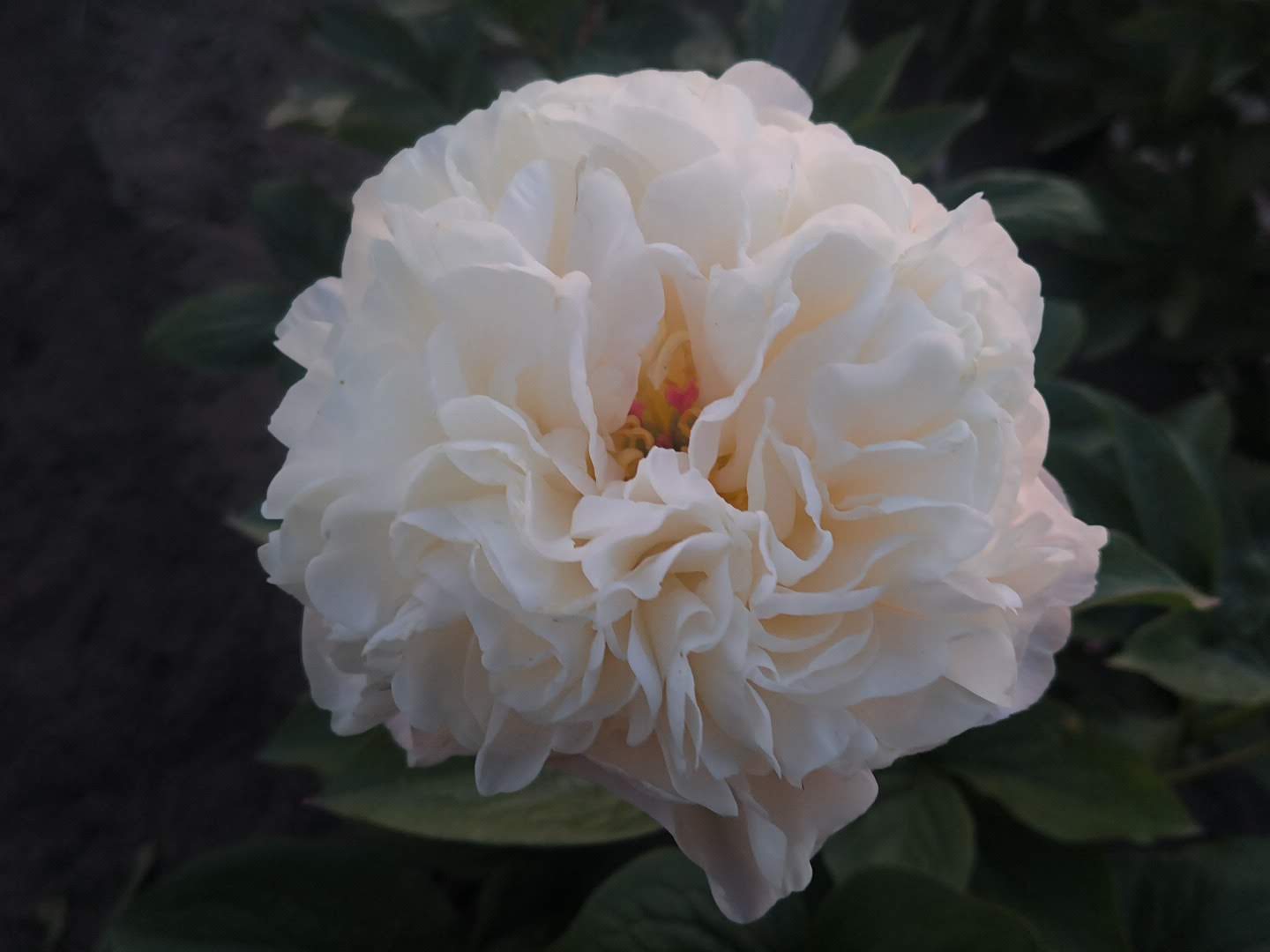

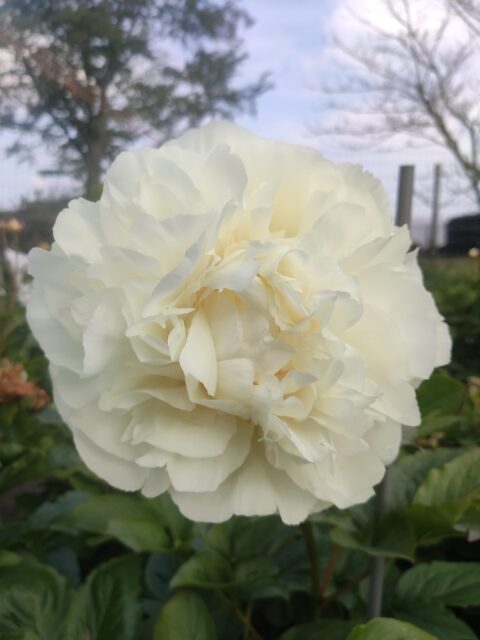
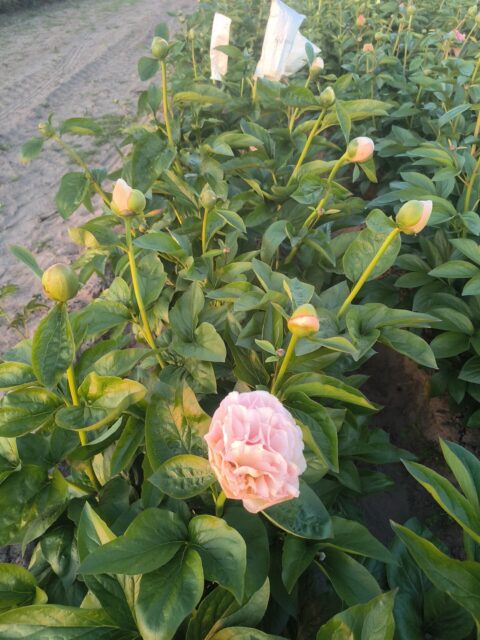
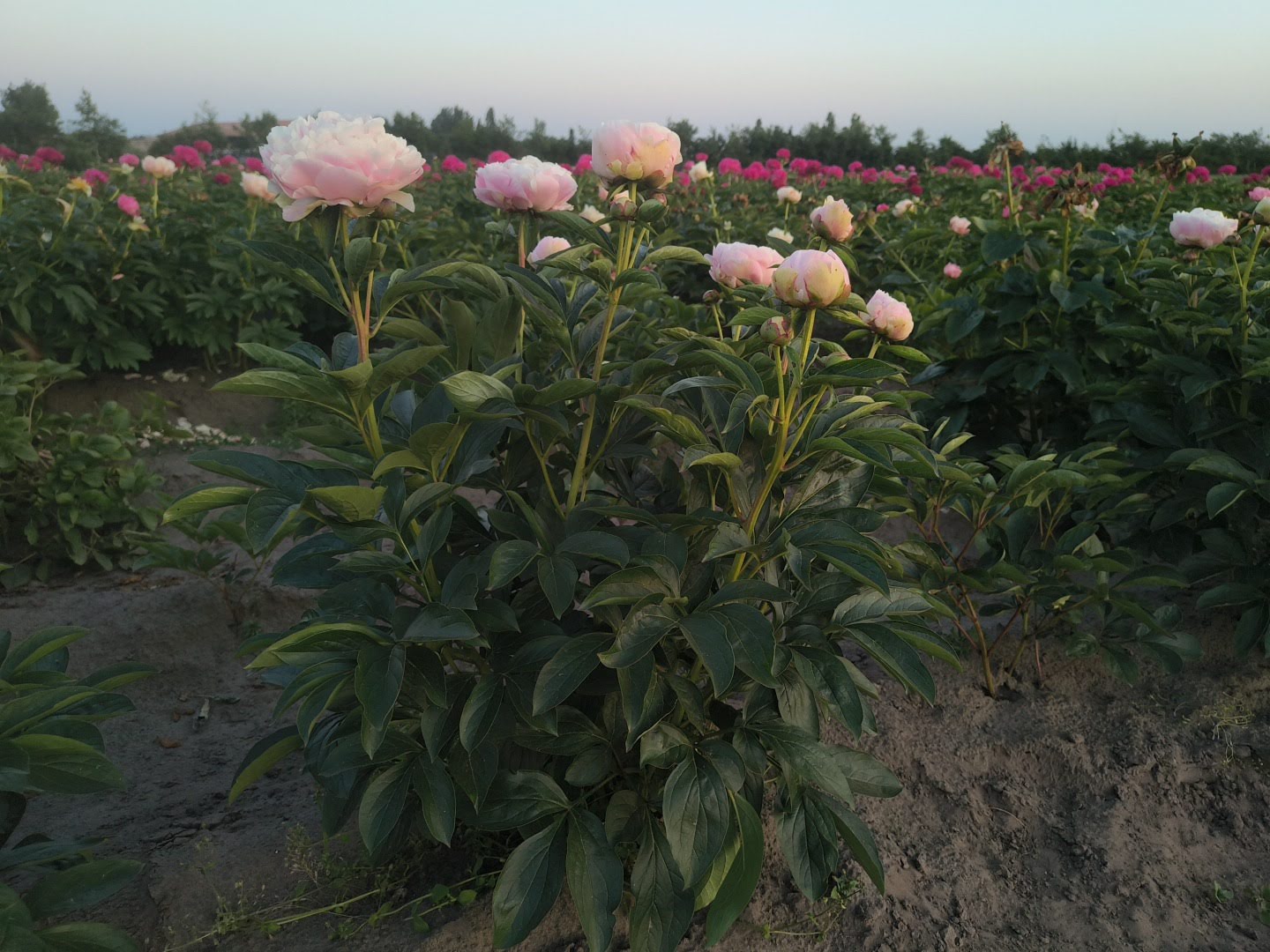
OFT003 bloomed later, on taller stems this time, but again perfectly upright and strong. A very large round pink bud, opening into a large pink flower, which over the following days also faded into white. At first I disliked the fact that there were quite of lot of stamens inside, but then when the second round of petals started to open, I grew more fond of it. Out of the two I do prefere OFT001, but OFT003 is also a standout anyway. Despite my earlier experience of using a new seedling too early as a parent in further generations, I really couldn’t resist doing just that again. With only a little pollen and a few flowers, it can already be concluded there is nothing wrong with the fertility of these new promising seedlings.

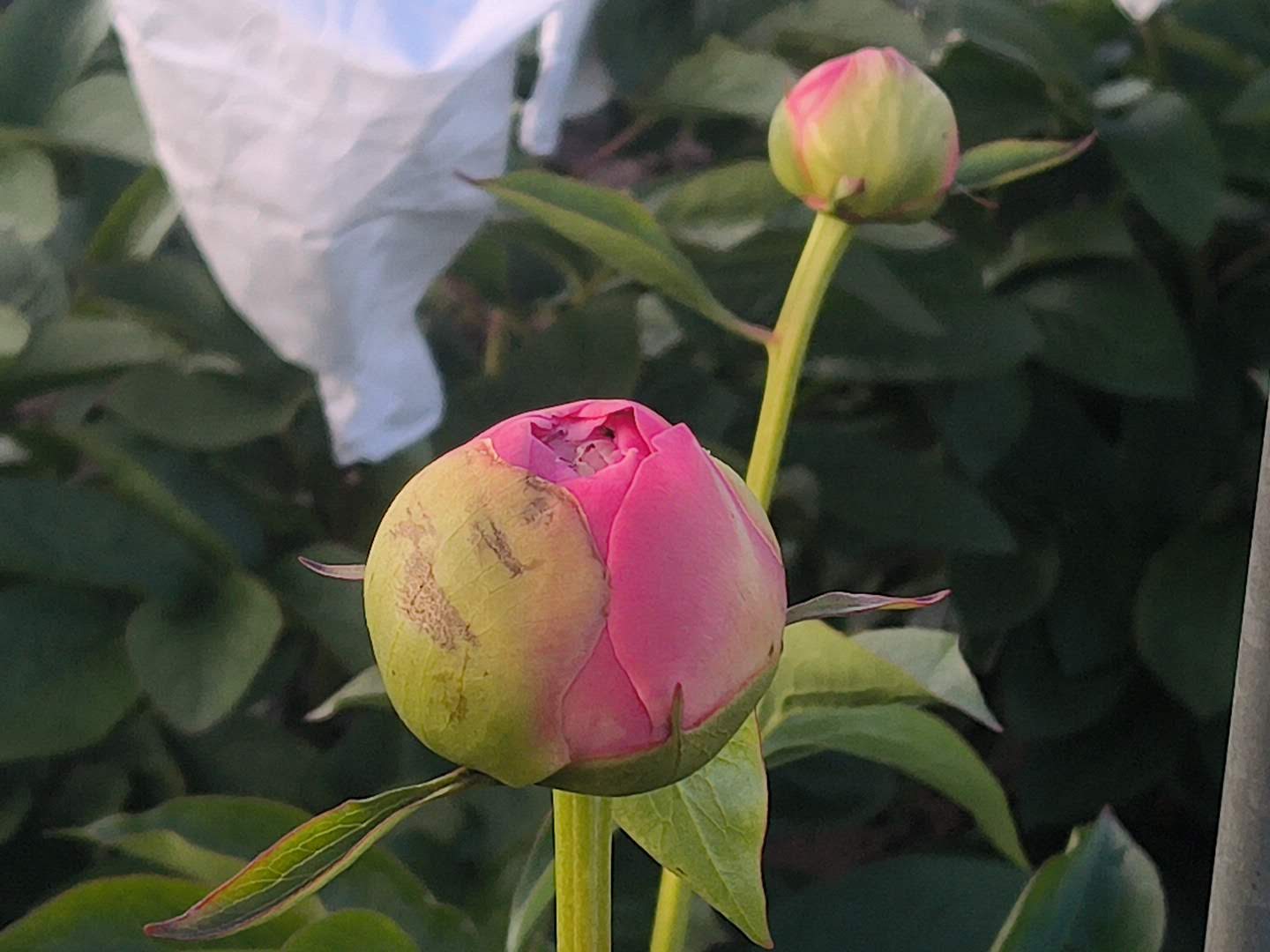


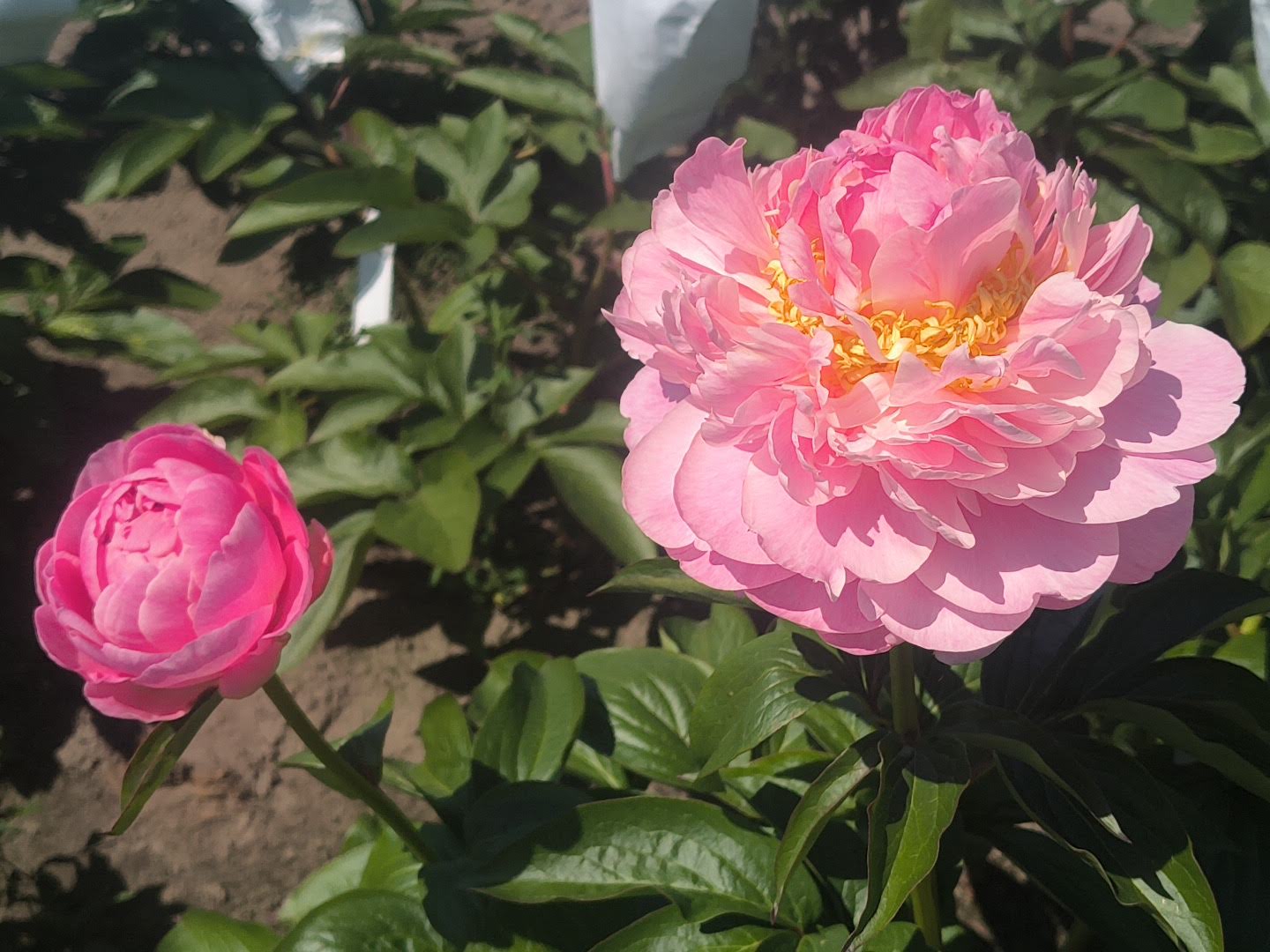
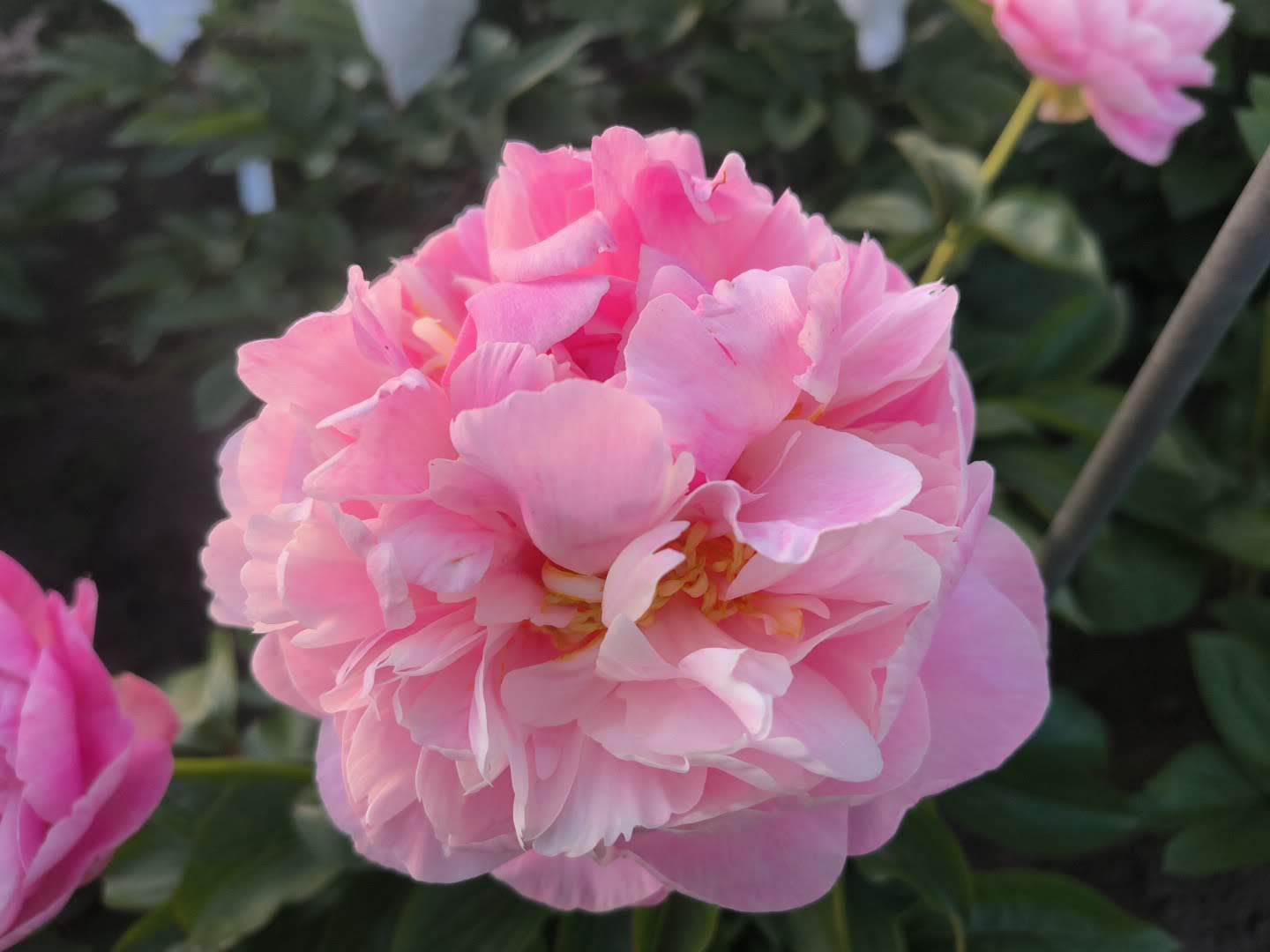
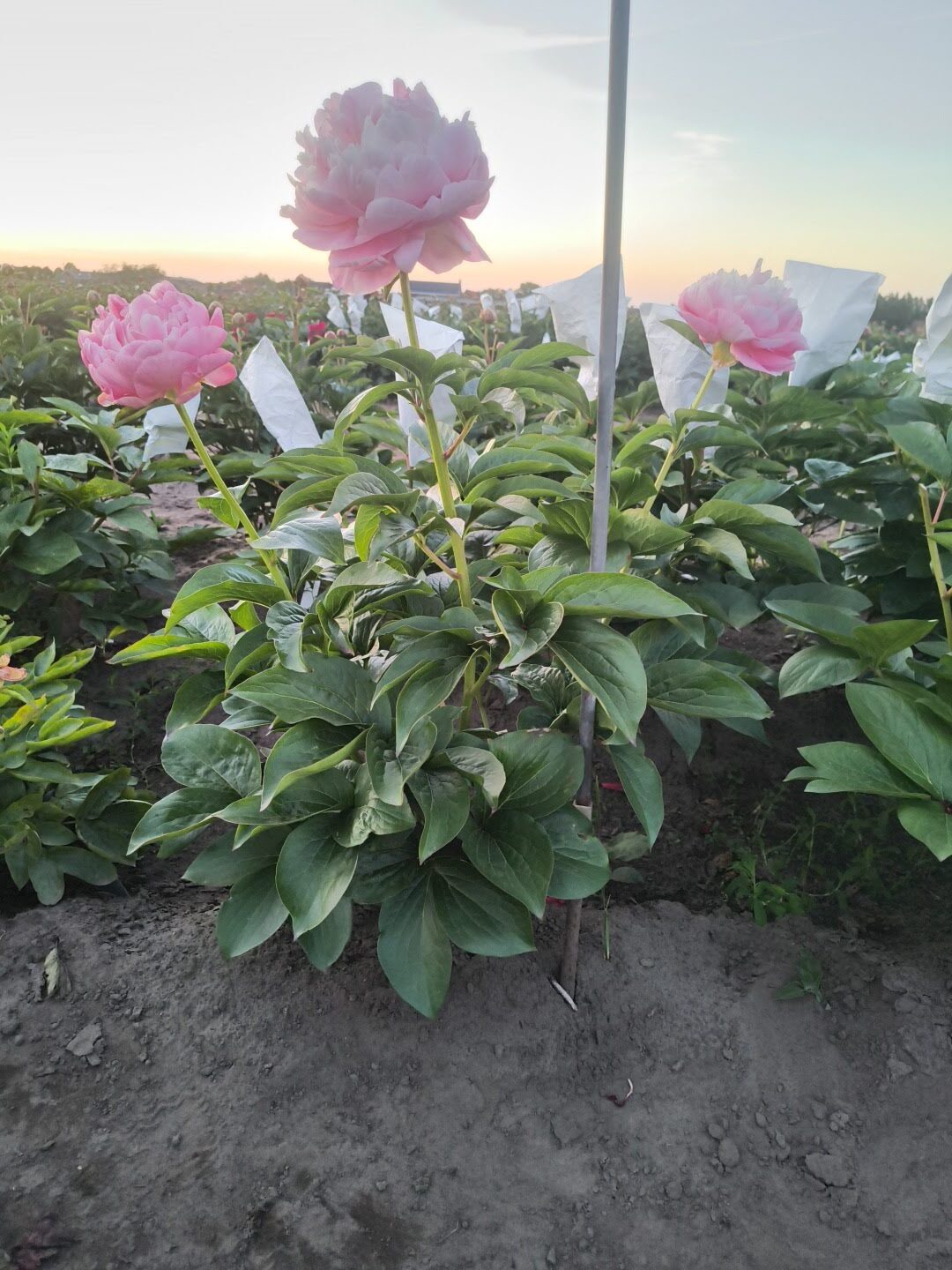
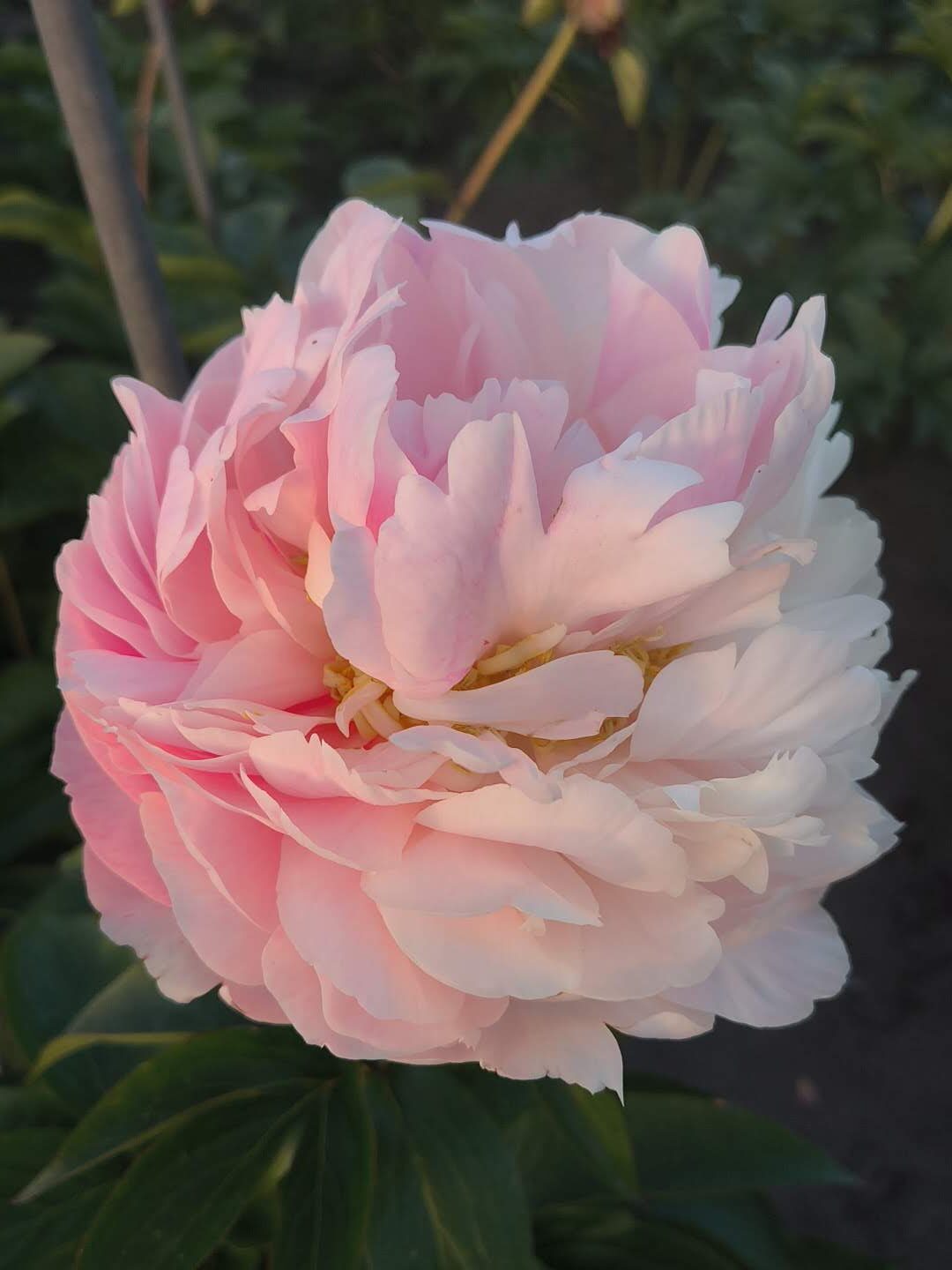

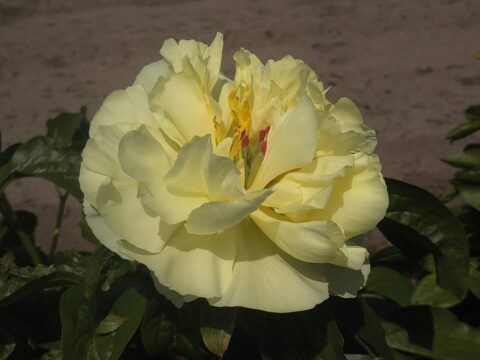
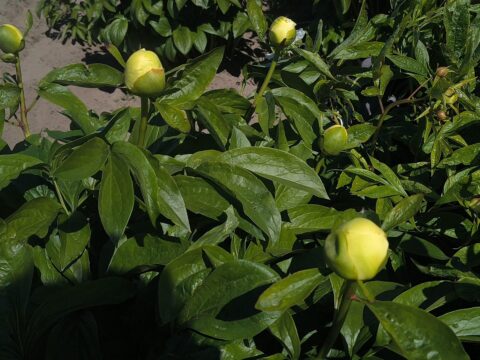
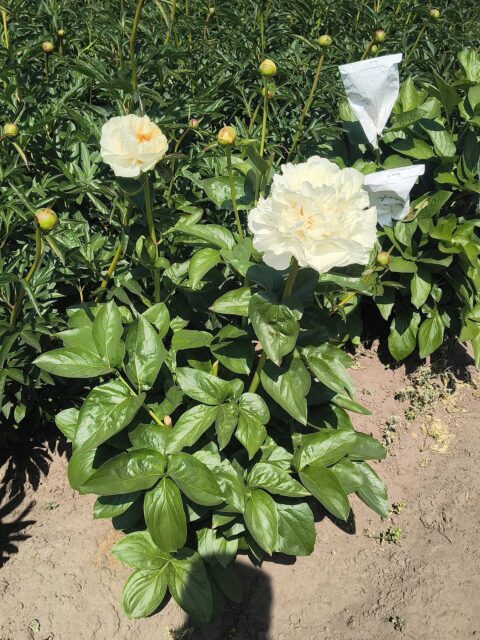
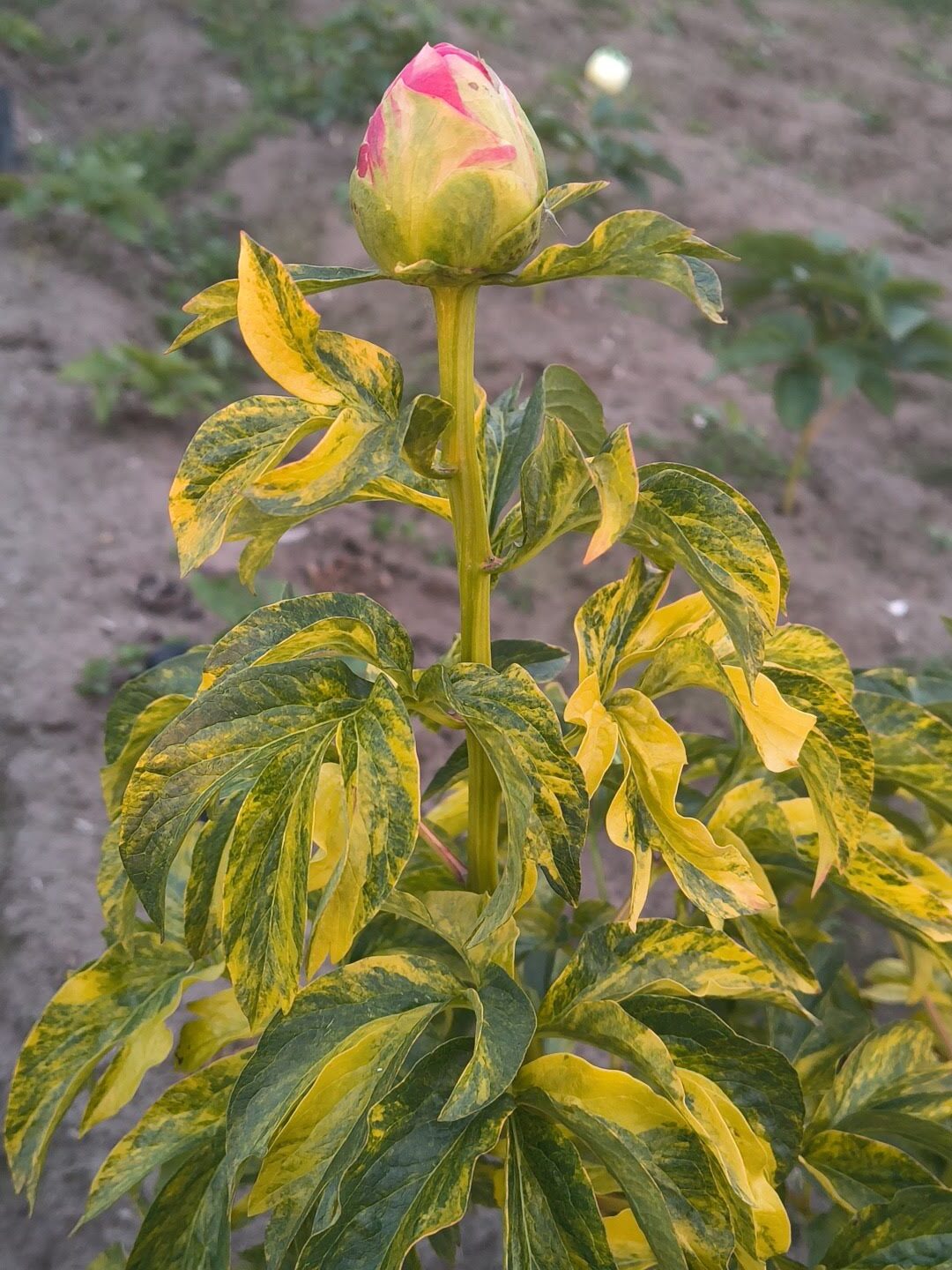
Some previously selected or registered peony seedlings disappointed a little to be honest; after several years that sometimes happens. Christine Carrette did deliver a few open buds, which it had never done before. Most bloomed perfectly, but some of those open buds did show petal damage. It may not be a recurring problem annually and may not even be a problem in some other climates, but it was an unwelcome suprise nonetheless. The same for ‘White Sunset’ (Vanilla Schnapp’s x PVBM003) which I thought was my very best seedling. Good stems, fast increase, tall, very early, large white buds, very large nearly double flower. But here again, once it grows into a large plant (and only then) the ‘open’ buds suddenly appear. That’s not completely uncommon of course, the widely grown Coral Sunset actually has the same issue, when it grows more double flowers, the buds also tend to be somewhat open. It is quite disappointing and it leaves me with the question of how long to grow a seedling before dividing it? If it only happens in a very mature plant, I’ll need to grow it for another two years, delaying the propagation process. Some other Old Faithful seedling selections were also unable to fulfill their earlier promise (or were simply superseded by some newer seedlings). Kato Hurtekant was excellent, but it being a mutation from Rozella, I can’t congratulate myself on this of course. Mieke Bral was also fine (very good reviews from test samples sent to florists), but this is only a cut flower, stems are not good enough as a garden plant (leggy and slightly sprawling). Mieke Bral F2 pink is better in this respect, with better stems, more length and, remarkably, side buds placed at the same height as the main bud (only seen this in lactiflora Al Rogers otherwise). Given that this seedling also inherited the ability to open its sidebuds when placed in a vase it did result in quite a show there, one of the most beautiful things I’ve ever seen. BMBBY001 (Buoy Master x Vanilla Schnapp’s) was also excellent, with some of the sturdiest stems I’ve ever seen and huge multi-row single flowers. Have been using it quite a lot as well as pollen parent. There was also a pink mutation from Old Faithful I found this year (though I had seen it before in the past, yet never marked it). The variegated Coral Sunset mutation was variegated again, but the yellow parts tend to scorch in bright sun. PVBM F2 006 was also very good, never an open bud (‘until now’ I should henceforth say with the aforementioned experience in mind) and a nice yellow, but as a semi-double probably too close to single-flowered territory. Forever Yours was good.
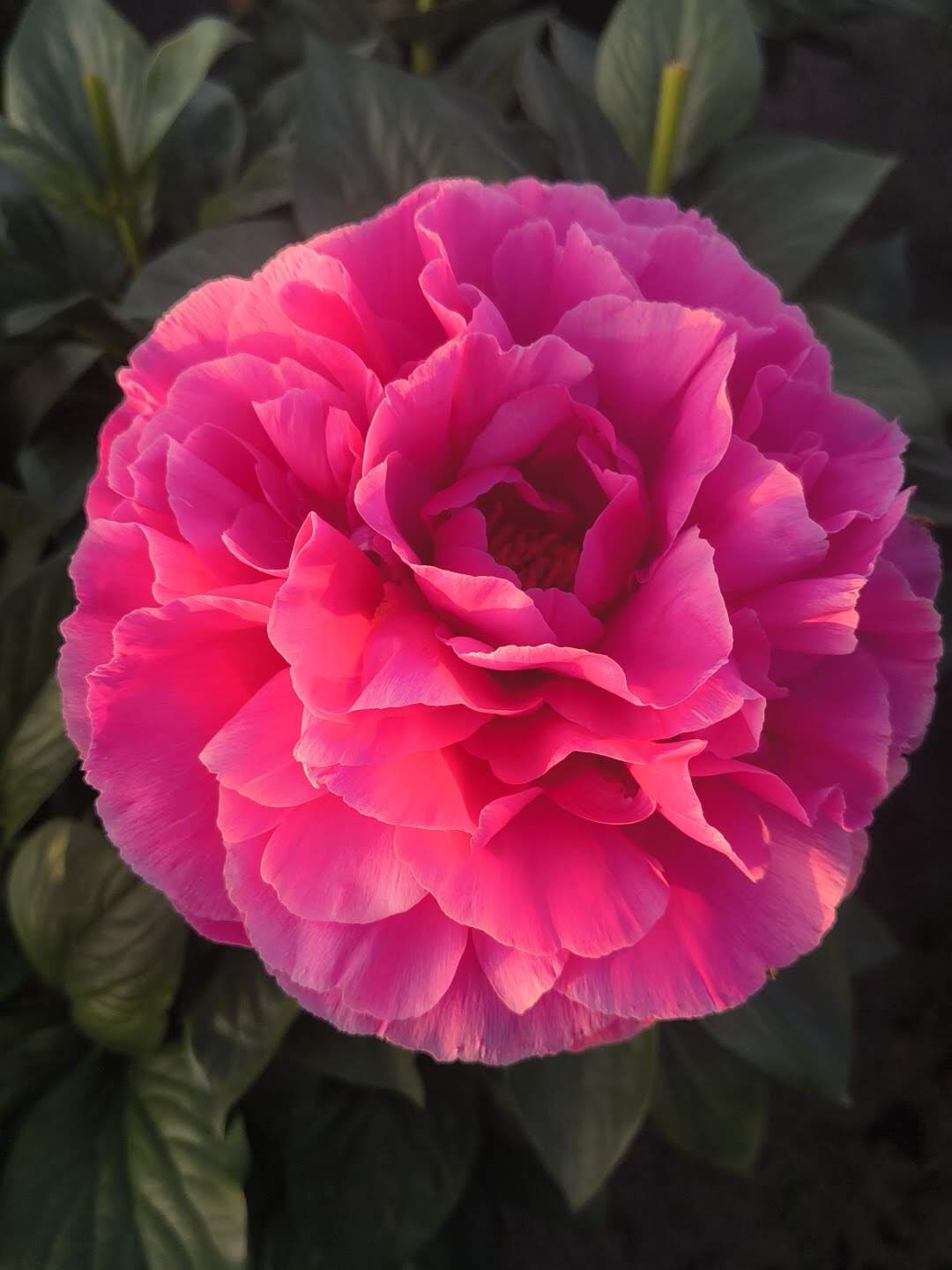
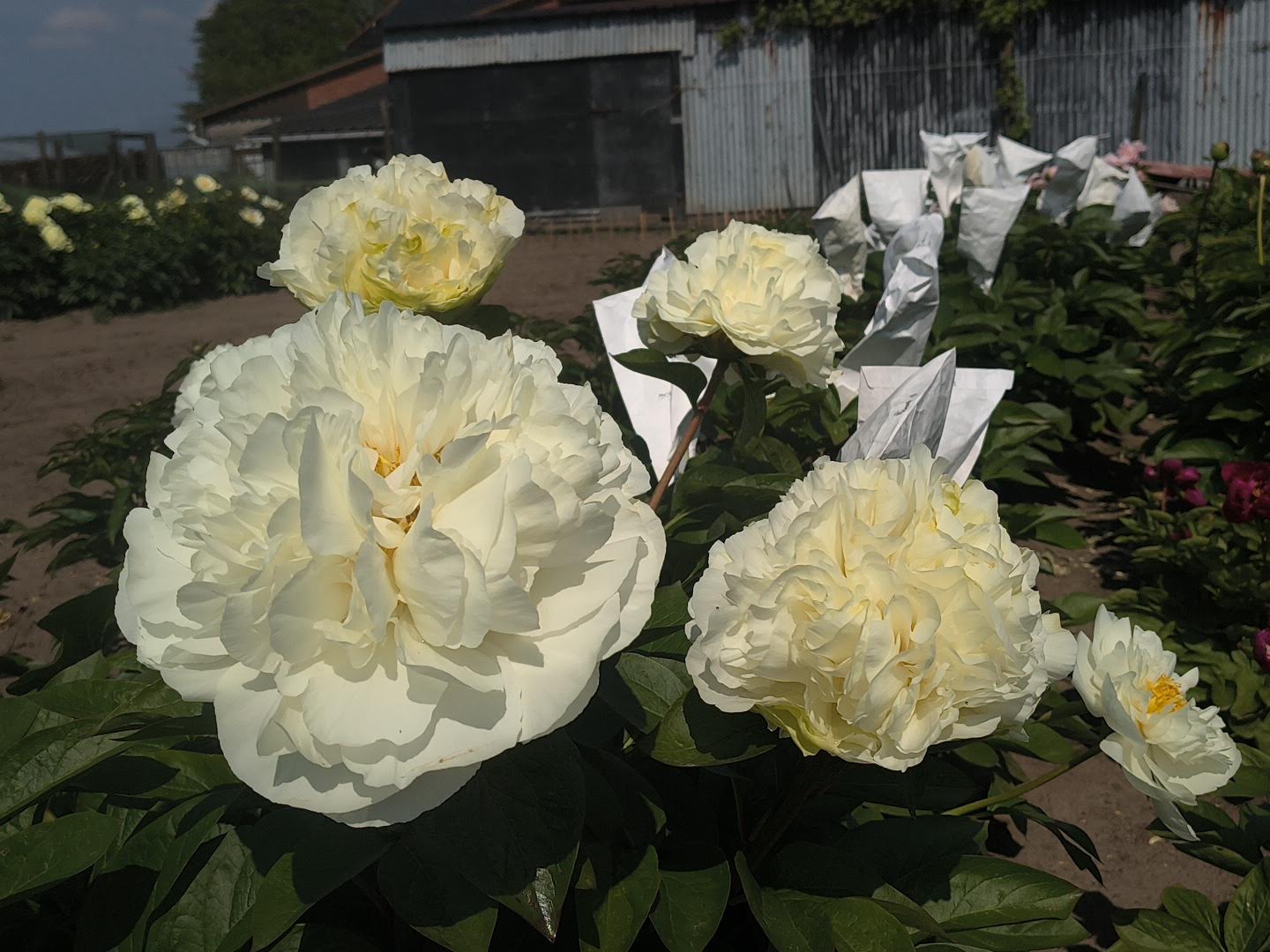
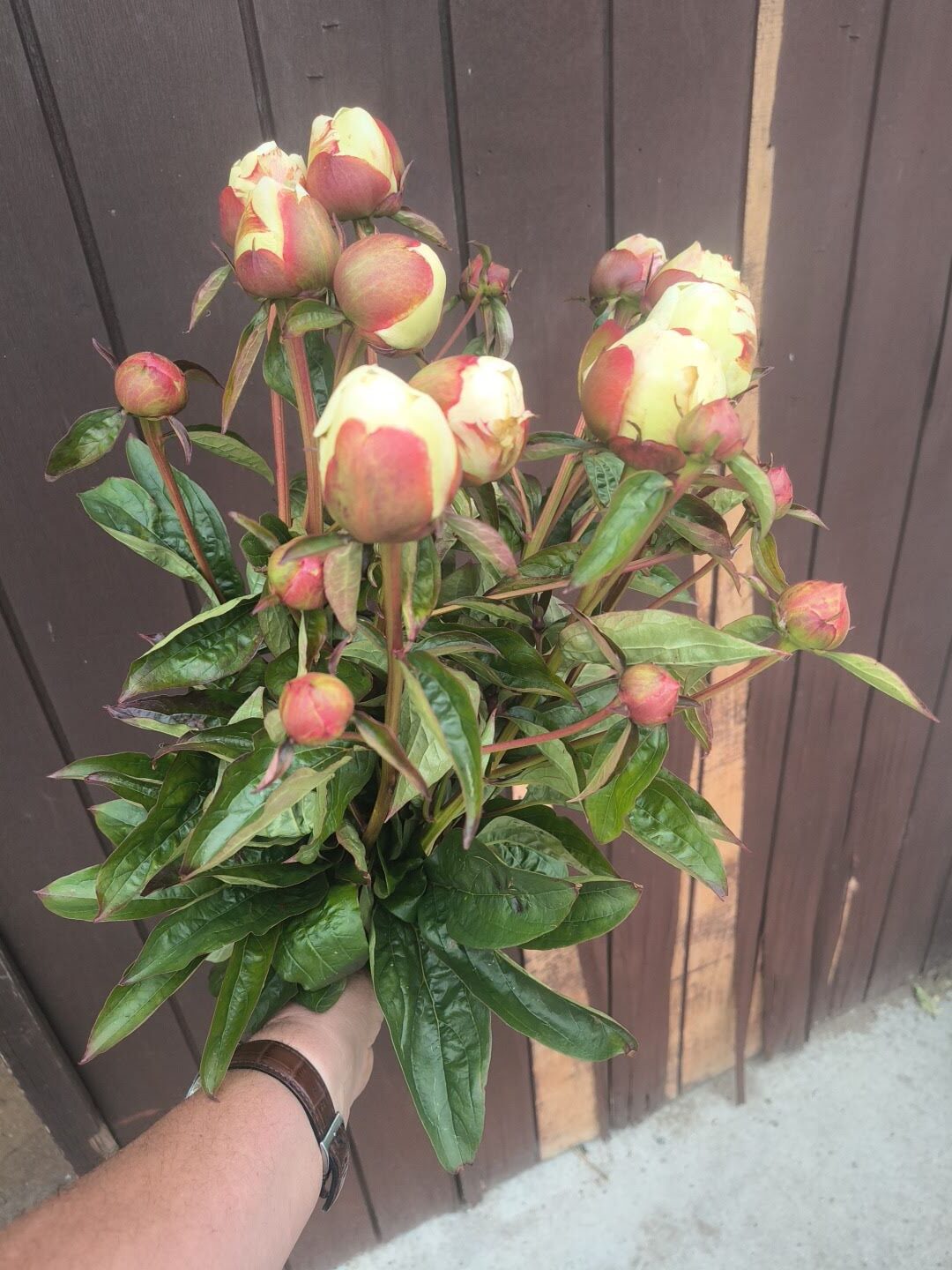






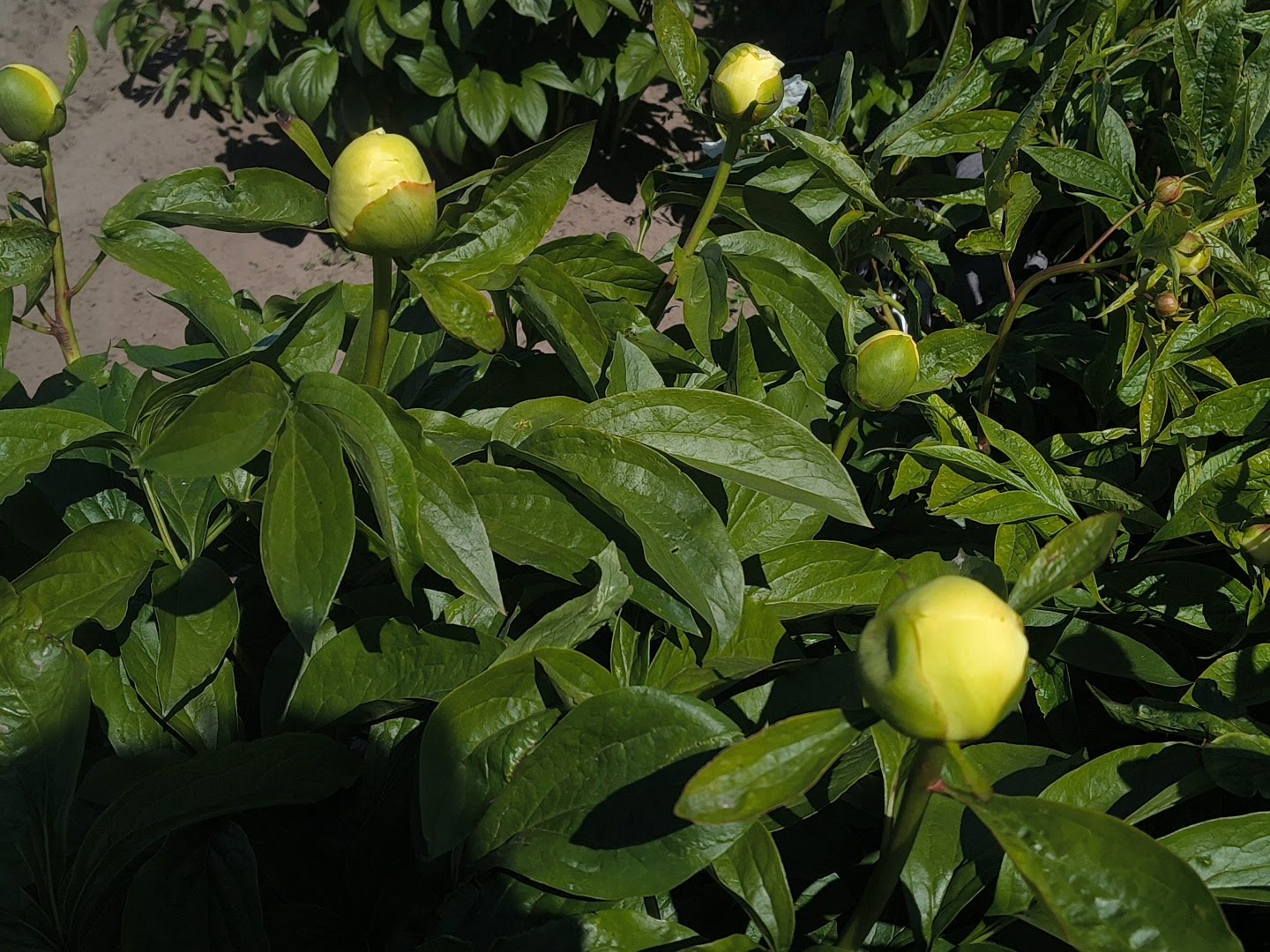
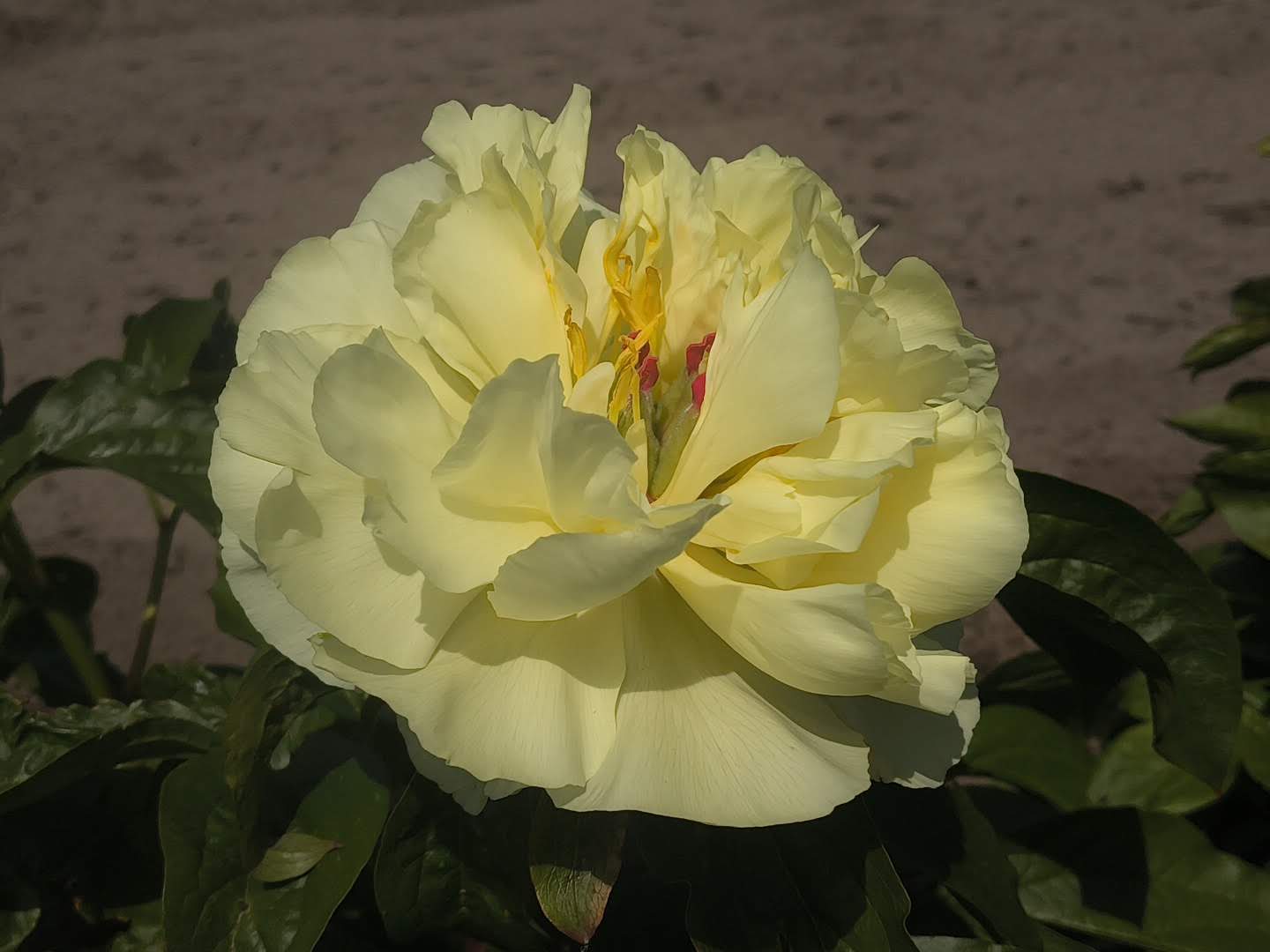

Last Winter we had the honor of interviewing several hybridizers about their work with peonies. That was very interesting to do and we also learned a lot, no doubt they will also have made some progress, from several we saw nice new seedlings appearing on social media whilst doomscrolling. I’m not going to ask them individually, but if any of them would be reading this and has pictures or more information about them to be added to the article about them, please send it to me and that page will be updated.
Some other things about the past peony season worth mentioning:
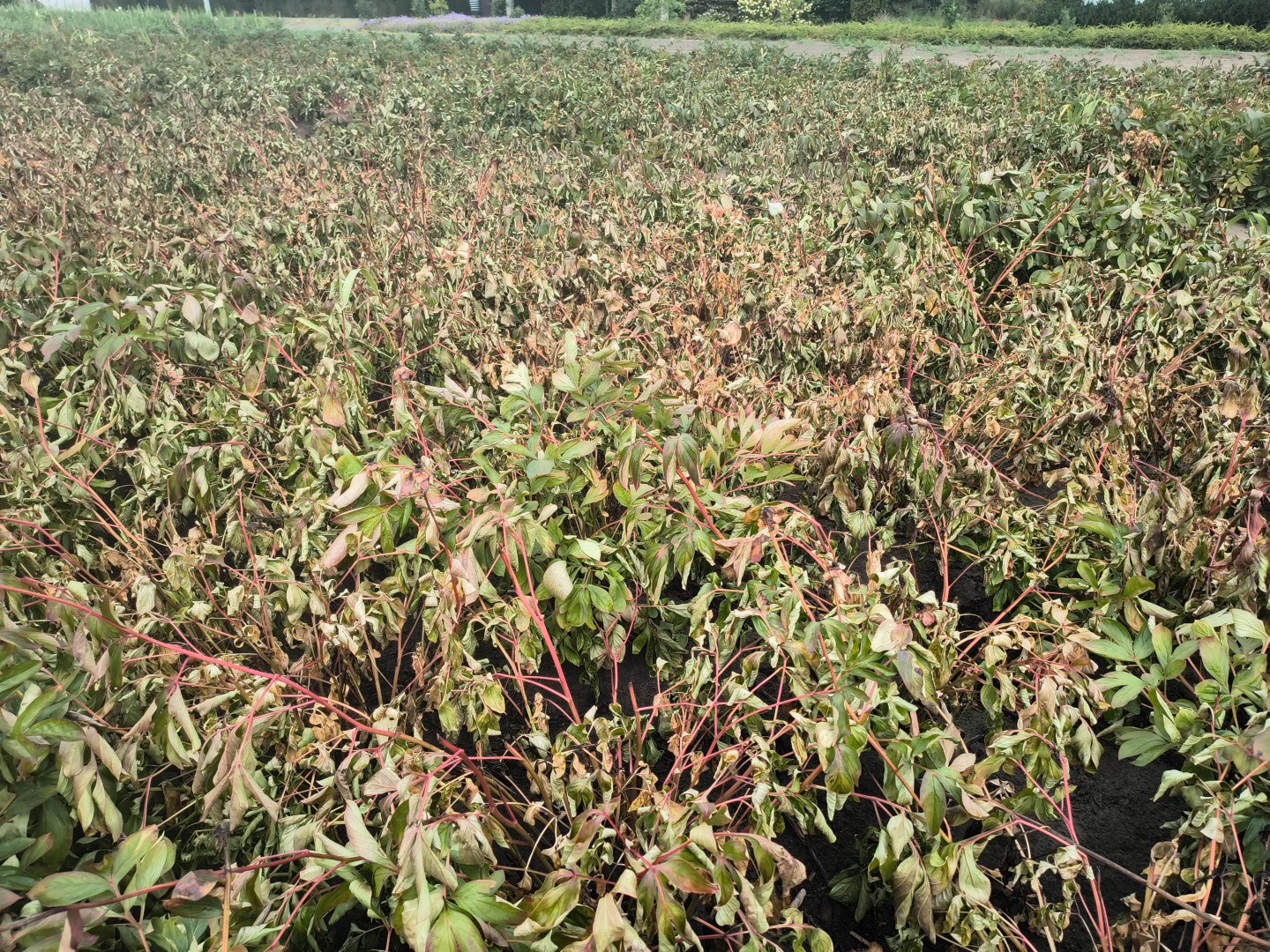
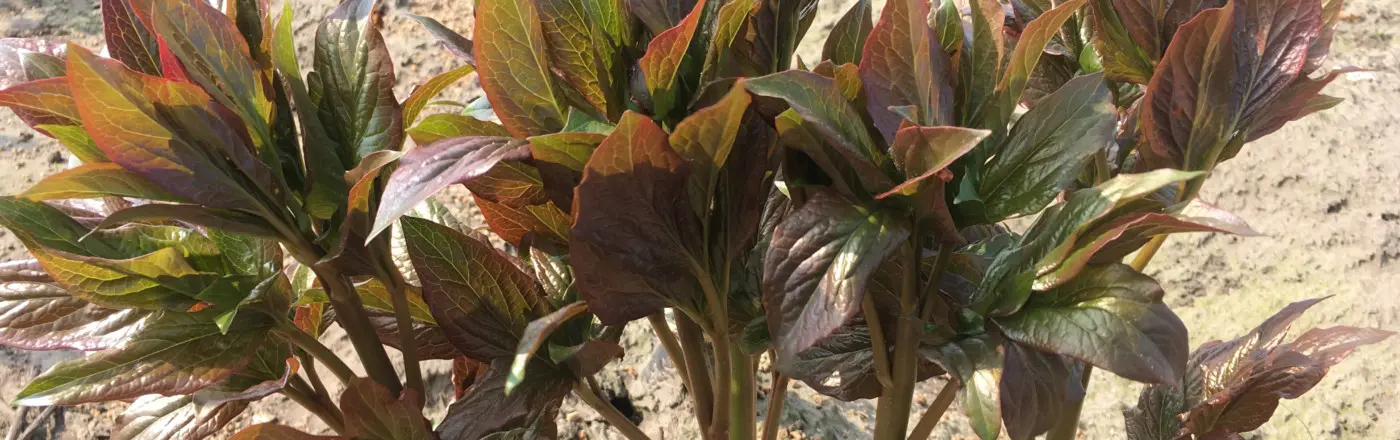
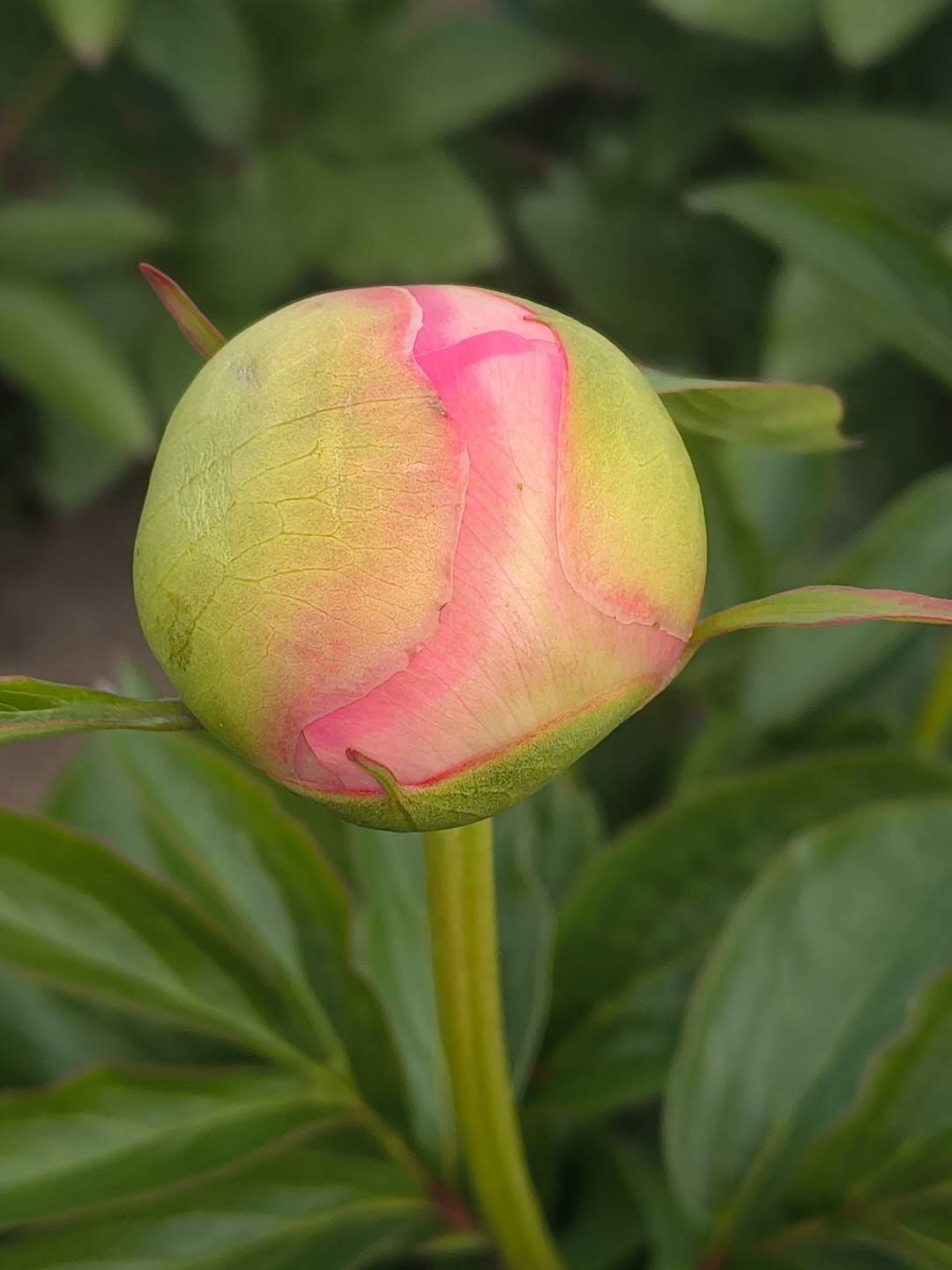
- There were some four heat waves this year and during Summer hardly any rain resulting in one the driest years on record. For the first time in decades we were driven to irrigate our mature peonies because they were really suffering. What was very remarkable here is that my first year plants were not in need of extra water, they were still standing strong. I didn’t expect this, rather the opposite. It hasn’t been tested rigorously but I attribute this to the biostimulants dip the roots received prior to planting. See the photographs to get an idea what it is made of, we’re especially happy with ‘Rootfit’, containing many proven biostimulants. Perhaps we should do a treated/untreated trial for comparison, but of course, one doesn’t know what the weather will be next time.
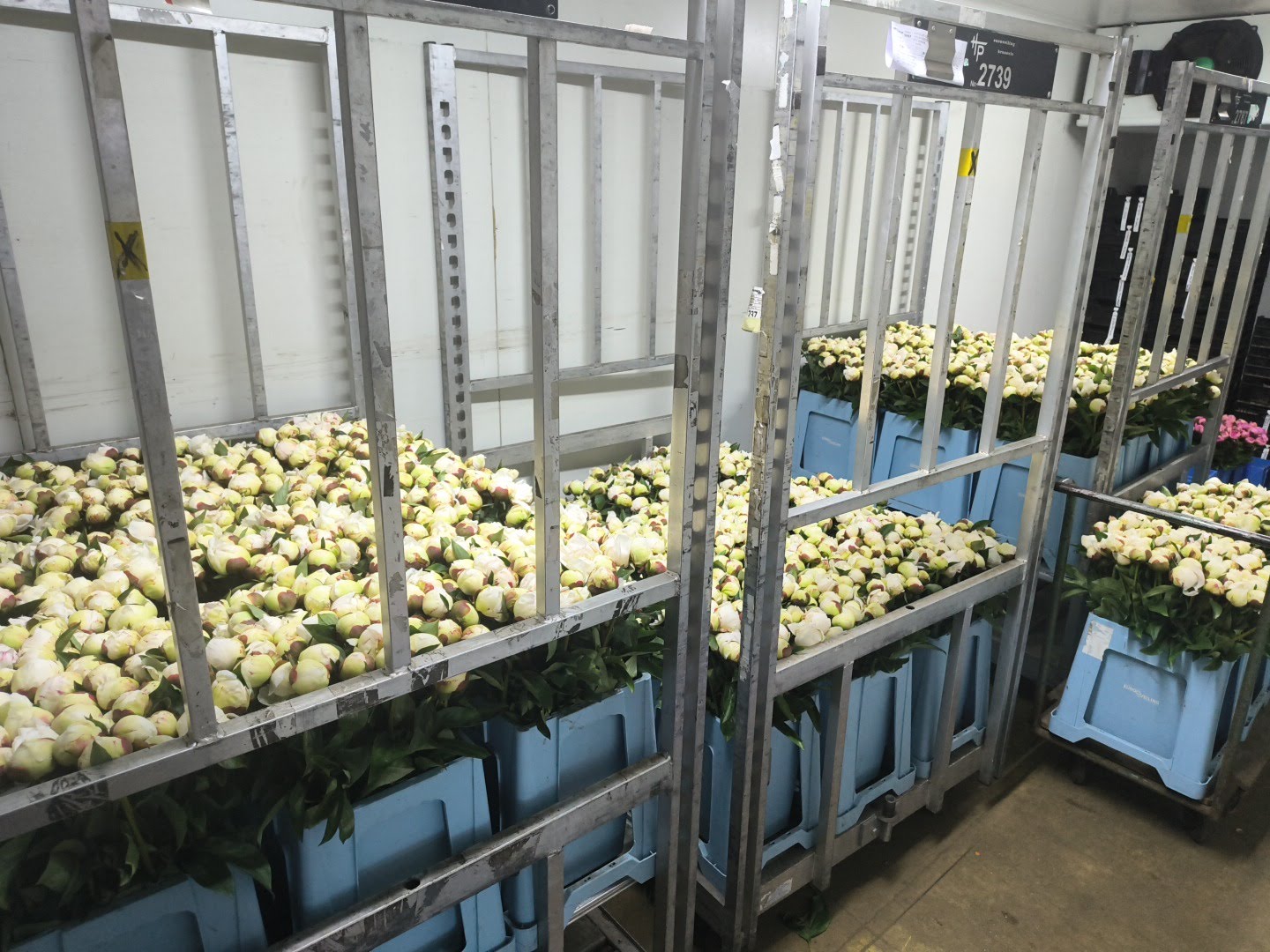
- Problems arose at the end of the season with Elsa Sass flowers cut, stored and then when opened indoors, showing damage on the petals. This damage appeared on initially fine looking petals that then fast turned brown. It was only the outer layer of petals, but of course it wasn’t pretty. Elsa Sass has a reputation here for being a rather difficult one, sometimes giving these unexpected results. I can only theorize as to the cause, but I think it has to do with the extreme weather again. During bloom time temperatures were very high. When we cut they were placed in cold storage immediately. Nothing seemed to happen until thus placed in a vase afterwards. Probably the very large temperature drop was the cause of this and it would be better to acclimatize them more gradually (say first keep them inside at intermediate temperatures for a few hours before cold storage). The same happens with oriental lilies which we used to grow in the past. The petal can turn brown because of such a sudden large temperature drop. Of course, here again, we should try it in the future to see if we’re right. There are few to no alternatives to Elsa Sass, because it is the last blooming peony variety we grow (Jacorma is supposedly also that late blooming, but fetches far lower prices at the auction).
- It was the fourth year we received tissue cultured plantlets of our seedlings. We are happy to report much progress in survival rates. Upon arrival they were placed in horticultural crates. These were then placed in cold storage for 5 months before being moved outside under a shading net. They grew fine, we only had to irrigate a few times due to the long dry weather. We’ll dig them soon, but the expectations are that they will be sufficiently large to move them to our normal growing fields. We are less happy to also report the tissue lab has informed us they’ll quit propagating peonies. Except for the intersectionals and tree peonies, losses are too high for them and they were not making any money from it. I do regret this and am unsure whether to look for another lab, because despite public talk of ‘astonishing results’ the facts speak otherwise. We could easily write a whole article on this topic with our own experiences, perhaps in Winter.
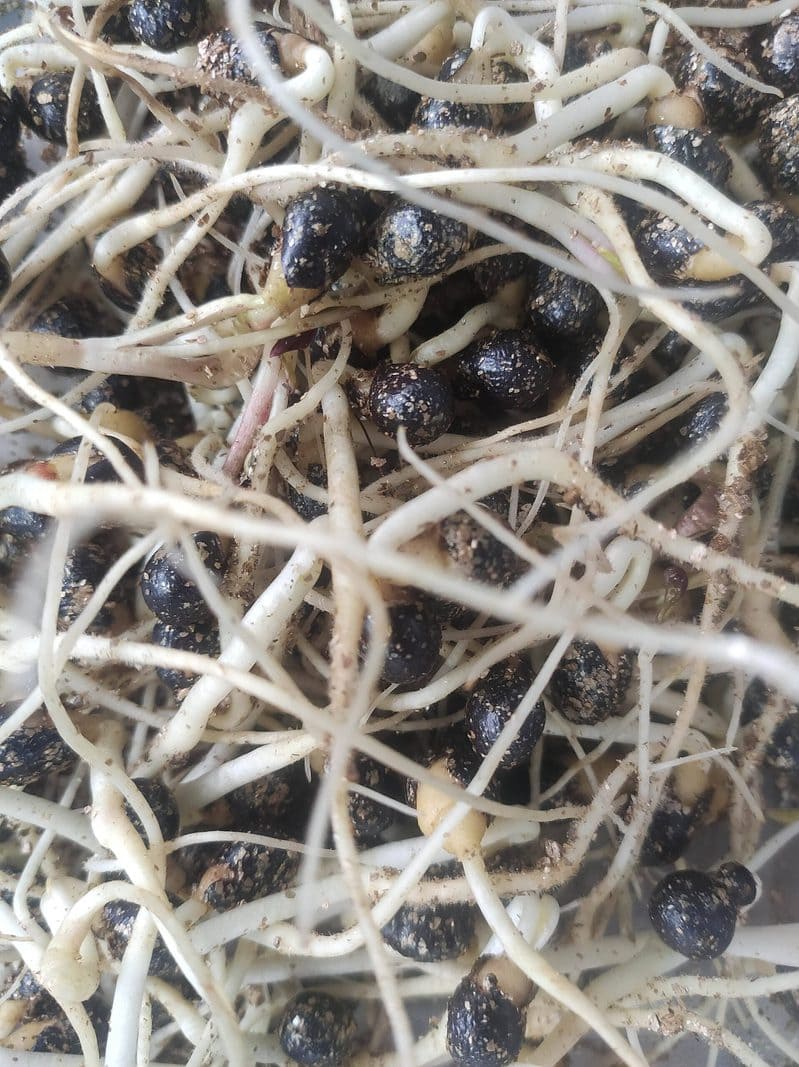
- It was early December when I received a batch of interesting seeds. Crosses between different species, sometimes difficult ones. The attraction of growing these into blooming plants lays with the possibility of using them in our hybridizing program obviously. We didn’t want to wait another year for germination efforts, so the seeds received the usual treatment and were placed in a small wine climate cabinet for their warm phase. By mid-February the first roots appeared and the first batch was moved to cold storage with other batches following later on. They were kept there until early June after which they were moved again to our greenhouse with some shading net above again. Now the differences between the batches are quite large. Those receiving 3 and 3 1/2 months of cold storage were best, with little difference between them. However the last batch which received only 2 months and 1 week of cold did not do so well. Fewer sent up a first leaf, a leaf much smaller for the same seeds and eventually they all died. The conclusion is comparable to what we noticed with the tissue cultured plantlets: a longer cold period results in far better growth with more vigorous plants.
So, this summarizes our peony season 2026. We hope yours was as interesting as ours and we are looking forward to the next one, but first the propagation season is upon us 🙂