Yuri Alekseevich Lukoyanov
Country:
Russia, Nizhny Novgorod Region
Short biography:
I will be 62 years old in a month. I have a family and two adult sons. Currently, my main work involves working with peony seedlings. My second area of expertise is woodworking (furniture, construction, etc.).
More information:
I have social media accounts. My main ones are currently on VK and OK. I do not have my own website. Perhaps I will create one someday. Times change quickly.
Peony hybridizers series
-

- Yuri Lukoyanov

-

- Yuri Lukoyanov

How did you first get involved in peony hybridizing?
The idea of taking up peony hybridization came to me after 2010. I’ve been familiar with peonies since childhood — my parents had been growing several varieties since the second half of the 1970s. Having grown up working the land, this kind of work has been familiar to me from an early age. I began planting various plants, including peonies, on my new plot after the year 2000. Gradually, the collection grew as I acquired peonies from many different sources.
I read a lot about the history of peonies and the people who created new varieties — everything related to peonies was my primary area of research. The second area was theory — I read and studied everything I could find on genetics, soil science, phytopathology, biology, and other necessary subjects. My studies were entirely self-directed.
My very first, completely accidental experience was with obtaining a new tulip variety. This was in the mid-2000s, and it seemed to happen all on its own. The very fact that something new was born appealed to me.
What was the starting material for your hybridizing?
By the time I began the hybridization process, I already had a collection of lactiflora and hybrid peonies — about a hundred varieties in total, and that number was constantly growing. Among the species peonies, I have Paeonia caucasica and a few others. In terms of well-known varieties, I don’t have many from Soviet or Russian breeding. There are very few of them. The majority are foreign varieties. I now have around 150 varieties, or perhaps slightly more, from a wide range of breeders and different time periods. For me, the varieties obtained and bred by hybridizers such as Lemoine, Krekler, and Saunders provided a new direction for the development of peony hybridization. This is a vast topic, and I cannot single out anyone in particular. The second important milestone in the development of hybridization was the group of enthusiasts established by Silvia Saunders and Roy Pehrson at the turn of the 70s. This group included famous breeders like Seidl, Hollingsworth, and many others. They were able to create a new generation of hybrids—these can be considered “special” because they served as the foundation for creating new varieties.
My very first experiments were with lactifloras, and all the results turned out to be negative. We are located in a “high-risk farming” zone, so being able to grow anything at all is a triumph. This is due to the soil, the climate, and the sharply shifting weather, including frosts and summer droughts. This first stage of learning and finding my own way lasted five to seven years. The first sprouts came from ‘Lemon Chiffon’ after five years, but there were only a few, and they all perished during one cold winter with severe frosts. That was another lesson. A year later, I planted about 3,000 seeds from controlled crosses involving 32 different parent combinations. From then on, I continued this practice, planting between 3,000 and 5,000 seeds every year. Not all of them germinated — on average, in line with well-known statistics, around 10% did.
What are your goals in hybridizing peonies?
Do you mostly depend on open pollination or do you mostly make controlled crosses?
I have used both practices: open pollination and controlled crosses. Another method I’ve tried is using several types of pollen simultaneously. As of now, I don’t have a report on those results.
| 100% open | 50/50 | 100% controlled |
How large is your hybridizing program?
The scale of my hybridization work is limited by several factors. First is the space available — there isn’t that much of it. Second is time — each seedling requires 5 to 10 years of labor. Third is my own health — I am not immortal. Currently, I have several batches of seedlings in progress, totaling about 400 or so different plants.
Initially, I carried out about 50 different controlled cross combinations annually. In recent years, I haven’t done this. Looking ahead, I have a plan to create new combinations using my own seedlings as parents.
Do you have any plants in the market?
There isn’t a market as such. Everything happens randomly and chaotically. Some collectors have my peonies, but for now, this is not being publicized.
Do you know the American Peony Society (APS)? Are your plants registered there?
Nothing is registered at the moment. Payments cannot be processed.
Can you describe a few of your plants that you consider the best or most beautiful and which are available now?
I am not ready to say for certain right now which ones are the best or which will be liked most. There are a number of beautiful and high-quality seedlings. However, their qualities need to be confirmed over several seasons. It takes time for a full evaluation.
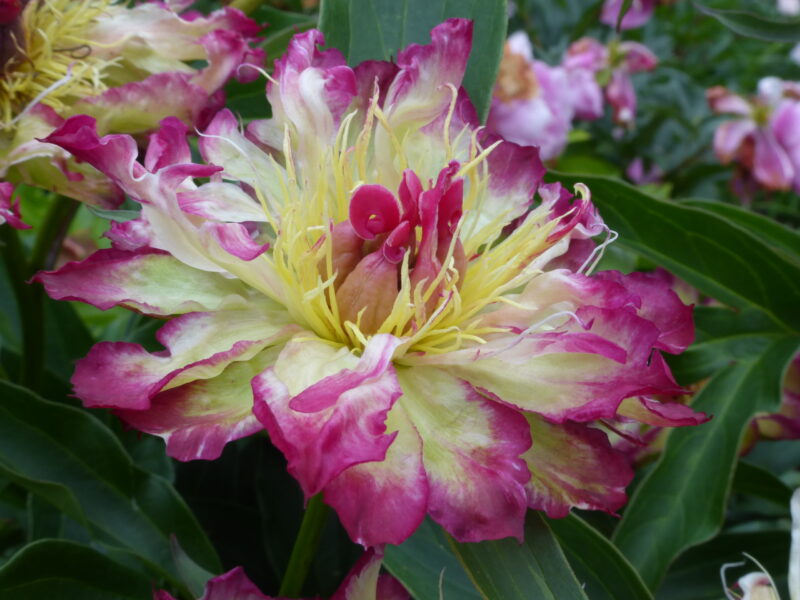
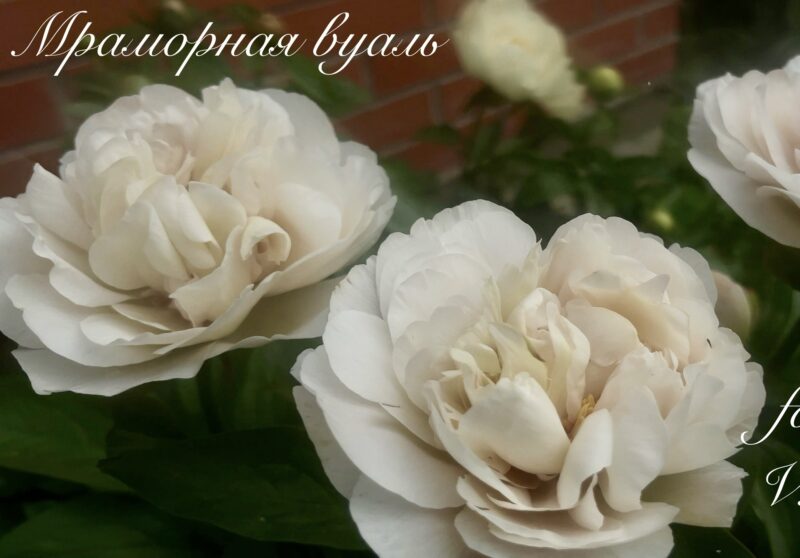
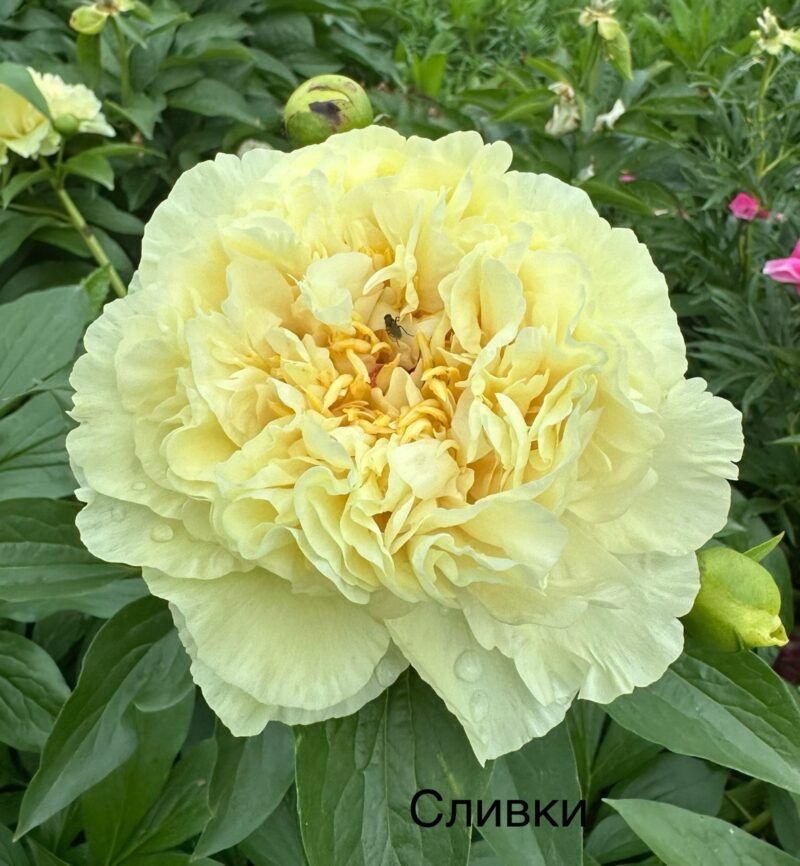
The first one is seedling Yuriel (SBSD19.1). It is white, and while it’s hard to surprise anyone with that, there is one detail that is very important to me. How was I able to produce it? Out of all my varieties, ‘Sunny Boy’ bloomed very early, while other beautiful hybrids bloomed too late to use their pollen on it. I had the idea to use pollen from the previous year. That summer, I prepared several types of pollen from various beautiful hybrids and stored them in a box until the following summer.
My first attempt the next year yielded no results. I tried this two or three times—three years of searching. Eventually, I managed to get four very tiny seeds. I planted them, and they matured in the ground for two years. Initially, three seedlings grew, but one perished, leaving two. This white seedling has a beautiful flower form with symmetrically arranged petals. I’ve observed it for several years now, and it’s not a fluke.
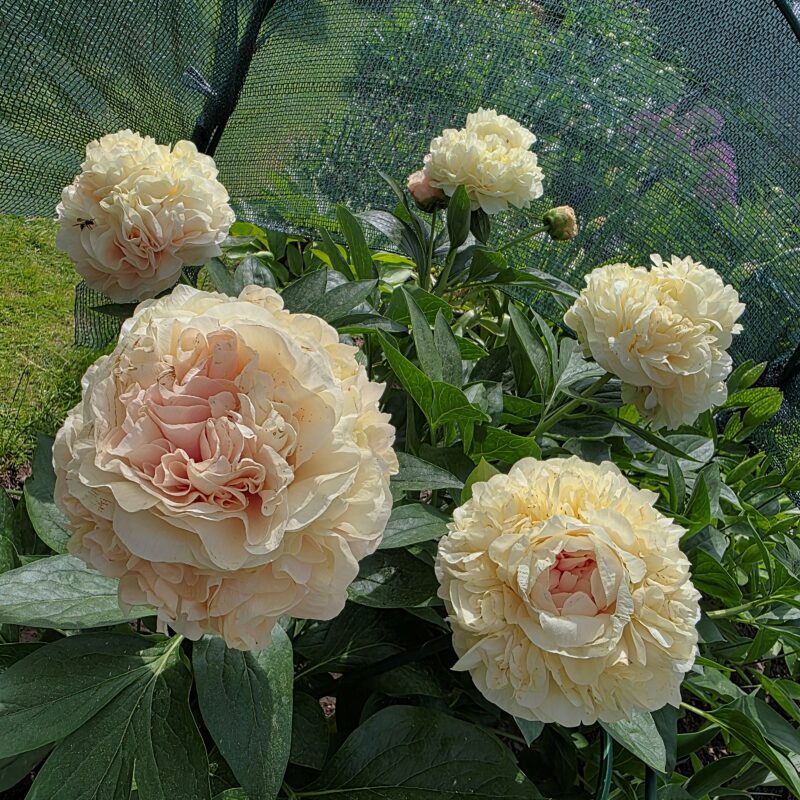
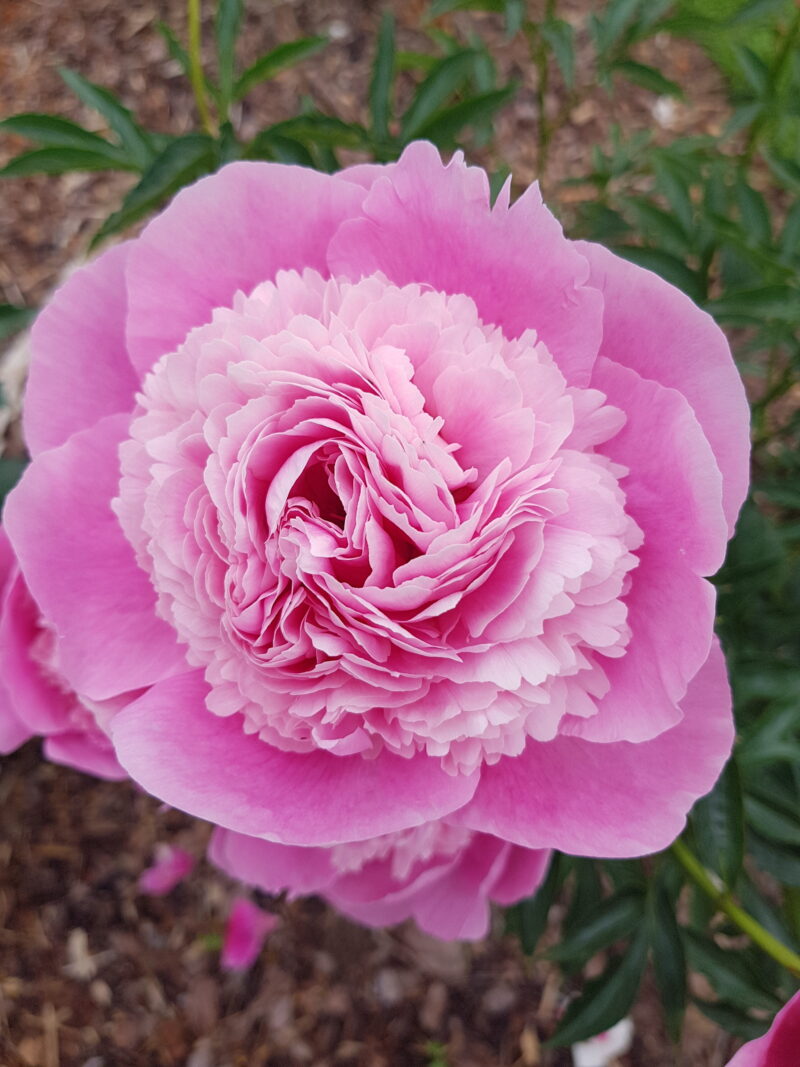
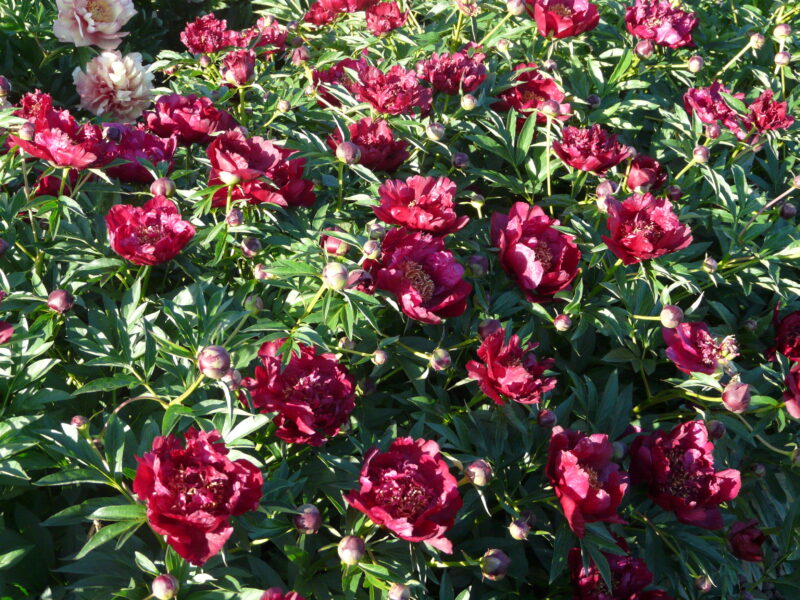
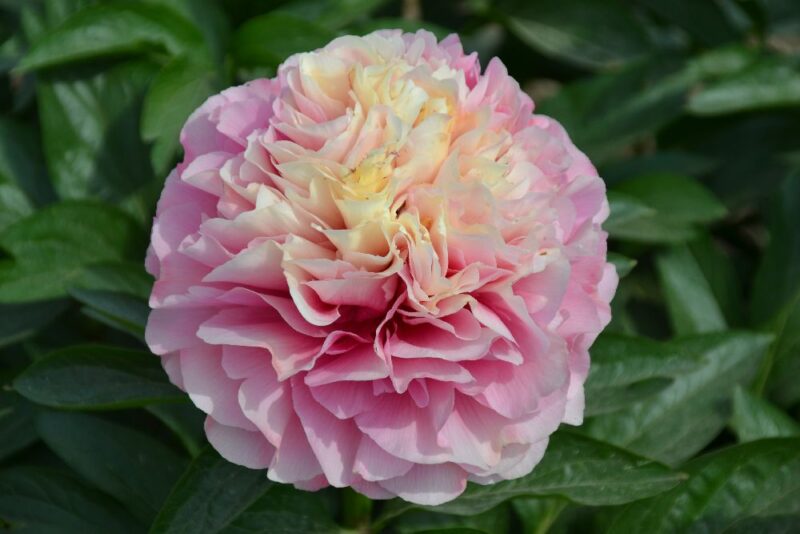
Another interesting creation is a group of seedlings from ‘Nelda’s Joy’ and ‘Sweet Lemonade’. The pollen parent is ‘Sweet Lemonade’; I took the pollen from a side flower of simple form that happened to have good stamens. This was an extremely rare occurrence. In the end, I got 10 seedlings, and they are all wonderful. I could probably pick out 3 or 4 of the most interesting ones. In this NJSL19 group, there are two special ones with distinctive stem and leaf characteristics: NJSL19.2 and NJSL19.3. The point is that they have sturdy, straight stems—very strong—and the leaves are very smooth, thick, and always hold their shape. It looks beautiful.
This was the beginning, or what I call the “First Wave.”
Remark: abbreviations in the parentages are the following
- SB: Sunny Boy
- SD: Salmon Dream
- NJ: Nelda’s Joy
- SL: Sweet Lemonade
- LC: Lemon Chiffon
- P: Pastelegance
-

- Yuriel

Yuriel
-
- NJSL19.8 Энжи Эсель

NJSL19.8 Энжи Эсель
-

- NJSL19.6

-
- NJSL19.6

NJSL19.6
-
- NJSL19.1

NJSL19.1
-
- NJSL19.7

-
- NJSL19.7

NJSL19.7
-
- NJSL19.2

NJSL19.2
Within your current seedlings, what are the most promising ones?


Are you in contact or working together with other peony hybridizers?
Communication is problematic today due to world events.
Do you have unregistered plants that are not good enough to introduce but have something ‘special’?
Yes, I do.
Would you like to exchange such ‘hybridizers plants’ with other hybridizers?
This practice is hardly used here. I do not participate in exchanges.
Name a few peony varieties from other hybridizers which you especially like?
Final question. Any remarks or suggestions you may have…
Updates:
Jan 22th: Added the abbreviations in the parentages
E-mail of this person is known to the author. If you want to contact this hybridizer, we can forward your message.