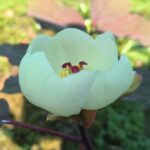
Parentage: Big Jhonny is derived from Garden Peace. The latter is derived from P. lactiflora and P. macrophylla.
+Beautiful pale pink double flowers, very floriferous, very early.
-Stems only average
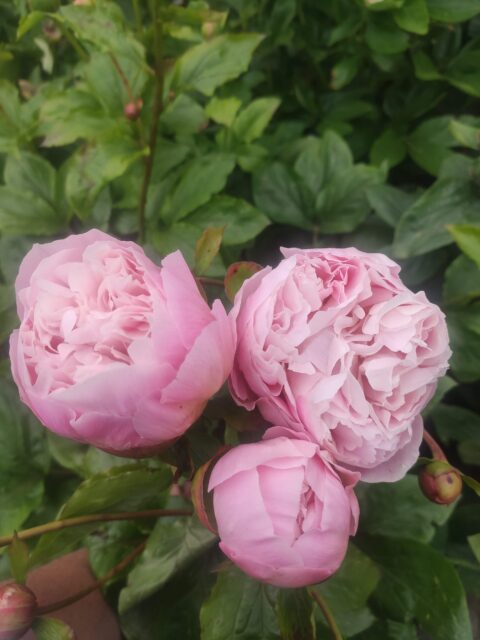
Parentage: Big Jhonny is derived from Garden Peace. The latter is derived from P. lactiflora and P. macrophylla.
+Beautiful pale pink double flowers, very floriferous, very early.
-Stems only average

 Our hybridizing program, 2026 2026, August 24th
 A dike of a flower: NOP Fleur Espel (NL) 2026, August 20th
 Long term storage of peony pollen 2026, May 6th
 Paeonia species of Georgia 2026, January 30th
 The best peony germinating substrate: part 2 2026, January 28th
 The Peony in China: A Few Journeys 2026, January 27th
 Peony Hybridizers: Rat Thierry 2026, January 22nd
 Peony Hybridizers: Skakodub Anatoliy – Askarova Larissa 2026, January 21st
 Peony Hybridizers: Lukoyanov Yuri 2026, January 21st
 Peony Hybridizers: Vynogradska Elina 2026, January 20th
 Peony Hybridizers: Kļaviņa Ritma 2026, January 19th
 Oriental Gold: Legend, Hypothesis, and the Scientific Mystery of a Peony 2026, January 19th
 Peonies in China and the Netherlands 2026, January 19th
 Paeonia x kayae 2026, January 19th
 Peony Hybridizers: Hurtekant Koen 2026, January 16th
 Peony Hybridizers: Anokhin Petr 2026, January 15th
 Peony Hybridizers: Khorosh Igor 2026, January 14th
 Peony Hybridizers: Kaya Erdal 2026, January 13th
 Peony Hybridizers: Otto-Zagorska Ilga 2026, January 12th
 Peony Hybridizers: Gorobets Vasyl 2026, January 8th
 Prairie Peonies HortAlaska Peonies
2026, The Peony Society
34". Single, white waxy, glistening look, rather big flowers, red and yellow heart, long blooming. Stamen stems red with gold tops, white pistils have red tops. Foliage extra large, dark green. (First called Peace.)
Growing in bushes and grasslands, but also in open woods, at altitudes from lowlands to 2,300 m, but to 3,400 m in Sichuan Province (Kangding), China. In E Asia: China, the Korea Peninsula, E Mongolia, and Russia (the Far East and SE Siberia).
The most distinct character of Paeonia lactiflora is the cartilaginous thickening along the leaf margins, which are dentate—spinose on these thickenings.
More info
Parentage uncertain, most likely 'Garden Peace' by unknown pollen (possibly 'Lemon Chiffon' by unknown pollen). First bloomed 2008, first propagated 2009. Large SEMI-DOUBLE flowers to 7½ inches (19 cm), usually 3 per stem, the secondary flowers being somewhat smaller and more variable in form. Three rows of pale pink guard petals; well rounded. Inner petals creamy-apricot; frilled and ruffled. Center of pollen-bearing stamens and pale gray-green carpels. Carpels variable in number (ranging from 2-5) and moderately hairy, having red-purple stigmas. Produces seeds. The staminodal disc, in herbaceous peonies normally a ring of protuberances at the base of the carpels, is here developed to extend about a quarter the length of the carpels, suggestive of a rudimentary sheath as seen in woody peonies where it often entirely encloses the carpels; colored red-purple, same as the stigmas. Upright self-supporting growth with stems to 30 inches (76 cm). Foliage emerges with coppery leaves turning to rich dark green as it matures. Very large, broad leaves, the mature plant much resembling 'Garden Peace' in leaves, stems and buds. Named for the originators’ second grandchild.
Very dark red Jap. Good upright grower, vigorous, late, 34 inches. An improvement on Fuyajo. Seedling # JE-3.
Award of Landscape Merit (ALM) description: 'Charm' (Franklin, 1931) Lactiflora Group, Late mid-season, 38? — A lustrous and satiny, dark red Japanese form bloom with a center of the same red petaloids, etched yellow. Stiff and relatively straight stems angle outward gracefully to form a very large, harmoniously mounded, fountain of blooms. An eight-year-old plant matures to 40 or so stems that emerge from a relatively compact area. Although individual blooms are at their peak for a shorter duration than those of other lactifloras, plenty of side buds help 'Charm' maintain its striking presence in the landscape. One of the later Japanese form peonies to bloom.
Seedling TF-8. Parentage: (P. tenuifolia 'Plena' x P. tenuifolia 'Rosea')F2. First bloomed 2012, first propagated 2013. Fully double BOMB form. Baby pink flowers are borne 1 to a stem, 3¼ inches (8 cm) in size, up facing to slightly out facing. Two to three carpels on average which are glabrous to slightly tomentose, green and topped with whitish stigmas, the latter sometimes deformed. Disc poorly developed. No pollen, but as a pod parent normally fertile but not with other pink P. tenuifolia, so far. Not fragrant. Blooming time very early, together with or slightly ahead of P. tenuifolia 'Plena'. Finely cut foliage, pale green on emergence, is typical of the species. Average height to 15 inches (38 cm); support not needed. Named after originator's mother who was not the tallest person but the best mother one can imagine.