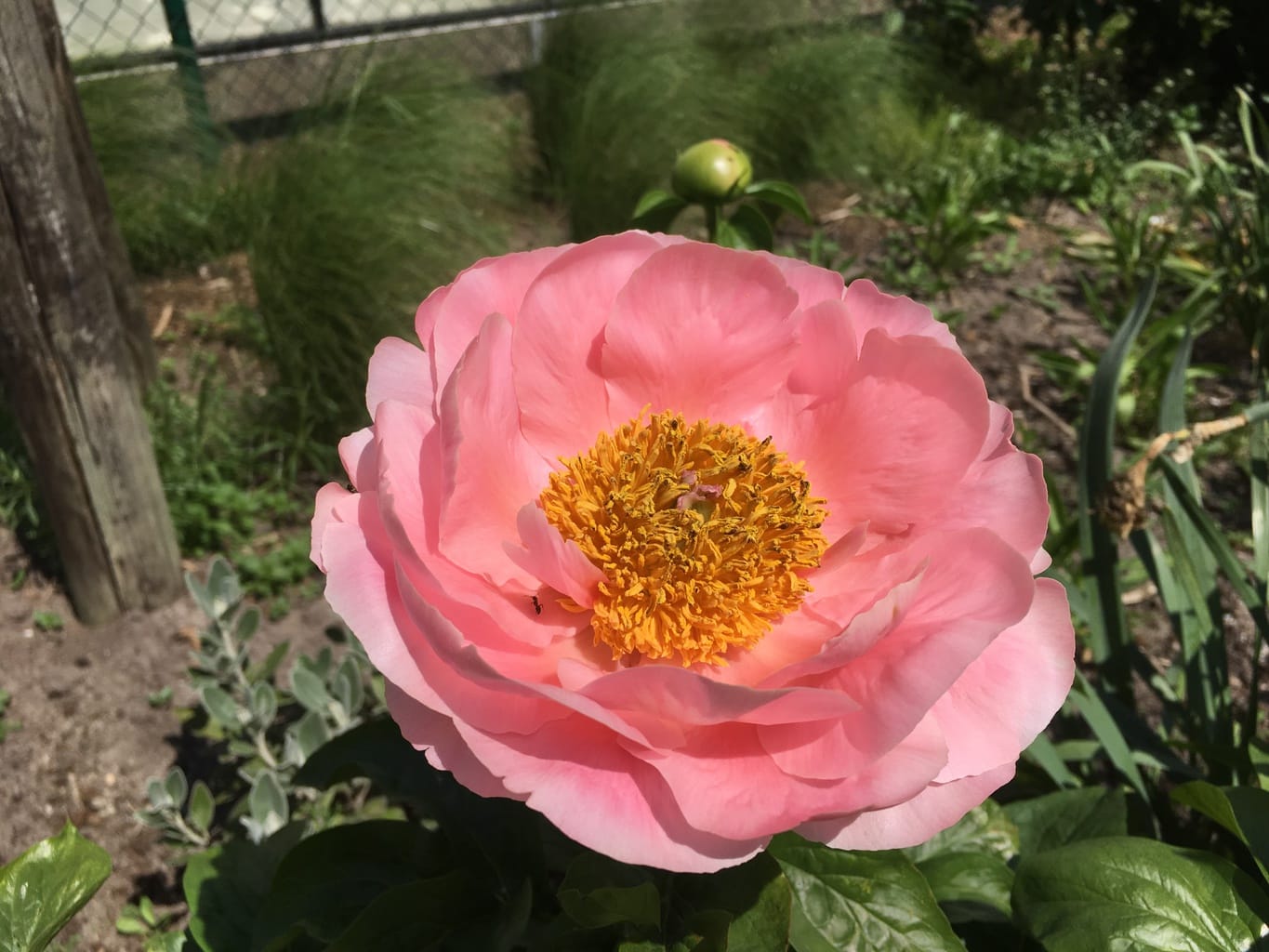
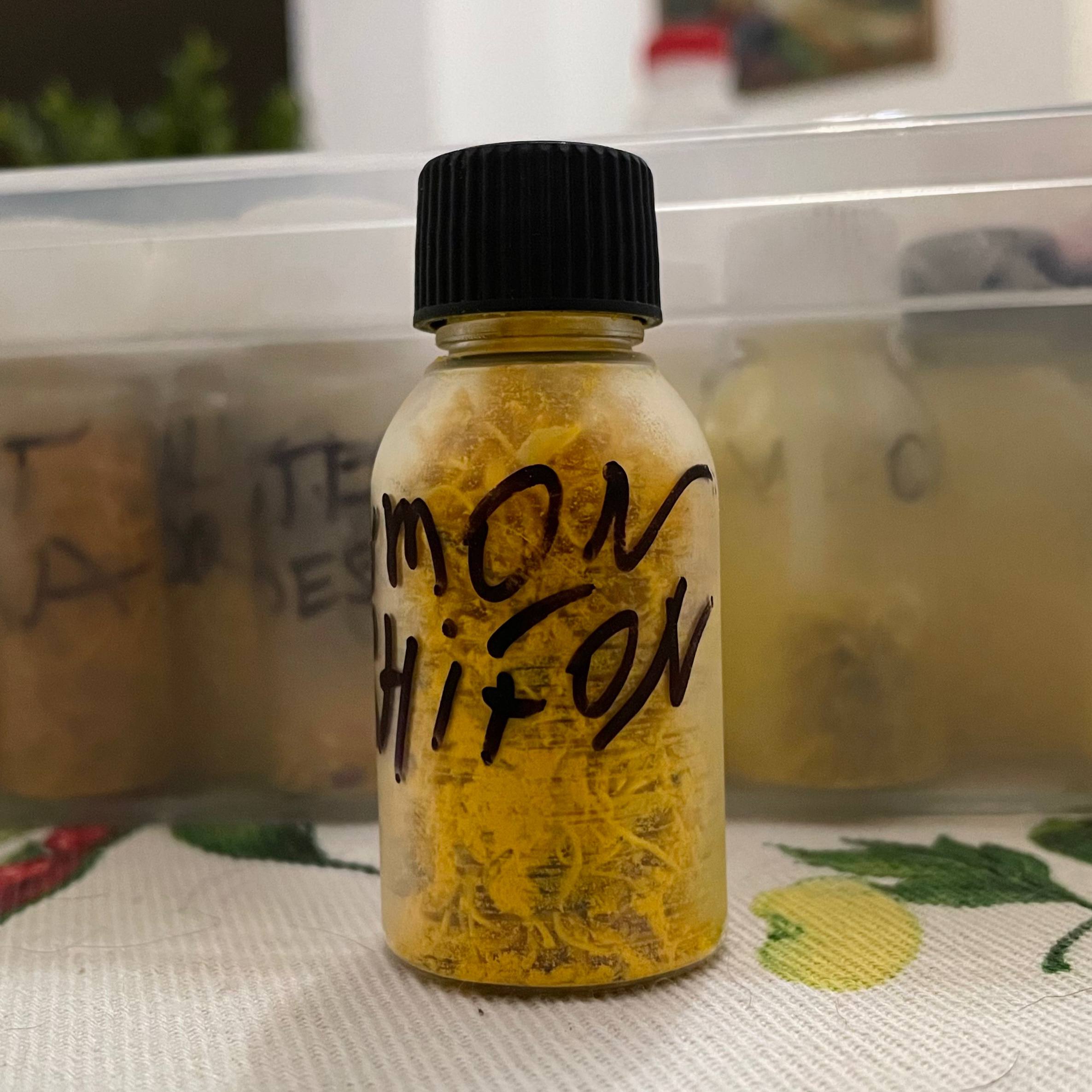
In May 2025, some pollen was collected—for example, from the variety ‘Lemon Chiffon’. Then, the pollen was dried and placed in a refrigerator compartment set to 5°C. It stayed there for about three days, after which it was moved to a freezer at -15°C. Ideally, the pollen should have been tested for viability beforehand, but since I didn’t have a microscope at the time, that data wasn’t recorded.
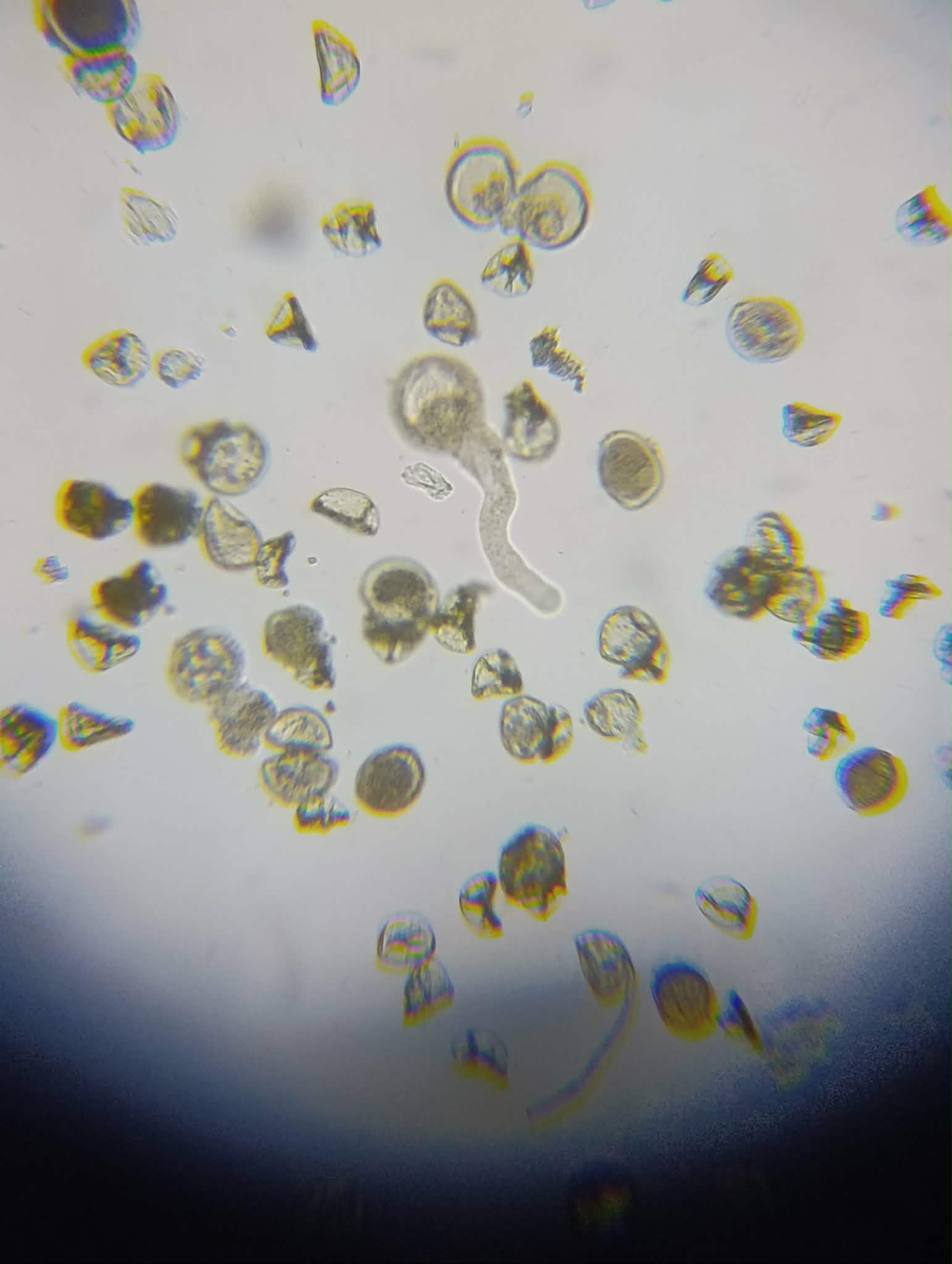
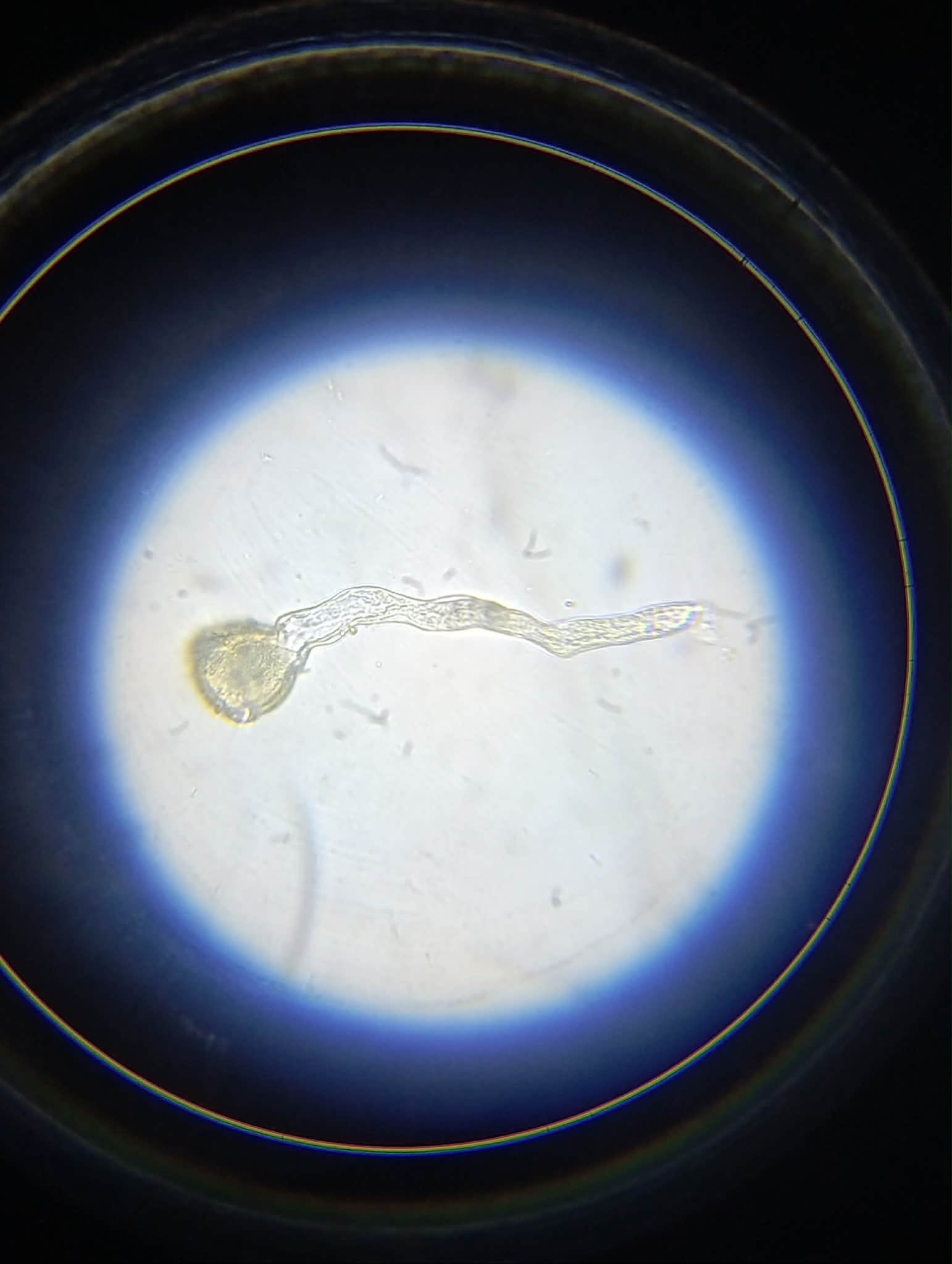
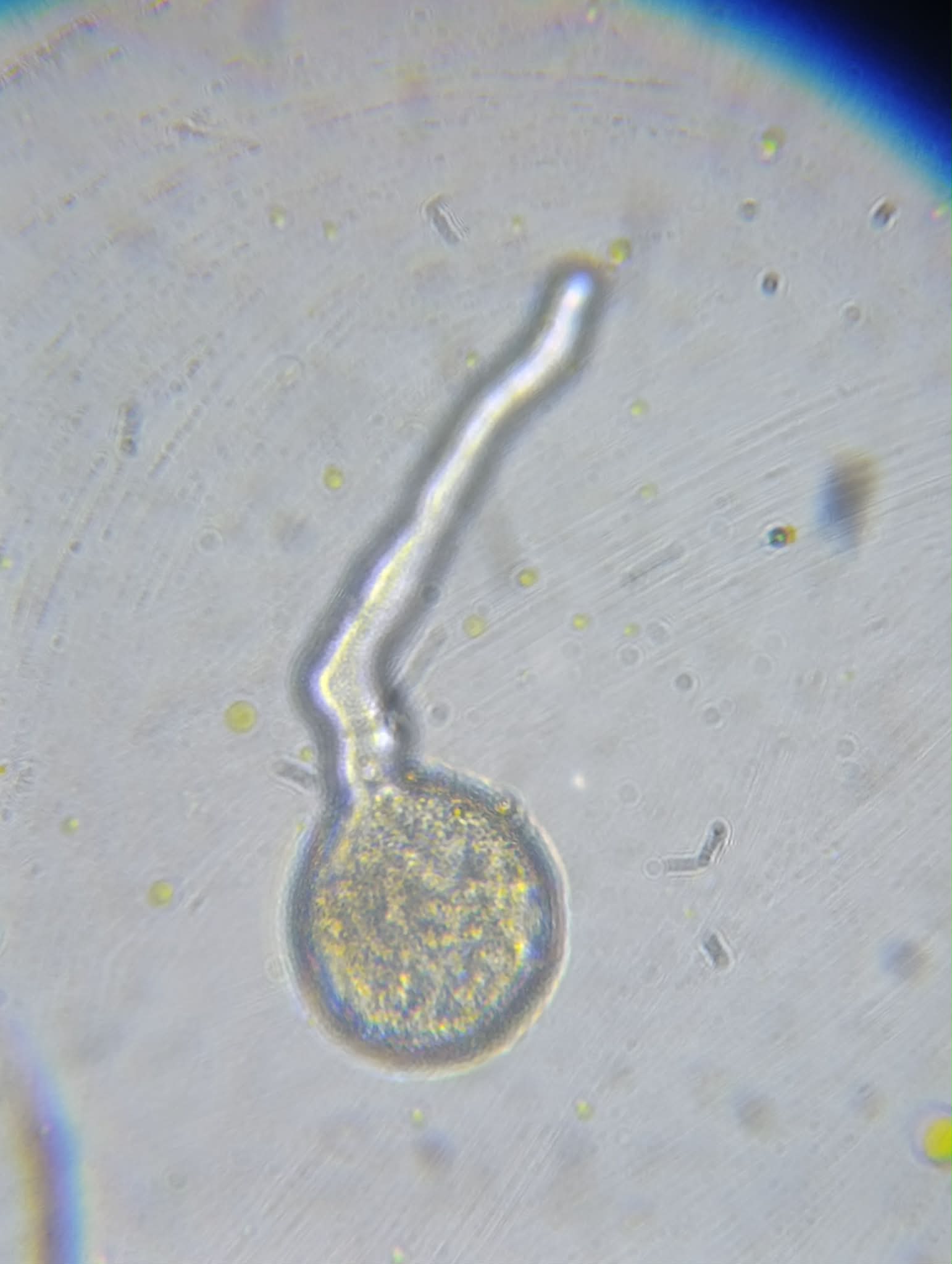
One year later, on April 26, 2026, the pollen was taken out and moved back to the 5°C compartment for one day (reversing the process). After that, it was brought to room temperature (20–25°C). The pollen was placed in a 20% sugar solution. After about 40 minutes, pollen tubes began to sprout here and there—it came back to life! Generally, after two hours, the pollen viability rose to 80%, which is a great result. I also performed microscopy on pollen from ‘Scarlett O’Hara’, ‘May Lilac’, and ‘Nelda’s Joy’, and the situation was identical.
Conclusion
It is possible to store prepared pollen in a frozen state in a freezer. This allows us to be ready for crosses with early hybrids, providing a wide spectrum of pollen to choose from, or allowing us to save pollen that is only available in small quantities.
One Note
Thawed pollen must be used on the same day; by the next day, fertility drops by half. Unless, of course, you perform repeat crosses with a three-hour interval to increase the probability of successful pollination.