The Reticulate Evolution and Hybridization of Herbaceous Peonies
Aulikki Salmia
Introduction
According to Chinese botanist Hong’s classification, there are 34 peony species. In the range extending from Northwest Africa to Europe and Western Asia, 15 herbaceous species grow. In the Himalayan region and Central and East Asia there are 17 species, of which 9 are woody (tree peonies) and 8 are herbaceous. In North America, 2 herbaceous species grow.
Of the peony species, 21 are diploid and 9 are tetraploid. For four species, studies have found both diploid and tetraploid taxa, or separate populations with different ploidy levels. These species are Paeonia daurica (the Caucasian peony group), P. obovata (the woodland peony), P. clusii, and P. emodi (the Himalayan peony).
Hybridization
A diploid species has two sets of the basic chromosome number. In peonies this number is 5, so a diploid peony has 10 chromosomes in total (2n=10) whilst tetraploids, which have four sets of them, have 20 in all (2n=20). There is another difference to be made between alloploids and autoploids. Alloploids are species that derive from two (or more) different species, whereas autoploids derive from one single species.
Autotetraploids can be found when the genome of a diploid has doubled. Allotetraploids have several origins. They can arise when two different diploid species hybridize and the chromosome set subsequently doubles. Or they can also be the result of two different tetraploids hybridizing.
Hybridization can also remain at the diploid level(1). The diploid P. anomala (Siberian peony) is thought to have arisen as a hybrid of P. lactiflora (Chinese peony) and P. veitchii (Veitch’s peony). Based on molecular markers, the Chinese peony was apparently the maternal (=seed) parent and Veitch’s peony the paternal (=pollen) parent. All three species mentioned above are diploid, so despite the cross, the ploidy level in P. anomala has remained diploid.
A large-scale study(2) examined tetraploidy in more detail, among other topics. The study material comprised all peony species — 187 plants in total — collected from 90 populations across 14 countries. The countries with species richness were more densely sampled, such as China (38 populations), Greece (10 populations), Spain (6 populations) and Turkey (12 populations). The researchers used both chloroplast genes (inherited maternally in angiosperms) and nuclear genes (inherited from both maternal and paternal plants) from plant samples. I won’t go into these genetic research methods in more detail. There were many questions. The aim was to determine whether the tetraploid peony taxa are auto- or allotetraploid. Which diploid species have served as parents (ancestral species) of the new species or subspecies that arose? The researchers also considered why there are so many tetraploid herbaceous peony species in the Mediterranean region but only one in Asia.
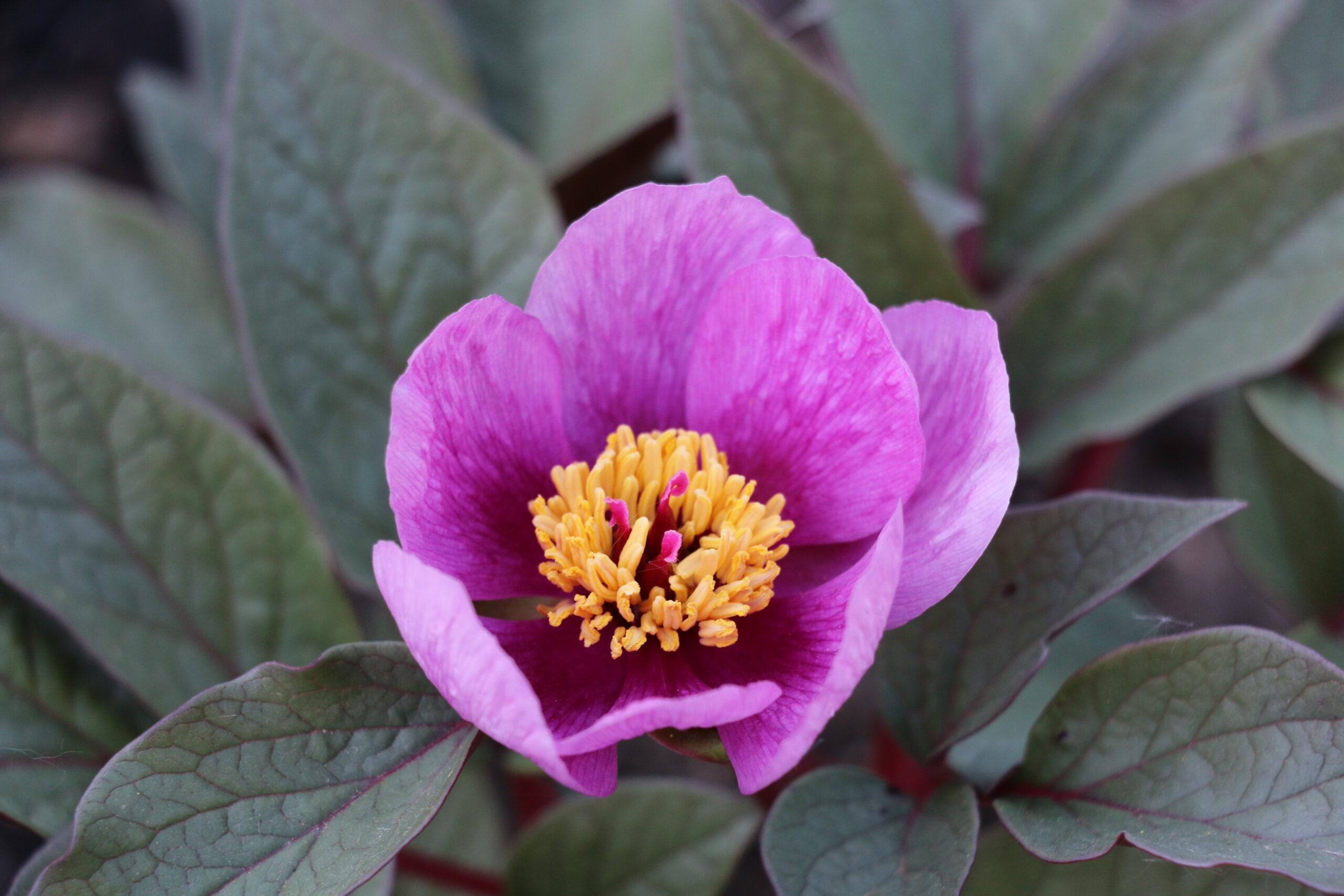
Paeonia cambessedesii (Mallorcan peony) Image by Dick Westland
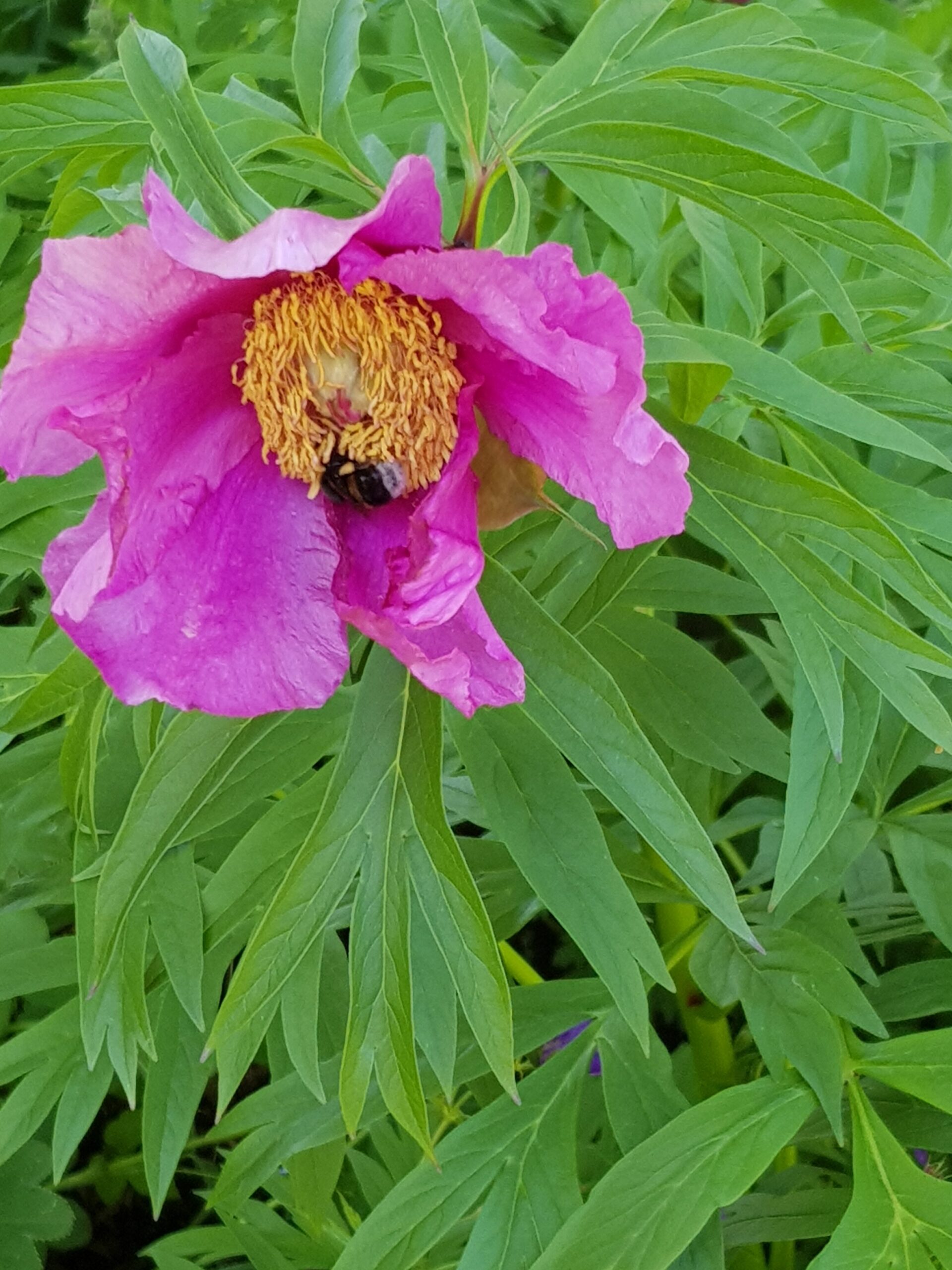
Paeonia anomala (Siberian peony) Image by Aulikki Salmia
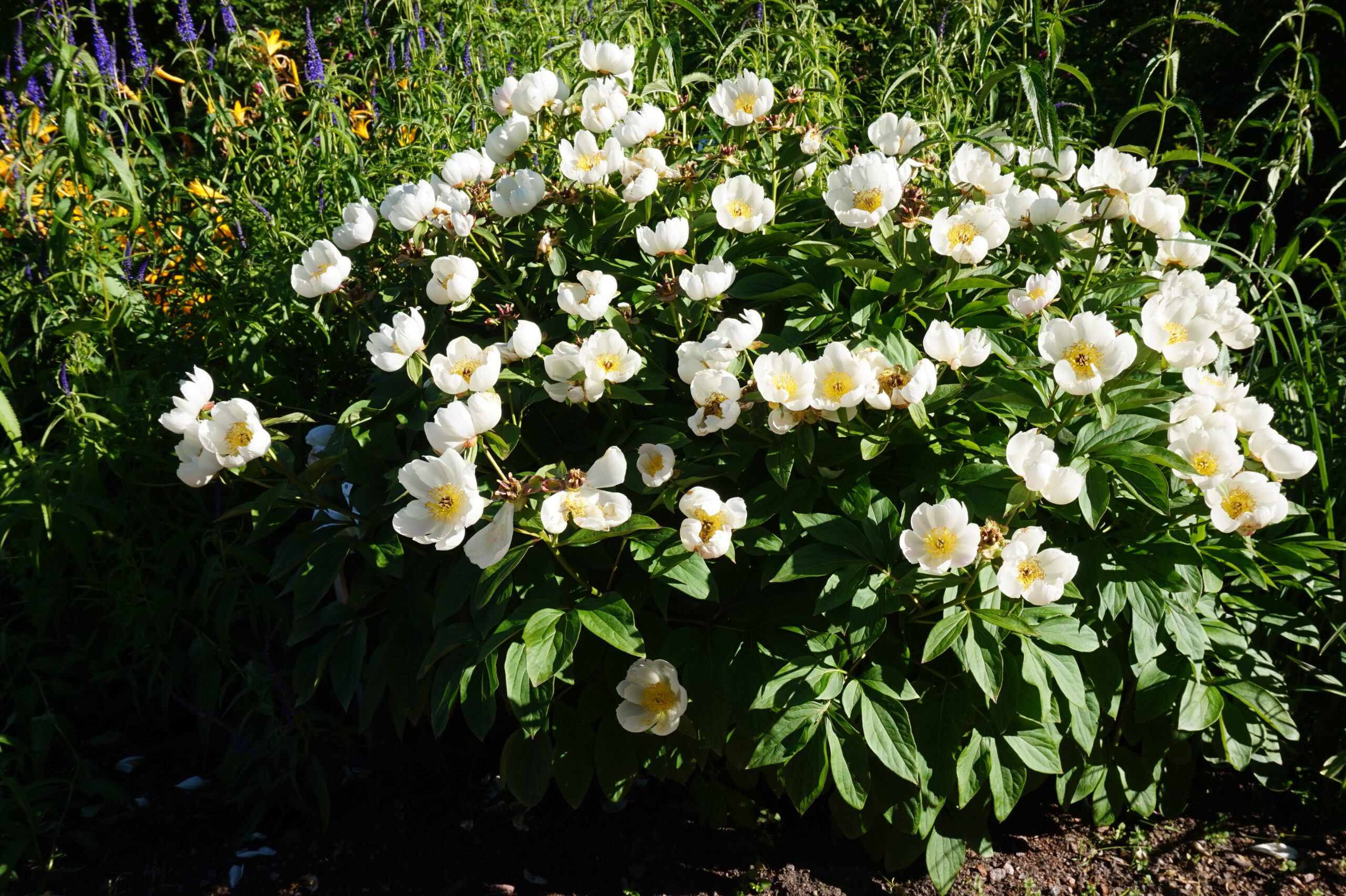
Paeonia lactiflora (Chinese peony) Photo by Mikael Lindholm
Two Centers of Diversity
Geographically, two centers of species diversity can be distinguished: the Himalayan region (11 species) and the Mediterranean region (14 species). In the Caucasus region, by contrast, only 2 species grow: the P. daurica peony group and P. tenuifolia (the fernleaf peony). I will look at the Himalayan region first.
The Himalayan Region
In evolutionary history, the Himalayan region has served as the birthplace of peonies. The divergence into tree and herbaceous peonies is estimated to have occurred around 28 million years ago. All tree peony species are diploid and are endemic to the Himalayas and nearby areas. The Himalayan region has served as a refuge area for peonies, where they were able to speciate and persist — that is, survive — through geological changes. Most peony species are younger than 10 million years. No fossils have been preserved. From the Himalayan region, tree peonies spread into nearby parts of Central and East Asia. Gradually, herbaceous peonies also spread eastward and further from East Asia to northwestern America, but also westward, to the Caucasus region, the Middle East, and Europe. This dispersal occurred gradually over a period from about 22 to 1.1 million years ago.
In the Himalayan region and Asia, herbaceous peonies are mostly diploid. There are 7 such diploid species. The Chinese peony (P. lactiflora), Veitch’s peony (P. veitchii), the Siberian peony (P. anomala), and the woodland peony (P. obovata) have wide distribution ranges. Other diploid species include the Himalayan peony (P. emodi), the Central Asian P. intermedia, and the Tibetan P. sterniana. These have more limited distributions. It is remarkable that only one species, the Chinese endemic P. mairei, is tetraploid. It arose from diploid ancestral species: Veitch’s peony (P. veitchii, maternal parent) and the woodland peony (P. obovata, paternal parent). P. mairei is therefore an allotetraploid, a hybrid of two species, whose genome can be denoted VVOO after its parent species. In Asia, peony speciation has thus occurred at the diploid level, with P. mairei as the sole exception. I will return to this later.
The Mediterranean Region
The Mediterranean region is the second center of species diversity for peonies. Notably, of the 14 species, 8 are tetraploid and 5 are diploid. P. clusii is both diploid and tetraploid. Subspecies (ssp.) rhodia, growing on the island of Rhodes is always diploid, whilst ssp. clusii, growing on Crete and Karpathos, can be either. The diploid species of the Mediterranean region have narrow distributions, growing either on islands, such as P. corsica, P. coriacea, and P. cambessedesii (Mallorcan peony), or along coastlines (P. algeriensis, P. broteri). The tetraploid species, by contrast, have wide distribution ranges.
Speciation in the Mediterranean region (and the Caucasus) has occurred through hybridization and polyploidization. Researchers speak of “reticulate evolution” because there are several diploid ancestral species, forming a network-like pattern instead of a simple branching tree. Many ancestral species have served (based on this study) as both maternal and paternal parents.
However, three key diploid ancestral species can be identified. These are the woodland peony (P. obovata, genome OO, served as both maternal and paternal parent), the Crimean peony (daurica ssp. daurica, genome DD, served as both maternal and paternal parent), and the fernleaf peony P. tenuifolia (genome TT, served only as paternal parent). The fourth ancestral species, the diploid Veitch’s peony (P. veitchii, genome VV) served as the maternal parent in the origin of the Chinese endemic P. mairei, as already mentioned above. In total (in the Zhou et al. study), 8 diploid taxa (species or subspecies) were identified as parents of the tetraploids (table 1). In addition to the taxa mentioned above, the diploids P. algeriensis, P. clusii ssp. rhodia, and P. corsica have all served as both maternal and paternal parents, while P. daurica ssp. coriifolia (P. caucasica) served only as the maternal parent.
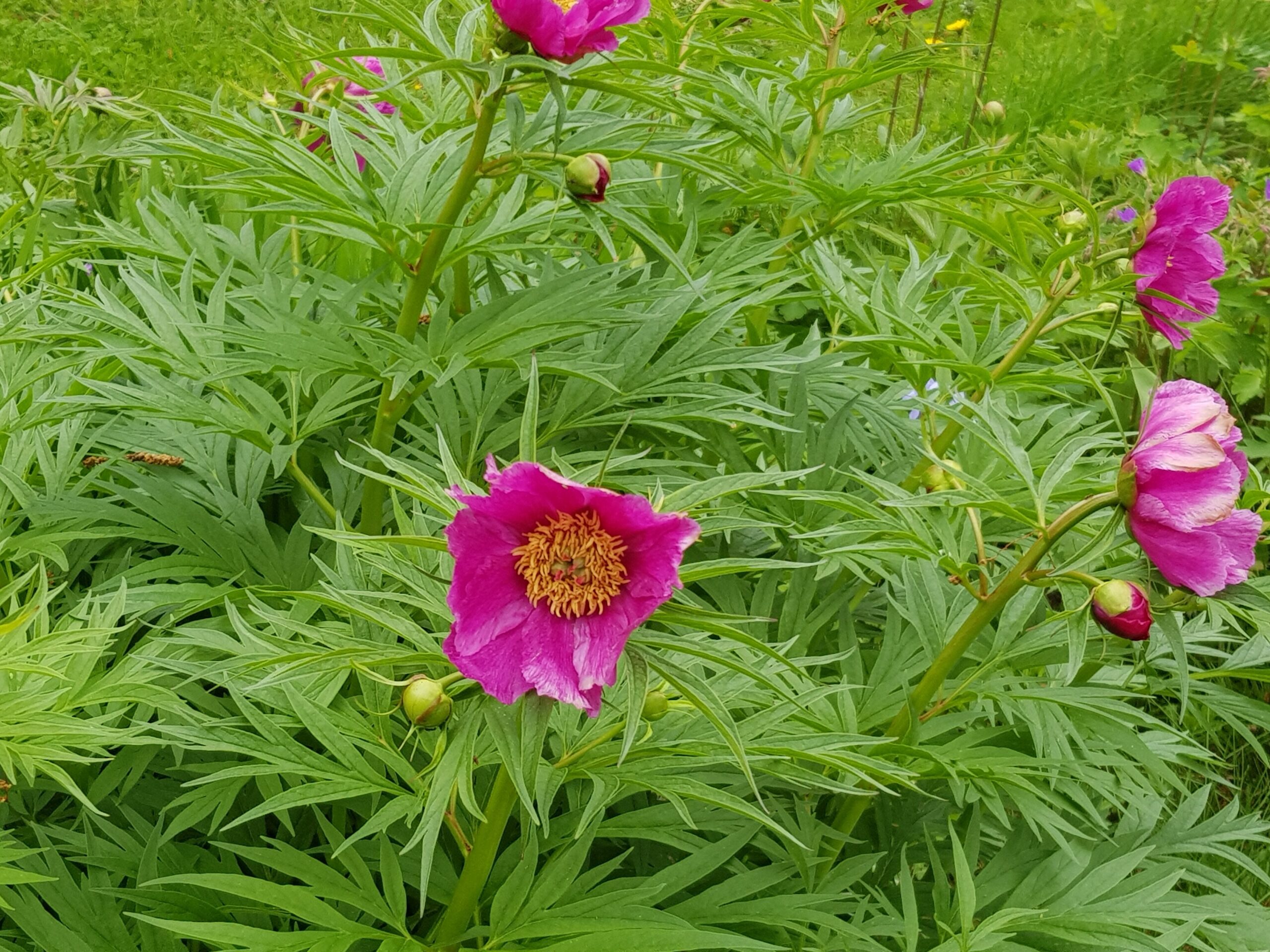
Paeonia veitchii (Veitch’s peony) Image by Aulikki Salmia
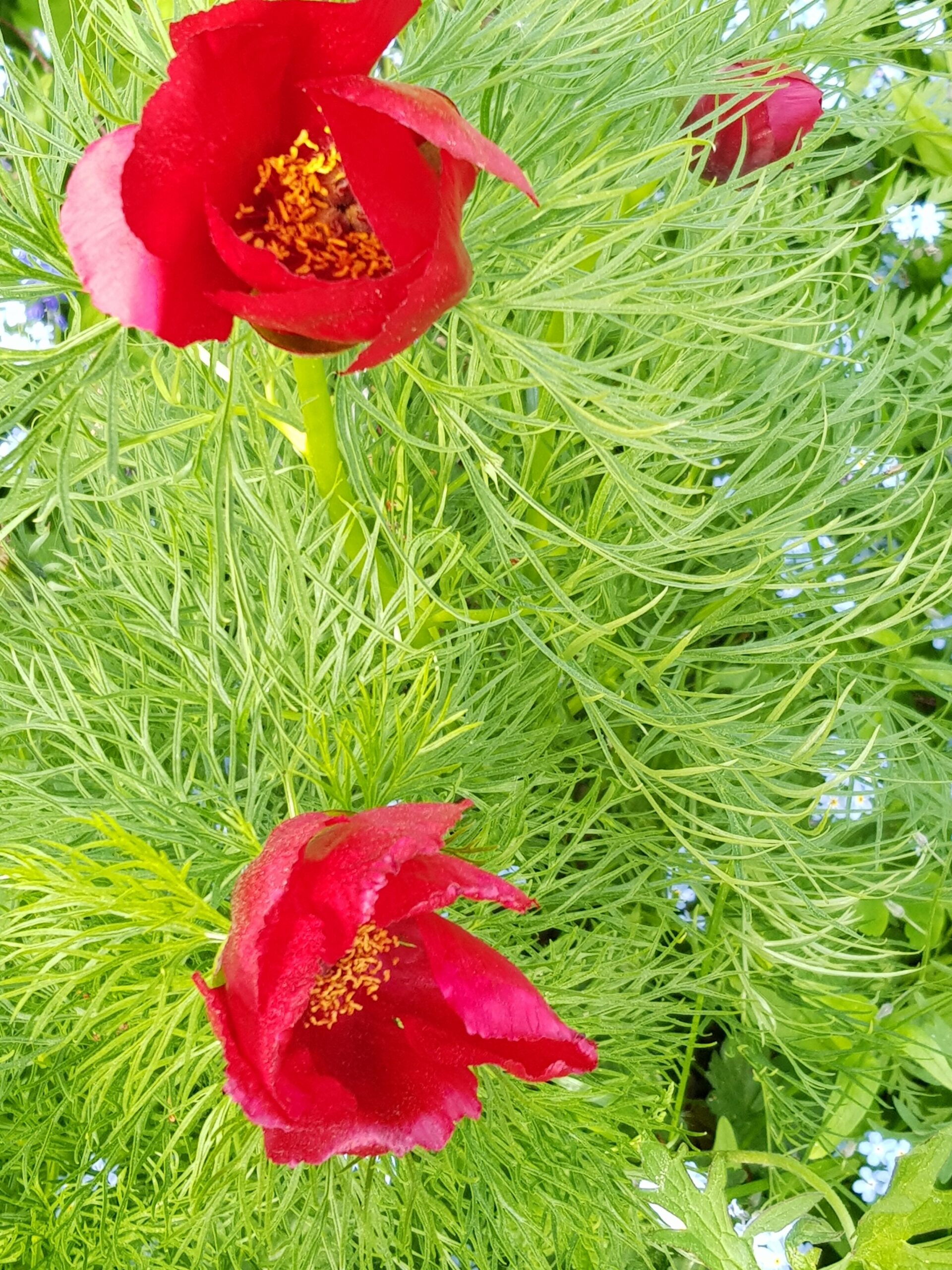
Paeonia tenuifolia (fernleaf peony) Image by Aulikki Salmia
Table 1: Diploid origins of the tetraploid Paeonia species (Source: Zhou et al.)(2)
| (Sub-)Species | Speciation | Maternal parent(s) (seed) | Paternal parent(s) (pollen) |
| P. arietina | HTD | P. obovata, P. tenuifolia | P. daurica, P. corsica |
| P. clusii ssp. clusii | HTD | P. clusii ssp. rhodia, P. tenuifolia | P. obovata |
| P. coriacea | HP | P. algeriensis | P. obovata |
| P. daurica ssp. daurica | HTD | P. daurica | P. obovata, P. corsica |
| P. daurica ssp. macrophylla | HTD | P. daurica | P. obovata, P. corsica |
| P. daurica ssp. wittmanniana | AT | P. daurica | |
| P. emodi | AT | P. emodi | |
| P. kesrouanensis | HP | P. corsica | P. obovata |
| P. mairei | HP | P. veitchii | P. obovata |
| P. mascula ssp. bodurii | HTD | P. daurica | P. obovata, P. clusii ssp. rhodia |
| P. mascula ssp. hellenica | HTD | P. daurica | P. obovata, P. clusii ssp. rhodia |
| P. mascula ssp. mascula | HTD | P. daurica, P. tenuifolia | P. obovata, P. corsica |
| P. mascula ssp. russoi | HTD | P. daurica, P. tenuifolia | P. obovata, P. clusii ssp. rhodia |
| P. obovata ssp. obovata | AT | P. obovata | |
| P. obovata ssp. willmottiae | AT | P. obovata | |
| P. officinalis ssp. banatica | HP | P. obovata, P. tenuifolia | |
| P. officinalis ssp. huthii | HP | P. obovata, P. tenuifolia | |
| P. officinalis ssp. microcarpa | HP | P. obovata, P. tenuifolia | |
| P. officinalis ssp. officinalis | HP | P. obovata, P. tenuifolia | |
| P. parnassica | HTD | P. obovata, P. tenuifolia | P. algeriensis |
| P. peregrina | HP | P. daurica, P. tenuifolia | |
| P. saueri | HTD | P. daurica, P. tenuifolia | P. algeriensis |
| AT = autotetraploid (diploid AA becoming tetraploid AAAA) HP = hybridization and polyploidization (diploids AA and BB hybridizing into AB and becoming tetraploid ABAB) HTD = homoploid tetraploid derivative (two different tetraploids hybridizing) | |||
P. daurica
P. daurica and its subspecies present a taxonomic naming problem for all of us. Hong includes several subspecies within it. Three of the subspecies are tetraploid: ssp. macrophylla (allotetraploid, daurica × obovata / corsica), ssp. wittmanniana (Wittmann’s peony, autotetraploid, genome from daurica only). The subspecies tomentosa, which grows in Iran, is also tetraploid, but this study did not determine its parentage. By contrast, ssp. mlokosewitschii (“Molly the Witch”), ssp. coriifolia (P. caucasica, the Caucasian peony), and ssp. daurica (Crimean peony) are diploid. However, an allotetraploid ssp. daurica has been found in Turkey, whose diploid parents are daurica × obovata / corsica.
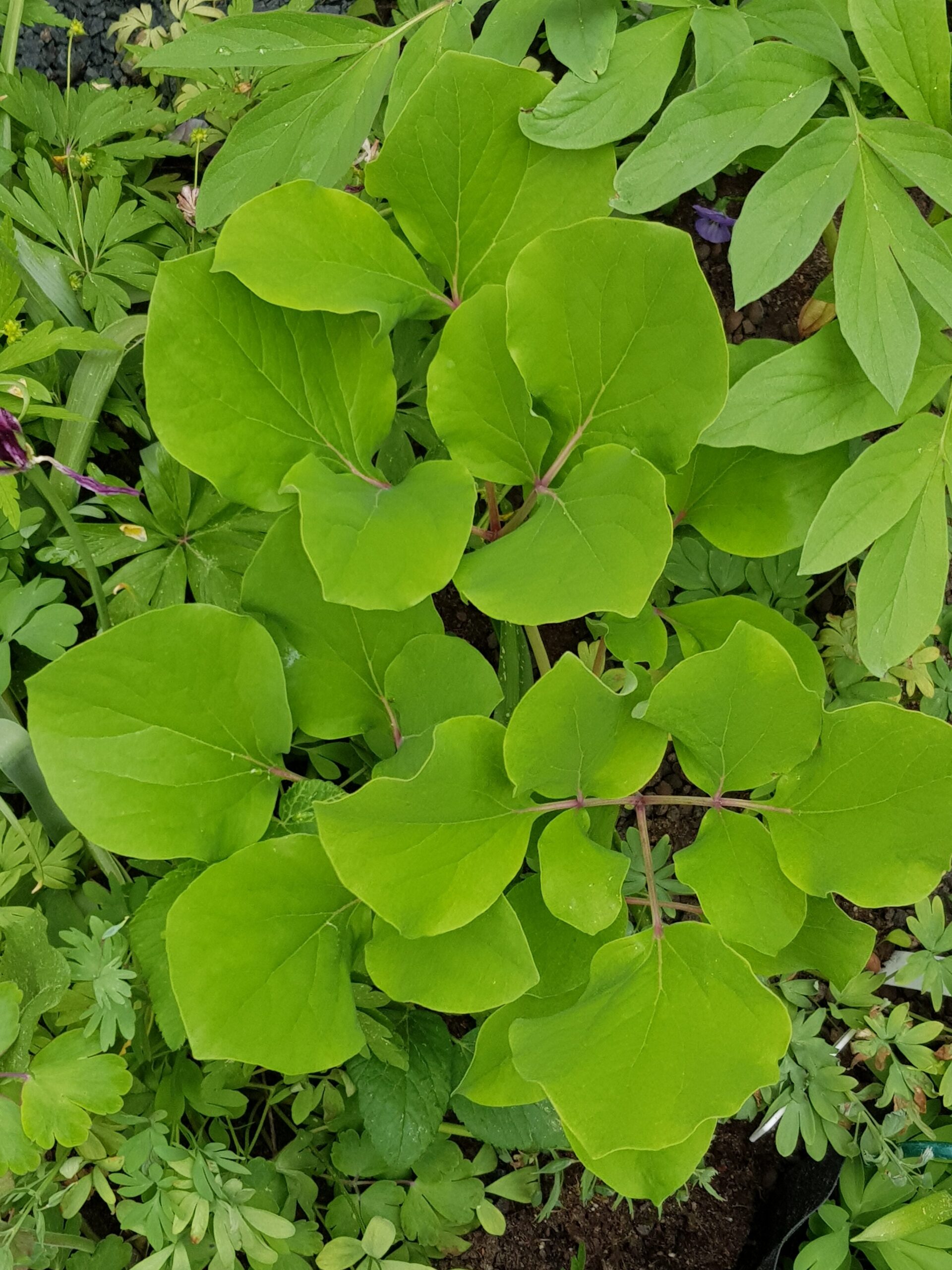
Paeonia daurica ssp. daurica (Crimean peony) Image by Aulikki Salmia

P. daurica ssp. coriifolia, (syn. P. caucasica) (Caucasian peony) Image by Mikael Lindholm
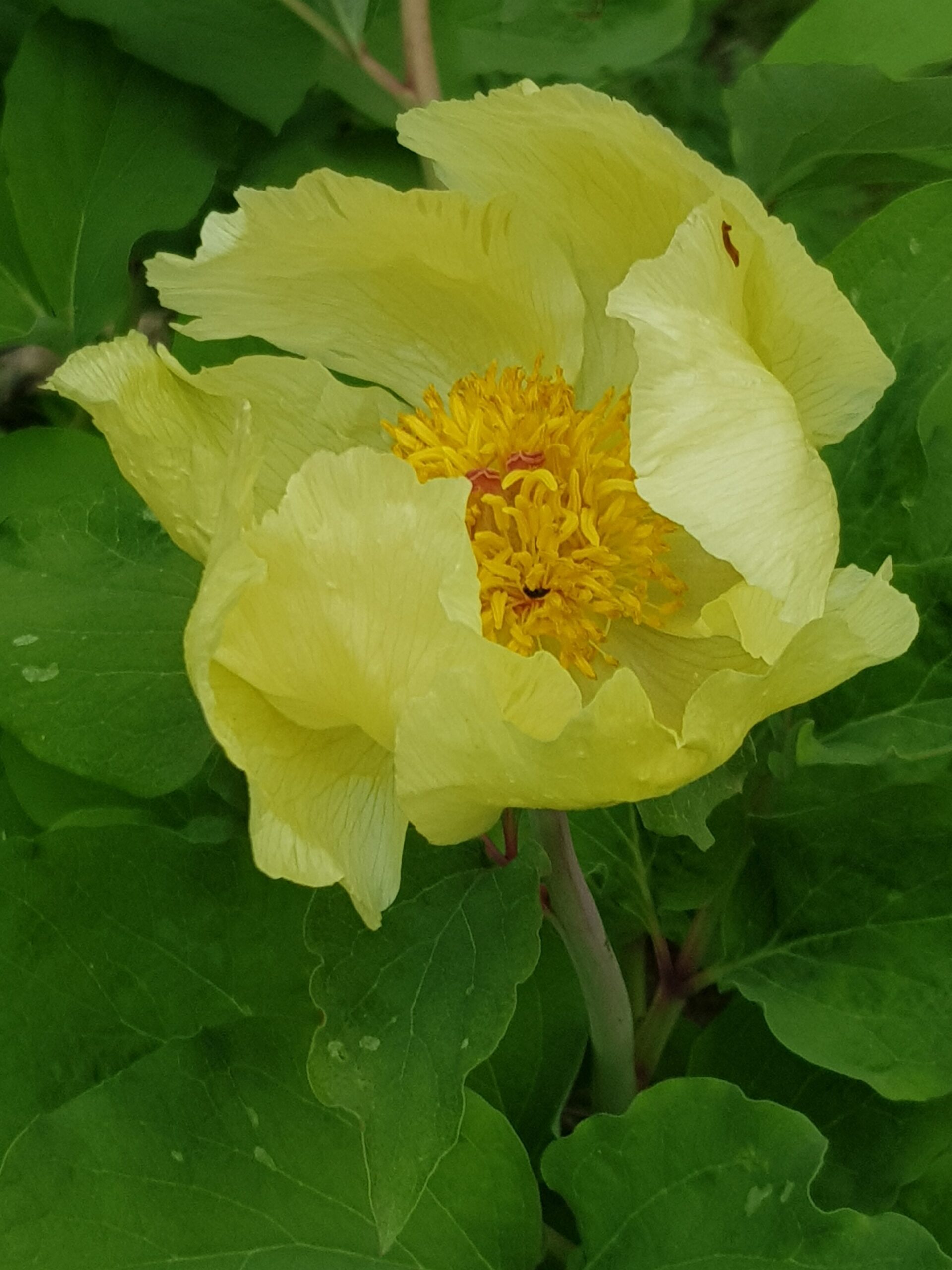
Paeonia mlokosewitschii (“Molly the Witch”) Image by Aulikki Salmia
Further Examples
The Balkan peony (P. peregrina) has the genome DDTT — that is, its parents are daurica and tenuifolia. The common peony (P. officinalis) has the genome OOTT, despite it arising from two unexpected species. When Ferguson and Sang(3) investigated the origin of this species using gene markers, they concluded that it arose as a hybrid of two allotetraploid species, P. peregrina (DDTT) and P. arietina (OOTT). In P. officinalis however, only the genomes O (obovata) and T (tenuifolia) remain, the daurica genome has been lost most likely because of backcrossing to arietina.
For the various subspecies of the male peony (P. mascula), the maternal parent has been daurica (and sometimes tenuifolia), but there are several possible paternal parents — for some subspecies it has been corsica, for others obovata, and for others clusii ssp. rhodia. In the origin of P. arietina (the Ram’s horn peony) the maternal parents were obovata and tenuifolia, but here as well several paternal parents: daurica and corsica.
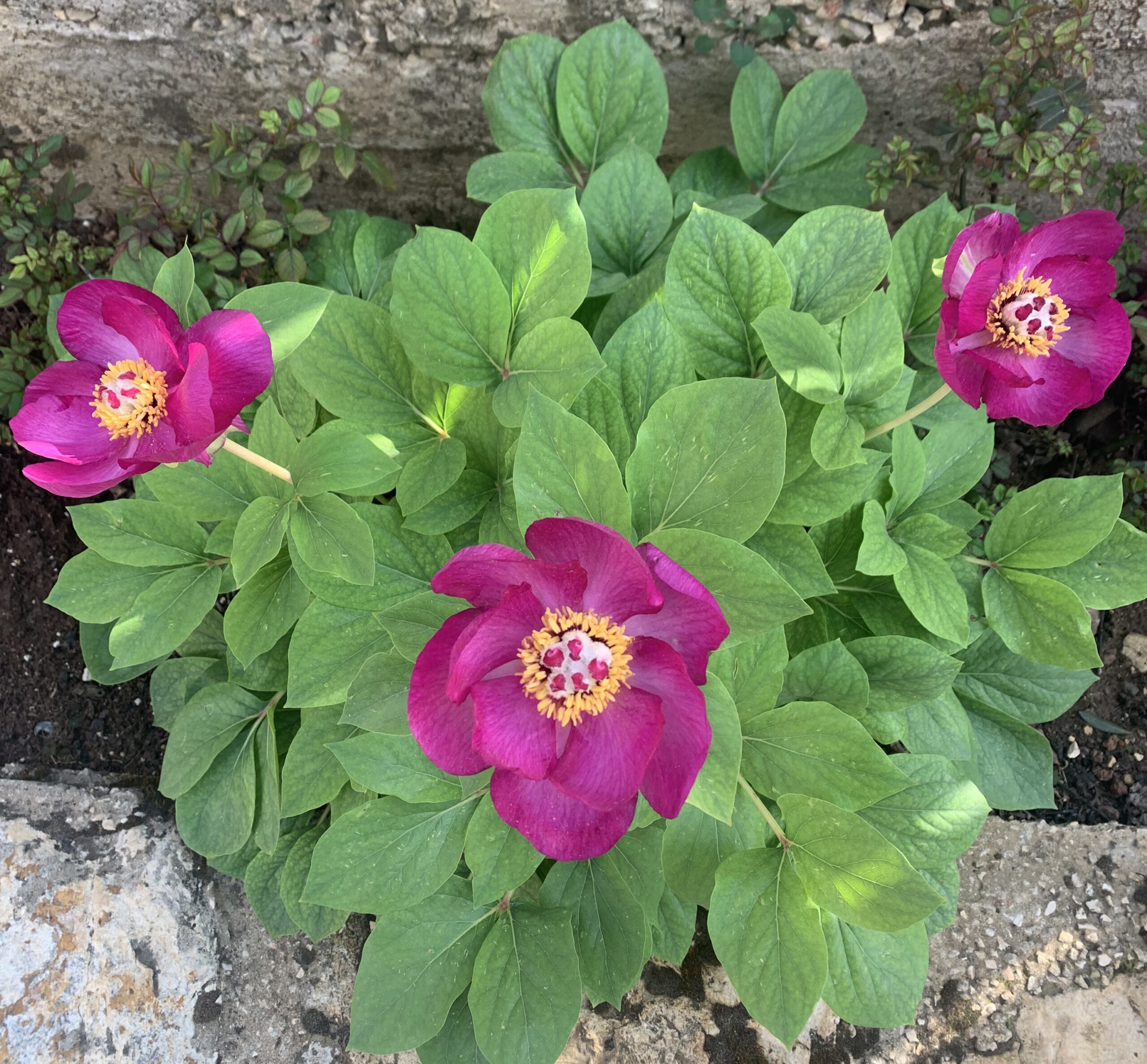
Paeonia mascula (male peony) Image by Aziz Tafish
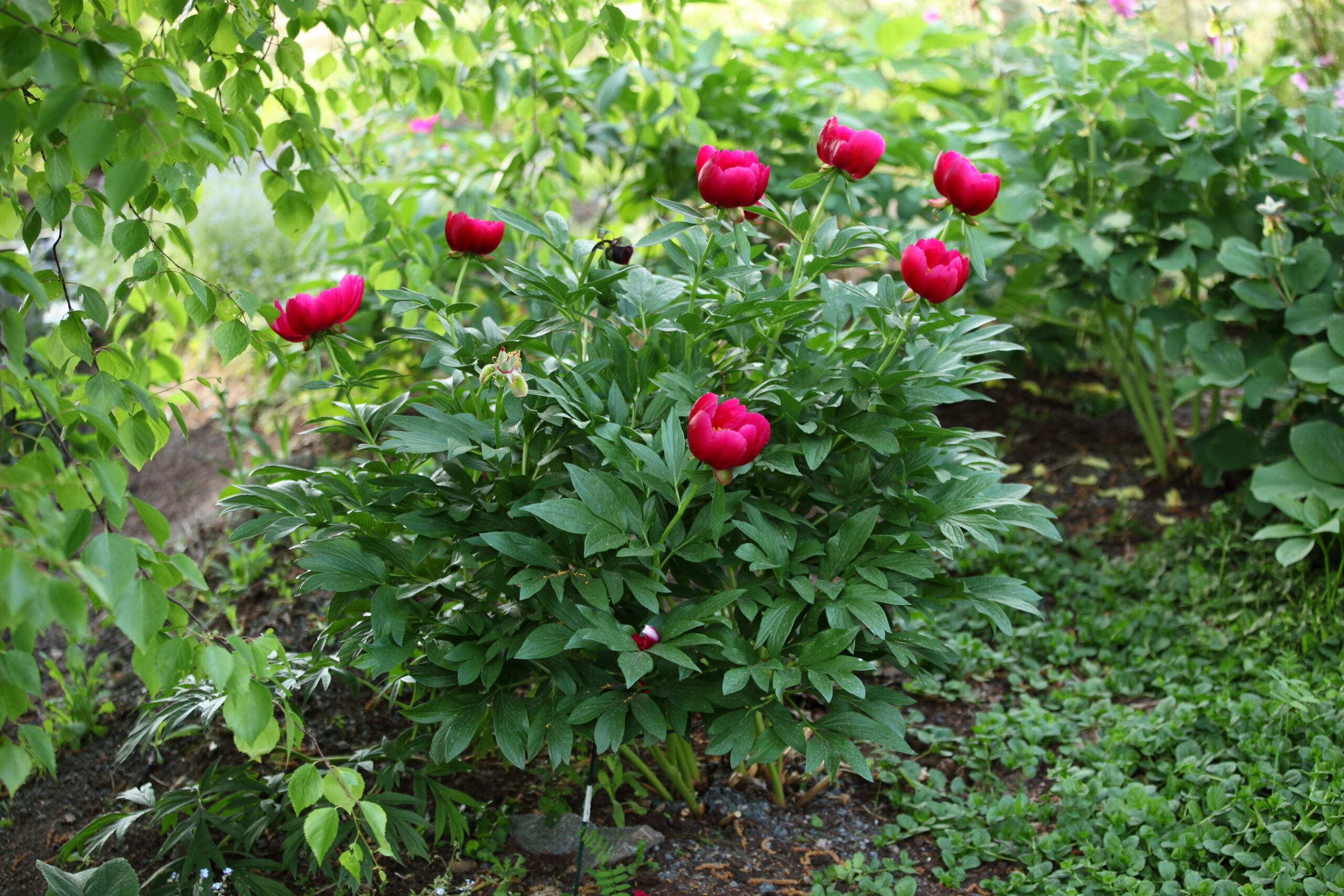
Paeonia peregrina (Balkan peony) Image by Marja Alho
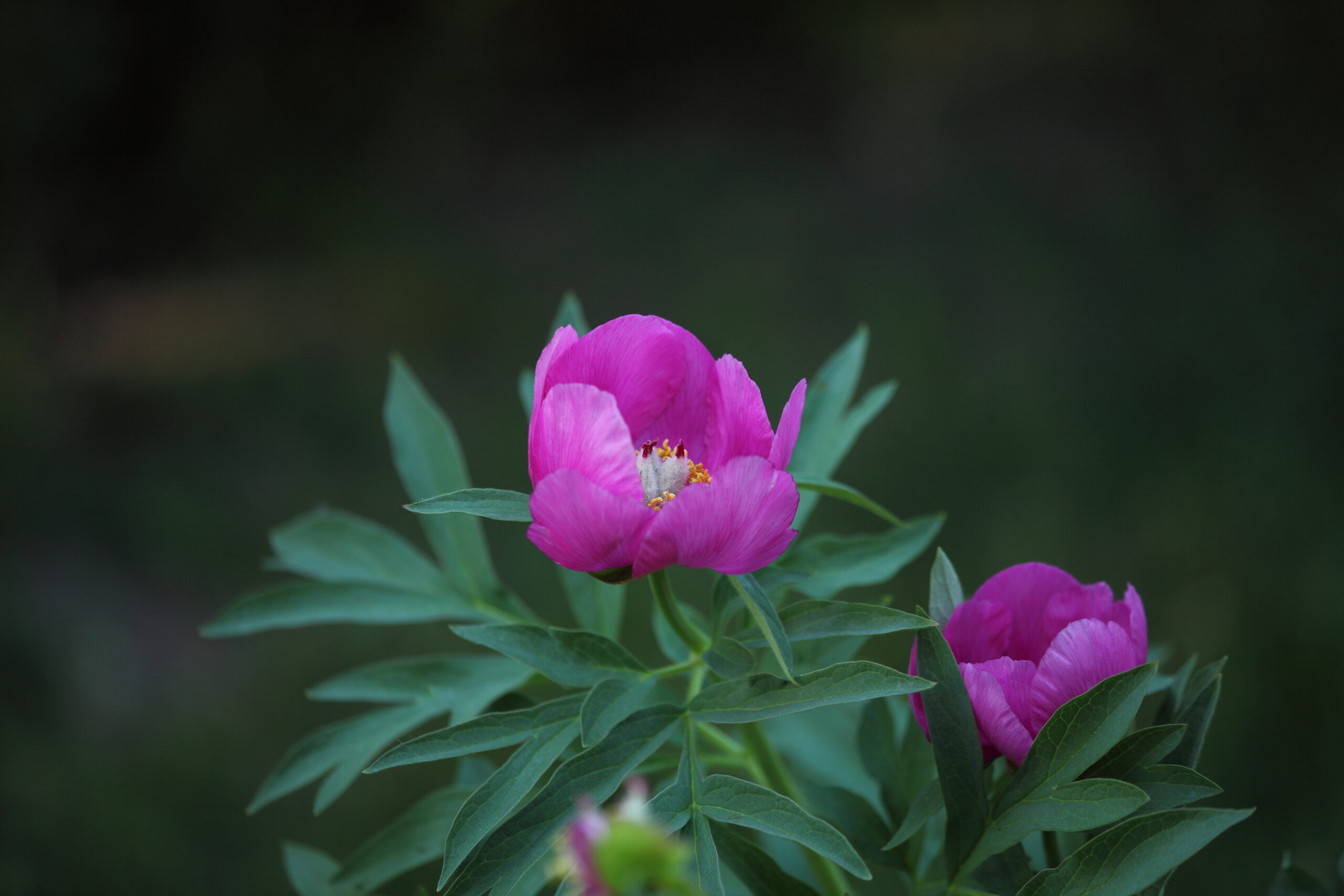
Paeonia arietina (Ram’s horn peony) Image by Marja Alho
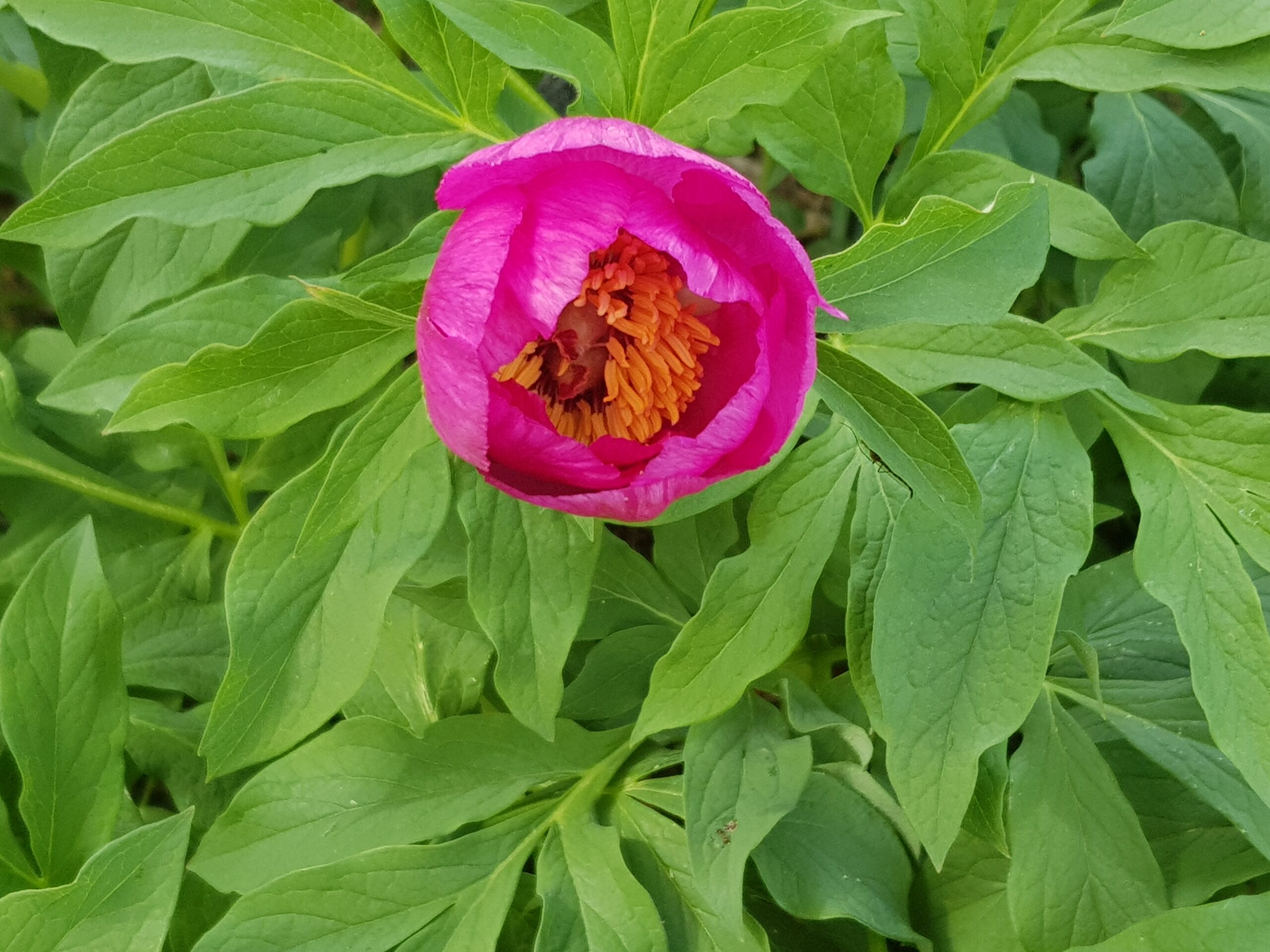
Paeonia officinalis (common peony) Image by Aulikki Salmia
The woodland peony, P. obovata ssp. obovata, is diploid, but an autotetraploid population of it does exist nonetheless. By contrast, the other subspecies of obovata, the Chinese endemic ssp. willmottiae, is autotetraploid. The Himalayan peony P. emodi is in principle diploid, but tetraploid populations of it are also known from southern Tibet. The matter of a species’ or subspecies’ established ploidy level, then, is not simple at all.
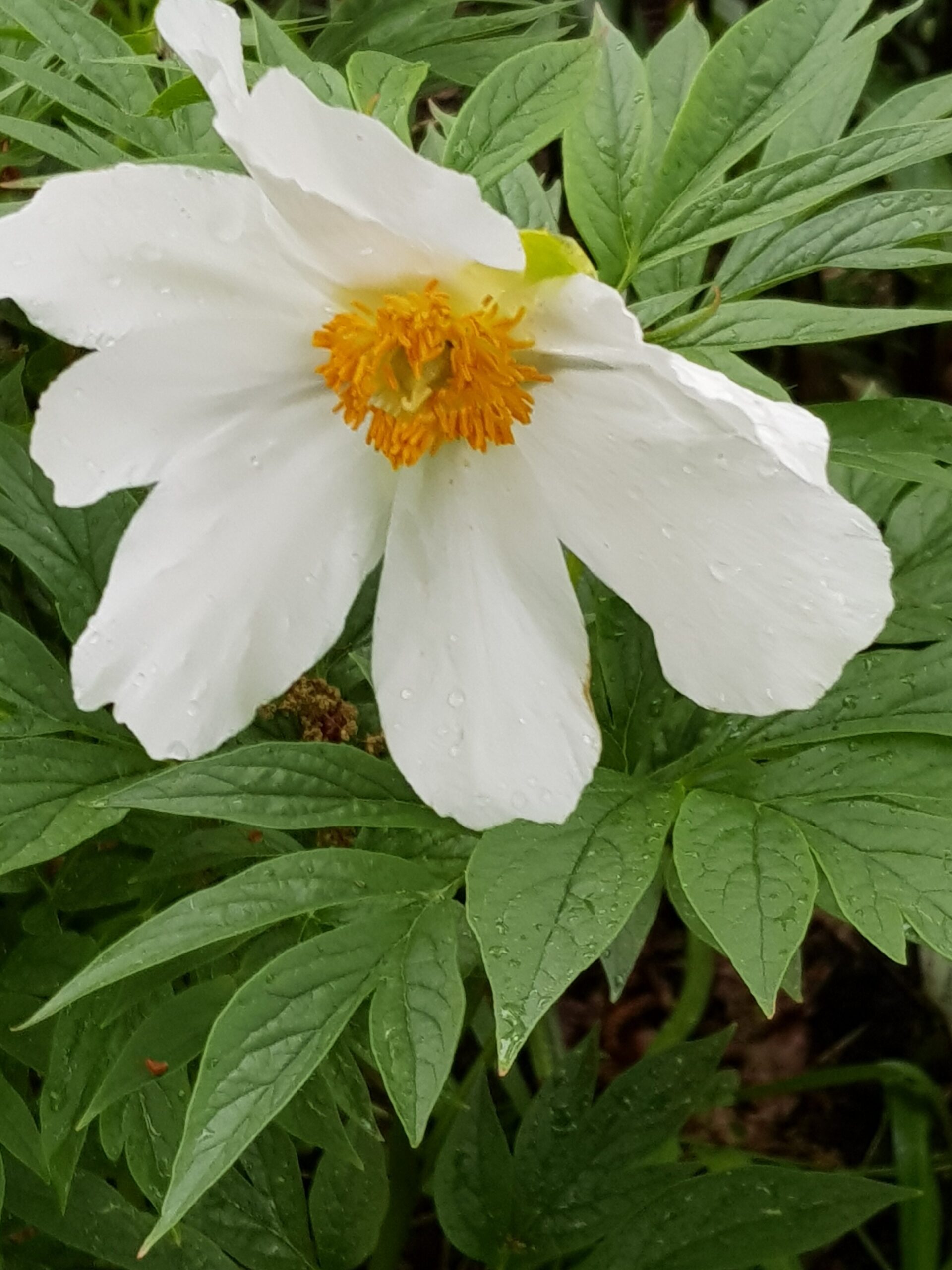
Paeonia emodi (Himalayan peony) Image by Aulikki Salmia
Questions
1. How can P. obovata be connected to the peonies of the Mediterranean region?
It is not easy to understand how a Himalayan and East Asian species, the woodland peony (P. obovata), became entangled in the origin of the allotetraploid peonies of the Mediterranean region. It is thought that this species, like P. tenuifolia, also once grew in Europe. During the ice ages of the Pliocene and Pleistocene periods (5.3–2.6 million years ago / 2.6 million–10,000 years ago), the advance of the ice forced plant species — peonies and many others — southwards to refuge in the Mediterranean region. In these so-called refuge areas, diploid peony species more easily encountered one another, and peony hybridization and polyploidization took place. The resulting hybrid lineages — that is, the tetraploid species — survived because they were more vigorous and better adapted to their environment. The ice ages thus acted as the initial trigger and driving force for speciation in the Mediterranean region.
The tetraploid peonies of the Mediterranean region have wide distribution ranges. Many of the diploid ancestral species, by contrast, disappeared or had their ranges contracted. An exception is P. tenuifolia, which now has a wide distribution from Eastern Europe to the Caucasus. The European diploid peony species grow in restricted areas, such as islands. Nor is the woodland peony P. obovata the only Asian plant species that disappeared from the European flora during the Pliocene. There are other examples too, such as hickory (Carya), sweetgum (Liquidambar), tulip tree (Liriodendron), tupelo (Nyssa), and wingnut (Pterocarya).
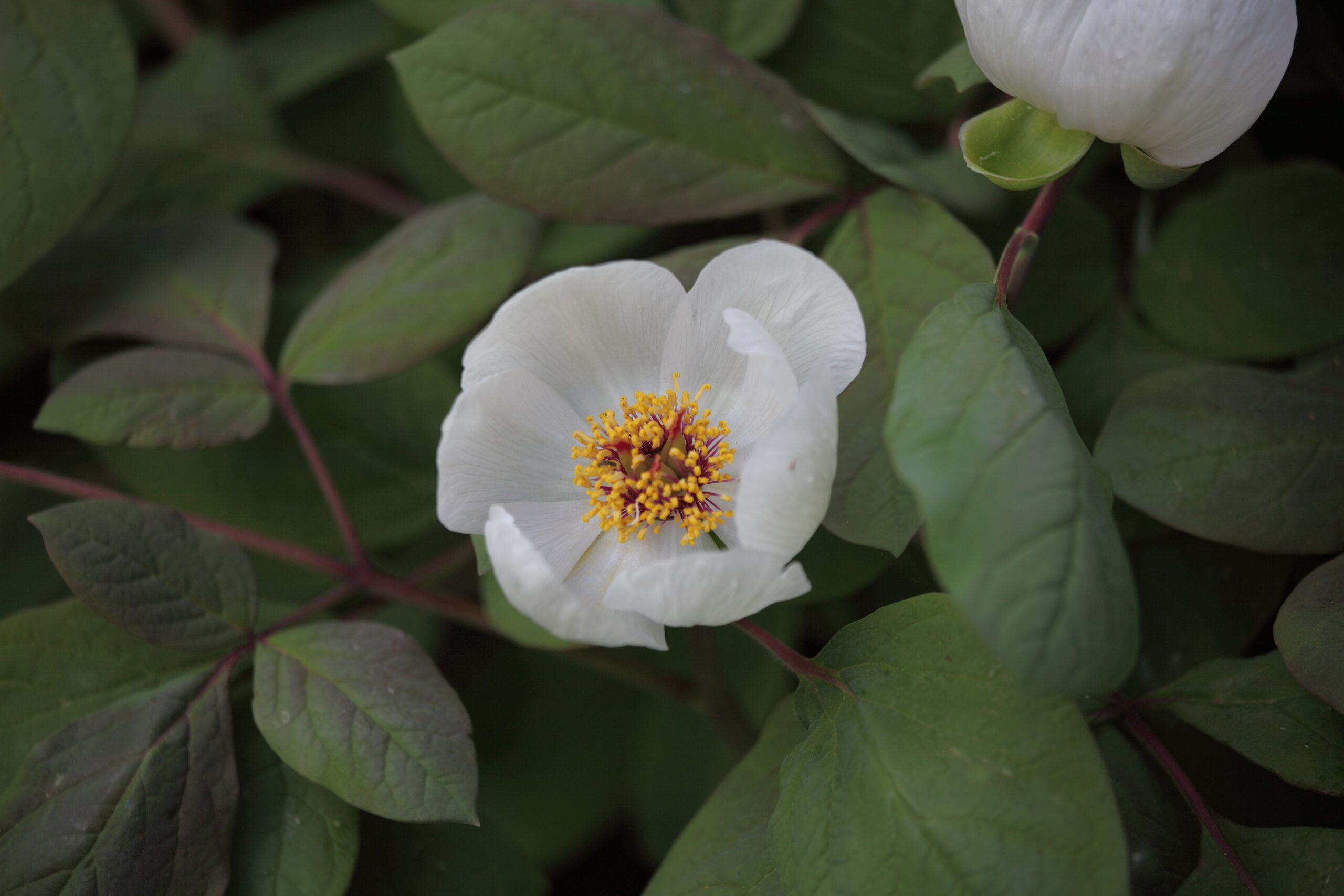
P. obovata ssp. willmottiae (woodland peony) Image by Marja Alho
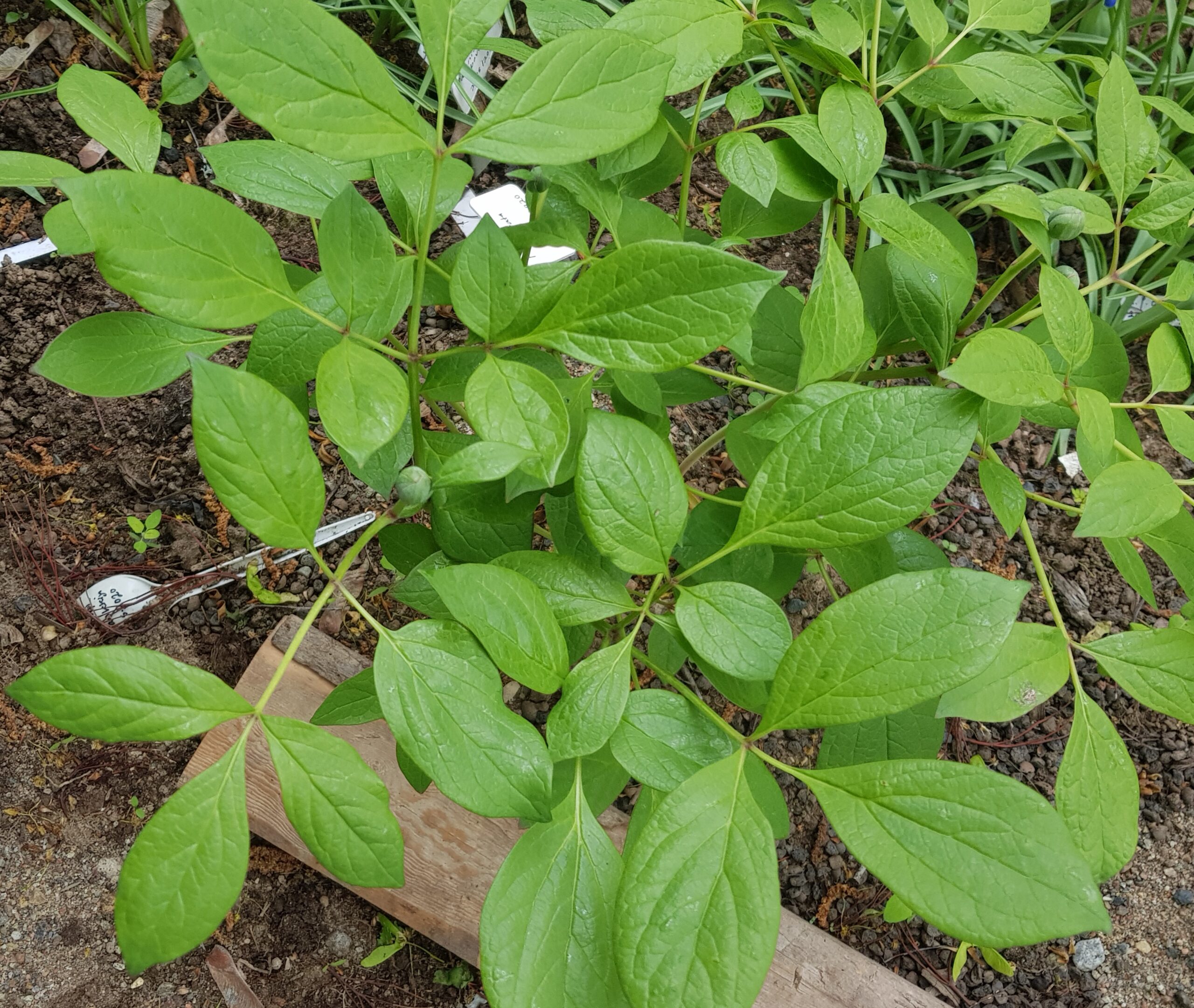
Paeonia obovata (woodland peony) Image by Aulikki Salmia
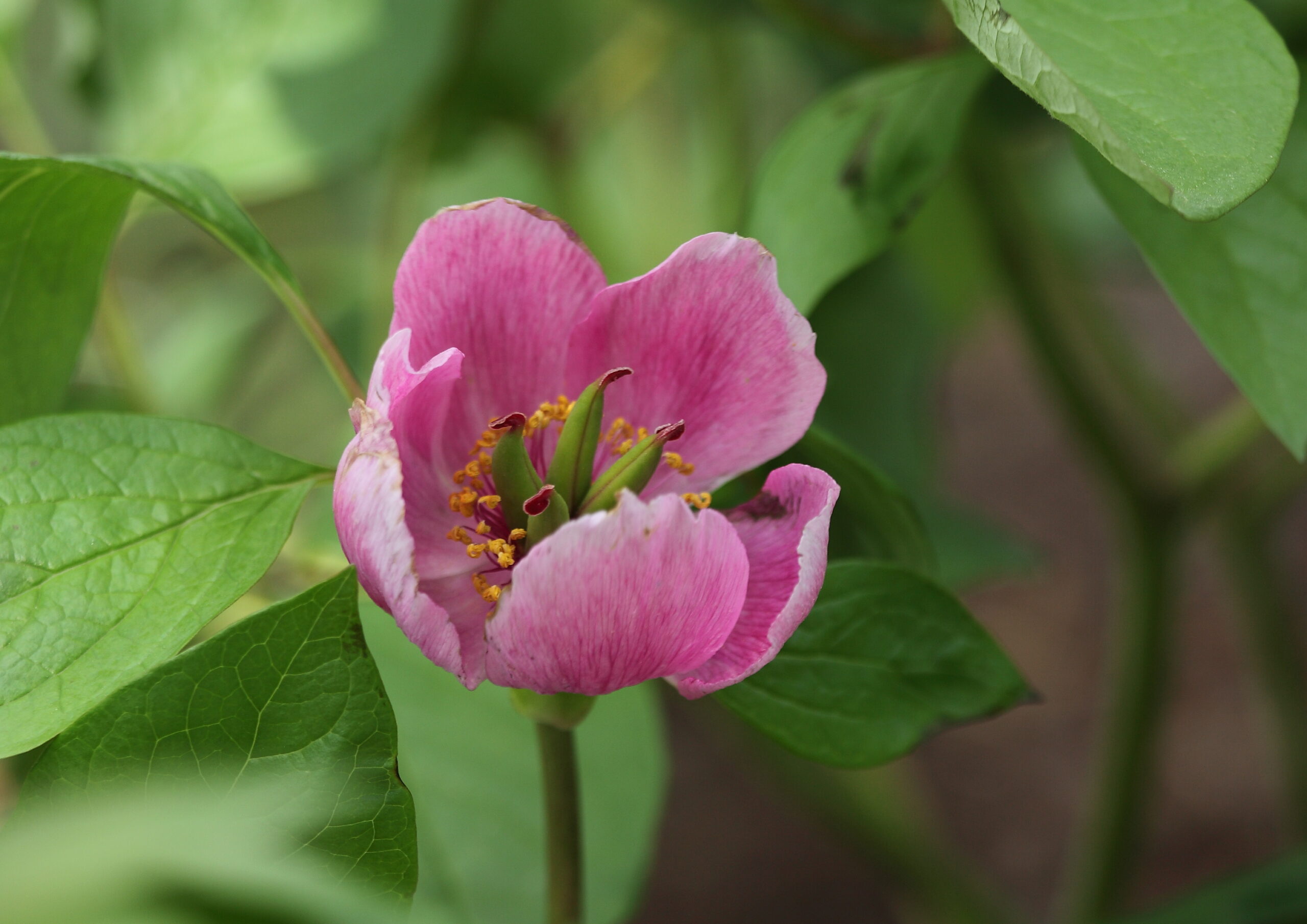
Paeonia obovata (woodland peony) Image by Marja Alho
2. Why is there only one tetraploid peony in Asia, P. mairei?
The situation regarding the ice ages was different in East Asia. The ice sheet was not as extensive, and the glaciation was not as severe as in Europe. In addition, the terrain and topography are different. Simply put, in East Asia plants were able to move further south during the ice ages and then move back north again as the ice melted. Speciation in Central and East Asia has occurred at the diploid level, and, as already mentioned, many diploid herbaceous peony species still have a wide distribution in Asia.
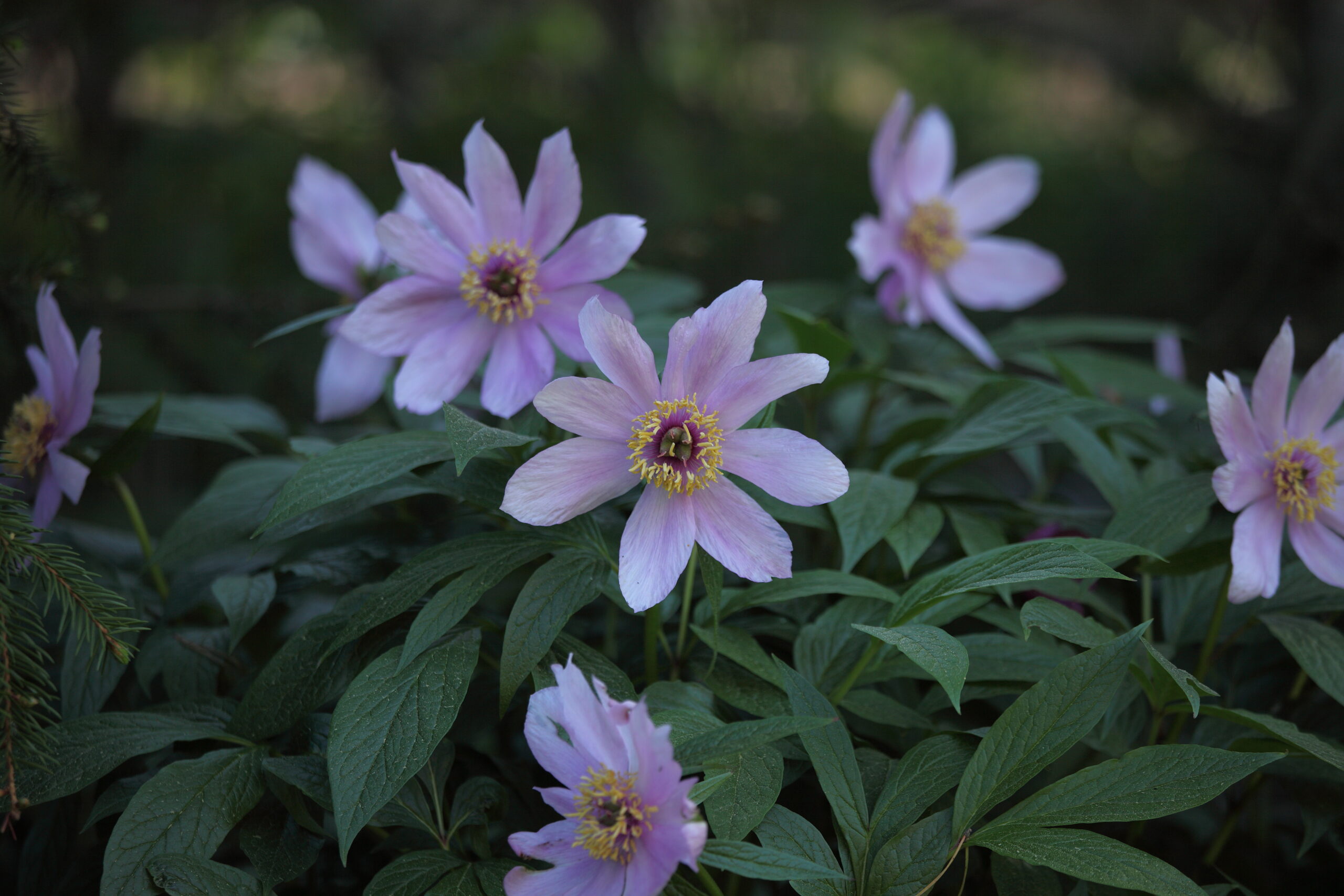
Paeonia mairei, image by Marja Alho
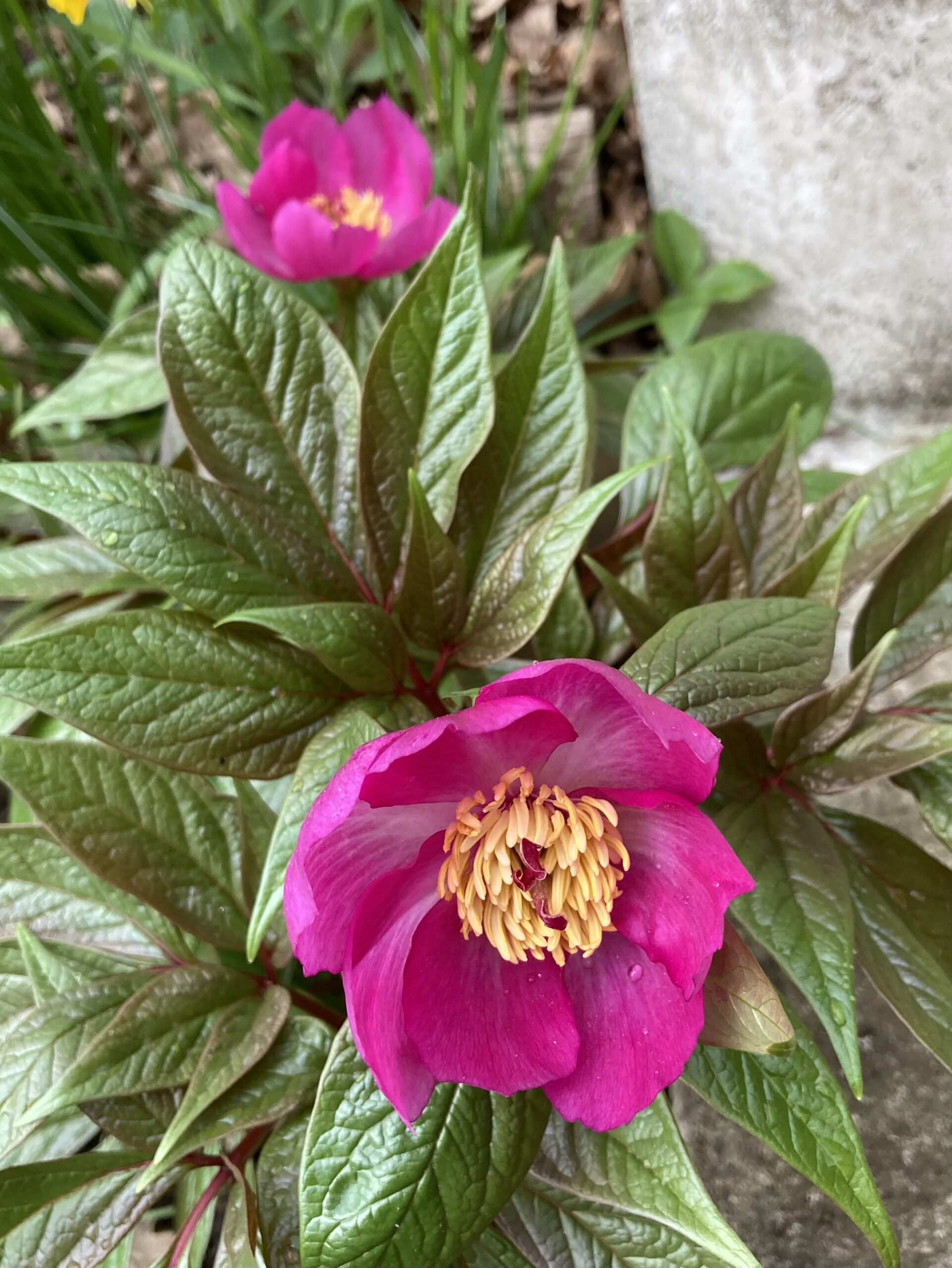
Paeonia mairei, Image by Marta Cernicka
Conclusion
Back in 1999 — 25 years ago — I had already written “reticulate evolution” in my notes next to the subject of peonies. Sang et al. published several articles on peony evolution between 1995 and 2001, which I had read. I returned to this term, for example, when I wrote an article on the Siberian peony, P. anomala, for the Finnish journal Lutukka in 2011. When the key sources for this current article appeared,(2) (4) I again tried to tackle the subject of “the reticulate evolution of peonies.” But I couldn’t put together a summary of the topic then, either for myself or for the rest of us. But the right time was 2024, when the article was first written in Finnish. This revised English version was written in 2026 with the help of Koen Hurtekant to whom I’m very grateful.
Acknowledgments: Photos were sent to me by Marja Alho, Aziz Tafish, Dick Westland, Marta Černická, and Mikael Lindholm.
- Pan J., Zhang D. & T. Sang. “Molecular phylogenetic evidence for the origin of a diploid hybrid of Paeonia.” In: American Journal of Botany, 2007, vol 94, pp 400–408.[back to text]
- Zhou S.L., Xu C., Yu V., Wu P., Cheng T. & D.Y. Hong. “Out of the Pan-Himalaya: Evolutionary history of the Paeoniaceae revealed by phylogenomics.” In: Journal of Systematics and Evolution, 2021, vol 59, pp 1170–1182.[back to text][back to text][back to text]
- Ferguson D & Sang T. “Speciation through homoploid hybridization between allotetraploids in peonies (Paeonia).” In: Proceedings of the National Academy of Sciences, 2001, vol 98, pp. 3915–3919.[back to text]
- Hong D.Y. “Peonies of the world. Part III. Phylogeny and Evolution.” 2021: Royal Botanic Gardens: Kew.[back to text]