This is a video from Down Under by the ABC television series Gardening Australia. Ron Boekel, an Australian peony grower, tells about his plants, and he does it with passion.
You can view the original video and read the accompanying article here.
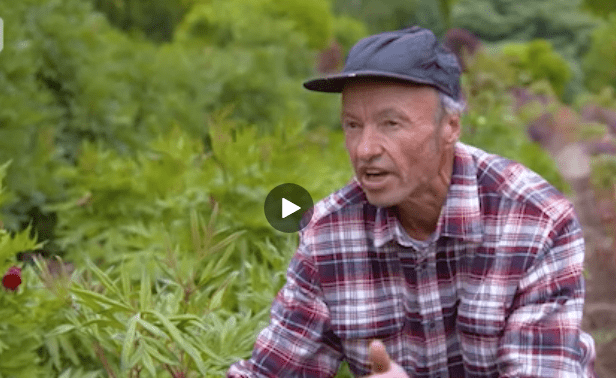
This is a video from Down Under by the ABC television series Gardening Australia. Ron Boekel, an Australian peony grower, tells about his plants, and he does it with passion.
You can view the original video and read the accompanying article here.
Fun it may be to always discuss those new advanced hybrids, but they tend to come at a price....
.jpg)
 Our hybridizing program, 2026 2026, August 24th
 A dike of a flower: NOP Fleur Espel (NL) 2026, August 20th
 Long term storage of peony pollen 2026, May 6th
 Paeonia species of Georgia 2026, January 30th
 The best peony germinating substrate: part 2 2026, January 28th
 The Peony in China: A Few Journeys 2026, January 27th
 Peony Hybridizers: Rat Thierry 2026, January 22nd
 Peony Hybridizers: Skakodub Anatoliy – Askarova Larissa 2026, January 21st
 Peony Hybridizers: Lukoyanov Yuri 2026, January 21st
 Peony Hybridizers: Vynogradska Elina 2026, January 20th
 Peony Hybridizers: Kļaviņa Ritma 2026, January 19th
 Oriental Gold: Legend, Hypothesis, and the Scientific Mystery of a Peony 2026, January 19th
 Peonies in China and the Netherlands 2026, January 19th
 Paeonia x kayae 2026, January 19th
 Peony Hybridizers: Hurtekant Koen 2026, January 16th
 Peony Hybridizers: Anokhin Petr 2026, January 15th
 Peony Hybridizers: Khorosh Igor 2026, January 14th
 Peony Hybridizers: Kaya Erdal 2026, January 13th
 Peony Hybridizers: Otto-Zagorska Ilga 2026, January 12th
 Peony Hybridizers: Gorobets Vasyl 2026, January 8th
 Prairie Peonies HortAlaska Peonies
2026, The Peony Society
Double - Pink - Early. Tall. Moderate fragrance. Very large. Light rose-pink of the dull-opaque quality seen in pink chrysanthemums; broad, smooth guard petals; center incurved and silvered with light grayish pink. Very free-flowering; stems lax and loose. Foliage light green. One of the most popular of all peonies. Its stems are bad for garden use, but it is most effective when cut. M.
From the Dutch peony testing series in 1998((footnote: Kortmann, J. "Paeonia: pioen." In: Dendroflora, 1998, vol 35, pp 58-95.)), own translation:
'Monsieur Jules Elie' (Mister Jules Elie) (Crousse, France, 1888). Flowers pink, on the outside paler, double, early; leaves mid large, regular of shape, pale green; height 90 cm, stems good to mediocre (usually somewhat too thin); number of stems mediocre to good. This cultivar which is by now 100 years old is imporant as a cutflower. In 1996 this cultivar took seventh place at the Aalsmeer auction, despite its only mediocre stem strength. This cultivar has also shown some susceptibility towards botrytis, although it should be noted that this disease appears less frequently on heavier soils. The plant can also be infested with root knot nematodes. This cultivar cannot be recommended as a garden plant.
Double - White - Early. Notable fragrance. Large, cupped, white guards and a moderately full center of light canary-yellow deepening to a pale green at the base of the petals; very floriferous; stems erect and strong. Excellent foliage. The general impression is a rounded flattish globe-like flower. Dependable and well regarded for its profuse production of medium-sized blooms, and its excellent garden habit. Mrs. D. Y. Dunn, Lexington, Kentucky, says the plant sprawls and blooms later than midseason. M.
From the Dutch peony testing series in 1998((footnote: Kortmann, J. "Paeonia: pioen." In: Dendroflora, 1998, vol 35, pp 58-95.)) , own translation:
Duchesse de Nemours (Duchess of Nemours) (Calot, 1856). Flowers white with sulphur yellow to greenish glow, double, slight fragrance, mid-early; leaves rather small, pale green, height 80 cm. Stems good to very sturdy, number of stems average to good. This old cultivar is a mainstay in the peony assortment: the bush habit is good and the flowers keep well on water. A technical difficulty is that this plant makes 'necks', which makes this cultivar hard to propagate. Furthermore Duchesse de Nemours is healthy, which makes it recommendable for both cutflowers and garden. N.B. The American Peony Society mentions another cultivar with the same name (Guérin, 1840) with violet pink, double flowers, this variety is no longer being grown.
Double - Pink. Sweetly scented. This variety is the result of a cross between Bunker Hill and Sarah Bernhardt. Strong stalks, large solferino-rose flowers.
From the Dutch peony testing series in 1998((footnote: Kortmann, J. "Paeonia: pioen." In: Dendroflora, 1998, vol 35, pp 58-95.)), own translation:
'Alexander Fleming' (synonym: Dr. Alexander Fleming) (Blonk, Netherlands, before 1950) (P. 'Bunker Hill' x P. 'Sarah Bernhardt'). Flowers deep salmon pink, double, weak sweet fragrance, mid early; leaves pale brown with green base; height 100 cm; flower and stem thick and sturdy; number of stems reasonable to good. This cross is one of the best in the assortment. As a cutflower it takes an important place mostly thanks to the sturdiness of the stems. Vase life is some 5 to 8 days, which is good. Unfortunately it appears to be somewhat susceptible to botrytis.
Double type; large; midseason. Very bright crimson with very little blue in it, outer petals large and waved, central petals incurved and notched; not fragrant. Tall; free-flowering; strong stems. Good foliage. Of good clear color, excellent form, and reliable blooming habit. Considered by many to be the best red variety. Good for both cutting and garden decoration.
From the Dutch peony testing series in 1998((footnote: Kortmann, J. "Paeonia: pioen." In: Dendroflora, 1998, vol 35, pp 58-95.)), own translation:
'Karl Rosenfield' (Rosenfield, USA, 1908) Flowers dark carmine red with a blue purplish hue, double, mid early; leaves dark green, upperside of stems slightly brownred; height 80 cm; stems sturdy; number of stems good to very good. This much grown peony belonged to one of the most sold peonies at the Aalsmeer flower auction in 1996. Vase life is long, some 10-17 days. The flowers fade somewhat towards blue. The sturdy habitus makes this plant fit for the garden. It should be noted however, that this cultivar shows some susceptibility towards botrytis, but the good characteristics predominate so that we can review it positively.
Double type; very large; late. Dark rose-pink, edged a trifle lighter, with inconspicuous red edges on a few central petals, and an occasional golden yellow anther in the collar; agreeably fragrant, but not especially so. Medium height; floriferous; strong stems. Good foliage. Very popular, and considered one of the best exhibition flowers. It is somewhat undependable in blooming and of no special value for garden decoration. "A very reliable and abundant bloomer with me."—Saunders. "Not reliable with me but a very beautiful flower."—Boyd.
From the Dutch peony testing series in 1998((footnote: Kortmann, J. "Paeonia: pioen." In: Dendroflora, 1998, vol 35, pp 58-95.)) , own translation:
'Sarah Bernhardt' (Lemoine, France, 1906). Flowers pink, double, petal edges pale pink to silvery white (total colour impression hardly influenced by this), small red flecks on some petals in the center (hardly conspicuous); leaves mid large, lustreless with a brownred glow, upperside of stems slightly brownred, height 95 cm, flowers and stems sturdy; number of stems excellent. This cultivar from France is widespread worldwide and well-know thanks to its good qualities. Thanks to the sturdiness of the stems it is an appropriate cultivar both for the garden and cutflowers. This follows from the next figures: in 1995 at the auction in Aalsmeer some 3 million stems of it were sold, same thing in 1996. Despite the fact that this cultivar is somewhat susceptible towards botrytis, the positive characteristics like sturdiness, flower colour, leaf quality and number of stems predominate. It should also be noted that around 1900 other cultivars with the same name were offered in the trade, more precisely from Calot and Dessert, these never made any marks.
Remark from koen hurtekant: the "sturdiness" of the stems is heavily overstated, the fact that it is the largest cultivar both in plants and number of cutflower stems may make the review somewhat biased IMHO.
[vc_row][vc_column][vc_column_text]
Itoh Hybrid, tree peony type, semi-double. Parentage — Paeonia lactiflora, cultivar x P. (Lutea Hybrid) Alice Harding. First bloomed 1973. Itoh Hybrid, semi-double tree peony type flowers on herbaceous stems. Yellow petals with red highlights, 20-50 petals, prominent center of sheathed carpels and large size flowers. Very hardy, flowers produced regularly and uniformly year after year from below ground overwintering buds. Stems to 27", upright to arching, presents the flowers well out of the foliage, makes a broad low bush. Large, dark green leaves last well into autumn, making an excellent landscape subject. One to three flowers per stem, sidebuds on long stems suitable for cutting, little benefit in disbudding. Long flowering, with the mid to late season lactifloras, up to 21A weeks. Fragrant. Very little pollen. Certificate of Merit Award, 1984. Patent applied for. Seedling # 205.
Award of Landscape Merit (ALM) description: 'Garden Treasure' (Hollingsworth, 1984) Itoh Group, Mid- to late-season. Medium height (27? stems), but very wide at maturity (four feet) — Big, often multi-petaled, golden yellow, semi-double blooms with soft red flares emanating from its center. Yellow stamens surround prominent ghost green carpels with pale sheaths and soft pink stigmata. Primary buds, presented on long stiff stems, and lateral side buds pop open intermittently, one at a time. For mature specimens, this can mean an extended season of upwards to two and a half weeks of continual bloom, with a profusion of flowers at its peak. Stems are upright to oblique, with blooms facing upward and outward, a vestige from, but a marked improvement over the pollen parent 'Alice Harding'. Dark green leaflets are fairly large, sharply cut and semi-glossy. Foliage is durable and can remain viable well into autumn. Blooms have a deeper coloration in some years than in others and with a more orangey aspect upon first opening. Older plants are more likely to bloom fuller with more petals. Excellent health and vigor, excellent increase rate by division. Always attracts attention from garden visitors. 1996 Gold Medalist.
[/vc_column_text][vc_gallery type="grid" images="21634,21635,21629,21631,21632,21633,21636,21630" img_size="medium" grid_number="3" gap="large"][/vc_column][/vc_row]
Double hybrid; parentage Salmon Dream x Reath No. F-3: Cream Delight x Moonrise; first bloomed 1980. Lemon Yellow, hybrid, double ball; stamens, pollen, and seeds; heavy substance, floriferous; strong stems, bloom held erect; 32 inches; midseason hybrids, June 11; attractive deep green foliage. A very fertile seedling with bloom of bomb to ball-type double. Seedling Reath 80-4.
Widely distributed from the Iberian Peninsula to the Balkans via France, Italy and Switzerland.
More info
(ex Holland, before 1953) Double - Blush - Early. This beautiful variety is the result of a crossing between Festiva Maxima and Mme. Edouard Doriat, 20 yrs. ago. This variety flowers a week before the well known early flowering variety, Festiva Maxima. The color is a beautiful light rose which changes into white, exceptionally large in size, 8" in diameter. An outstanding variety as a cut flower for its firm stems and early flowering period. Smirnow ad, Bulletin 129.
From the Dutch peony testing series in 1998((footnote: Kortmann, J. "Paeonia: pioen." In: Dendroflora, 1998, vol 35, pp 58-95.)), own translation:
'Shirley Temple' (Smirnow, USA, before 1948) (P. 'Festiva Maxima' x P. 'Madame Edouard Doriat') Flowers soft pink, fading to white, flower size 20 cm, double, early (a week earlier compared to 'Festiva Maxima'); leaves large, shining satiny green; height 80 cm; stems both thick and thin (variable); number of stems good. This cultivar has a unique colour and is most wanted. It is a good garden plant and also a muche requested cutflower. At the auction 'Shirley Temple' has a top 5 place, despite the fact that the buds are less attractive. Vase life is excellent, some 10-17 days. It turns out there is some susceptibility towards botrytis, which corresponds well with growers experiences.
Seedling FKyPK. Parentage: Old Faithful x Faithful Dream. First bloomed 2007; first propagated 2009. Double flowers on well grown established plants. Semi-double when young. Complex color of opaque peach pink. Petals are edged creamy-yellow on opening, transforming to soft butter-yellow, shell pink, to peach shades. Color remains bright as flower matures. Flowers are extra large, to 8 inches (20 cm), one per stem. Mid-season bloom, flowering staggered, lasting two weeks in originator's garden. Very satisfying plant habit, vigorous and fast growing. Medium to tall bush (40 inches, 100 cm) with strong upright stems, slightly spreading. Holds well even under inclement weather. Large flowers may benefit from light support. Foliage mid green, remains attractive throughout growing season turning golden yellow in autumn. Excellent for garden use and exhibits good cut flower qualities. Fertile both ways. Certificate of Merit awarded under seedling number FKyPK at APS convention, 2012, Omaha. Has had distribution under number. Named for originator's daughter.
[gallery link="file" size="medium" ids="17753,17754"]
From Hollingsworth Peonies website 2018 offering: Early midseason double, medium height. Double flower form on well grown mature plants; semi-double when young. Color complex, opaque peach pink; petals edged in creamy yellow, transforms into a soft butter yellow shell pink to peach shades. Color remains bright as flower matures. Flowers are extra large when grown in protected areas. Very satisfying plant habit, vigorous and fast growing, one bud per stem. Free flowering, bloom staggered, lasting a two week period in our Midwestern climate. Medium to tall bush with strong upright stems, holds shape well even under inclement weather. May benefit from light support during flowering. Foliage, mid green, remains attractive throughout the growing season, eventually turning golden yellow in the fall. Excellent choice for garden use and suggests good cut flower qualities.
Growing in bushes and grasslands, but also in open woods, at altitudes from lowlands to 2,300 m, but to 3,400 m in Sichuan Province (Kangding), China. In E Asia: China, the Korea Peninsula, E Mongolia, and Russia (the Far East and SE Siberia).
The most distinct character of Paeonia lactiflora is the cartilaginous thickening along the leaf margins, which are dentate—spinose on these thickenings.
More info
Parentage: Minnie Shaylor x Otto Froebel, first bloomed about 1965; seedling number unknown. Double hybrid, deep coral, flat form, reliable, stamens, pollen, no seeds, fragrant. Good substance. Good stem strength with excellent foliage, 34 inches, early, vigorous. Appears to be a sister seedling of Coral Charm. Mr. Wissing worked over 26 years to achieve these beautiful and unique coral hybrids. One bud per stem. Plant patent applied for.
Award of Landscape Merit (ALM) description: 'Coral Sunset' (Wissing, 1965) Herbaceous Hybrid, Semi-double, Early, 32? — Big (five inches across x two and a half inches deep), durable, semi-double, cupped shaped, coral-rose flowers, that open wider and turn the color of parchment as they age. Individual flowers retain their form and stay viable decorative elements for an exceptionally long time in situ. With occasional side buds helping to prolong the flowering period, blooms at different stages of development will be present on a single plant. Stems emerge yellow-green from the ground in the spring. Foliage is larger but less finely cut than that of 'Coral Charm' and remains attractive only when soil stays evenly moist throughout the season. It withstands late freezes in Arkansas (the freeze of 2007 being the exception), but may be injured in other regions where late freezes may be harsher or more untimely. Farther north, 'Coral Sunset' is reputed to survive severe winter cold down to -40º F. Increases slowly and matures to 18 stems on a ten-year-old plant . Mature roots are very long, with many never deeper than a few inches. Propagate by division or adventitious root. 2003 Gold Medalist
D. E. Red. Seedling No. not given. Parentage not given, Fourth generation hybrid. Double red with heavy substance, large plant and roots. Excellent keeper, late blooming for a hybrid.
Award of Landscape Merit (ALM) description: 'Old Faithful' (Glasscock / Falk, 1964) Herbaceous Hybrid, Late mid-season — Big, velvety, deep red semi-double/double blooms are held aloft stout, medium tall stems. Makes a robust and dramatic presentation when in bloom. Color is clear. Petals are many and possess excellent substance and holding power. It’s a late bloomer for a hybrid. Buds show color long before opening. May prove to produce less stems in more southern climes. It’s difficult to divide and slow to increase, factors that contribute to its pricey and limited availability. 1997 Gold Medalist
Parentage: 'Salmon Dream' x Roger Anderson seedling AT-84-16. Limited distribution of this plant has taken place over the last 20 years under the name now being registered. Very large dusty pink DOUBLE flowers that are carried one to a stem, on sturdy 36 inch (90 cm) stems requiring no support. Has green carpels, smooth, usually three, with pink functional stigmas. Has stamens (cream colored at the base, then yellow) and pollen and readily makes seeds, particularly with tetraploid pollen. It has a well-developed staminodal disc colored cream-pink. As a parent it has proven to be very good for the production of double pastel seedlings. Early foliage is red, later foliage is broad-pointed and green. Blooms early midseason, and growth rate is moderate.
(officinalis rubra x lactiflora} A sensation at recent peony shows. Perfect double bomb type, rich red collar of big petals, full and sturdy plant, no stamens, rather long pale green pistils.
From the Dutch peony testing series in 1998((footnote: Kortmann, J. "Paeonia: pioen." In: Dendroflora, 1998, vol 35, pp 58-95.)), own translation:
'Red Charm' (Glasscock, USA, 1944) (P. lactiflora x P. officinalis) Flowers dark red, very large, double, centre filled with many deep red petaloids, surrounded by two circles of large petals; leaves rather large, dull green; upperside somewhat irregular; height 100 cm; stems rather sturdy; number of stems mediocre. This American cultivar is remarkable thanks to its magnificent colour and the enormously large flowers, which need support to remain upright, despite the plant having sturdy stems. The mediocre number of stems and the development of so called 'necks' on the roots inhibited propagation and distribution at large scale for some time. 'Red Charm' is reportedly somewhat susceptible toward botrytis, which was also noted by the review commission. It is a good garden plant, despite some negative characteristics.
Double - Blush White - Early Midseason. One of the loveliest, large gardenia formed. Perfect every year. Many times winner of championship ribbon. Lin's list 1955: Fine plant, strong stems foliaged way down.
From the Dutch peony testing series in 1998((footnote: Kortmann, J. "Paeonia: pioen." In: Dendroflora, 1998, vol 35, pp 58-95.)), own translation:
'Gardenia' (Lins, USA, 1955). Flowers white to ivory white, very large, double, mid early, flowers lustreless green, some gray sheen; height 80 cm; stems sturdy; number of stems very good. The remarkable thing about this cultivar is that each stem develops a flower, which makes it very appropriate as a cutflower. In the trade it is well known however that this often results in cutting too many stems which is very detrimental for these plants. The foliage is very healty, botrytis hardly ever occurs.
[vc_row][vc_column][vc_column_text]
Seedling US-LHO, which codes for Unknown Seedling - Lactiflora of Hybrid Origin, but that does not mean either parent was a lactiflora. The plant, overall, gives the impression of lactiflora but it breeds like a tet hybrid and has other hybrid features. First bloomed 1982. Light pink heavy DOUBLE flowers, large and showy. Petal margins are unevenly notched contributing to a ruffled appearance. Coloration often fades at petal edges giving the flower a darker center region. Carpels numbering 4 to 5 are green and smooth. Sigmas are pink, mostly of normal morphology but some are feathered. Stamens have light yellow filaments, are not numerous, but pollen is fertile. Staminodal disk is well developed and light pink. Seeds are produced. Has fragrance. Tall erect stems to 42 inches (110 cm). Excellent carriage, no staking, great for cut flower production. Vigorous grower and clumper; recovering quickly from transplanting. Midseason bloom. The name inspired by the song "Juliska aus Budapest," a character in the operetta “Maske in Blau.”
[/vc_column_text][vc_gallery type="grid" images="21640,21639,21641,21638" img_size="medium" grid_number="3" gap="large"][/vc_column][/vc_row]
Rose pink dots on blush background, speckled.
Very dark red Jap. Good upright grower, vigorous, late, 34 inches. An improvement on Fuyajo. Seedling # JE-3.
Award of Landscape Merit (ALM) description: 'Charm' (Franklin, 1931) Lactiflora Group, Late mid-season, 38? — A lustrous and satiny, dark red Japanese form bloom with a center of the same red petaloids, etched yellow. Stiff and relatively straight stems angle outward gracefully to form a very large, harmoniously mounded, fountain of blooms. An eight-year-old plant matures to 40 or so stems that emerge from a relatively compact area. Although individual blooms are at their peak for a shorter duration than those of other lactifloras, plenty of side buds help 'Charm' maintain its striking presence in the landscape. One of the later Japanese form peonies to bloom.
Seedling TF-8. Parentage: (P. tenuifolia 'Plena' x P. tenuifolia 'Rosea')F2. First bloomed 2012, first propagated 2013. Fully double BOMB form. Baby pink flowers are borne 1 to a stem, 3¼ inches (8 cm) in size, up facing to slightly out facing. Two to three carpels on average which are glabrous to slightly tomentose, green and topped with whitish stigmas, the latter sometimes deformed. Disc poorly developed. No pollen, but as a pod parent normally fertile but not with other pink P. tenuifolia, so far. Not fragrant. Blooming time very early, together with or slightly ahead of P. tenuifolia 'Plena'. Finely cut foliage, pale green on emergence, is typical of the species. Average height to 15 inches (38 cm); support not needed. Named after originator's mother who was not the tallest person but the best mother one can imagine.