Paeonia japonica, the Japanese woodland peony
Aulikki Salmia
In October 2022 I received four small Japanese woodland peony seedlings, Paeonia japonica, from a friend in the Netherlands. The seeds of the mother plants came from the Yuzawa nursery on the Japanese island of Hokkaido, which in turn had received its seeds from the island of Kyushu. My seedlings grew well in partial shade, and in 2024 I wrote “fine seedlings”. One of the plants bloomed in early June 2025 with a single white flower (photos 1 and 2). It was clearly different from the woodland peony, Paeonia obovata, growing in my garden (photo 3). That made me curious about the Japanese woodland peony, and I set out to investigate this taxon.
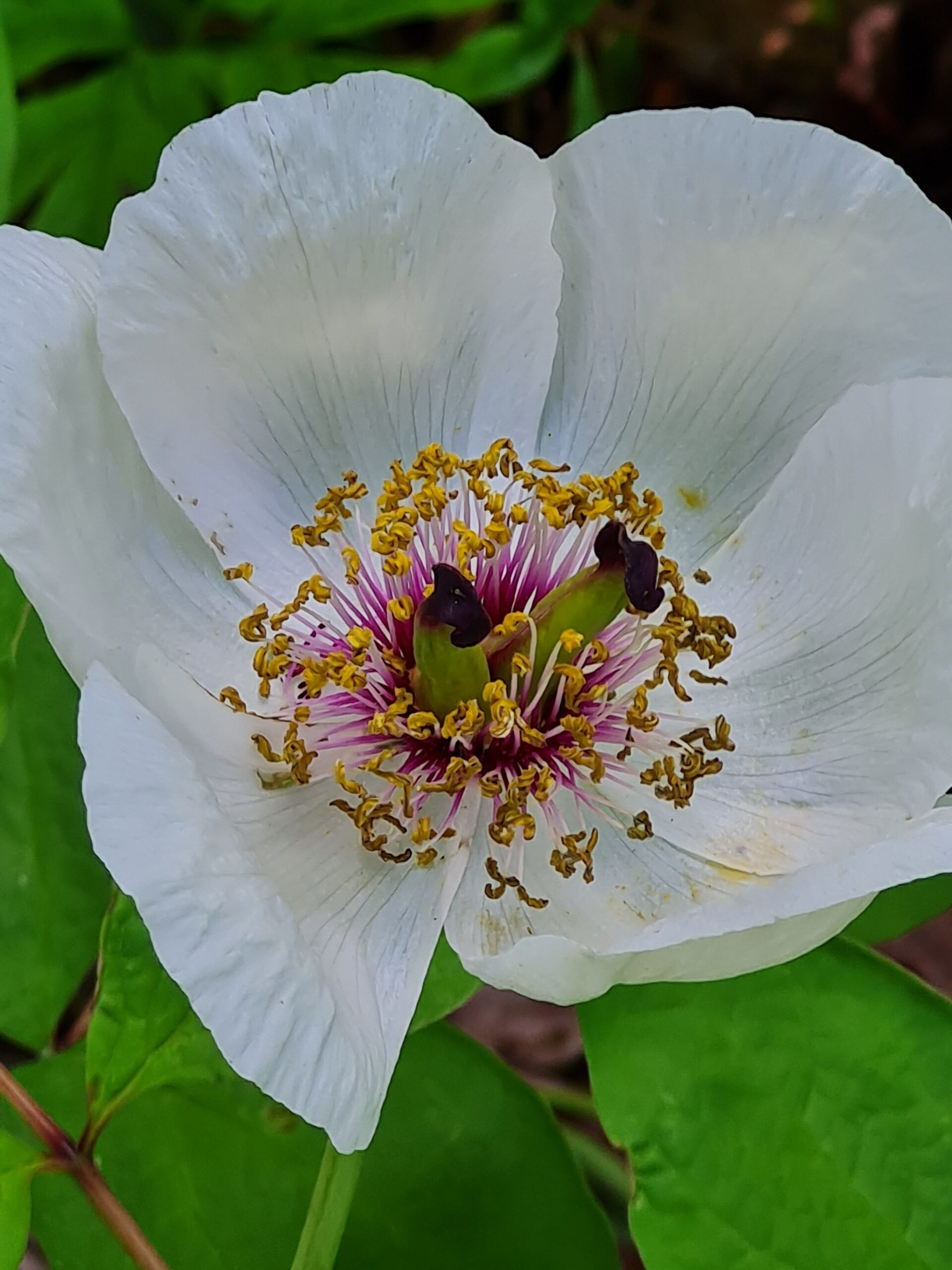
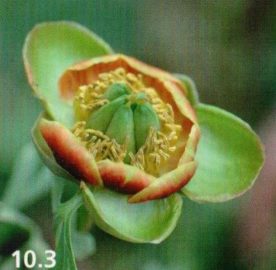
Photo 1: Japanese woodland peony, close-up of the flower. Photo Aulikki Salmia, 3.6.2025, Tammela.
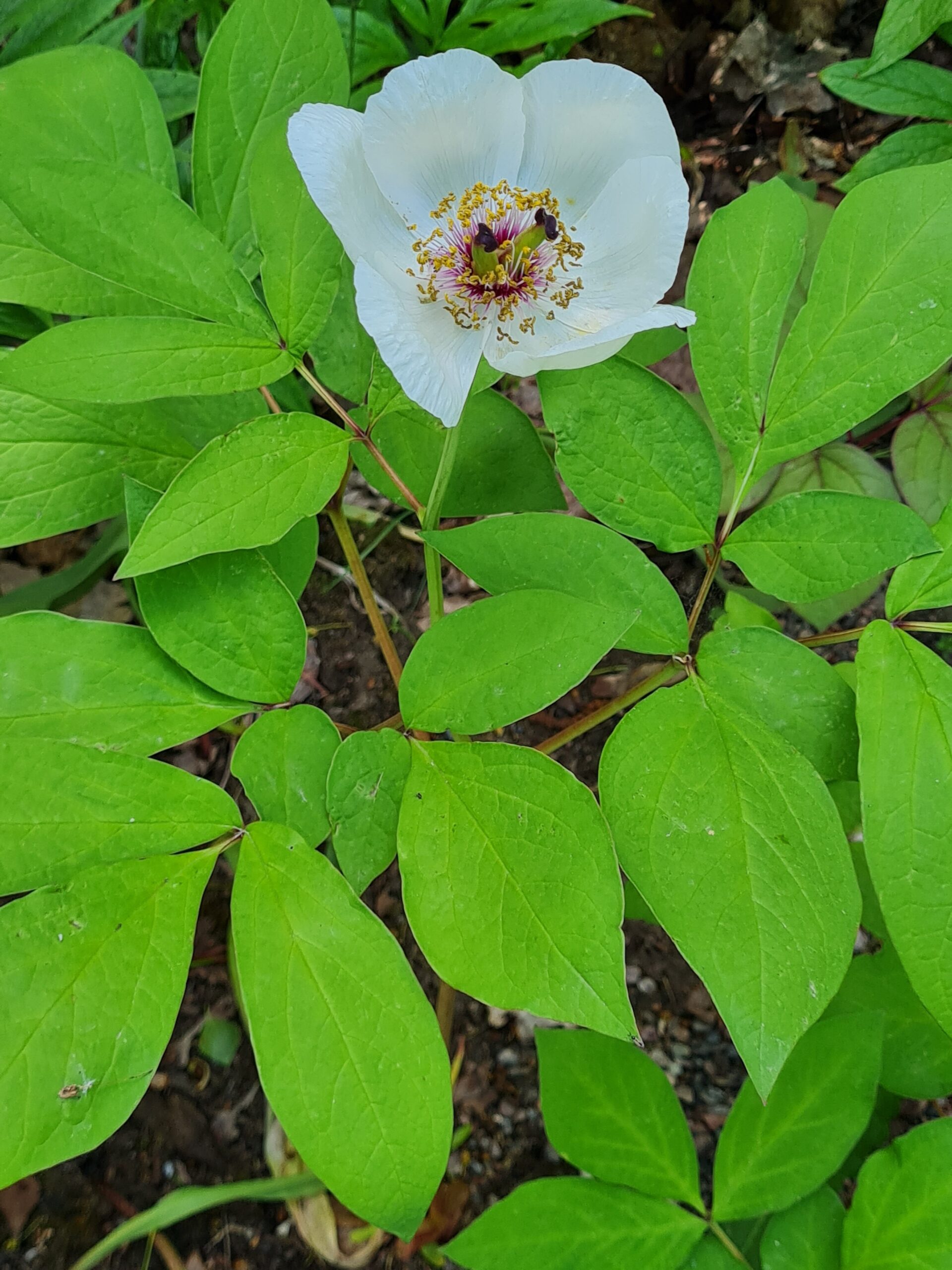
Photo 2: Japanese woodland peony (P. japonica), seeds of Japanese origin (Hokkaido, Yuzawa nursery). Photo Aulikki Salmia, 3.6.2025, Tammela.
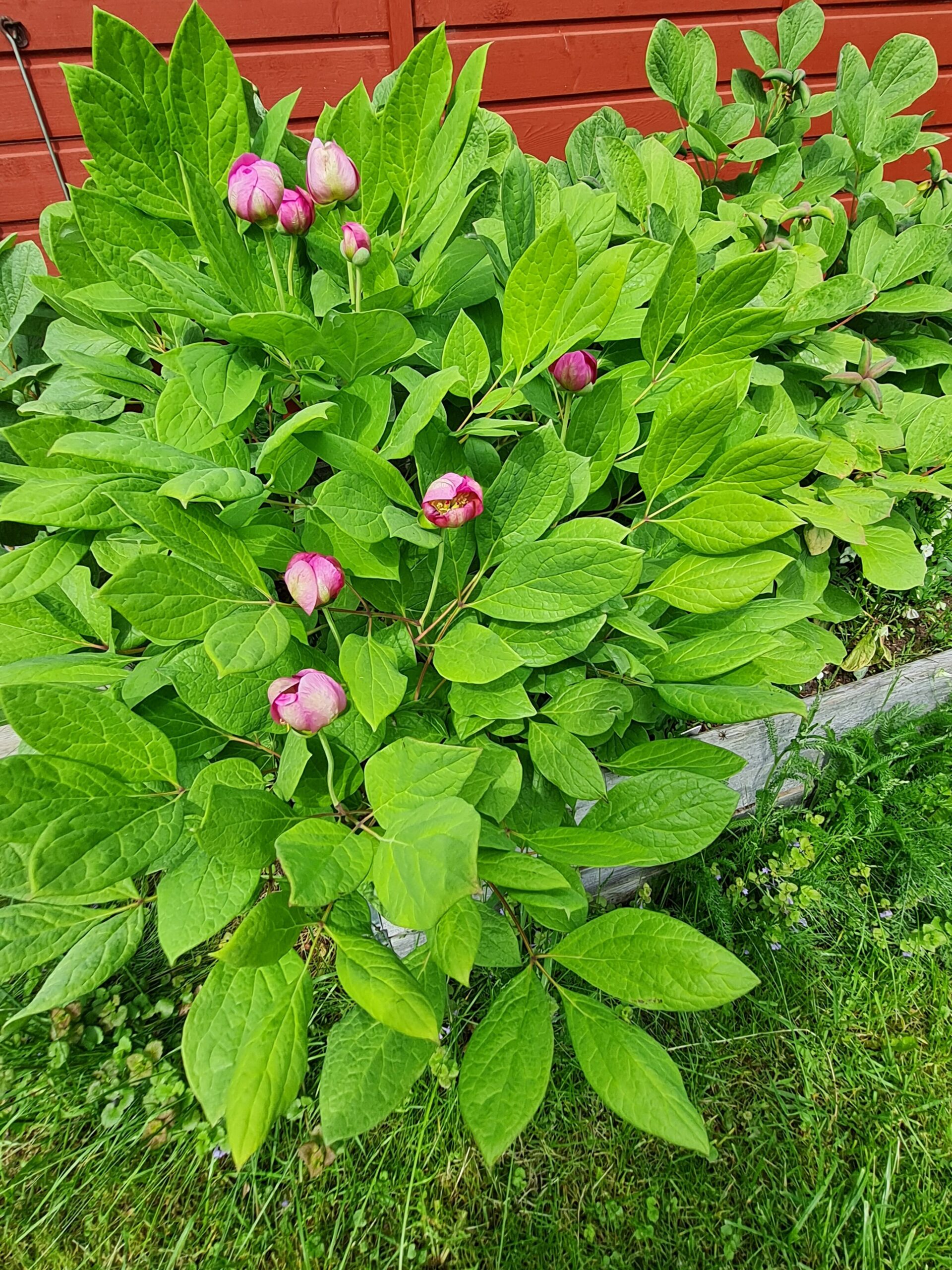
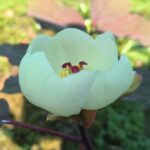
Photo 3: Woodland peony, P. obovata, seeds originally from China in 1994 (Jilin Prov., Mt. Changbai area). I received the seeds from the University of Helsinki Botanic Garden in 2018. Photo Aulikki Salmia, 15.6.2025, Tammela.
Different taxonomic ranks: japonica as a variety of obovata, a species in its own right, a subspecies of obovata, or a synonym of obovata?
I will go through these taxonomic ranks in chronological order.
Makino found a white-flowered peony on the Japanese island of Honshu in 1898 and named it P. obovata var. japonica. He therefore regarded the Japanese woodland peony as a variety of the woodland peony. The red-flowered woodland peony (P. obovata Maxim.) had already been described by Maximowicz in 1859 from the Amur region of the Russian Far East.
Miyabe and Takeda raised the white-flowered peony to species rank in 1910 and published a description of it. Their names appear as the authorities, i.e. the name-givers, so the Japanese woodland peony goes by Paeonia japonica (Makino) Miyabe & Takeda. This name is used in the Japanese-authored Flora of Japan(1) and, for example, in the name database of the Finnish Biodiversity Information Facility (Laji.fi). According to these, P. japonica, the Japanese woodland peony, is a species in its own right. The Helsinki herbarium holds one such sheet from 1956. F. C. Stern(2) also treated japonica as a separate species and described it in detail. Huxley et al.,(3) in their four-volume work on garden plants, cover peonies in volume three. For P. japonica the entry reads, among other things: “as P. obovata except that the leaves are glabrous and the flowers white. Difficult to grow.”
Other researchers regard the Japanese woodland peony as a subspecies of the woodland peony, ssp. japonica (Halda & Waddick, also WFO).(4)(5) This name was given by Halda in 1997, so the Japanese woodland peony with its authorities is Paeonia obovata Maxim. subsp. japonica (Makino) Halda. Halda and Waddick(4) describe ssp. japonica as follows: smaller, about 50 cm, leaves glabrous (also underneath), flowers white, carpels glabrous, flowering earlier than ssp. obovata. They characterize ssp. obovata as larger, 70 cm, leaf undersides grey-green and hairy along the veins, flowering later, flowers white or reddish, carpels glabrous. (In my own plants, all of these held true; compare photos 1–3.)
The Chinese botanist D.-Y. Hong, in turn, considers that the nominate subspecies of the woodland peony, P. obovata ssp. obovata, also includes japonica (the Japanese woodland peony). In his view the names var. japonica, ssp. japonica and P. japonica are synonyms. The reasoning can be read in his article(6) or book.(7) Hong compared the morphology of field and herbarium specimens (japonica / obovata) and reached this conclusion. I will not go through the arguments in more detail, but anyone who wants to understand his reasoning can look them up in the sources mentioned.
I searched the Species Paeonia Group Facebook group (using the keyword japonica) to see what is written there about the Japanese woodland peony. Several people criticized the view of the Chinese professor (D.-Y. Hong) that japonica = obovata. This conclusion, that they are the same species, was generally considered a mistake. I found opinions such as: the flowering time is different; obovata grows and emerges slowly while japonica is already flowering (this was the case with my plants too); the leaf shape is different; and the leaves of obovata grow larger after flowering, which japonica does not do (this, among other things, was also noted by Page).(8)
What do the Japanese think and write about this species / species pair?
In the Species Paeonia Group I found a Japanese peony grower (Seiichirou Hayashi). I sent him two pictures of my plants (see photos 1 and 3) and asked for his opinion. I asked whether they look like the corresponding plants in Japan. He replied that my plants (that is, the Japanese woodland and woodland peonies) look exactly like theirs in Japan. He commented on the differences in flowering time in Japan: japonica flowers a month earlier there than the other peony species, obovata. He sent me fine pictures of the natural habitat of japonica (photos 4 and 5).
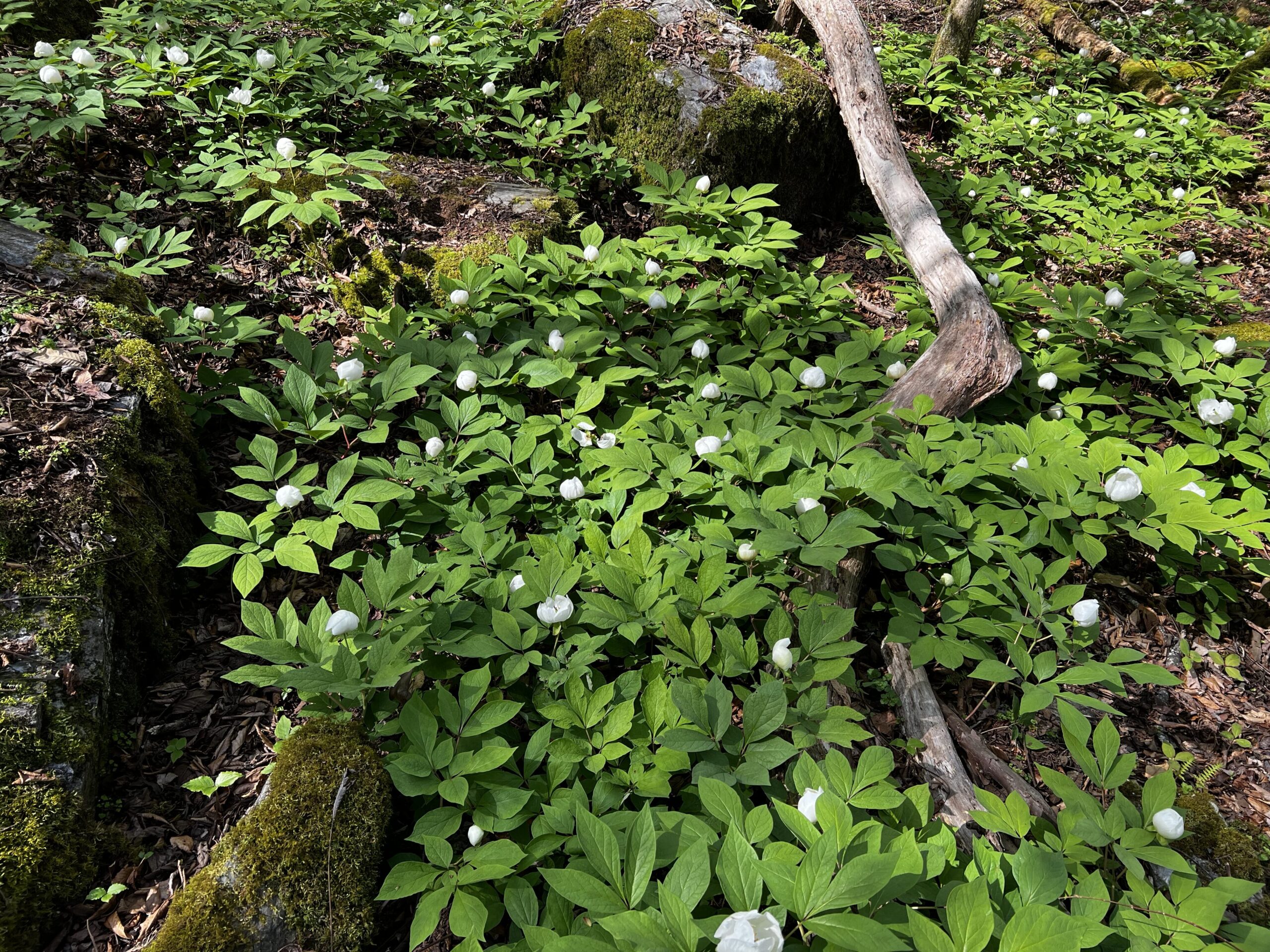
Photo 4: Natural habitat of the Japanese woodland peony (P. japonica) in Japan on Shikoku island (Tokushima Prefecture, Nishiiya village), 900 m. Photo Seiichiro Hayashi, 20.4.2023.
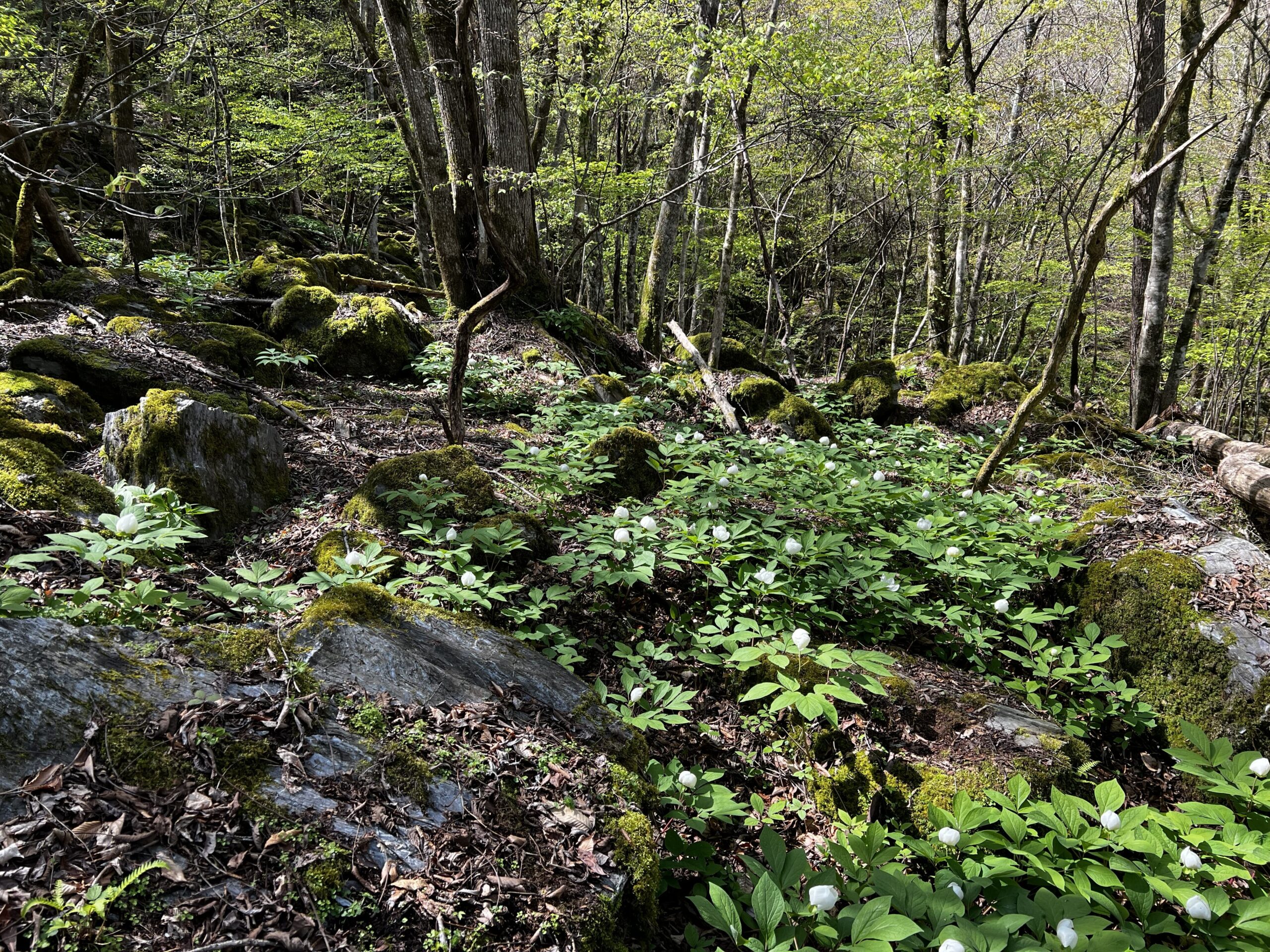
Photo 5: Natural habitat of the Japanese woodland peony (P. japonica) in a moist, humus-rich deciduous temperate forest, 900 m, Shikoku. Photo Seiichiro Hayashi, 20.4.2023.
I also contacted a botany professor at Hokkaido University about this naming issue. But I started our conversation from the wrong end by first asking what he thought of the Chinese D.-Y. Hong’s taxonomy, i.e. that P. japonica = P. obovata. He replied that he is not a taxonomist and did not comment further. Later I asked how japonica and obovata are described in their national Flora of Japan,(1) but he did not answer. I found the answer myself through the library’s interlibrary loan service, and I did get the right pages (“Paeoniaceae”) by email from volume 2a of the Flora of Japan.
According to the Flora of Japan,(1) two peony species grow in Japan, of which P. japonica is endemic, growing on the islands of Hokkaido, Honshu, Shikoku and Kyushu. According to this source, P. japonica does not grow on the Korean peninsula. According to another source (WFO),(5) ssp. japonica grows in Japan and on the Korean peninsula. Habitats in Japan(1) are temperate-zone deciduous forests at 200–1700 m. The identification key gives the following distinguishing features. The flowers of P. japonica are white, with usually 6 petals and 2–3 carpels; the stigmas are only slightly curved back; the terminal leaflet is narrowly ovate with a long tip; and the leaf underside is usually glabrous.
P. obovata grows in Japan, the Russian Far East, Sakhalin, the Kuril Islands, Korea and China, so it has a much wider distribution. In Japan its habitats are temperate forest at 500–1400 m.(1) The corresponding key characters are as follows. The flowers of P. obovata are pale pink, sometimes white, with usually 5 petals and 3–5 carpels; the stigma surfaces are strongly curved back; the terminal leaflet is ovate with a pointed or tapering tip; and the leaf underside is densely hairy along the veins.
Summary
Over more than a hundred years, this species / infraspecific taxon, in this case the Japanese woodland peony, has been given several differing taxonomic ranks and scientific names, as I have described above. The ordinary peony enthusiast may not be “bothered” by this. They can simply enjoy its pure white flowers, if they manage to get hold of a Japanese woodland peony from somewhere.
Acknowledgements
Although Seiichirou Hayashi does not speak English, he went to the trouble of translating many of my messages and kindly answered all my questions in English. He emailed me photos he had taken of the Japanese woodland peony’s natural habitat in Japan, which we can all admire in this article. He has my warm thanks. Before he had time to reply, I asked my friend Taina Suonio for translation help. In fact, her son Evert Suonio, who knows Japanese, translated the text. Thanks to both. I found out for myself that the family Paeoniaceae is treated in volume 2a of the multi-volume Flora of Japan.(1) The problem was how to get this key information to Finland. I first tried the university libraries of Stockholm and Uppsala, but they do not give out or send information to private individuals. The interlibrary loan service came to the rescue. I thank Leena Virta (Tammela library), who helped me obtain the information I requested from Uppsala University Library, where Lilja Sverker handled the matter.
Extra information:
Images on instagram: #ヤマシャクヤク
- Iwatsuki, K., Boufford, D. E. & Ohba, H. (eds.) 2006: Flora of Japan, volume 2a: Angiospermae–Dicotyledoneae. Kodansha Ltd., Tokyo.[back to text][back to text][back to text][back to text][back to text][back to text]
- Stern, F.C. 1946: A study of the genus Paeonia. Royal Horticultural Society (available online as a book).[back to text]
- Huxley, A., Griffiths, M. & Levy, M. 1999: The New Royal Horticultural Society Dictionary of Gardening, part 3, L to Q. MacMillan Reference Ltd., London.[back to text]
- Halda, J.J. & Waddick, J. W. 2004: The Genus Paeonia. Heartland Peony Society, Portland.[back to text][back to text]
- WFO (World Flora Online) 2025: Paeonia obovata subsp. japonica (Makino) Halda. Published on the internet: http://worldfloraonline.org./taxon/wfo-0000480631. Accessed 19.6.2025.[back to text][back to text]
- Hong, D.-Y., Pan, K. Y. & Rao, G.-Y. 2001: Cytogeography and taxonomy of the Paeonia obovata polyploid complex (Paeoniaceae). Plant Syst. Evol. 227: 123–136.[back to text]
- Hong, D.-Y. 2010: Peonies of the world, Taxonomy and phytogeography. Royal Botanic Gardens, Kew.[back to text]
- Page, M. 2002: The Gardener’s Guide to Growing Peonies. Timber Press, Portland.[back to text]