A dike of a flower
Source: Greenity, no 225, June 12, 2026, pp. 10-12.
Text and photography: Suzanne Rousseau-Meeuwissen
The scorching temperatures are pushing the peony season forward at high speed. At peony grower Nop-Fleur in Espel (The Netherlands), the bunching machines are working overtime. Between the pickers in the field and the full carts heading to the auction, grower Paul Koenraadt remains strikingly calm: “It’s extreme, but that’s part of the job too.”
At the end of May, with thirty degrees and not a breath of wind, the peonies are racing through their growth stages under the blazing early summer sun. The heat dictates the pace, and that pace is currently very high. “It’s chaos,” several peony growers said hurriedly over the phone.
Grower Paul Koenraadt has been in the business for 37 summers and remains relatively cool-headed about it. Although he does find it very hot at the moment, he says this while the peony stems almost seem to find their way through his hands to the bunching machine by themselves. He is standing in his shed in Espel, with the doors wide open on both sides. Without having to think about it, he arranges the cut flowers on the conveyor belt. The bunching machine keeps running steadily while he continues placing stems as he talks. “Yes, the weather is a bit extreme. But there are a few extreme days every year,” Koenraadt agrees.
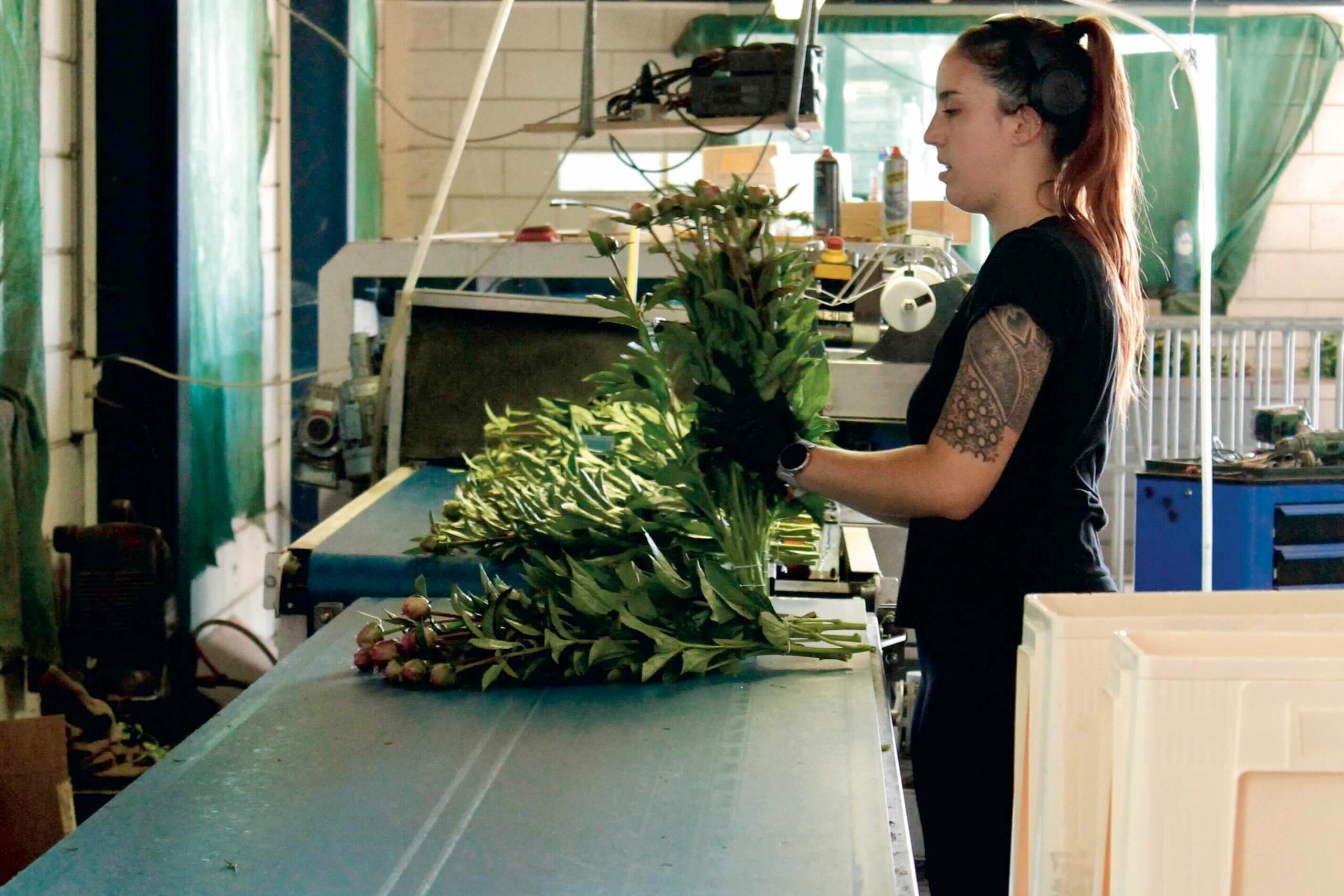
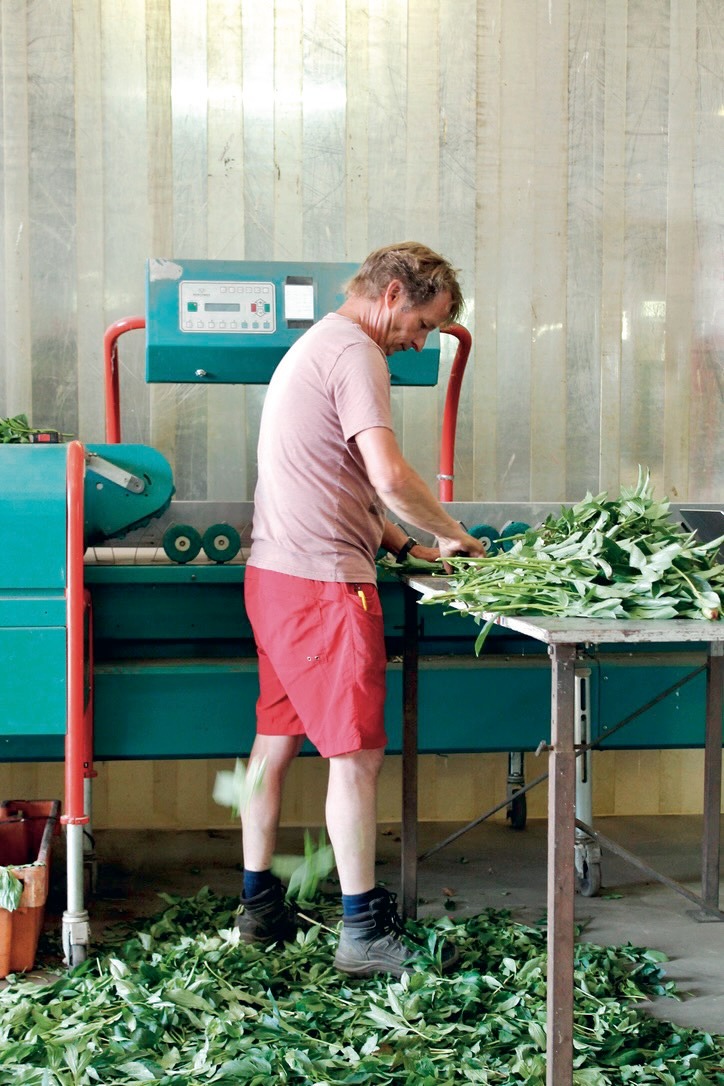
The grower processes the leftover bunches. Excess leaves are removed and stem after stem is combined into a bunch. On the other side of the shed, another bunching machine is running, operated by three Portuguese women. This machine is newer, better, and faster. When bunching was still mainly done on the old machine, eight people stood around it. “In that respect we have become much more efficient. Indoors, bunching goes on all day and outdoors, cutting goes on all day.” The Portuguese workers have been returning to Koenraadt’s nursery, Nop-Fleur, for years. Once the selection work at bulb growers in the region is finished, they move on to the peony nursery to help cut and bunch the flowers for a few weeks. “And when the work here is done, they go back to the bulb growers nearby,” says Koenraadt. “Then harvest time begins there.” All bunches of peonies leave for the auction at the end of the afternoon. The crates and carts are already waiting to be filled.
“Indoors, bunching goes on all day, outdoors, cutting goes on all day”
Koenraadt was one of four growers who last summer urged colleagues to sign a petition against the mandatory FSI certification of Royal FloraHolland. Together with Pieter Damen, Sjaak van der Ploeg, and Lex van der Zwet, he believes the FSI (Floriculture Sustainability Initiative) requirement excludes non-certified but sustainable growers and suppliers from the market. They fear a hollowing-out and shrinking of the range. For small to medium-sized nurseries, making it mandatory is too costly, they say. That is why they want the compulsory certification to stop. The petition was signed 850 times in total. After it was handed over, the growers held several talks with the RFH (Royal FloraHolland) management. The auction has now temporarily dropped the certification requirement, but the growers still are not certain that the cooperative has changed its view. “In my opinion, mandatory certification is greenwashing,” says Koenraadt.
“In my eyes it solves nothing. The grower should be responsible for his own product, not the auction. If FloraHolland is concerned about the sustainability of products, they should actually refer people to the grower of that product.” The peony grower sees that many small growers in his area are quitting. “That’s really a shame, because they often have the nicest products.” The 64-year-old Koenraadt has also decided that next year will be his last peony season. “I had wanted to continue for another two years, but this was an extra push to stop earlier.”
The peony grower from Espel comes from a farming family. His parents grew potatoes, onions, beets, and grain. With three older brothers ahead of him, the future of the family farm was largely settled early on. Two brothers emigrated to Canada, one built a life in Denmark, and the second-oldest took over the family business. Koenraadt found his own path in horticulture. At first in perennials, but soon he specialized in growing peony plants, together with his partner Nico van der Voort. A grower from the region came one season to cut the flowers from their peony plants. When he returned the next year, it began to dawn on them: there was a future here. Demand for cut peonies grew, and with it Koenraadt’s conviction that this was more than just a side line. Van der Voort and Koenraadt decided to take matters into their own hands and continue with the flowers themselves. Twenty years ago, they made the definitive choice: stop with the plants and focus entirely on cut peonies. Since then, everything has revolved around producing this unmistakably seasonal flower. Work that Koenraadt still describes after all these years as “fun and varied.” “I’m an outdoor person.”
The shed on Espelerweg, the place where Van der Voort lived, was adapted for cut-flower cultivation, and that was a good move. Because of the early years when plants were central, their company now had a treasure chest of varieties. This assortment was warmly welcomed at the auction. Ten years ago, Van der Voort retired. Since then, his house and the adjoining property on Espelerweg have been transferred to new residents. Koenraadt: “I’m allowed to keep renting and using the shed from the new owner.” In 2026, Nop-Fleur is still selling an enormously varied assortment: although Koenraadt halved his acreage (12 hectares (30 acres) previously), 22 peony varieties still go to auction. “We started at the end of April in tunnels. The peonies from the tunnels were very early this year. Outdoors, however, it started late, which meant production stood still for a week. By using tunnels and early and late varieties, we can spread the flowering somewhat. But it remains a natural product.”
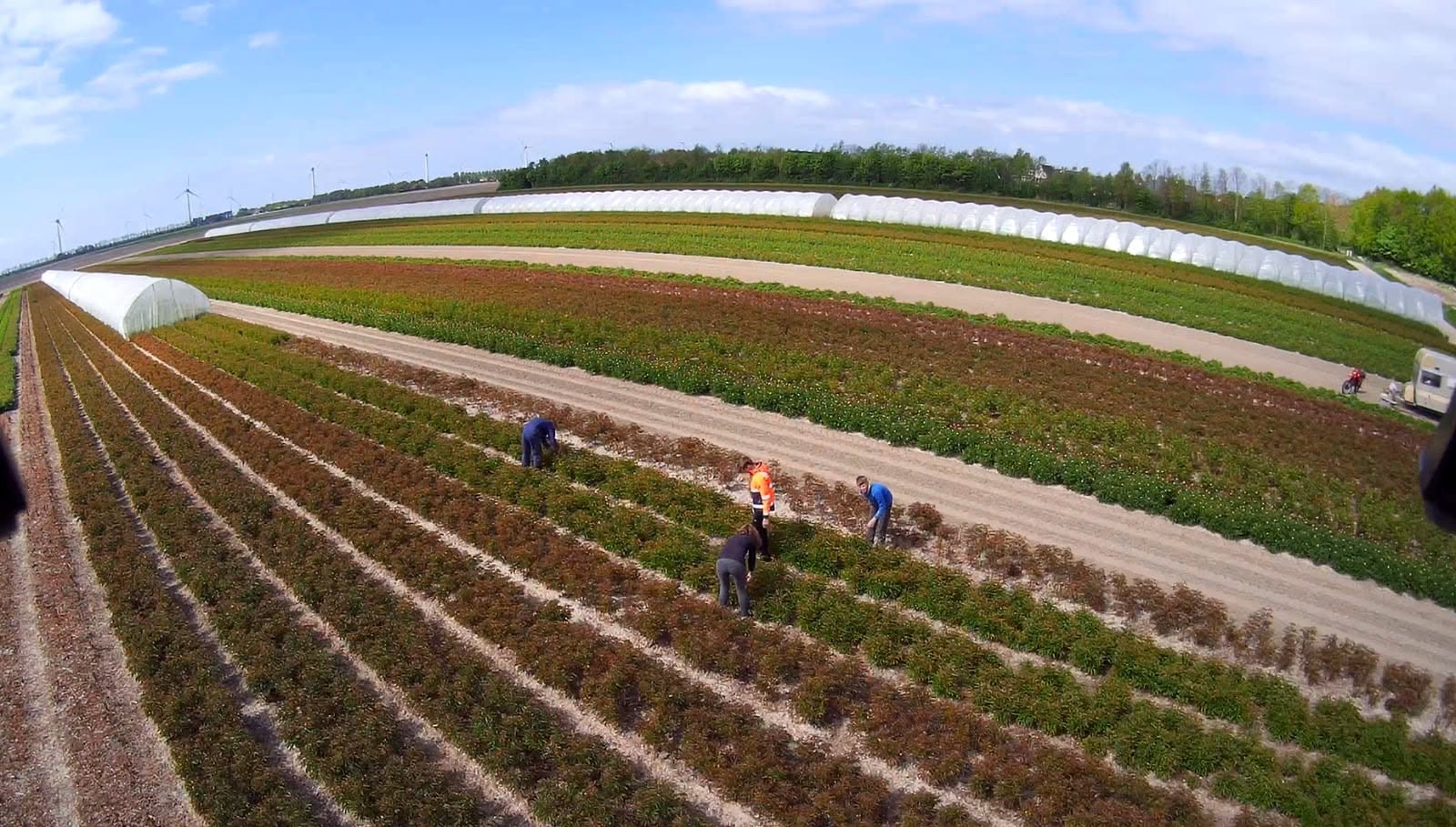
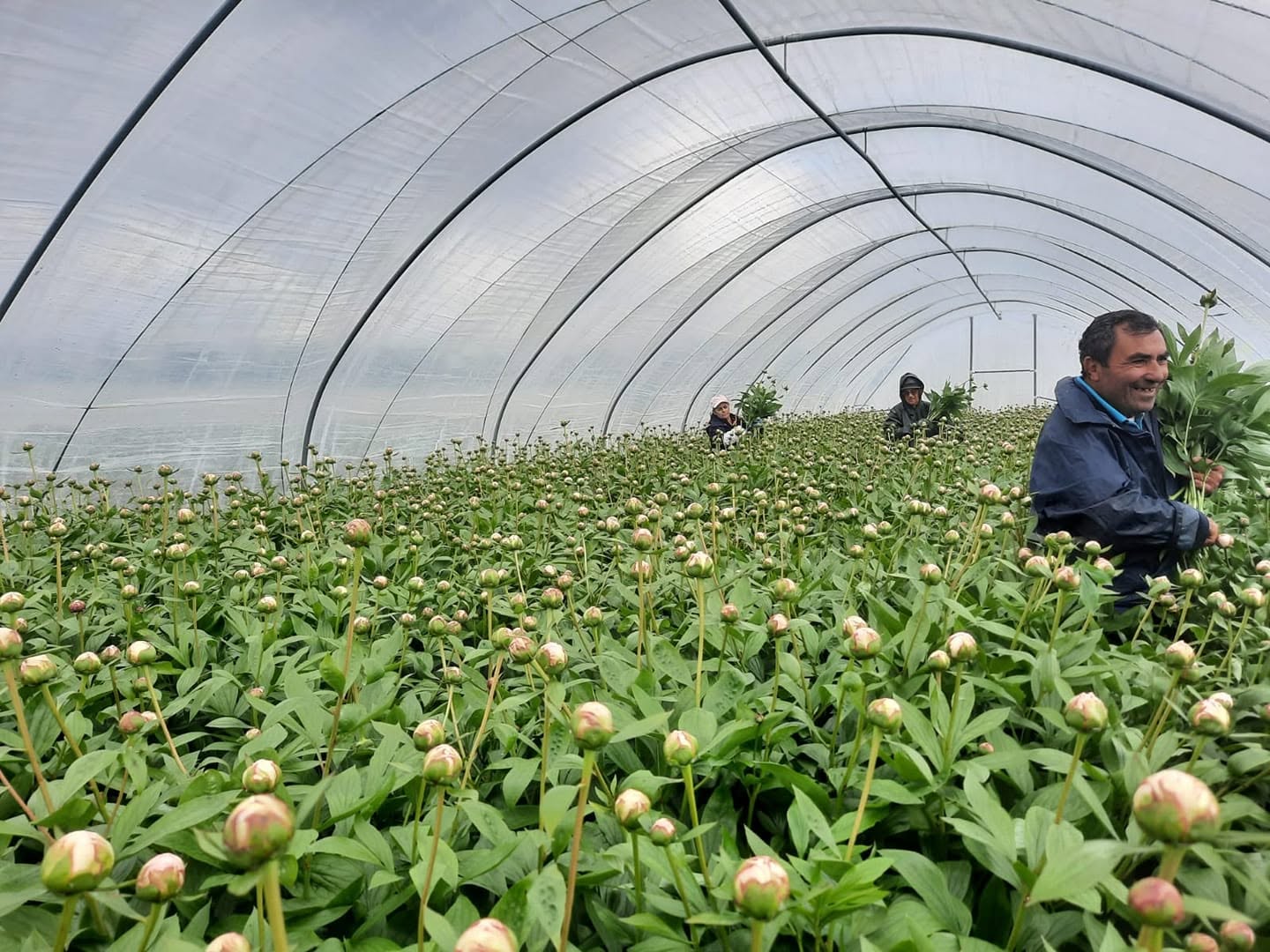
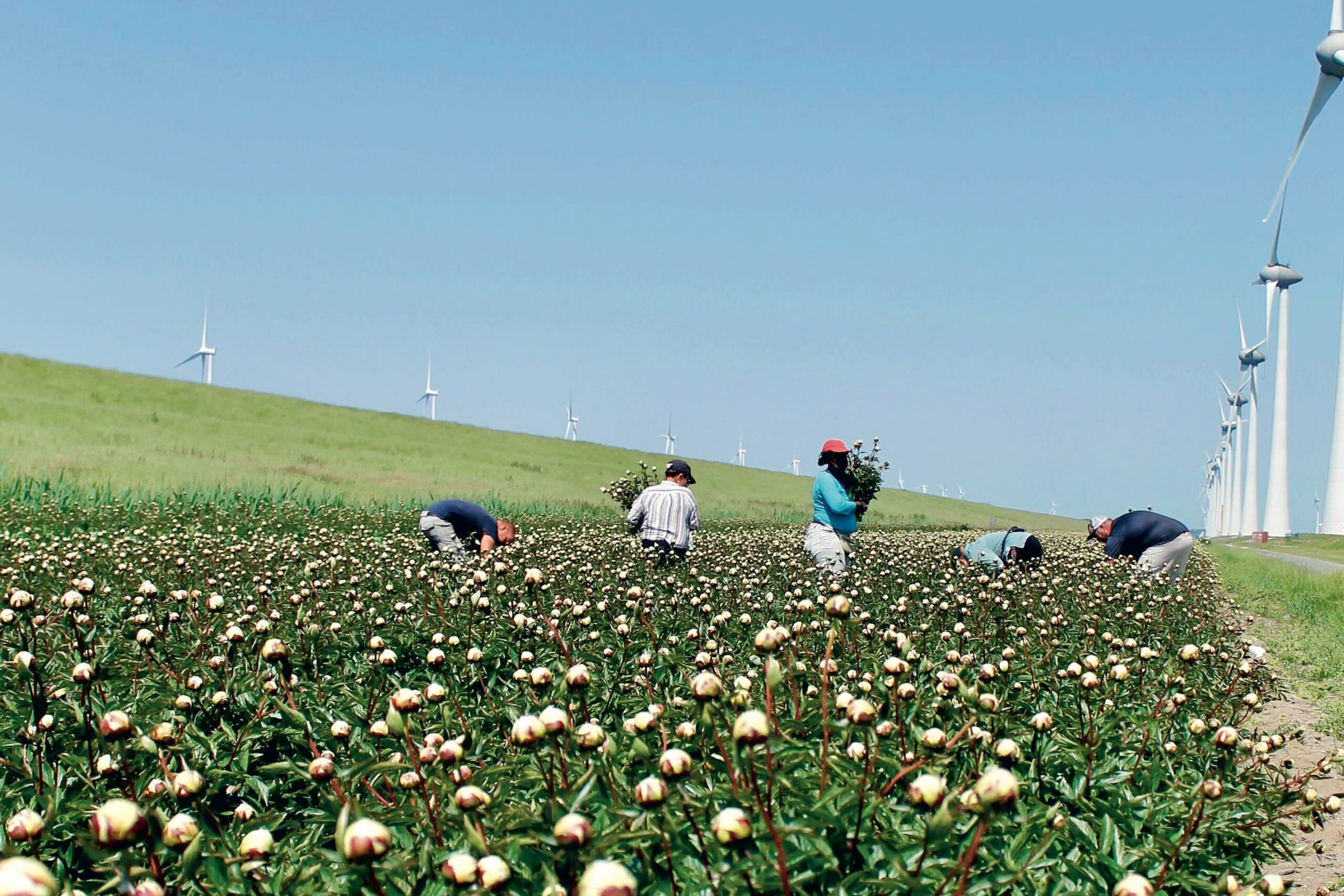
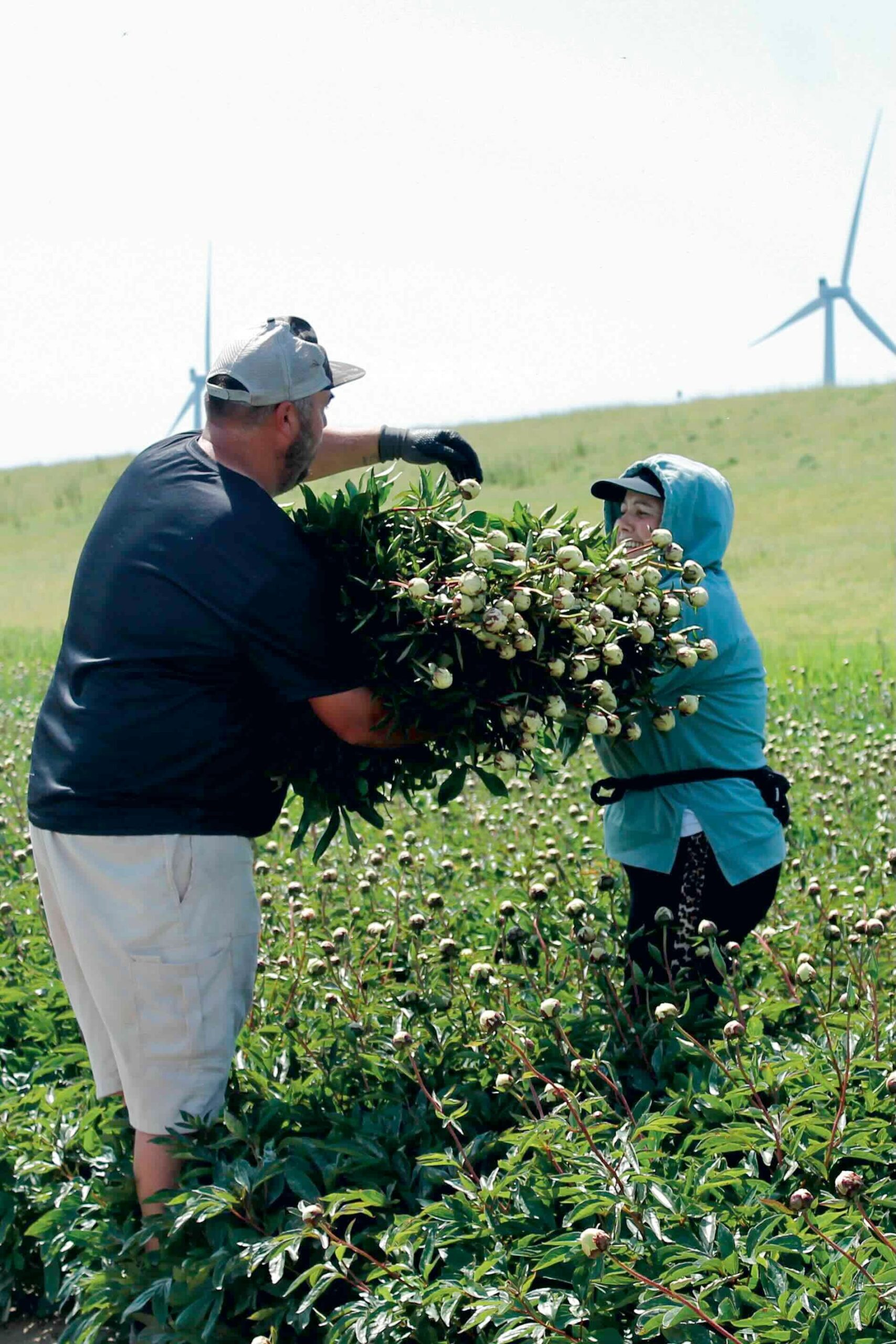
A five-minute drive takes Koenraadt to the plot where five employees are quickly cutting the ripe flowers from the plants. The peonies are tightly packed in a long, narrow strip behind the Westermeerdijk. The peony pickers wear protective clothing against the blazing sun and every few meters they pass the stems they have cut to a colleague. A streamlined job. “You have to get the hang of it,” says Koenraadt. After 37 seasons with peonies, he can dream the movements.
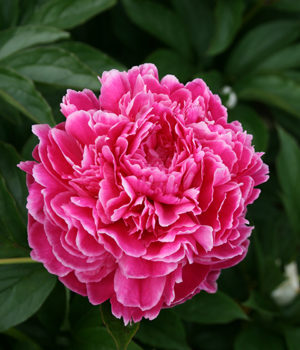
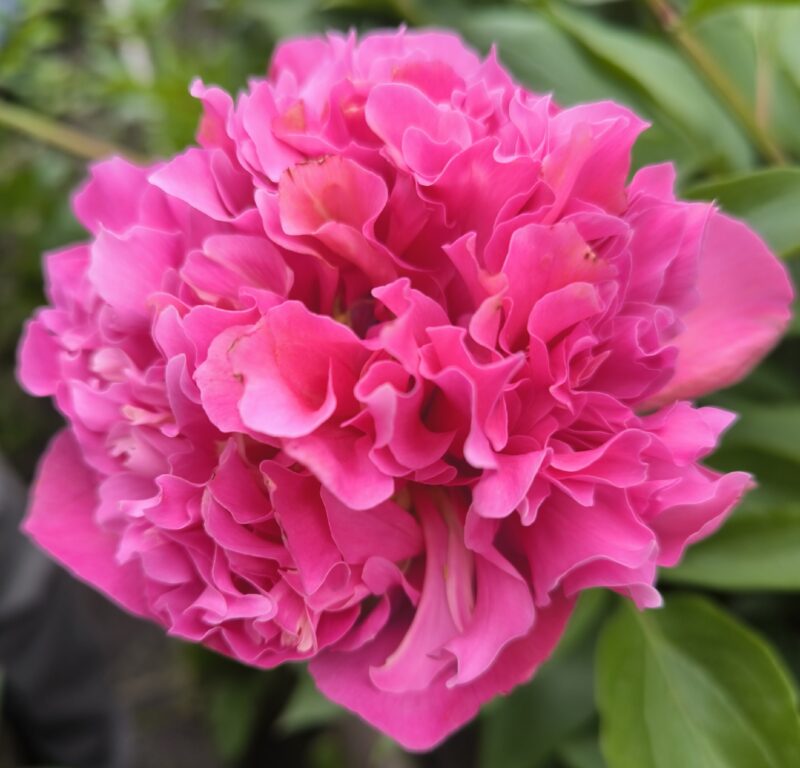
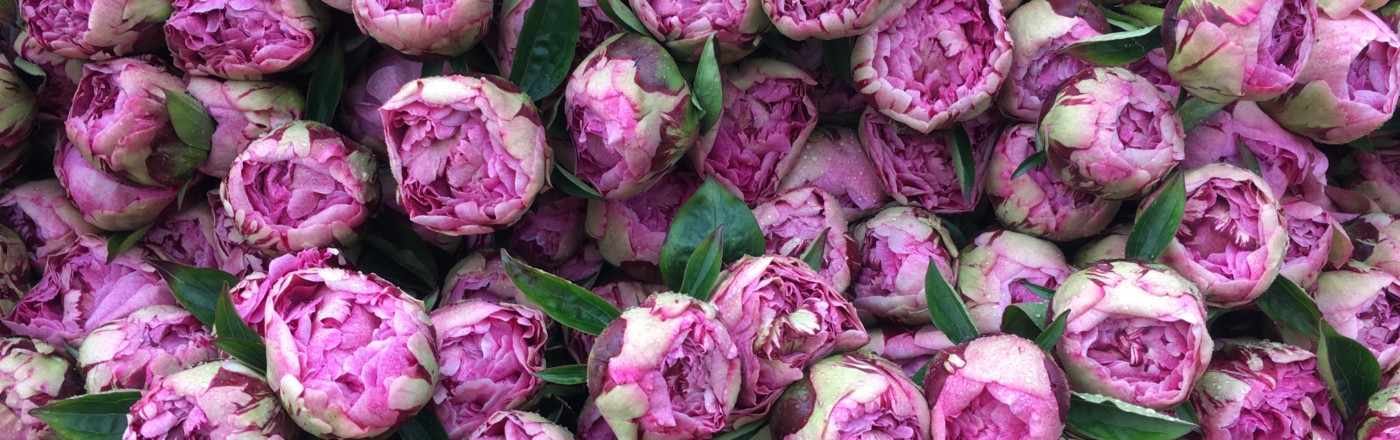
In the Nop-Fleur assortment you will find common varieties and rare varieties. “Auction prices range from 20 or 30 cents to 1.25 Euro per stem. There are varieties here that no one else has. Many old peony varieties, such as ‘Solange’ and ‘Alertie,’ are bunched here.” Koenraadt himself is still enthusiastic about the peony ‘Flevorite,’ a variety he introduced to the market and with which he won several awards. “The flower has a very beautiful bud shape and the color is somewhere between red and pink.”
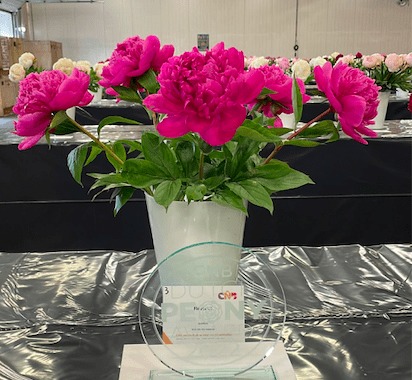
Peony ‘Flevorite’
Negotiations are currently underway with several growers about the sale of the lots. Interested parties can contact Paul Koenraadt if interested.





)