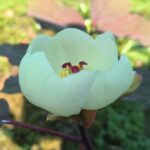
(Murawska, 1960) (Sarah Bernhardt, Reine Hortense) D.E.M. Pink. Double, true pink, strong stems. Named for a niece of Mr. Murawska. Bulletin 157 June 1960.
khurtekant - - - 0
 The reticulate evolution and hybridization of herbaceous peonies 2026, October 7th
 Our hybridizing program, 2026 2026, August 24th
 A dike of a flower: NOP Fleur Espel (NL) 2026, August 20th
 Long term storage of peony pollen 2026, May 6th
 Paeonia species of Georgia 2026, January 30th
 The best peony germinating substrate: part 2 2026, January 28th
 The Peony in China: A Few Journeys 2026, January 27th
 Peony Hybridizers: Rat Thierry 2026, January 22nd
 Peony Hybridizers: Skakodub Anatoliy – Askarova Larissa 2026, January 21st
 Peony Hybridizers: Lukoyanov Yuri 2026, January 21st
 Peony Hybridizers: Vynogradska Elina 2026, January 20th
 Peony Hybridizers: Kļaviņa Ritma 2026, January 19th
 Oriental Gold: Legend, Hypothesis, and the Scientific Mystery of a Peony 2026, January 19th
 Peonies in China and the Netherlands 2026, January 19th
 Paeonia x kayae 2026, January 19th
 Peony Hybridizers: Hurtekant Koen 2026, January 16th
 Peony Hybridizers: Anokhin Petr 2026, January 15th
 Peony Hybridizers: Khorosh Igor 2026, January 14th
 Peony Hybridizers: Kaya Erdal 2026, January 13th
 Peony Hybridizers: Otto-Zagorska Ilga 2026, January 12th
 Prairie Peonies HortAlaska Peonies
2026, The Peony Society
Double type; very large; late. Dark rose-pink, edged a trifle lighter, with inconspicuous red edges on a few central petals, and an occasional golden yellow anther in the collar; agreeably fragrant, but not especially so. Medium height; floriferous; strong stems. Good foliage. Very popular, and considered one of the best exhibition flowers. It is somewhat undependable in blooming and of no special value for garden decoration. "A very reliable and abundant bloomer with me."—Saunders. "Not reliable with me but a very beautiful flower."—Boyd.
From the Dutch peony testing series in 1998((footnote: Kortmann, J. "Paeonia: pioen." In: Dendroflora, 1998, vol 35, pp 58-95.)) , own translation:
'Sarah Bernhardt' (Lemoine, France, 1906). Flowers pink, double, petal edges pale pink to silvery white (total colour impression hardly influenced by this), small red flecks on some petals in the center (hardly conspicuous); leaves mid large, lustreless with a brownred glow, upperside of stems slightly brownred, height 95 cm, flowers and stems sturdy; number of stems excellent. This cultivar from France is widespread worldwide and well-know thanks to its good qualities. Thanks to the sturdiness of the stems it is an appropriate cultivar both for the garden and cutflowers. This follows from the next figures: in 1995 at the auction in Aalsmeer some 3 million stems of it were sold, same thing in 1996. Despite the fact that this cultivar is somewhat susceptible towards botrytis, the positive characteristics like sturdiness, flower colour, leaf quality and number of stems predominate. It should also be noted that around 1900 other cultivars with the same name were offered in the trade, more precisely from Calot and Dessert, these never made any marks.
Remark from koen hurtekant: the "sturdiness" of the stems is heavily overstated, the fact that it is the largest cultivar both in plants and number of cutflower stems may make the review somewhat biased IMHO.
Very dark red Jap. Good upright grower, vigorous, late, 34 inches. An improvement on Fuyajo. Seedling # JE-3.
Award of Landscape Merit (ALM) description: 'Charm' (Franklin, 1931) Lactiflora Group, Late mid-season, 38? — A lustrous and satiny, dark red Japanese form bloom with a center of the same red petaloids, etched yellow. Stiff and relatively straight stems angle outward gracefully to form a very large, harmoniously mounded, fountain of blooms. An eight-year-old plant matures to 40 or so stems that emerge from a relatively compact area. Although individual blooms are at their peak for a shorter duration than those of other lactifloras, plenty of side buds help 'Charm' maintain its striking presence in the landscape. One of the later Japanese form peonies to bloom.
Seedling TF-8. Parentage: (P. tenuifolia 'Plena' x P. tenuifolia 'Rosea')F2. First bloomed 2012, first propagated 2013. Fully double BOMB form. Baby pink flowers are borne 1 to a stem, 3¼ inches (8 cm) in size, up facing to slightly out facing. Two to three carpels on average which are glabrous to slightly tomentose, green and topped with whitish stigmas, the latter sometimes deformed. Disc poorly developed. No pollen, but as a pod parent normally fertile but not with other pink P. tenuifolia, so far. Not fragrant. Blooming time very early, together with or slightly ahead of P. tenuifolia 'Plena'. Finely cut foliage, pale green on emergence, is typical of the species. Average height to 15 inches (38 cm); support not needed. Named after originator's mother who was not the tallest person but the best mother one can imagine.