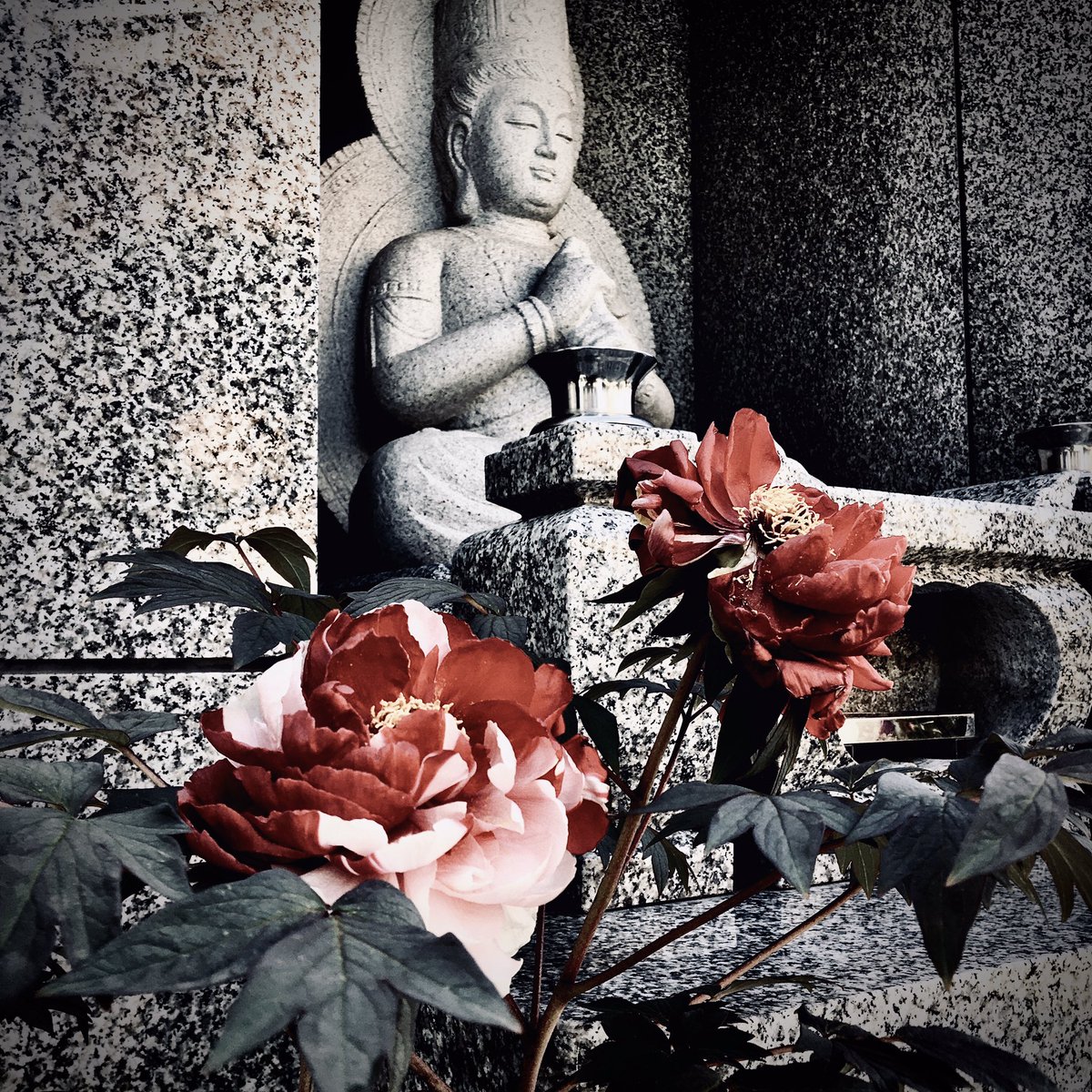
For many in the West, the Peony is a seasonal highlight of the garden, but in China, it is a several thousands year old institution. These tours were my third and fifth visits to China, and my goal was to look not only at the fabulous flowers, but to understand their intersection with Chinese culture and how the Peony is viewed and used by the people who live there. From the bustling industrial and commercial hubs of Shandong to the ancient historical capital of Luoyang, and the ancient city of Lanzhou on the Silk Road, the journey revealed a nation where the “King of Flowers” is woven into daily life.

Cultural Immersion and the Art of the Bloom
The journey began with the Peony motif, seen everywhere, appearing in places both important and ordinary. I was particularly struck by the attention to detail in public infrastructure; even the footpath protection guards and balustrades were cast with intricate Peony designs. This integration of Peony floral design into functional city elements speaks volumes about the flower’s status as a national emblem – though not officially the National Flower, it has been voted as the favourite throughout China. Many graduation regalia garments carry the Peony motif on the satin hood lining.


Suzhou in Jiangsu Province, near Shanghai, is where the cultural appreciation of Peonies transitions into fine art and crafts. Visiting the silk embroiderers and embroidery museums, I witnessed the painstaking process of “growing silk”, that was and is used as a canvas on which Peonies are painted or embroidered. The delicate silk embroidery of peonies I observed is some of the finest craftsmanship in the world, capturing the Peony’s special beauty in colourfast thread.

Heze: The Industrial Powerhouse
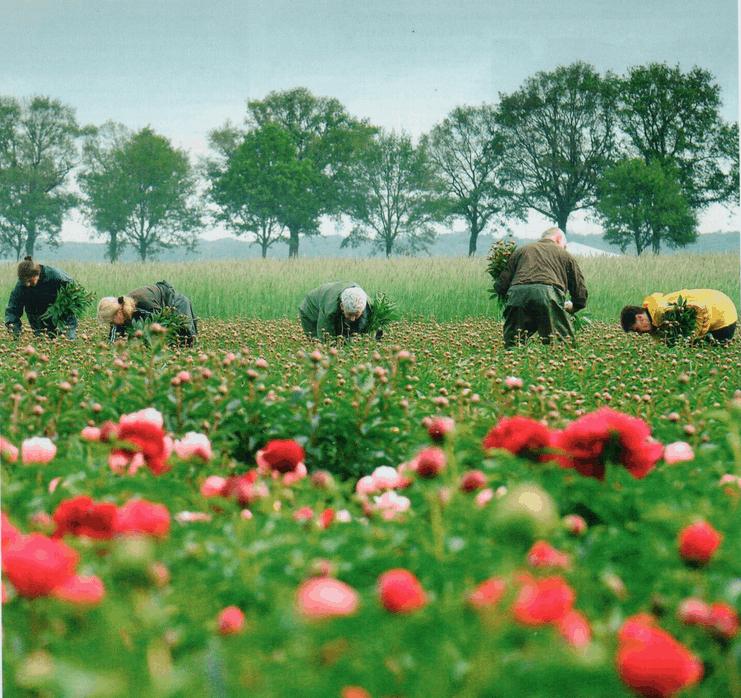
The scale of Peony production in Heze, Shandong, is difficult to describe without seeing it firsthand. Unlike the smaller boutique nurseries common in New Zealand and elsewhere, Heze operates on a massive industrial level. I visited extensive company gardens and fields where the rhythm of the season was in full swing. One of the most intriguing sights was the village women working in the fields. These workers are the backbone of the industry, using hand cultivators to maintain rows of incredibly healthy-looking plants with no weeds visible.

The technology used is a blend of traditional manual labour and modern efficiency. For instance, I observed the “Peony Hole Drill,” a specialized tool designed to handle the heavy workload of mass planting. Even lunch at the farm was an experience in local sustainability; locally produced food, highlighting the recycling practices integrated into their daily operations. In the village, life revolves around the crop; I saw children playing after school in the very heart of the village fields, growing up surrounded by millions of blooms.

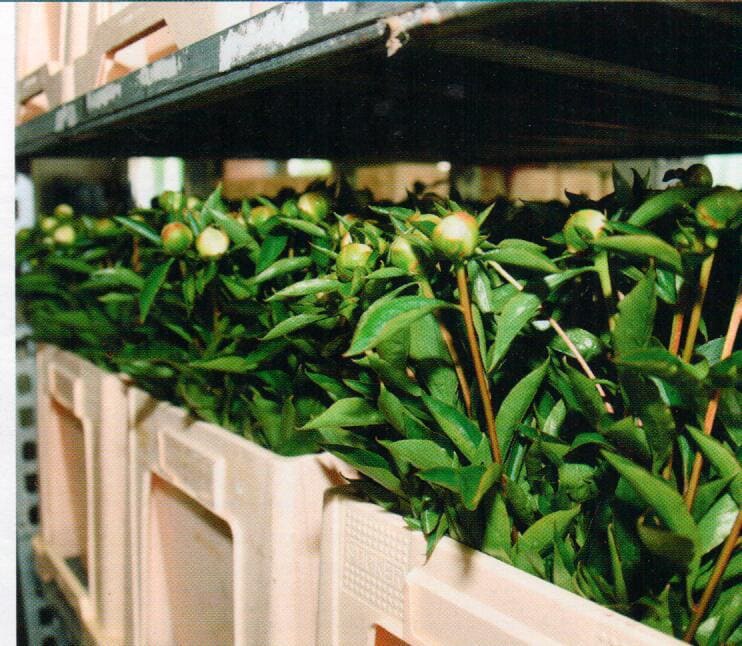
I visited a home farm cool-store facility that showed the nearness of the trade to home life. It was here that I saw the first cut Mudan (Tree Peony) of the season. While we are accustomed to herbaceous peonies as cut flowers, these Mudan are rarely available as cut stems outside of China. Watching the “tools of the trade” in action—the sorting and processing of these blooms for domestic and international markets—offered a glimpse into world-class horticultural practices.

Root Processing and Field Innovation
The industry in Heze is not solely focused on the beauty of the bloom; the “Processing Roots” sector is a massive undertaking in its own right. The excess roots are cleaned, and prepared for both the cosmetics market and the medicinal trade. Innovation is evident even in the manual labour of the fields. The businesses producing Peonies combine traditional expertise of the village staff who keep the fields impeccably weed-free and who harvest, sort and pack the blooms, with modern management practices, creating a unique blend of old-world skill and up to date efficiency.


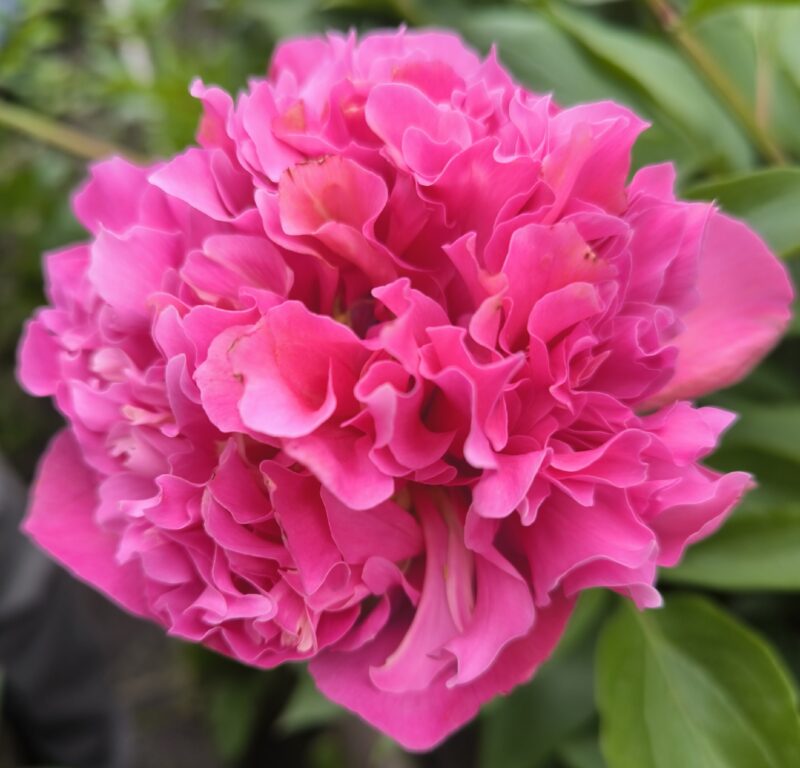
The city of Heze itself reflects the prosperity. From my hotel room, I could see some of the modern section of the city, complete with a newly built Peony shaped pavilion and several parks in the central district. Yet, the traditional trade remains visible on the streets, where vendors sell potted Mudan directly to the public. I encountered fabulous deep pink, green-centred Mudan and large Shao Yao (Herbaceous Peonies) that would be the envy of any collector back home.
The Logistics of the Heze Trade
The commercial infrastructure in Heze is impressive. The sheer volume of the peony trade is supported by extensive infrastructure serving the farms which surround the city. During my tour of the local facilities, I spent time at one of many massive cool-store complexes that serve as hubs for the surrounding region’s exports. The site consists of several multi-story buildings, each partitioned into floors that house four large industrial chillers on each floor. To give a sense of the scale, the company I visited has the capacity to store over a million blooms at once in a single chiller. It was in these chilled rooms that I witnessed the first cut Mudan (Tree Peonies) of the season being processed. Seeing tree Peonies handled as high-volume cut flowers; a unknown in the New Zealand market; and provided a glimpse into the global reach of Heze’s horticultural industry.


The industry scale includes family businesses as well as huge companies with the capacity to import several containers full of young plants ready to establish in newly ploughed fields. So while a family business manages everything, including marketing, themselves, the larger operations have dedicated staff to manage each aspect of the business.


Luoyang: Where History and Botany Converge
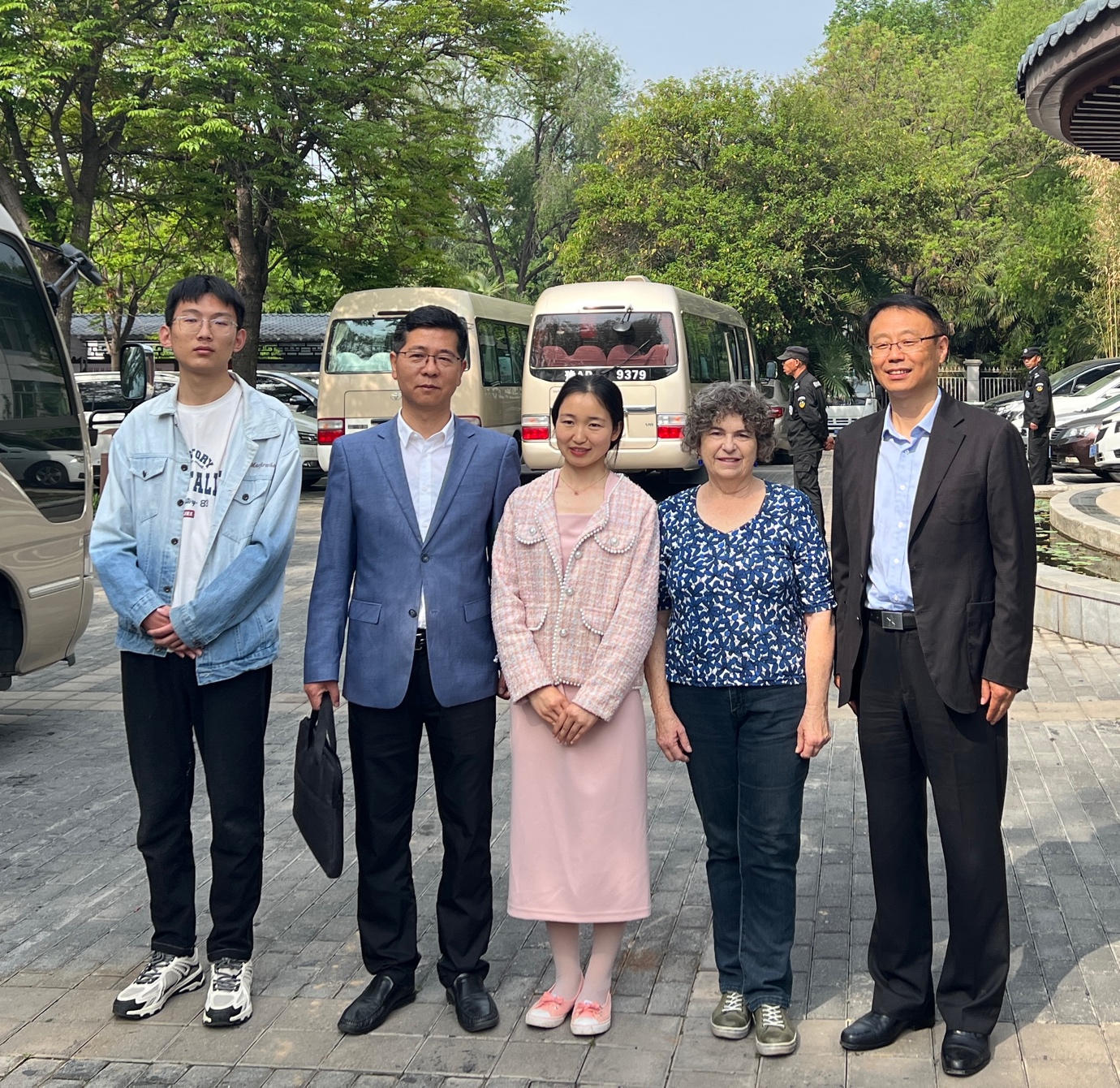
From the industrial fields of Heze, the journey moved to Luoyang, the ancient capital and arguably the most famous place in the world to view Peonies. Tourists descend on Luoyang from all over China as well as from abroad, and the city is well prepared for the influx. Luoyang embraces its Peony heritage with a sense of celebration that permeates the entire city. Peony souvenirs are everywhere, ranging from traditional paper cuts to a multitude of other Mudan crafts. I even saw Mudan stamps and “First Day Covers” in the Peony Museum, showing how the flower is valued by the state. I was met by city dignitaries and a few key scientists because Peonies are important there.
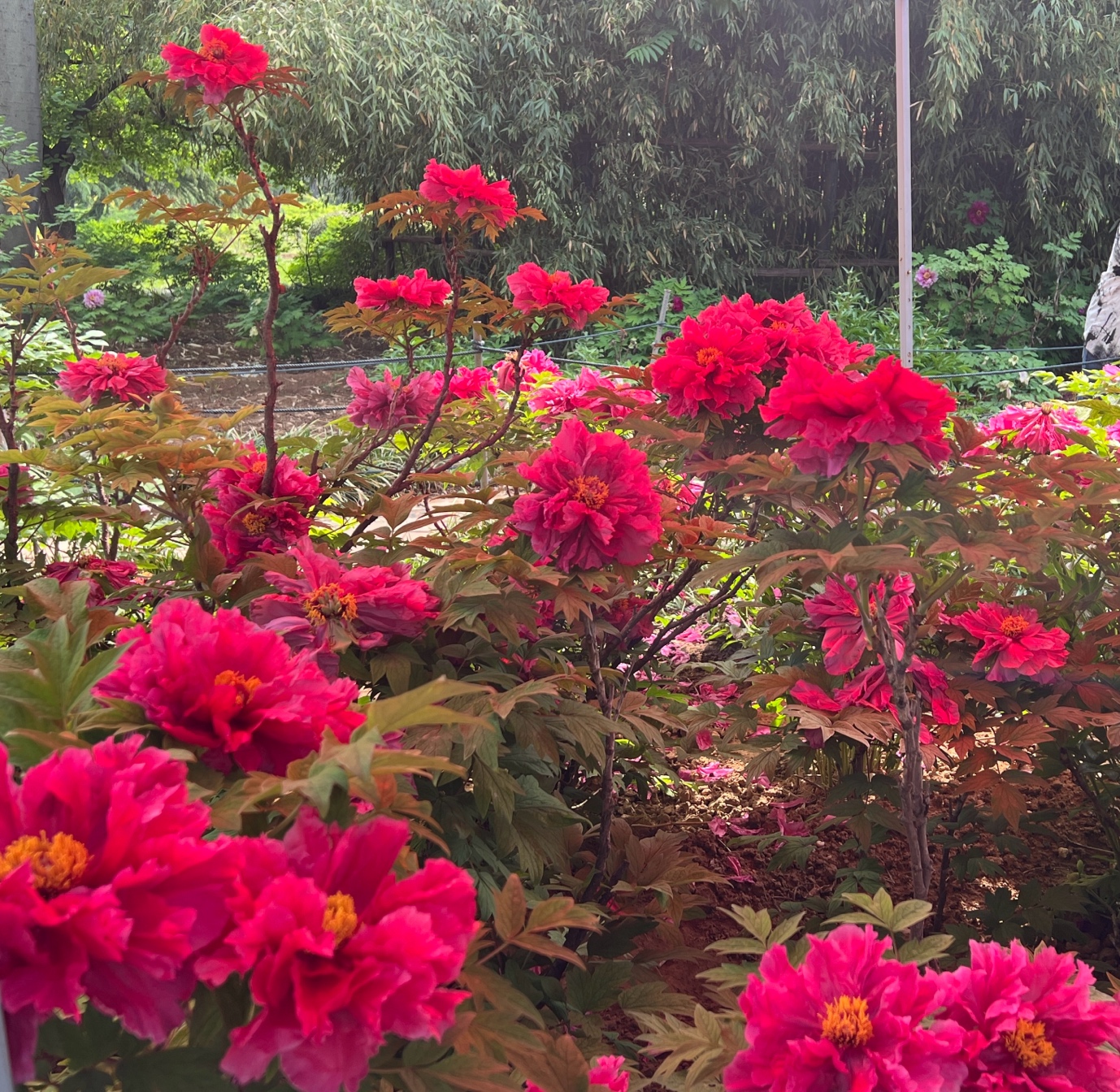
More than 20 expansive show gardens have long lines of tourists queuing at the gates. Peony plants in these dedicated parks are grown permanently and arranged wonderfully, in colour blocks so that during the season visitors see a fabulous display in every direction. Some plants are housed under shade cloth while others are in the open. And there are pavilions, fully under cover with raised boardwalks for other varieties. Most of the display plants were Mudan as these are the favourite in China, with Shaoyao, or Herbaceous definitely in second place. Examples of Peonies bred abroad are also included.

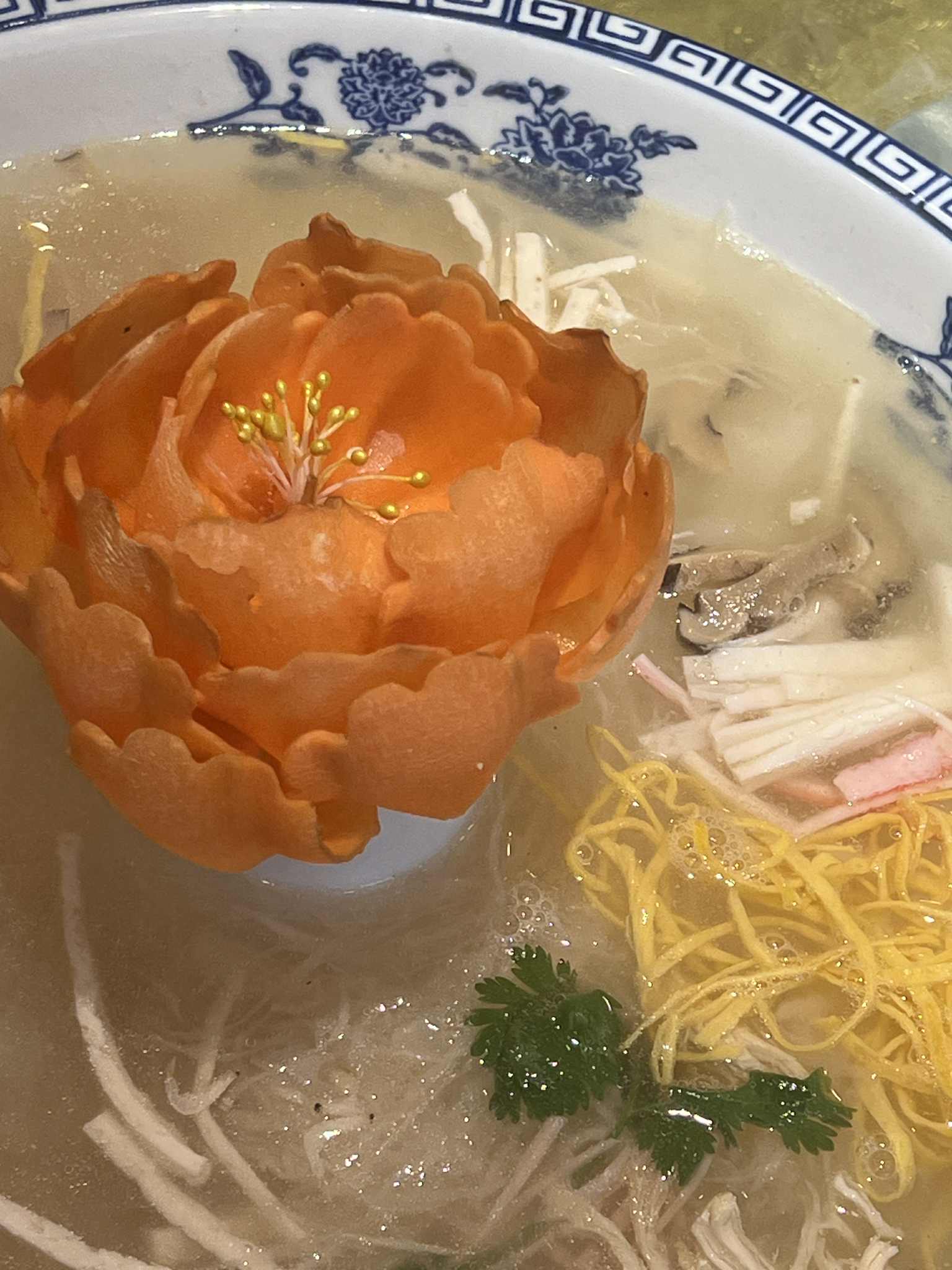
The culinary scene in Luoyang also pays tribute to the flower. One of the more unique highlights was tasting Peony Petal Jiaozi—dumplings filled with peony petals and the pastry incorporating petals too. Then salads that contained red petals. It was a literal way to consume the culture of the region.
The city’s gardens, such as those near the Longmen Grottoes, are impeccably maintained. These gardens are designed with the visitor in mind, featuring boardwalks and walls that allow for excellent photo opportunities without the feeling of being overcrowded. At the Dragon Gate of the Longmen Grottoes, perfect Peony blooms stood in stunning contrast to the ancient stone carvings.


One of the interesting aspects of the Luoyang festival was seeing young people dressed in popular Hanfu costumes with their printed Peony designs, fabulously dressed up and amazingly coiffured, wandering through the gardens. This revival of traditional dress against the backdrop of the Peony gardens made the experience feel like stepping back into one of the ancient dynasties. I was invited several times to get dressed in the costume and have my hair coiffured; instead I opted for an AI version.
Scientific Frontiers at Luoyang Academy of Agriculture and Forestry
A significant visit in Luoyang was spent at the Luoyang Academy of Agriculture and Forestry, which focuses on maintaining germplasm and developing new varieties. I had the privilege of meeting with Kevin Gao and observing their experimental garden breeding program. The work there is rigorous; I watched students learning pollination techniques and collating data with precision. The sight of huge numbers of seedlings gave a sense of the vast numbers required to find each perfect new variety. There were moments of unexpected familiarity in the university gardens; I was surprised to see “Do Tell,” a favourite variety of mine, growing so far from home. I also observed a range of coral-coloured Chinese peonies and new varieties being bred on a small private farm nearby.


My botanical observations during this leg of the trip focused on the finer details of the flowers. I noted that purple spots, as the Chinese designate them, or flares on the petals are often not noticeable in flowers with similar base tones, and that these spots come in a wide range of shades. Interestingly, the flare colour can also be seen extending to the sepal edges, a detail that many casual observers might miss. And the sheaths which enclose the carpels, often best seen during bloom senescence varied widely and were quite fascinating, like crowns.
Visit to a Private Breeder
The visit yielded an unexpected surprise in the form of a long photo from several years previous, that included Donald Smith, standing out among the Chinese faces. The breeder’s successes were in flower and quite varied and beautiful.
-

- Visit to a private breeder.

-

- Photograph with Don Smith

Even the sun umbrellas were Peony shaped and the sweet treats were filled with sweetened Peony petal filling.
-

- Mudan sweet treats

-

- Mudan tourist merchandise

University staff work closely with the growers. Visits to farms are most valuable for me too as I seek to understand their achievements and future goals as well as the challenges that they face. In recent years the cost of labour on Chinese farms has increased sharply. And the farm labourers I saw in many places tended to be older, perhaps mostly over 50, the youth having moved to the towns and cities for more lucrative work, so there is a pressing need to solve this issue, maybe AI enhanced automation will be the key.

The Medicinal and the Rare
As this trip concluded, it was clear that I had only scratched the surface. The Luoyang Peony Festival was even being reported on by China Television, highlighting the national significance of the event. While I was there, I was asked to take part in two interviews about my visit, by both the provincial and national stations.


The peony is more than just a flower in China; it is a bridge between the ancient past and a high-tech agricultural future. Whether it is a motif on a street-side fence or a seedling in a field, the Mudan remains the undisputed king.
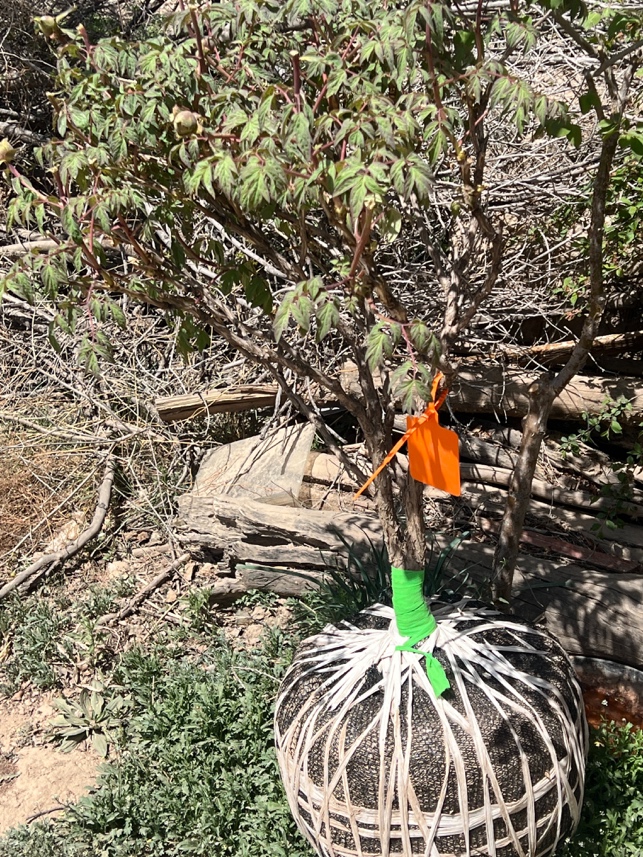
Multi grafted Mudan
If you have doubted the 8 coloured grafted Mudan, here’s proof. The grafts don’t take well so several years and careful planning go into providing 8 colours that bloom simultaneously. Here is a plant beginning its journey to fame.

The following year, 2025, I retraced my previous visit to Heze and Luoyang and this time, also visited my city’s sister city, Lanzhou in Gansu, Western China. This is a key area for a different type of Mudan, the group is often called Gansu Mudan, although the industry extends well beyond the province of Gansu. Historically, seeds of a few of these were sent by Joseph Rock, a twentieth century Austrian plant hunter, in the pay of Harvard’s Arnold Aboretum, who while travelling for several years throughout China, at one period made his base at a monastery near Lanzhou. It was his usual practice to carefully document each new specimen. However in the case of the Peony seed, it was more an item of interest; he had someone collect the seed while he was away on an expedition; they were not scientifically documented. There were quite a number of seeds from the few plants in the monastery garden, these were not a species as such, but garden plants with a long history of interbreeding. This place is on the Silk Road and had had thousands of years’ trading so the genes of those seeds were not only local. There is a wild species subsequently discovered and named in Rock’s honour but not found or documented by him, which is the true Paeonia rockii.

However, there is much confusion about “Rockii” in the West. Rock’s seeds were sent via Harvard to many countries; their progeny are easily recognisable by their strongly coloured central flares. These have been subsequently involved in many breeding programmes. In the last 30 years, more varieties, recently developed in Gansu, have been sold to the West. These plants are very hardy, tolerate extreme heat, cold and drought, and are larger and more fragrant than the usual Plains Mudan, that we are more familiar with from Luoyang and Heze region.
I was told that Gansu breeders, in particular, Chen De Zhong and his brother-in-law Yang Chen Wei, had worked together at the Peace Peony Garden, were the main protagonists in developing new varieties from the 1980s onwards. Subsequently, Yang has continued the breeding programme and has developed many new and exciting varieties for his nursery business, Long Yeong. Several companies have these and are exporting them. They would be particularly well suited to the world’s colder regions where Paeonia suffruticosa/Plains Mudan don’t do so well.

The British mountaineer, Will McLewin, has done significant research into the origins of these Gansu Mudan and has produced an excellent book explaining the details of this history.
My life’s Peony journey is far from over, and so I plan in 2026 is to re-visit these places and to dig deeper into the Chinese Peony world. I plan to be in China mid-April to mid-May this year, so if anyone has requests about anything Peony for me to chase up while I’m there, they can contact me.