Anatoliy Skakodub
Larissa Askarova-Skakodub
Country:
Kazakhstan
Short biography:
My name is Larisa Askarova, née Skakodub. I live in Almaty, Kazakhstan.
(Source: vk.com Voronezh Peony Growers Club)
More information:
From time to time I publish photographs of our peonies on Facebook.
This post about Larisa Askarova – Skakodub and her father could not have been made without the invaluable help of Petr Anokhin who did the interview with her and wrote all text. Thank you!
Peony hybridizers series
-
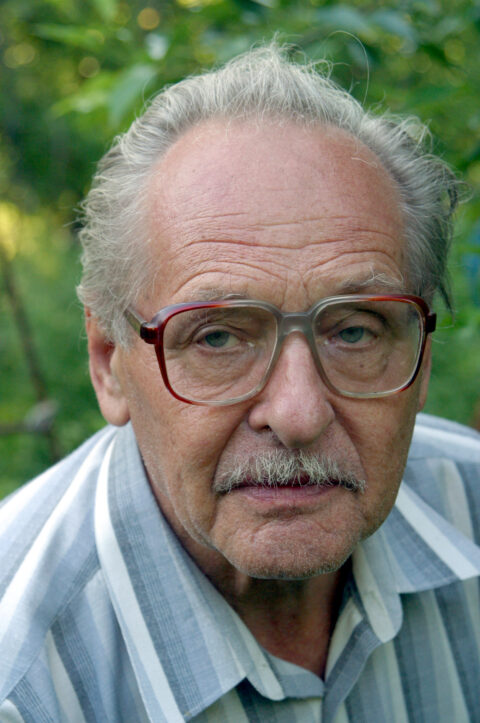
- Anatoliy Skakodub
-

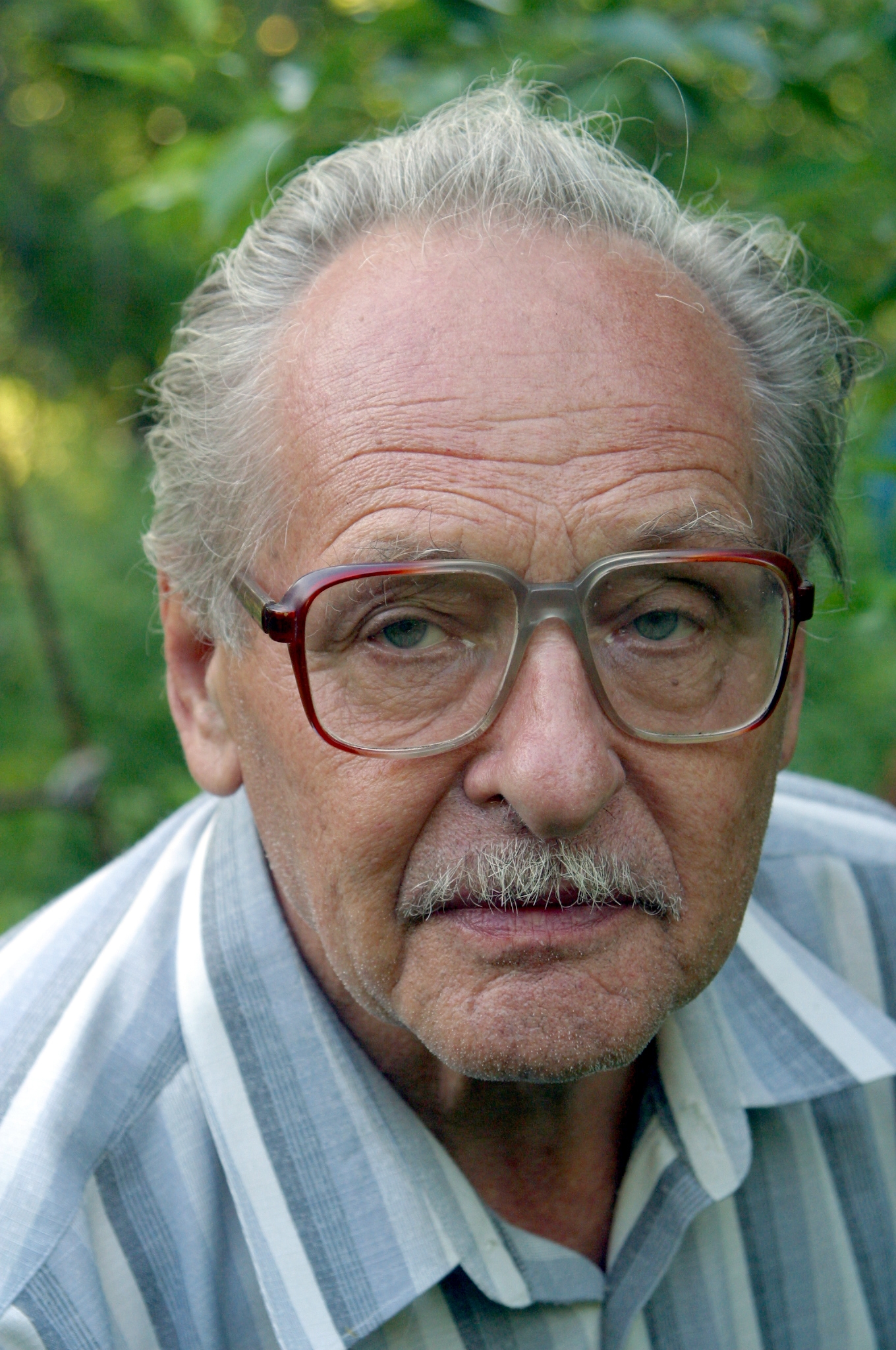
- Larisa Askarova

Anatoliy Skakodub and his daughter Larisa Askarova
My father, Anatoly Skakodub (1927–2011), began breeding peonies in the 1960s. He introduced only a limited number of cultivars, but each of them was distinctive and memorable. Among his varieties are Svetlana Sedova, Vladimir Dubrov, Anatoly Skakodub, and Almata. These peonies were regularly exhibited in Almaty and Moscow, and later in other countries of the former USSR.
On the character of the breeder and the fate of his cultivars
My father was a very modest person. There is a story that says a lot about him:
When the cultivar Svetlana Sedova first appeared at an exhibition, collectors tried to buy it, but the plant had not yet been propagated. My father always replied: “How can I sell this cultivar? I named it after my wife. How can I sell my wife?” That is why the first roots of this peony were not sold, but given as gifts.
A similar story happened with the cultivar Anatoly Skakodub. When Chinese flower producers saw it at an exhibition, they wanted to buy the rights to it, but my father refused. At that time, this cultivar was considered unique: it was a Paeonia lactiflora with a greenish tint to the petals, which was a rare and remarkable feature for that period.
Breeding connections and exchange of material
My father maintained contact with Tamara Nazarova, who worked at the Novosibirsk Experimental Station, where peony breeding was also actively carried out. They exchanged breeding material on a regular basis. From there, my father received several interesting forms, including large, fully double white peonies, which later became part of his own breeding program.
How peonies were brought to exhibitions in Moscow
Many of my father’s cultivars were regularly shown at major exhibitions in Moscow. In those years, private collectors did not have access to specialized refrigeration facilities, so in order to preserve the peonies for the exhibition, my father stored the cut flowers in an ordinary household refrigerator. In Almaty, peonies bloom earlier than in central Russia due to the warmer climate. It often happened that by the time exhibitions opened in Moscow, only early cultivars were in bloom there, while in Almaty medium and late cultivars were already flowering. To present his peonies at the right stage, my father kept the cut flowers refrigerated and then transported them by airplane to Moscow.
Continuing the tradition and preserving the collection
I myself also repeatedly brought peonies of our breeding to exhibitions. On one occasion, I brought an entire collection of my own cultivars and those of my father to Moscow and donated them free of charge to the N. V. Tsitsin Main Botanical Garden of the Russian Academy of Sciences. The peonies were accepted into the collection with the participation and under the curatorship of Dyakova, who at that time was responsible for the peony collection at the Botanical Garden. These cultivars are still preserved and grown in the Moscow Botanical Garden collection today.
On friendship, memory, and family tradition
My father was friends with Vladimir Dubrov, a well-known Russian peony breeder. In 2010, Anatoly attended an exhibition in Moscow for the last time, and at that time Dubrov strongly asked him to transfer several cultivars to enrich the Moscow collections.
Unfortunately, in 2011 my father passed away.
After his death, I continued his work. That is why on the internet I always used my maiden name — Skakodub — to emphasize that I am continuing my father’s work and that this is a family breeding tradition. My children do not breed peonies themselves, but they grow peonies in their gardens. Once my daughter joked — and this phrase was published online: “In our family, everyone has their own peony.”
On breeding as a hobby, not a business
For me, peony breeding has always been a hobby, not a business. I grow peonies on a plot of only 600 square meters, and this space contains both the collection and all the seedlings that I sow every year. That is why I never had large division lists or a wide commercial assortment. I also had very little contact with other breeders — most of them live in other countries, and during the years when my main breeding work was done, communication was extremely difficult. Today it is easier thanks to the internet, but I still do not have any special professional partnerships — I have always worked independently.
On recognition without registration
I know that peonies of my breeding and my father’s breeding are popular all over the world. I deliberately did not register my cultivars with the American Peony Society (APS), because I do not see any necessity for that. I know for certain that collectors from Finland, the Netherlands, Canada, Latvia, and Russia have acquired my peonies, and later the plants spread to many other countries as well. For me, this is the true confirmation of the value of my work — not registry entries, but living plants growing in people’s gardens.
Important clarification regarding the cultivar Belye Nochi ‘White Nights’
Recently, a post was published on Facebook stating that the cultivar ‘White Nights’ bred by Anatoly Skakodub had become one of the most popular and best-selling peony cultivars. However, this statement contains an error. The cultivar ‘White Nights’ was bred by me, Larisa Askarova, not by my father. It is important to me that the history of cultivars is preserved accurately.
On continuing work and new cultivars
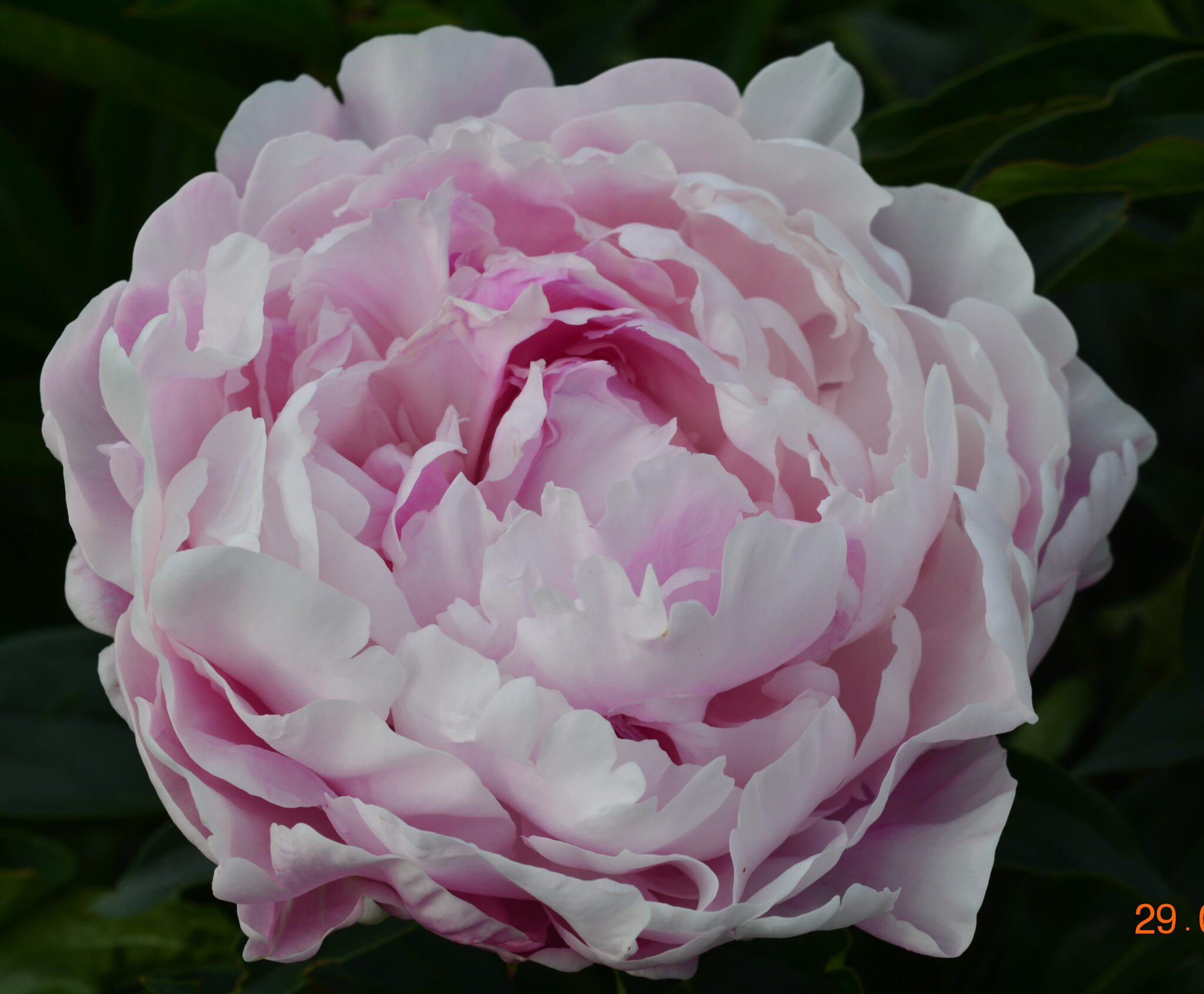
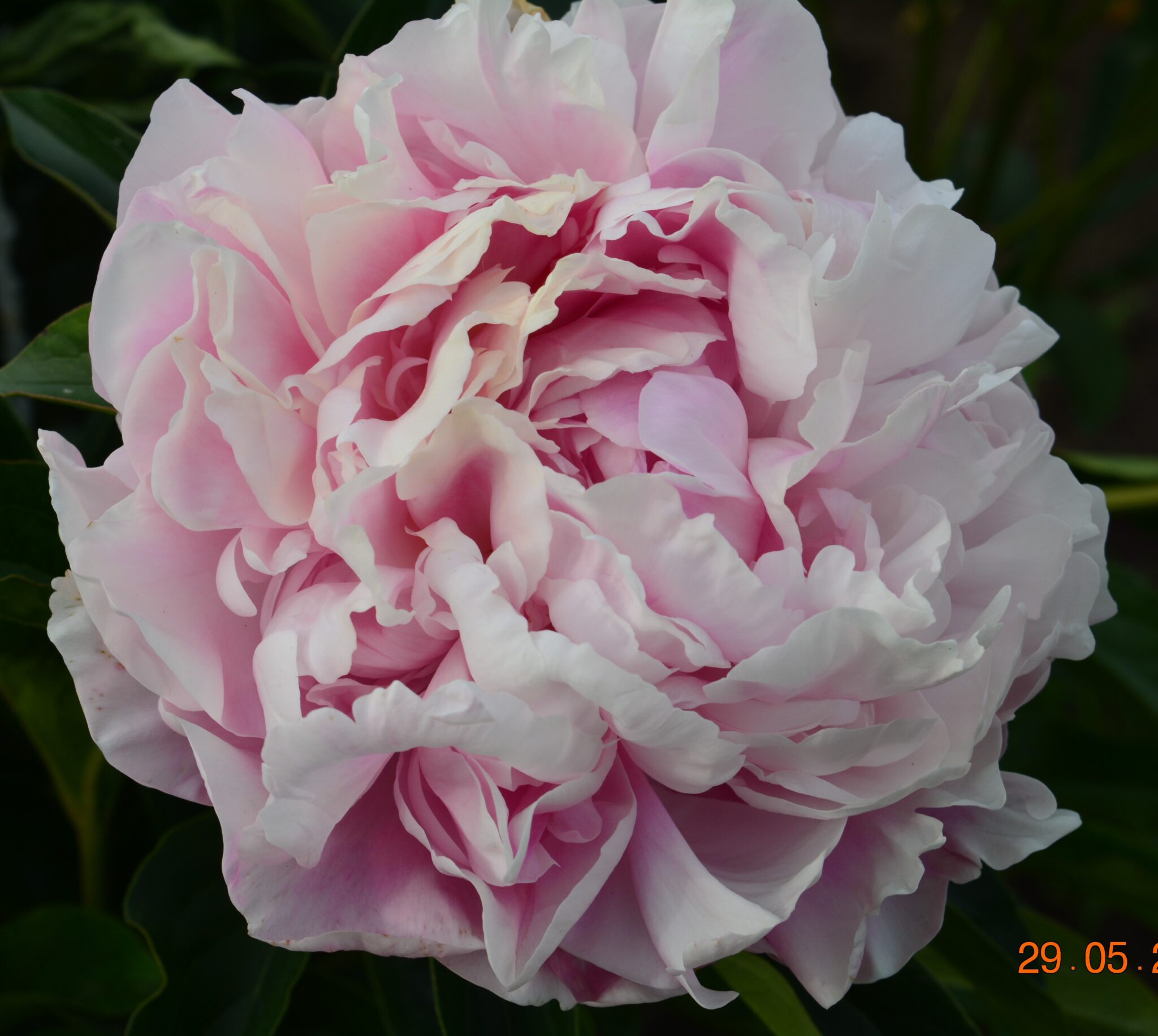
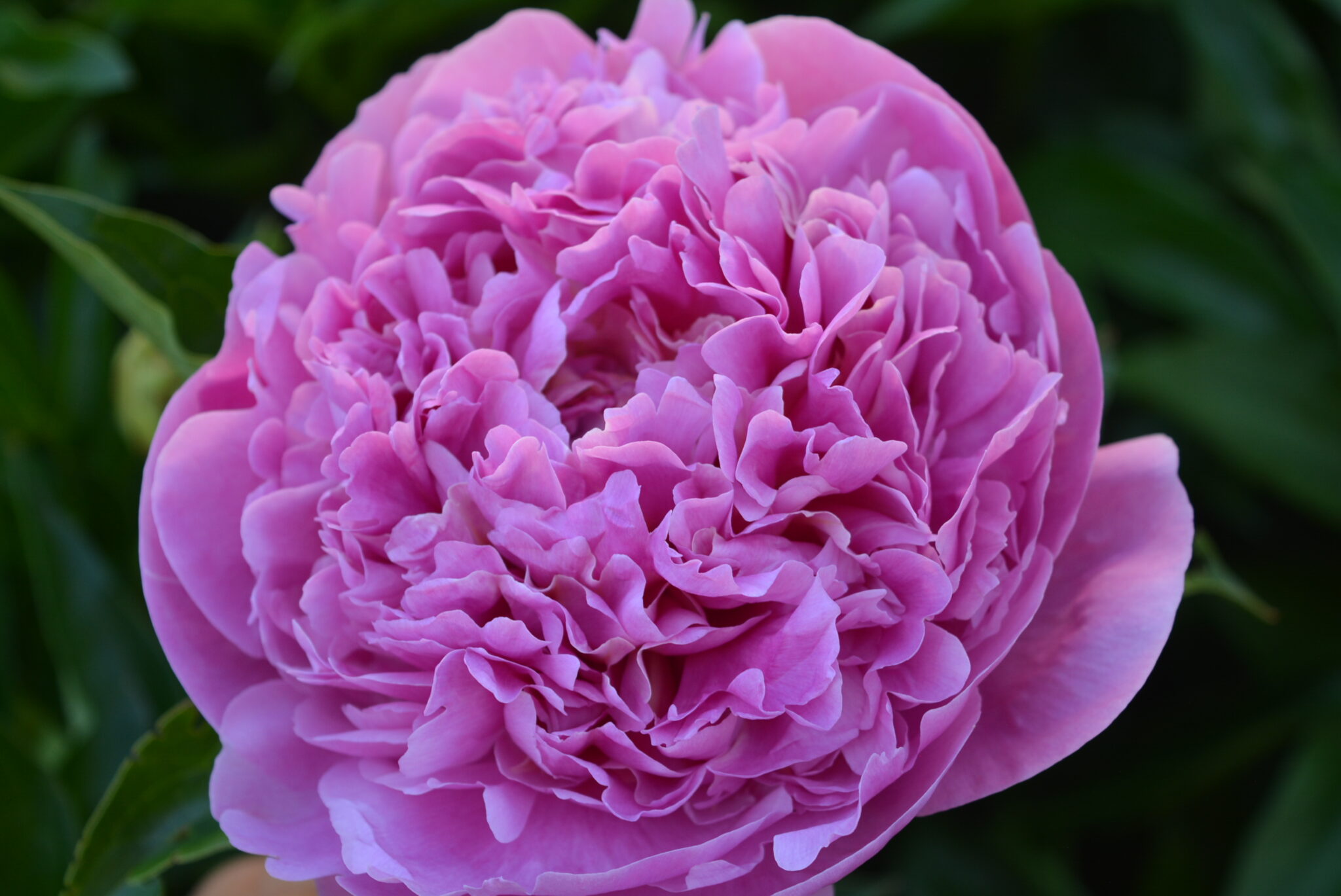
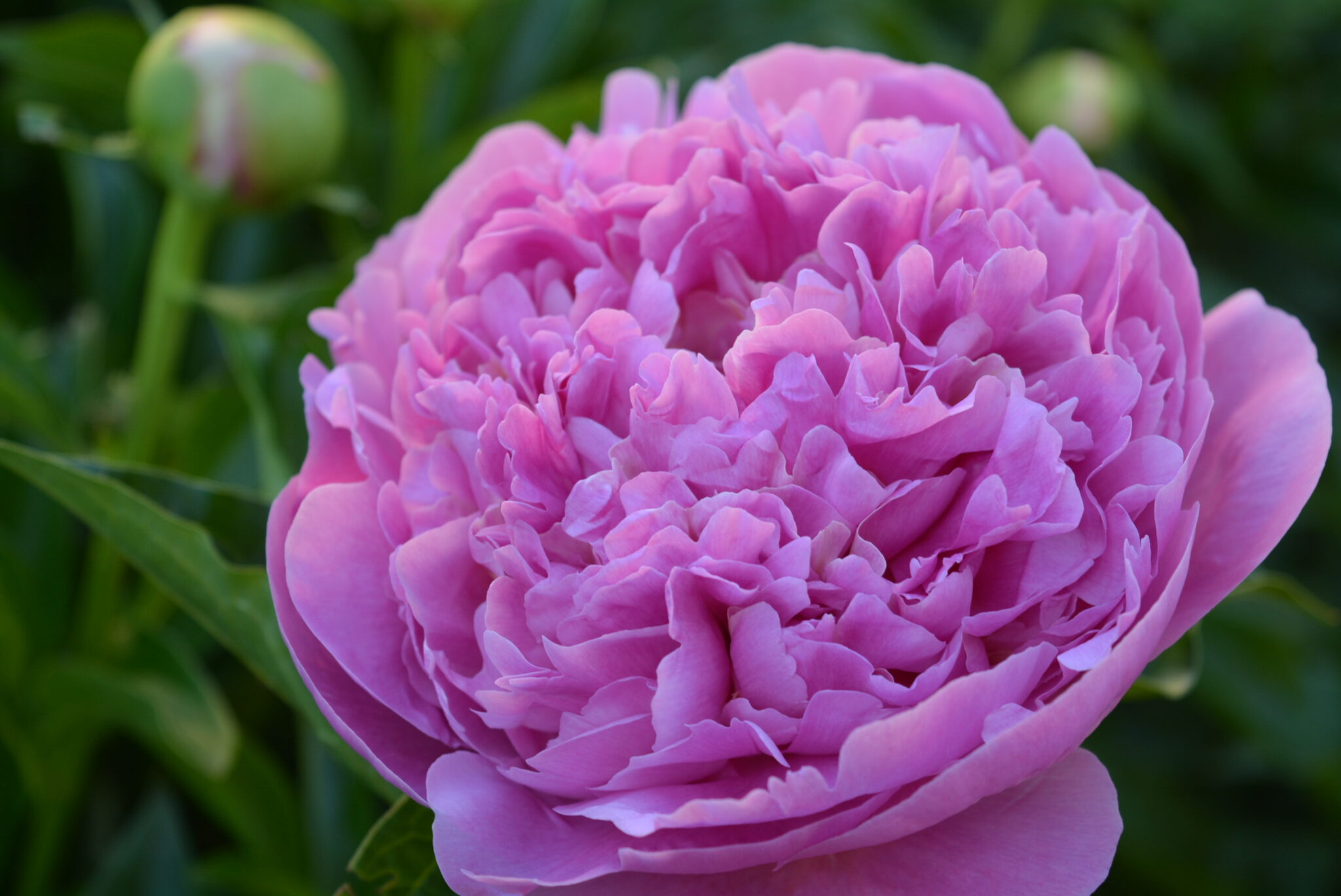
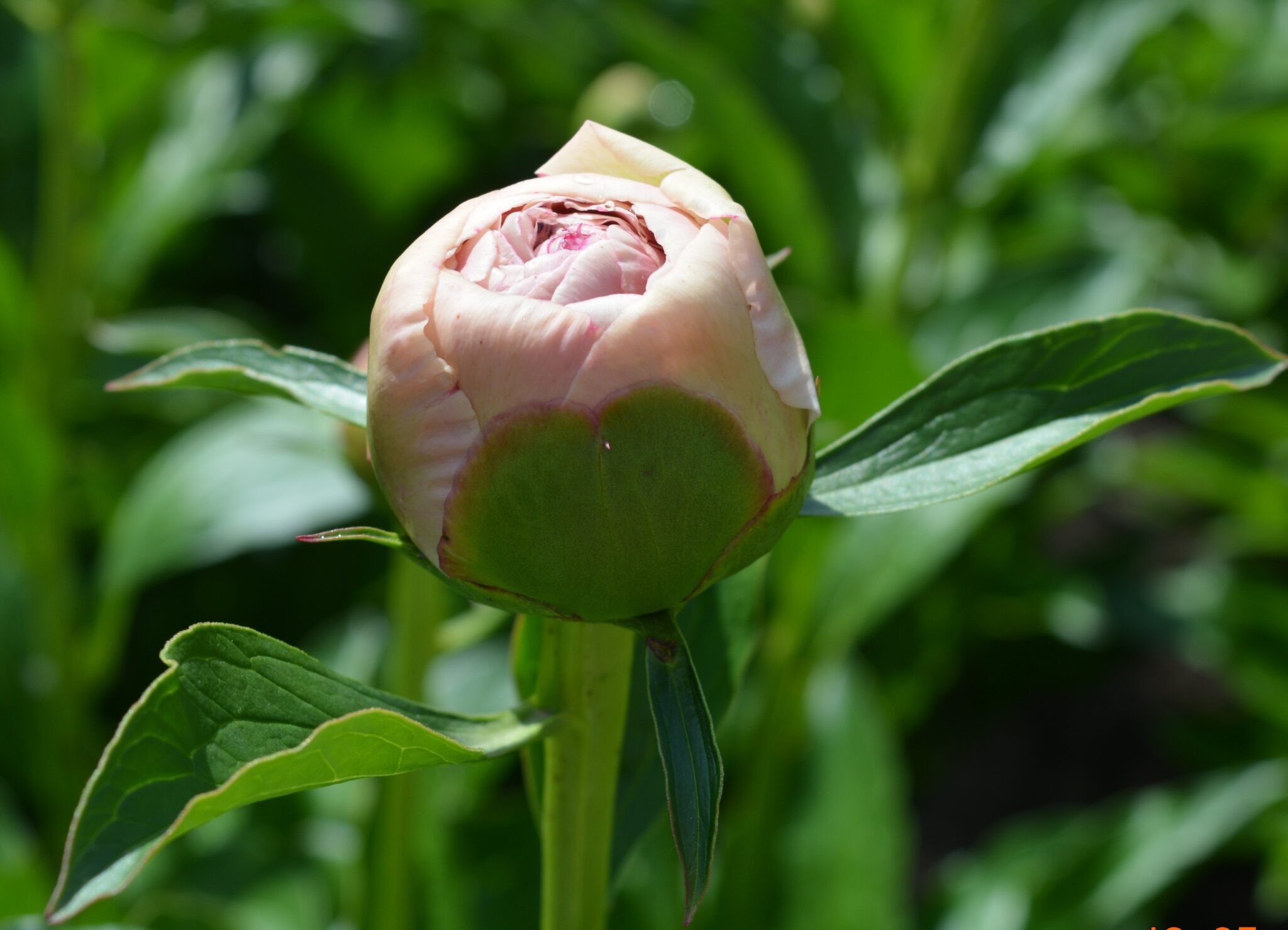
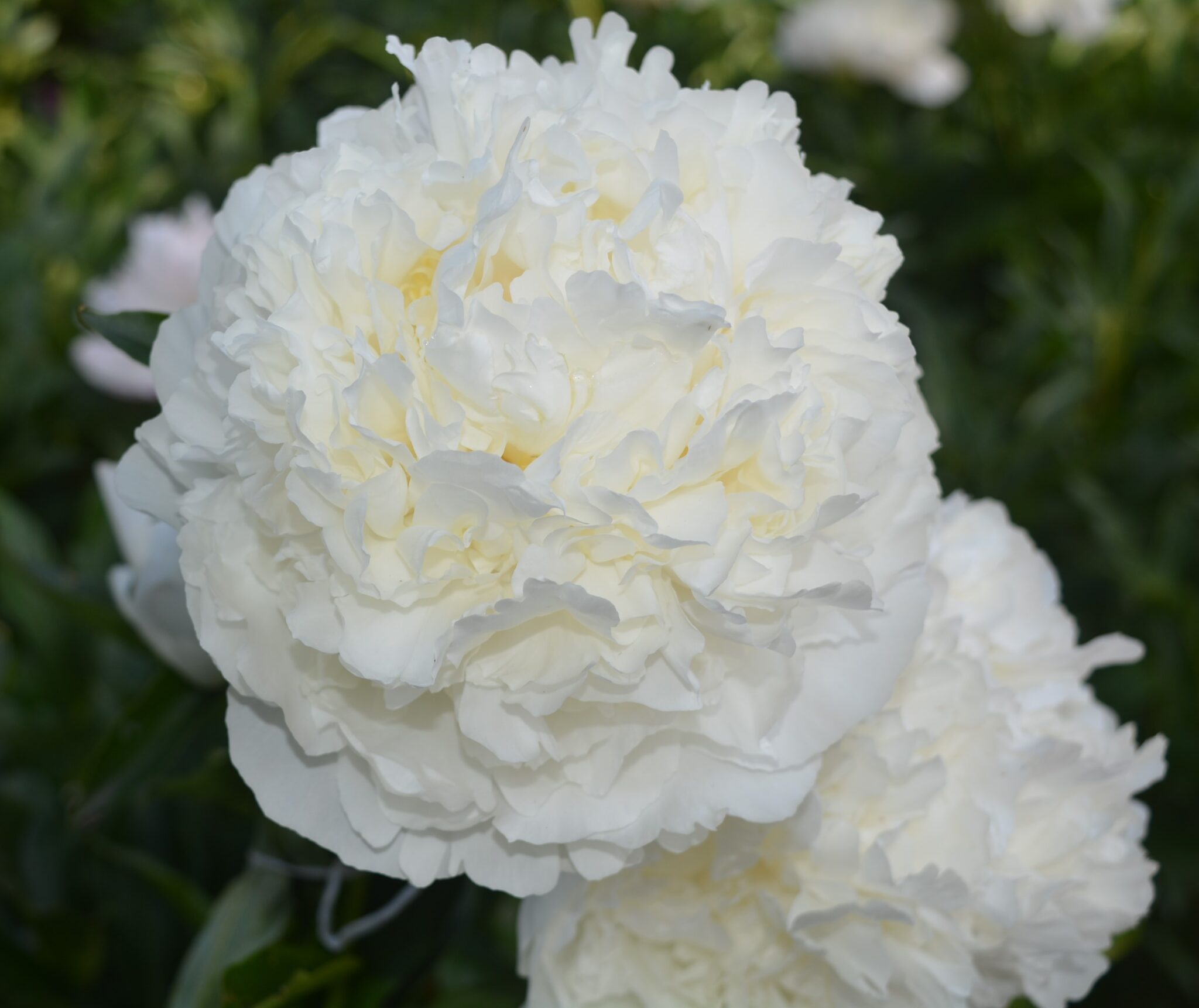
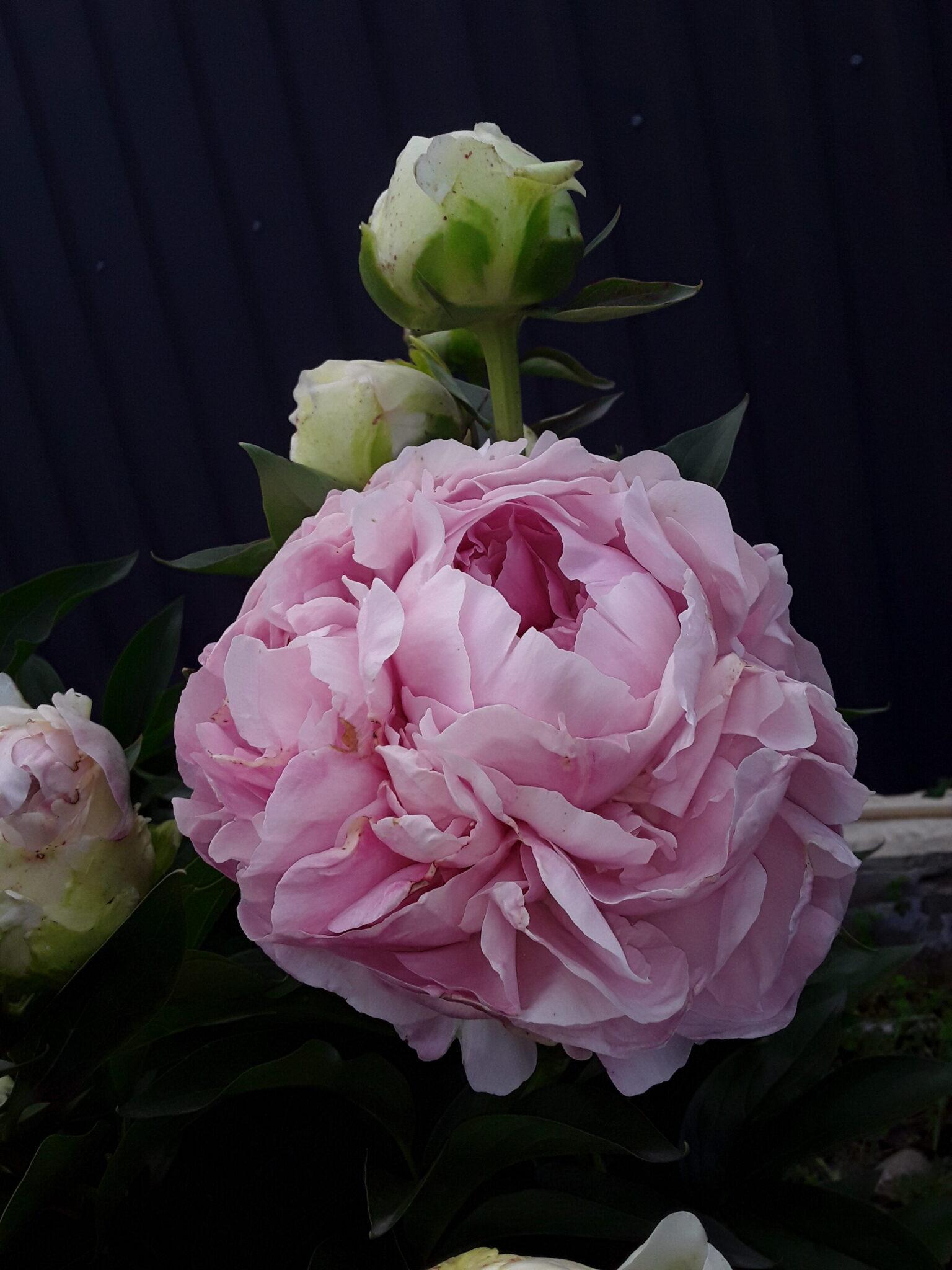
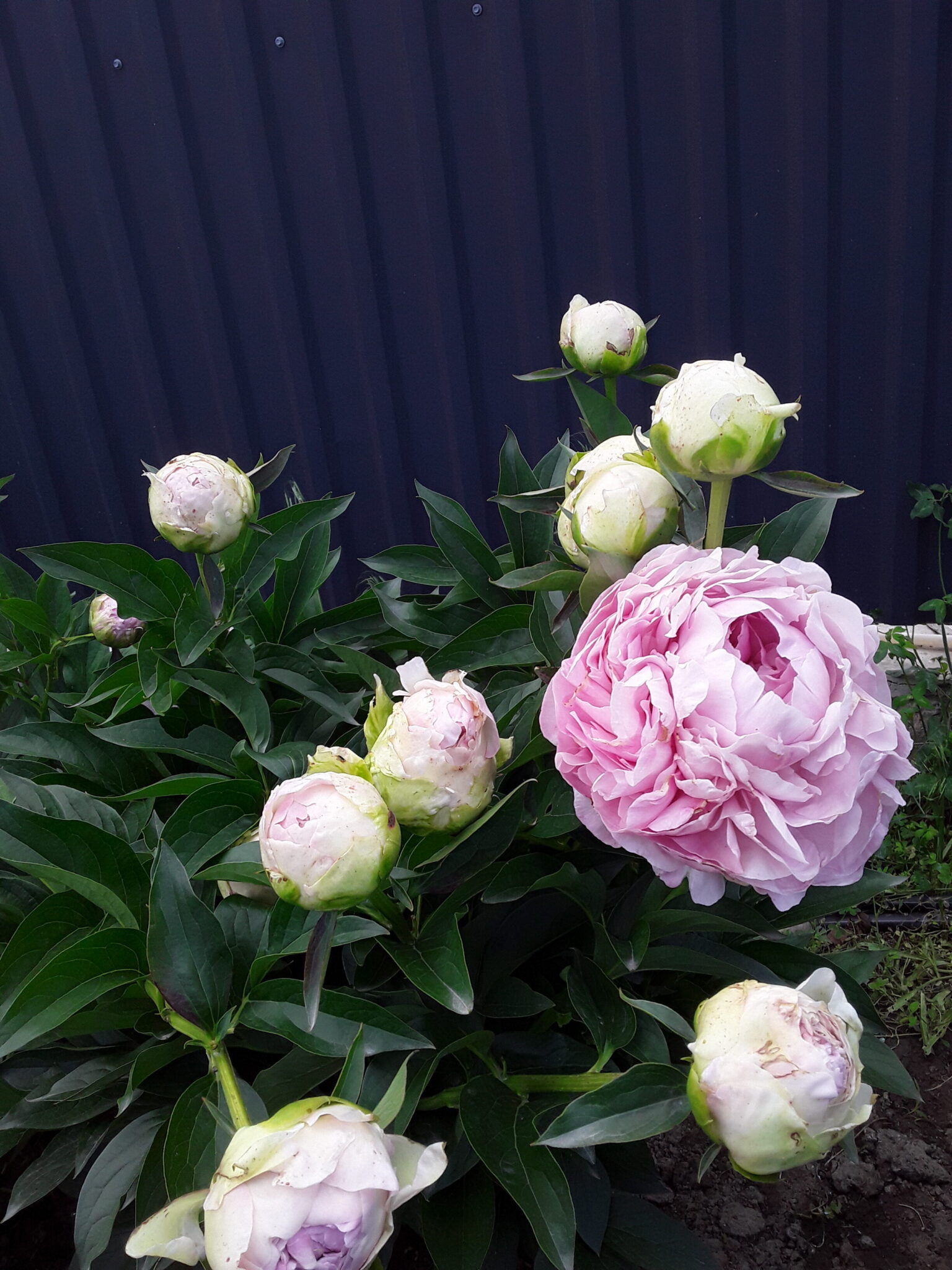
This August, a new peony collection book is scheduled to be published in Moscow. The author is Larisa Pavlova. I have sent her descriptions of 150 cultivars that I have bred in recent years. I also suggested that she review photographs of what I consider the most interesting of these cultivars, many of which do not yet have names. The photographs are attached.
Conclusion
The story of Larisa Askarova and Anatoly Skakodub is a story of quiet, genuine breeding, not created for the market or for fame. It is a path where honesty, memory, continuity, and respect for the plant matter more than numbers or registrations. These peonies were not born for catalogs — they were created for gardens. And today, as they continue to bloom in different countries, in botanical collections and private gardens, it becomes clear: true breeding lives longer than its creators — and that is its true meaning.
Can you describe a few of your plants that you consider the best or most beautiful and which are available now?
-

- Белые Ночи — Belye Nochi (White Nights) — (Askarova L., 2014, Kazakhstan).

-
- Белые Ночи — Belye Nochi (White Nights) — (Askarova L., 2014, Kazakhstan).

Белые Ночи — Belye Nochi (White Nights) — (Askarova L., 2014, Kazakhstan).
P. lactiflora variety, double (rose-type), cupped, D17 cm, white with red streaks on the buds. The bush is upright, compact, and grows well. Stems are thick and strong. Height: 80 cm. Mid-season bloomer. Strong fragrance.
-

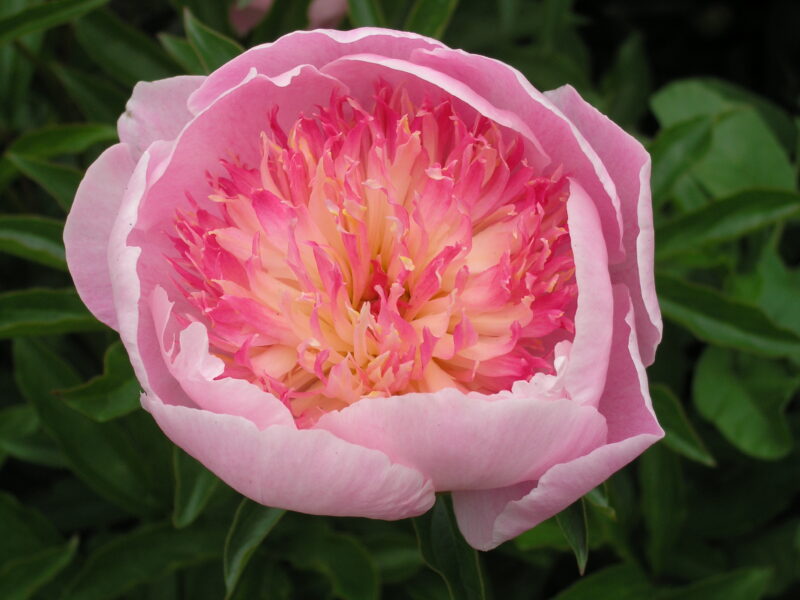
- Свадебные Цветы — Svadebnye Tsvety

Свадебные Цветы — Svadebnye Tsvety (Wedding Flowers) — (Askarova L., 2016, Kazakhstan).
P. lactiflora variety, double (rose-type), D20 cm, soft pink, fades in the sun. Features narrow light-yellow staminodes between the petals and in the center. The bush is slightly spreading; stems are thick and strong. Height: 90 cm. Mid-season bloomer. Faint fragrance.
-

- Алма-Ата — Alma-Ata

Алма-Ата — Alma-Ata (Skakodub A., 1979, USSR).
P. lactiflora variety, double (rose-type), D20 cm, very full, white-cream; some central petals have a very narrow red edge. Stems tend to curve, the bush is slightly spreading. Height: 110 cm. Very late bloomer. Strong fragrance.
-
- Дашенька — Dashenka (Askarova L., 2015)

Дашенька — Dashenka (Askarova L., 2015)
P. lactiflora variety, double (rose-type), D16 cm, lilac-pink. There are narrow pale yellow petals interspersed among the primary-colored petals. The bush is upright; stems are thick and strong. Height: 85 cm. Mid-season bloomer. Faint fragrance.
-

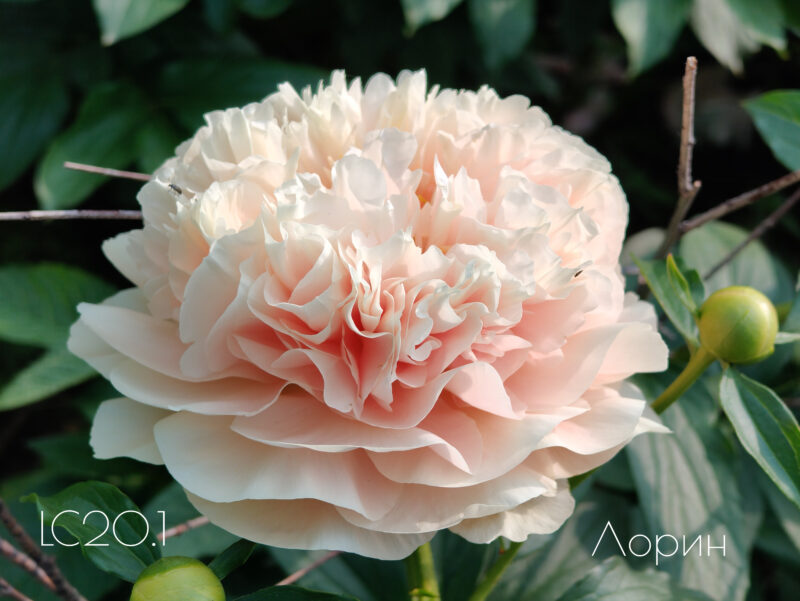
- Лариса Скакодуб — Larisa Skakodub

-

- Лариса Скакодуб — Larisa Skakodub
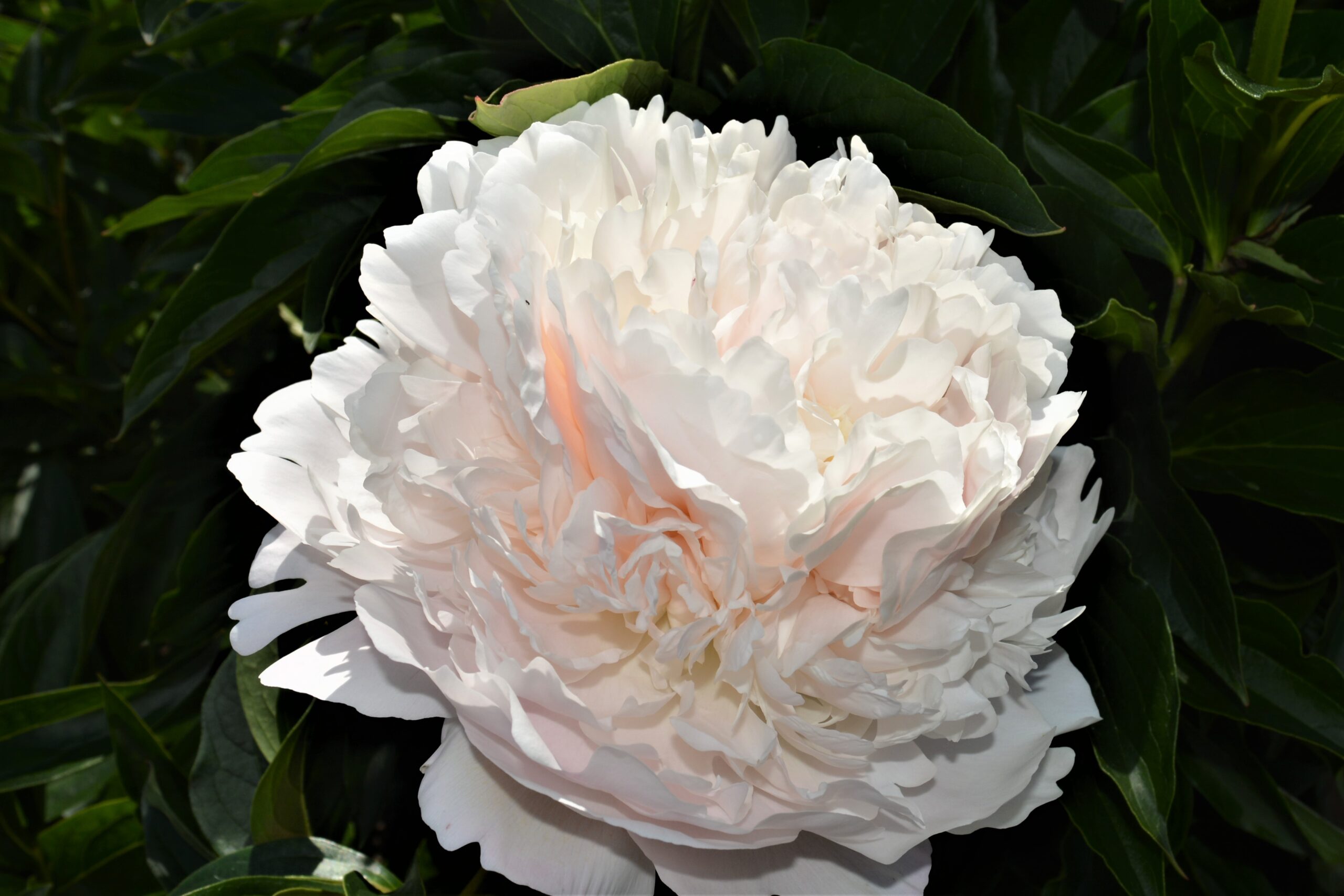
Лариса Скакодуб — Larisa Skakodub (Askarova L., 2010, Kazakhstan).
P. lactiflora variety, double (rose-type), very full; sometimes the flower develops multiple crowns. D20 cm, white with a creamy-pink tint. Stems are thick but cannot support the heavy flowers — requires staking. Height: 120 cm. Mid-season bloomer.
-

- Анатолий Скакодуб — Anatoliy Skakodub
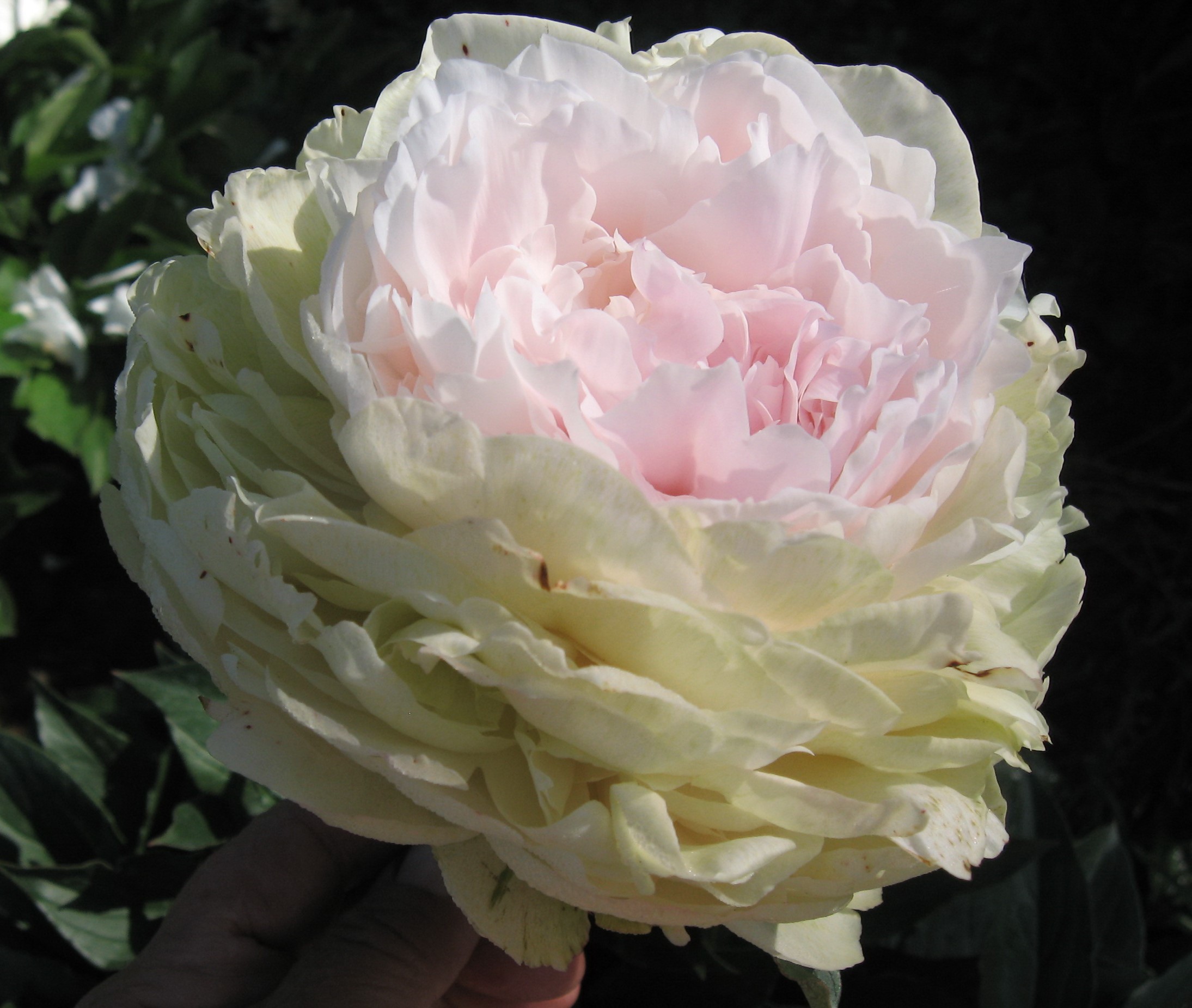
Анатолий Скакодуб — Anatoliy Skakodub (Skakodub A., 1984, USSR).
P. lactiflora variety, double (rose-type), D18 cm. Buds are elongated and open slowly; initially greenish-flesh-pink, becoming white-cream with a flesh-pink glow in the center when fully open. Petals are firm, leaves are dark green. The bush is upright, stems are thick and slightly curved. Height: 120 cm. Late bloomer. Faint fragrance.
-

- Идиллия –Idylia

Идиллия –Idylia (Askarova L., 2018, Kazakhstan).
P. lactiflora variety, double (rose-type), very full, flat form, D18 cm, light pink with uneven coloring: petals are cream-colored at the base, and central petals may have a crimson edge. Fades in the sun. Stems are thick and strong. The bush is slightly spreading. Height: 80 cm. Mid-early bloomer. Faint fragrance.
-

- Солнечный День — Solnechnyi Den
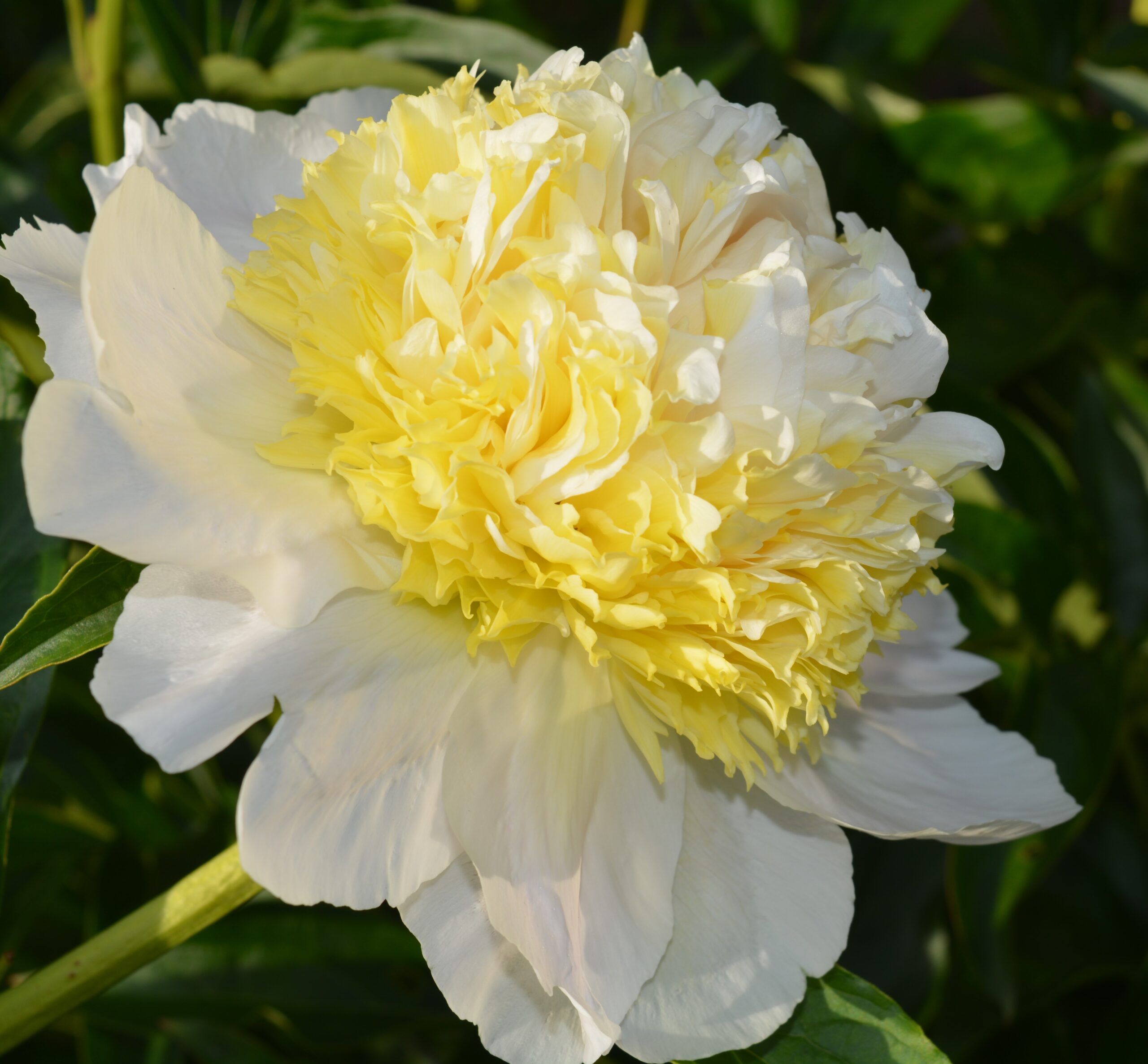
Солнечный День — Solnechnyi Den (Sunny Day) — (Askarova L., 2010, Kazakhstan).
P. lactiflora variety, double bomb-type, D16 cm. Outer petals and the tuft are white with a green tint, featuring a ball of narrow yellow petals. Flowers rise above the bush. Leaves are light green. The bush is slightly spreading; stems are strong. Height: 90 cm. Early bloomer. Faint fragrance.
-
- Владимир Дубров — Vladimir Dubrov
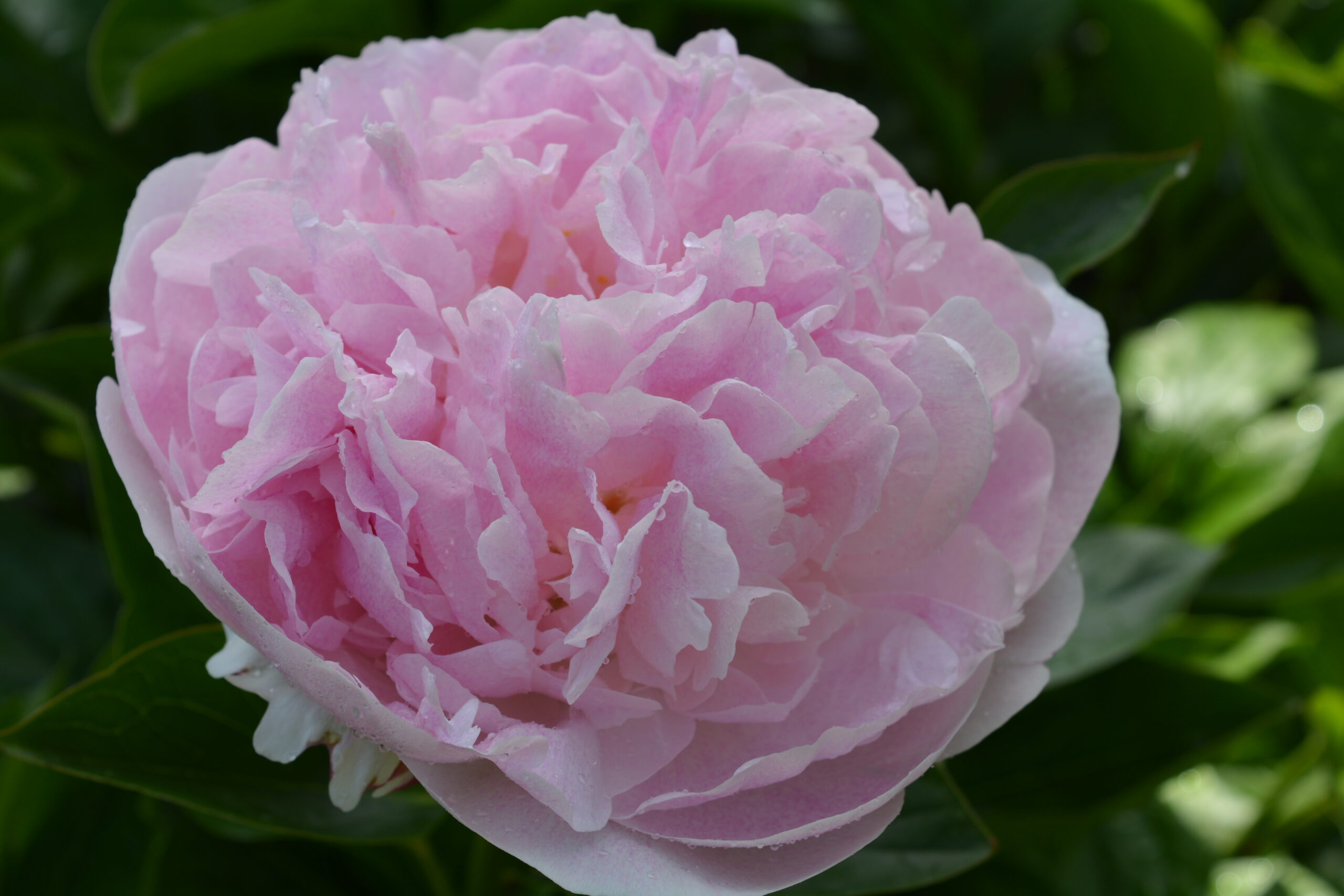
Владимир Дубров — Vladimir Dubrov (Skakodub A., 1995, Kazakhstan).
P. lactiflora variety, double, flat form, D20 cm, soft pink. Leaves are bright green, broad, and glossy. Stems are thick and strong, the bush is compact. Height: 120 cm. Early-mid season bloomer. Faint fragrance.
-
- Светлана Седова — Svetlana Sedova
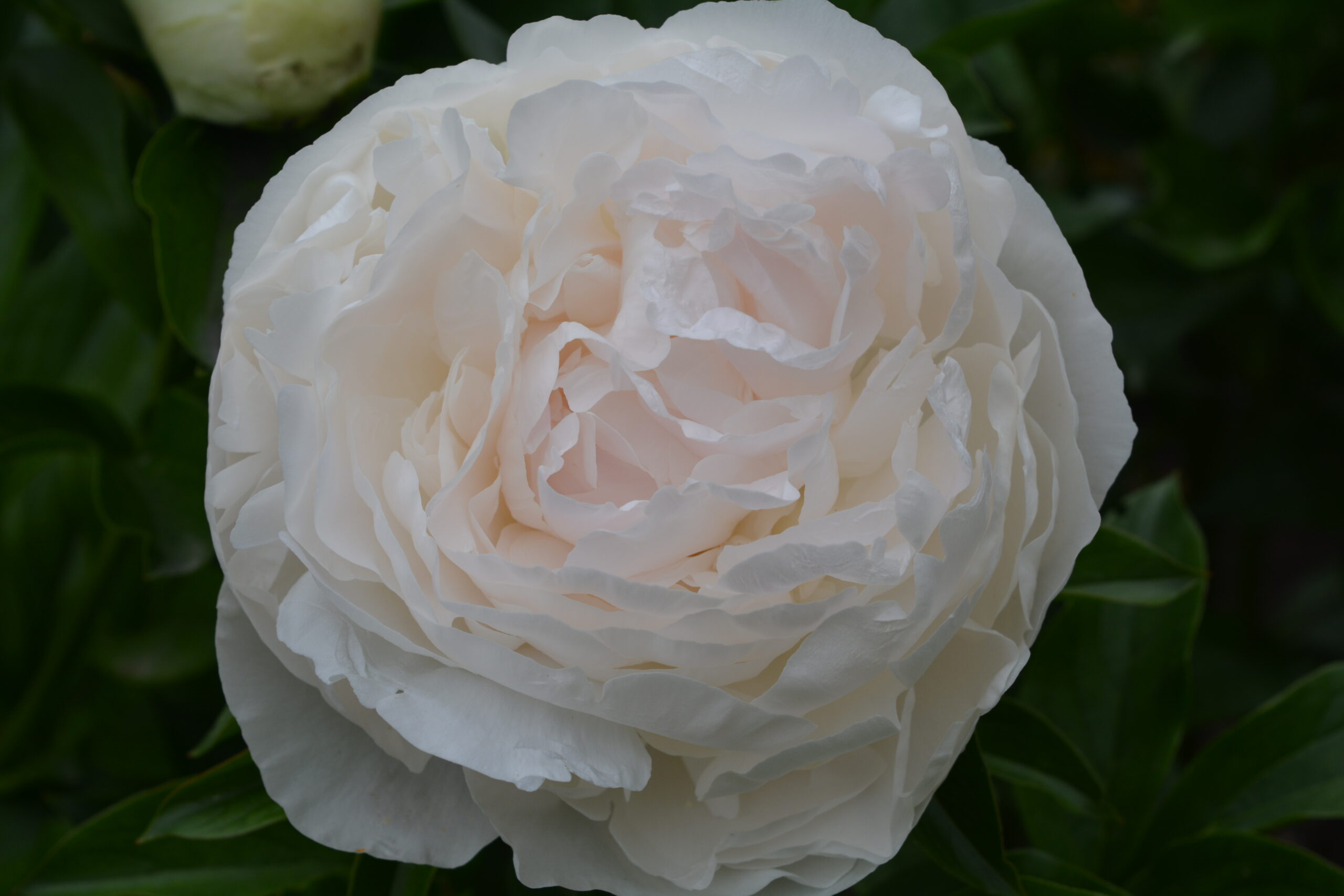
Светлана Седова — Svetlana Sedova (Skakodub A., 1985, USSR).
P. lactiflora variety, double (rose-type), D20 cm, white-cream with a soft pink glow in the center. Leaves are light green, broad, and glossy. The bush is upright and compact, stems are thick and strong. Height: 95 cm. Late bloomer. Faint fragrance.
Within your current seedlings, what are the most promising ones?
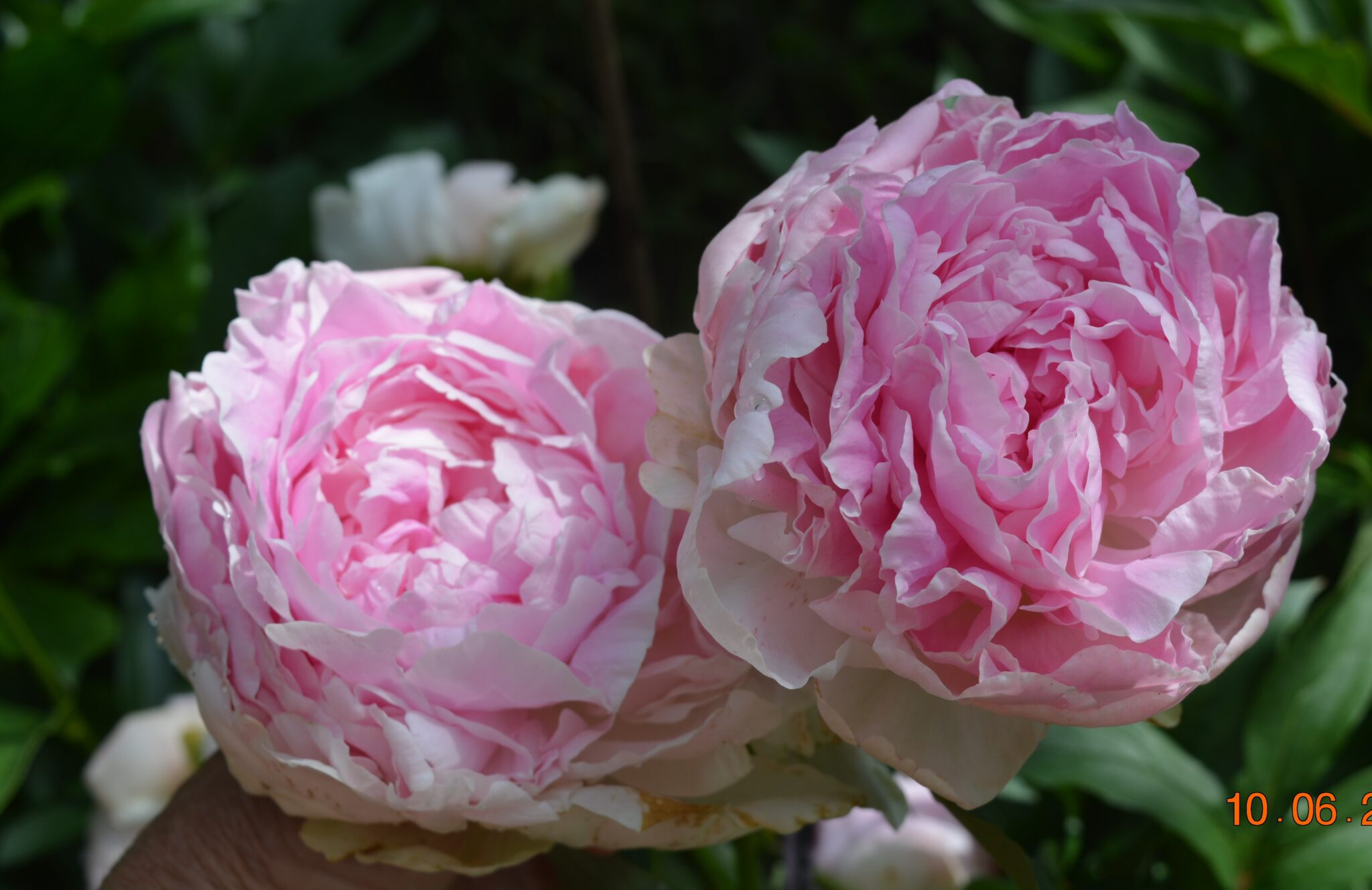




E-mail of this person is known to the author. If you want to contact this hybridizer, we can forward your message.