












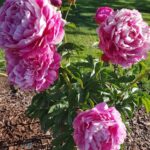


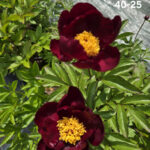


Updated with some more info I received from Aleksej.
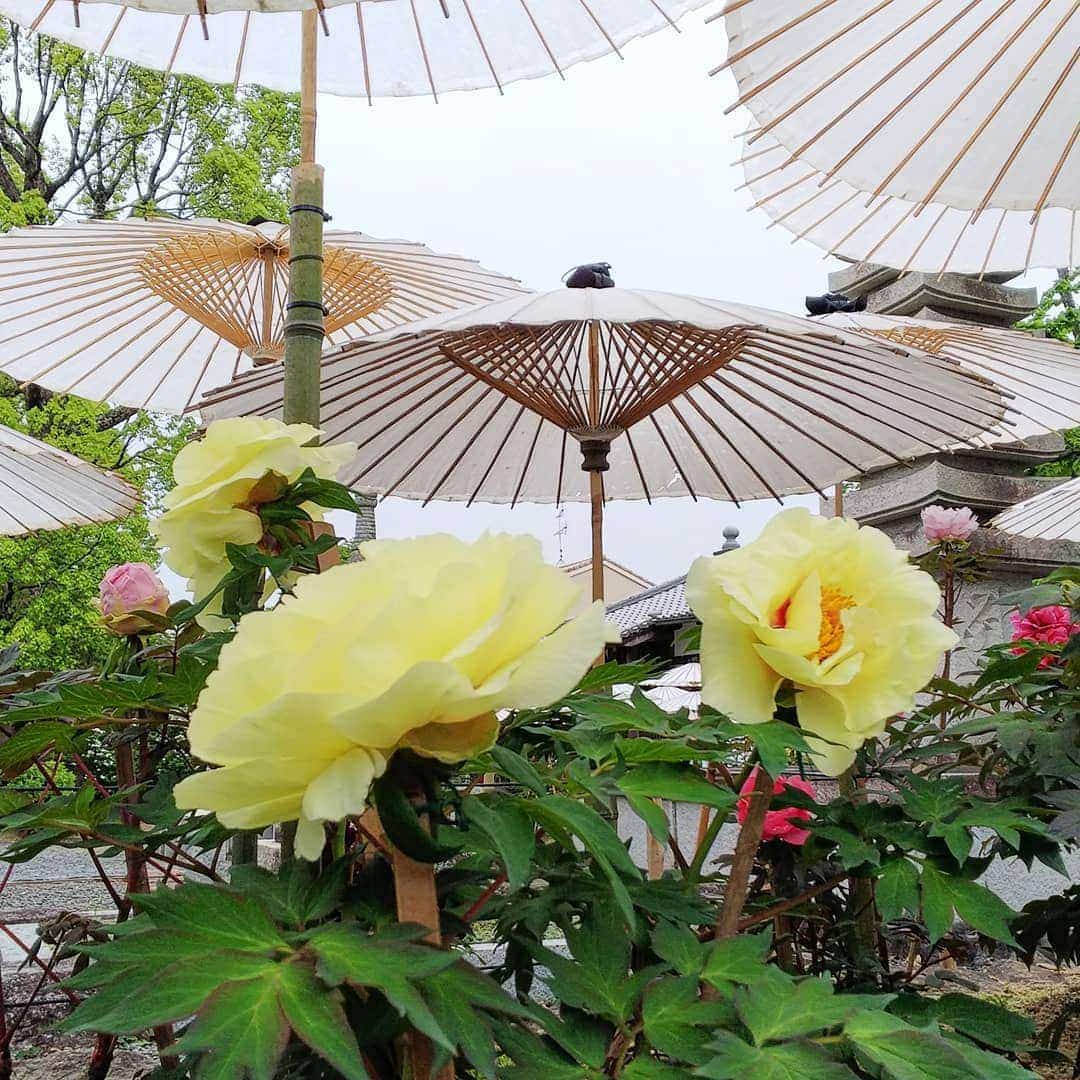
The time of the winter peonies in Japan is now, try an instagram search for the hashtag 牡丹
1 CommentThe article “Peonies of Turkey” has been updated to include some remarks by two Turkish scientists and several additional images have been added as well. I think it is now a whole lot better. Thank you to Halbay Turumtay and Cemal Sandalli for the extra information.
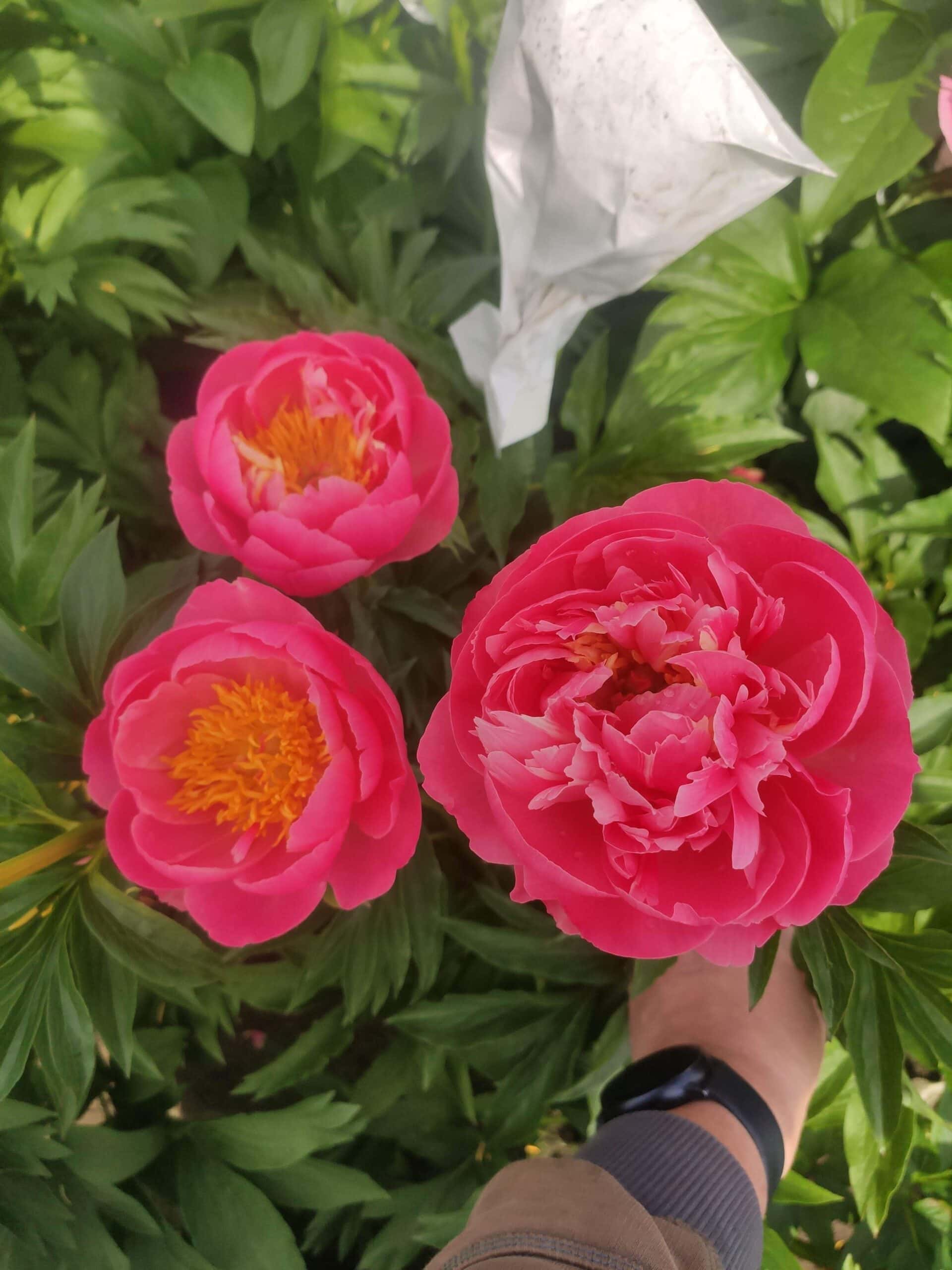
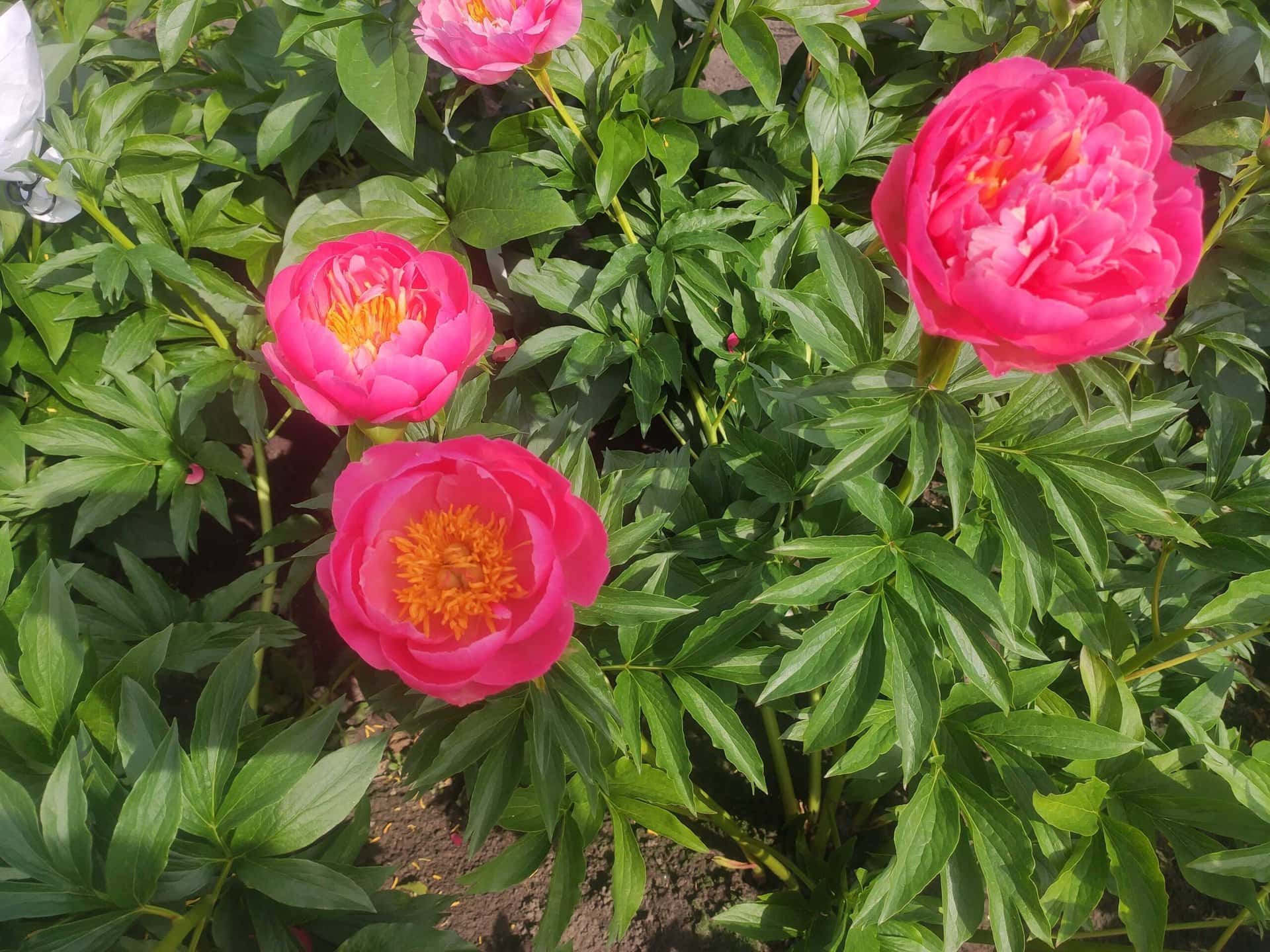
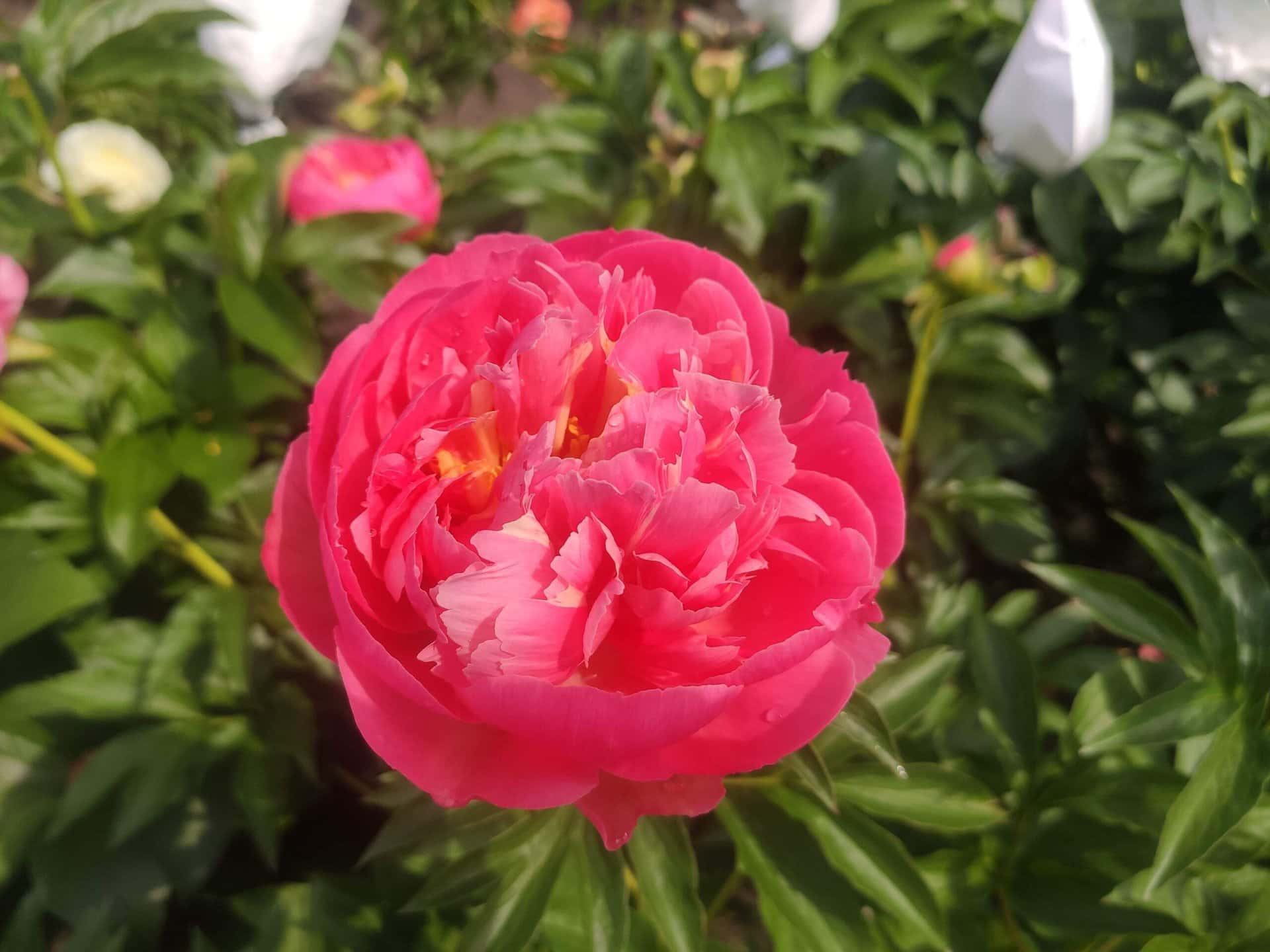
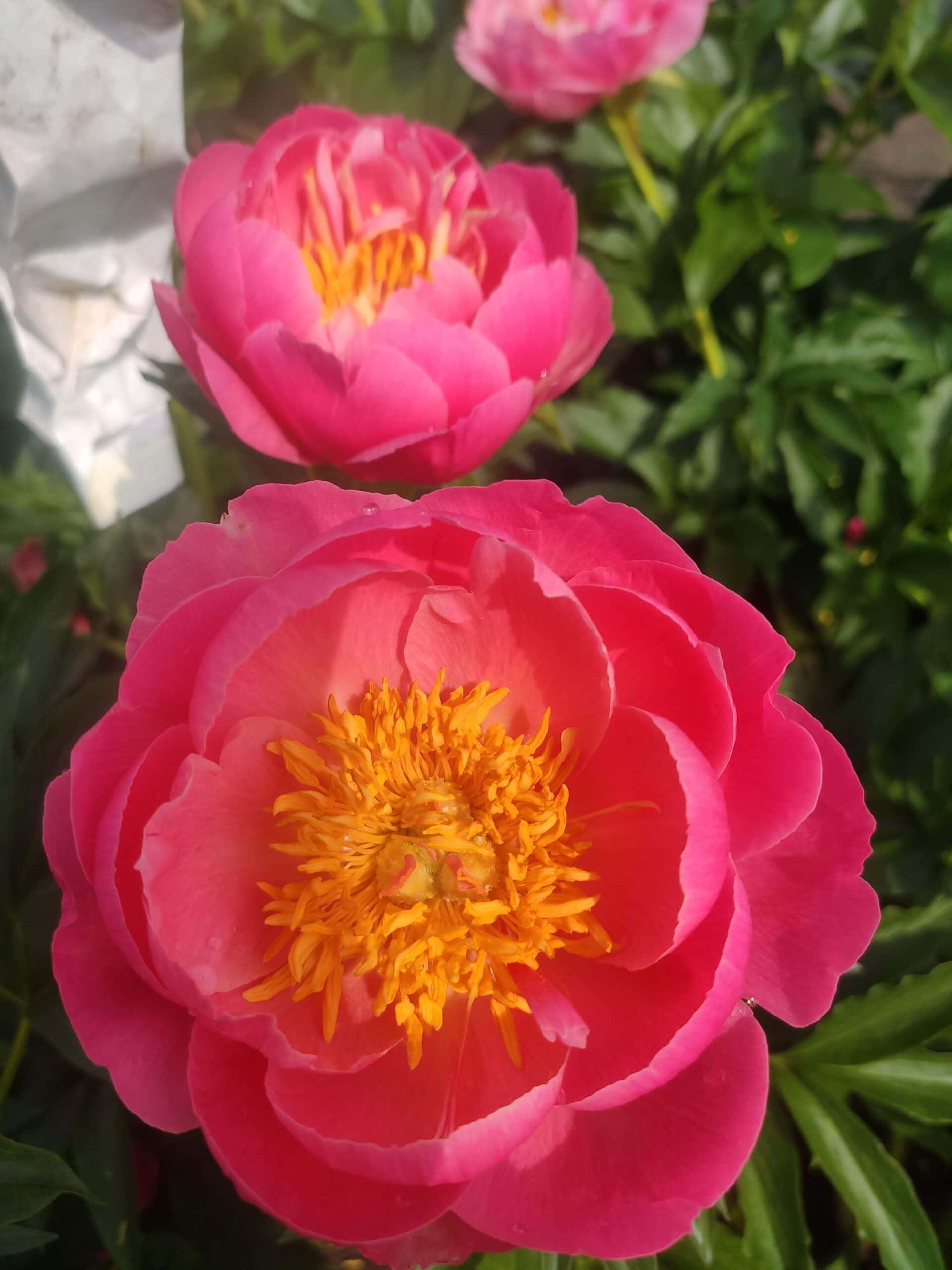
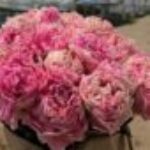
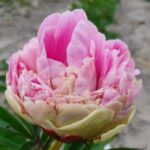
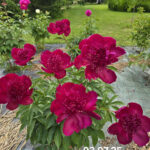
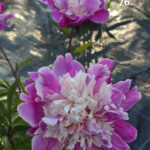
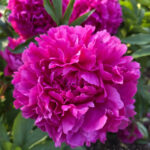
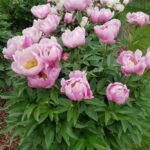
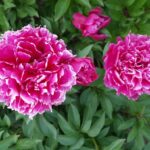
Nothing much happening when it comes to peonies currently. So to bridge the time until there’s more to tell, here are some images of last season’s OFF-4, a plant from Hans Maschke. A cross between Old Faithful and Coral Charm, thus with some interesting genetics. Can have all flower forms as can be seen from the image. Late flowering, very sturdy…Read More
![]()
![]()
![]()
![]()
![Profile picture of khurtekant]()
khurtekant posted in the group Species Peonies International Network (SPIN)
These are some open pollinated seedlings from Lagodekhi Sunrise, a selection from those lagodechiana hybrids (mloko x caucasica), a natural hybrid which you’ll find in Georgia. They naturally grow in shade, but my seedlings are in full sun. This shows on the leaflets, they are turning into all kinds of colours. I quite like it in fact.
13 Comments
😮 So close! Did not know it grew in my Motherland. What DOES not grow in the Caucasus? I will look these up. Turkey’s Black Sea climate might accommodate them.
![Profile picture of khurtekant]()
I can see you’re from Turkey. It has probably the most diverse natural collection of peony species of any country. P. peregrina, P. turcica, P. kesrouanensis, P. mascula ssp mascula, P. mascula ssp bodurii, P. arietina, P. tenuifolia, P. daurica ssp daurica, P. daurica ssp macrophylla, P. arietina ssp arasicola and P. x kayae (a hybrid). Perhaps…Read More
-
I read with fascination and gratitude. Will definitely look them up, and draw a map!
-
I am from the Caucasus, but I live in Turkey. I am stunned that Anatolia contains so, so many varieties. I will look them up, and, hopefully find and photograph them, even if others have done it before. A local Peony Pilgrimage, if you will, before I go to China and Japan. I am watching CGTN’s documentary The Peony 1-4, and my heart has fallen. I…Read More
![Profile picture of khurtekant]()
This is probably the best article on peonies in Turkey, listing 11 (sub-)species in 54 locations in Turkey. It’s in Turkish but I suppose that will not be a problem for you.
-
I thank you infinitely! However, I cannot but help laugh at the crude ‘Bear Flower’ or ‘Bear Rose’ name our locals have given them. Poor Peonies.
-
I can translate these documents for you, if you wish, as thanks.
![Profile picture of The Peony Society]()
Oh well, that’s very friendly, thank you. But I’ve run it through Google translate. The translation is very basic and it does happen that some sentences are rather incomprehensible, but it’s good enough to understand the main part. A translation from you would of course be far better, but I think the time needed to translate such a long article…Read More
![Profile picture of khurtekant]()
Well, you surely can. Here’s a map showing where you can find wild peonies in Turkey. There are probably listings with more precise locations, but I’m sure if you look somewhat you can find them. Some people sometimes post images of wild Turkish peonies on facebook, you might have a look there as well and perhaps ask the photographers where they…Read More
![Profile picture of khurtekant]()
Try joining this group on facebook and look for some images of Paeonia turcica, paeonia arietina, paeonia kesrouanensis and paeonia arietina arasicola. There have been images posted of those from Turkey in the last two years at least.
-
As much as I appreciate your assistance, I have a deep-rooted aversion to fB since the day they said, ‘We have discovered that you use your fb password on other sites’ back in 2008. I will never join them unless for commercial purposes. I will see what information I can get without joining fb. Much, much appreciated. I love peonies almost as much…Read More
![Profile picture of khurtekant]()
Not that only species peonies grow in Turkey, here’s an instagram account of a commercial peony cut flower farm:
https://www.instagram.com/kesme_sakayik/-
Oh! Many, many thanks!
-
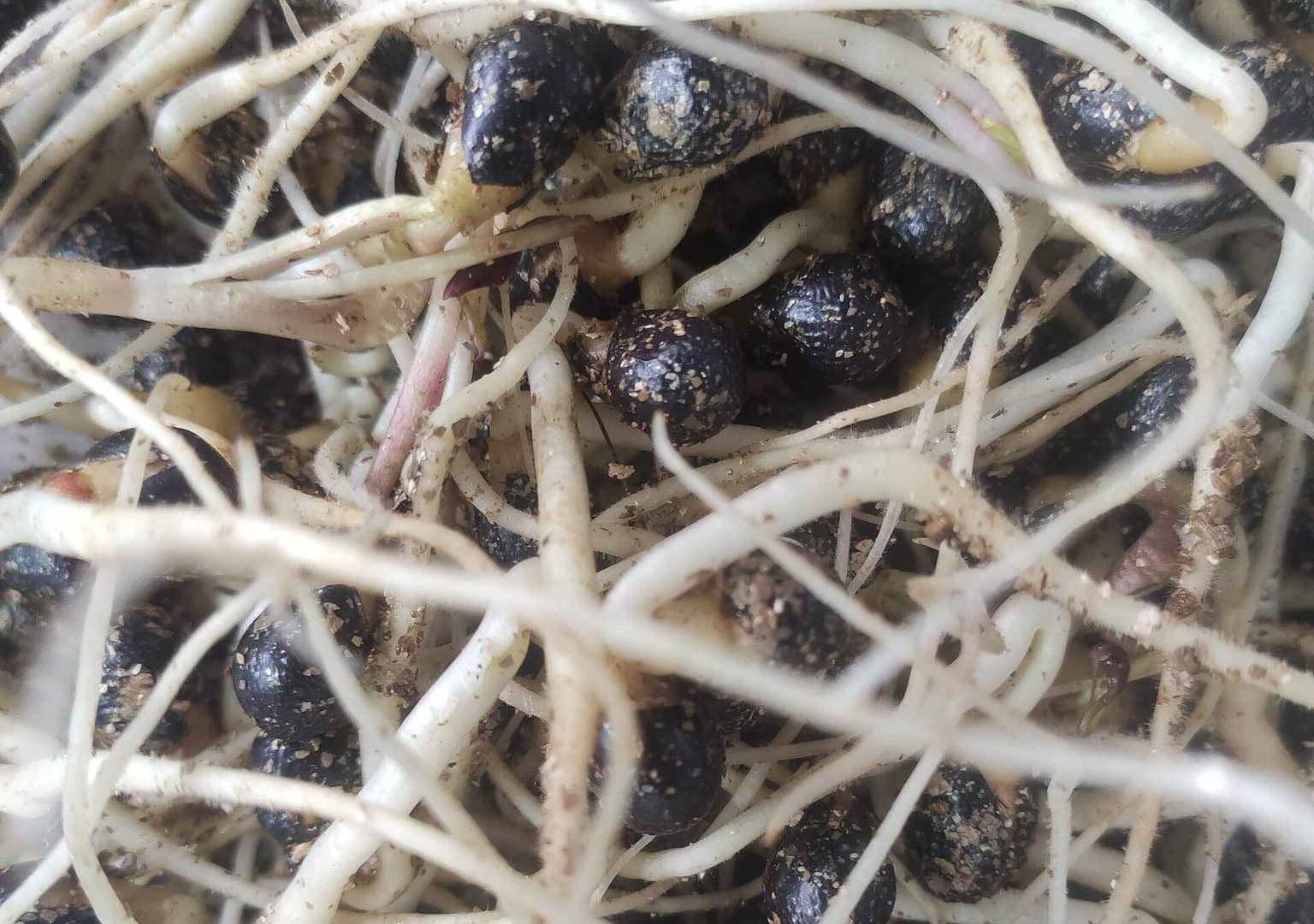
Interesting to see your results, and to see that you’ve gotten germination so quickly ! I’d be interested in knowing what your temperature routine was, and if you used this year’s seeds ?
I have my ways of doing it, but I can’t say that I’ve done as much experimenting as I should. I get results, so I’m happy, but since I’m getting something…I’m probably afraid to do too much experimenting out of fear I’ll get nothing.
And what about all those cracked seeds ? I get them with some crosses, but not others. ‘Laddie’ seems to be the worst offender here – some years a large percentage of seeds will be ruptured, while other years most of them look fine. In the past I used to think that it had to do with widely varying amounts of soil moisture, which may still be the case. But different pollens seem to produce different results too.
My sense is that when we get brown tips on the end of the roots, it’s from too much moisture or a lack of air ?
I’ve come to where I now give all of my seeds, fresh or not, several days of soaking prior to putting them in the bags. And will give them a bleach solution rinse before I bag them too. My sense is that if I’ve soaked my seeds well before I bag them, then all that’s really needed in the bags is an atmosphere that can maintain 100% humidity. I use fairly coarse vermiculite rather than the very fine stuff, but that’s just a matter of preference, along with what happens to be in the big 4 cubic foot bag that I buy every few years.
One other thing about vermiculite – it does a good job of showing you which seeds are rotting, by the manner that it sticks to rotting seeds.
In any case, good for you for doing these sorts of experiments. I suspect others may be like myself – we do something that seems to provide us (for better or worse) with results, and then we tend to stop experimenting.
![Profile picture of khurtekant]()
@bobjohnson Yes, this year’s seeds. But they were mature halfway August, earlier than yours. Then soaked for two days and then all the different treatments. The bags were placed in my unheated greenhouse. I should have logged the temperatures perhaps, but I didn’t (I’ll do that next year). The greenhouse vents are set to keep temperatures around 21-23°C (68°-74°F), although temperatures may have risen above this at times. There was no heating however, so temperatures during night will have gone down quite a bit as well. Last year I did the same treatment, but temperatures were not as high then and rooting occurred later, although here as well I don’t remember exactly when.
I am not sure about the exact treatment as well. I did receive some seeds later in the season and hesitated what to do with them. Place them in the greenhouse as well, although with decreasing temperatures they may not receive a long enough warm treatment. Or place them inside in a room where I can give additional heating? I’ve split them, but as it’s only a few seeds, I doubt much can be concluded from it if I would get some roots.
What I also wonder about: in the greenhouse they actually receive both warm and cold during the ‘warm period’. That’s more like will happen in nature of course. I have noticed that some of the seeds already had a plumule growing. So those must already have received their required cold period as well. Perhaps it’s thus possible to give both warm and cold period at the same time? Which is not necessarily very beneficial of course, I cannot plant them outside as they risk being frozen resulting in early death. And for some I do think outside planting after the first roots might be better, in pots there is always more risk of loss is my experience.
But what I reallly wanted to say: what would be best? Continuous warm temperature (as you would have inside) or alternating warm/cold temperatures, with probably the warm daily temperatures rather warm enough and for a long enough time? There sure is some more experimenting to do. But it will be for next year… I didn’t really mind all the failed germinations from Just Peachy. If not for this experiment I would never have collected the seeds at all.
I think the brown tips at the growing point of the roots are from too much moisture. If it were lack of air, I’d expect it to see at random throughout the experiment, which wasn’t the case, it deteriorated with increasing moisture levels.
The ruptured seeds I threw away weren’t necessarily bad, but I wanted to rule out the possibility that they would influence the results if they germinated less well or otherwise compared to ‘normal seeds’.
- Load More Posts


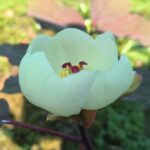


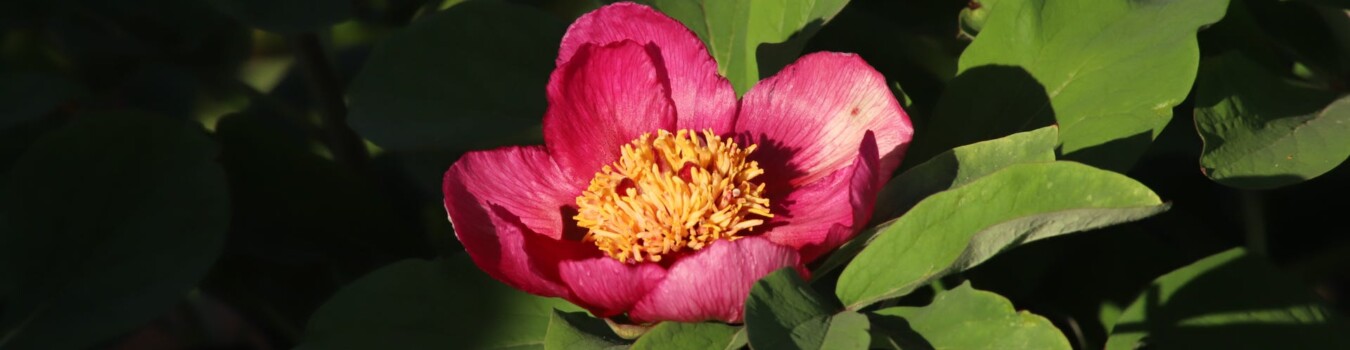







To go there directly:
https://www.instagram.com/explore/tags/牡丹/