Viktoriya Pikul
Country:
Russia
Short biography:
I’m 54 years old, married, with two adult sons, aged 30 and 26. I’m a very active and athletic person, spending a lot of time doing sports: skiing, mountain biking, fitness, and strength training. I also travel a lot; for the last four years, I’ve spent 78 days a year in the mountains on the ski slopes, but that’s during the winter season. In Summer, I devote all my time to the garden. My small garden (0.3 hectares) is located on my ancestral land in the Moscow region.
I am an aviation technologist by education (diploma from the Tsiolkovsky Russian State Technical University), and a bank manager by profession. Both are very far removed from gardening and plant breeding. In 2021, I quit my job and immersed myself in hybridization.
I inherited my love for the soil from my grandmother, Domna. As a child, I loved helping her. She taught me how to dig, use a hoe, mow grass with a hand scythe, and much more. These lessons from the Earth have stayed with me forever. My passion for the garden began with marigolds, asters, and petunias. Then I came across the book “All About Flowers in Your Garden” by Hessayon D. G., and I decided that all the plants in it would be grown in my garden. I planted my first peony in 2005.
Why then did peonies, and not other flowers, become a part of my life? After all, their blooming period is so brief and fleeting. Perhaps partly because it is, on the one hand, so long-awaited and swift, and on the other, so vibrant and impressive. If peonies bloomed gradually throughout Summer, they wouldn’t bring us so much joy and happiness. Their blooms are filled with fragrances and colors, forming a vivid memory in our minds that we cherish over long Autumn and Winter evenings, when we choose peonies offering new colors to complement the existing palette to create yet another fresh explosion of impressions and emotions. This long anticipation gives rise to a strong desire to possess those plants. This is how a collector is born…
Over the years, my fascination with peonies grew into a desire to create a source of spiritual joy, inspiration, and emotional delight for other people. This is precisely the role peonies play in my life. It’s hard to imagine a flower more rich in its variety of form and color. When you see such potential in this plant, you can’t help but wanting to participate in the creation of another peony, one unlike any other on planet Earth. And perhaps it will bring people a slightly different joy, with a different shade of color and fragrance. This is how a hybridizer is born… This is my path here and now.
More information:
Peony hybridizers series
-

- Viktoriya Pikul


Viktoriya Pikul and some images of her garden
How did you first get involved in peony hybridizing?
In 2019, I did a first trial sowing of a small number of open-pollinated Paeonia lactiflora seeds, selecting from those five seedlings for further evaluation.
In 2020, I made my first controlled hybrid crosses using Harald Fawkner’s recommendations. In personal correspondence, he motivated me to create my own peony varieties and described in detail what I needed to do to avoid mistakes at the very beginning of this long and difficult journey. He literally inspired me to believe in myself, saying: “Be warned: only people strong enough to cope with massive disappointment can do this. Therefore, you are the ideal breeder.” He taught me how to properly collect pollen; how and when to pollinate; how to secure and preserve the seedling’s parents from the moment of pollination; how to handle seeds in our Northern regions to achieve a sufficiently high germination rate and how to care for seedlings in their first year as transplants. He really is my inspiration and teacher in peony hybridization, I owe everything I’m starting to achieve to him. That year, I made my first 63 crosses, 50 of which yielded 534 seeds. As a result, I obtained 287 seedlings. Forty-five seedlings died during natural selection. Of the remainder, I have already selected 40 seedlings for further testing. I’m still observing the rest. This was my first experience hybridizing peonies. As for hybridizing other plants, I made one cross of bearded irises and got seedlings, but they haven’t bloomed yet.
What was the starting material for your hybridizing?
I use various new foreign varieties growing in my garden. I have a collection of 700 cultivars, many of which are recent introductions from abroad. For the past two years, I’ve also received a wide variety of peony pollen from the Southern regions of our country, allowing me to pollinate early hybrids and species plants with late hybrids, as well as perform hybrid crosses: in particular, I pollinate hybrids with Paeonia lactiflora cultivars. I try not to repeat the crosses of other hybridizers. I believe everyone should follow their own path in hybridizing. I try to use varieties or combinations of varieties that are less common. For the second year in a row, I’ve been pollinating my own seedlings to produce second-generation hybrids.
What are your goals in hybridizing peonies?
I want to work on the best herbaceous peonies. Hybrids are my priority right now, although I also work with P. lactiflora. I pollinate P. lactiflora with hybrids and vice versa. I’m interested in unusual peony shades. In particular, I’m looking for orange, green, and blue (or pure lilac) in peonies. Double-flowered peonies are my priority, but I’ll also consider single and semi-double varieties if they have a special feature. This includes the color or shape of the inflorescence and petals. Size is also important. I also pollinate intersectional hybrids, but haven’t yet been able to obtain seedlings. I haven’t yet pollinated tree peonies. I pay close attention to the shape and foliage of the bush, the strength and durability of the flower stalks, and the plant’s resistance to bacterial wilt. I pay special attention to the stamens, rejecting plants with blackened ones. I value good bud closure at the beginning of flowering; this greatly reduces early water damage to the blooms. Consistent doubleness is also very important to me. A double peony means that all its blooms are reliably double every year. I also greatly appreciate fragrance, especially in hybrids.
Do you mostly depend on open pollination or do you mostly make controlled crosses?
| 100% open | 50/50 | 100% controlled |
How large is your hybridizing program?
I make 180-250 crosses per year. I record all crosses. I sow them in a separate place with a tag, even if the cross produces only one seed. Along with the crosses, I also sow open-pollinated varieties of the same variety. In these cases, I record the mother variety. Not all crosses produce seeds. There are complex combinations that produce no seeds at all, or only 1-2 seeds. I sow an average of 2,000 seeds per year. I plant 1,000-1,500 seedlings per year. Currently, 3,380 seedlings are growing.
Do you have any plants in the market?
I’m just getting started. I don’t have any registered varieties yet. I only have seedlings in the evaluation stage. This year, I propagated 40 seedlings for the first time. The new season will be especially interesting for me, because out of 1,500 three-year-olds, only 350 have as yet bloomed. I hope the remaining 1,150 will bloom to their full potential in the coming season. In my experience, the first flowering in the fourth year of a seedling’s life is more complete and vigorous.
Within your current seedlings, what are the most promising ones?
-

- Большой Вудъявр (Bolshoi Vudyavr) (Pikul Viktoriya)
-

- Большой Вудъявр (Bolshoi Vudyavr) (Pikul Viktoriya)

-

- Большой Вудъявр (Bolshoi Vudyavr) (Pikul Viktoriya)
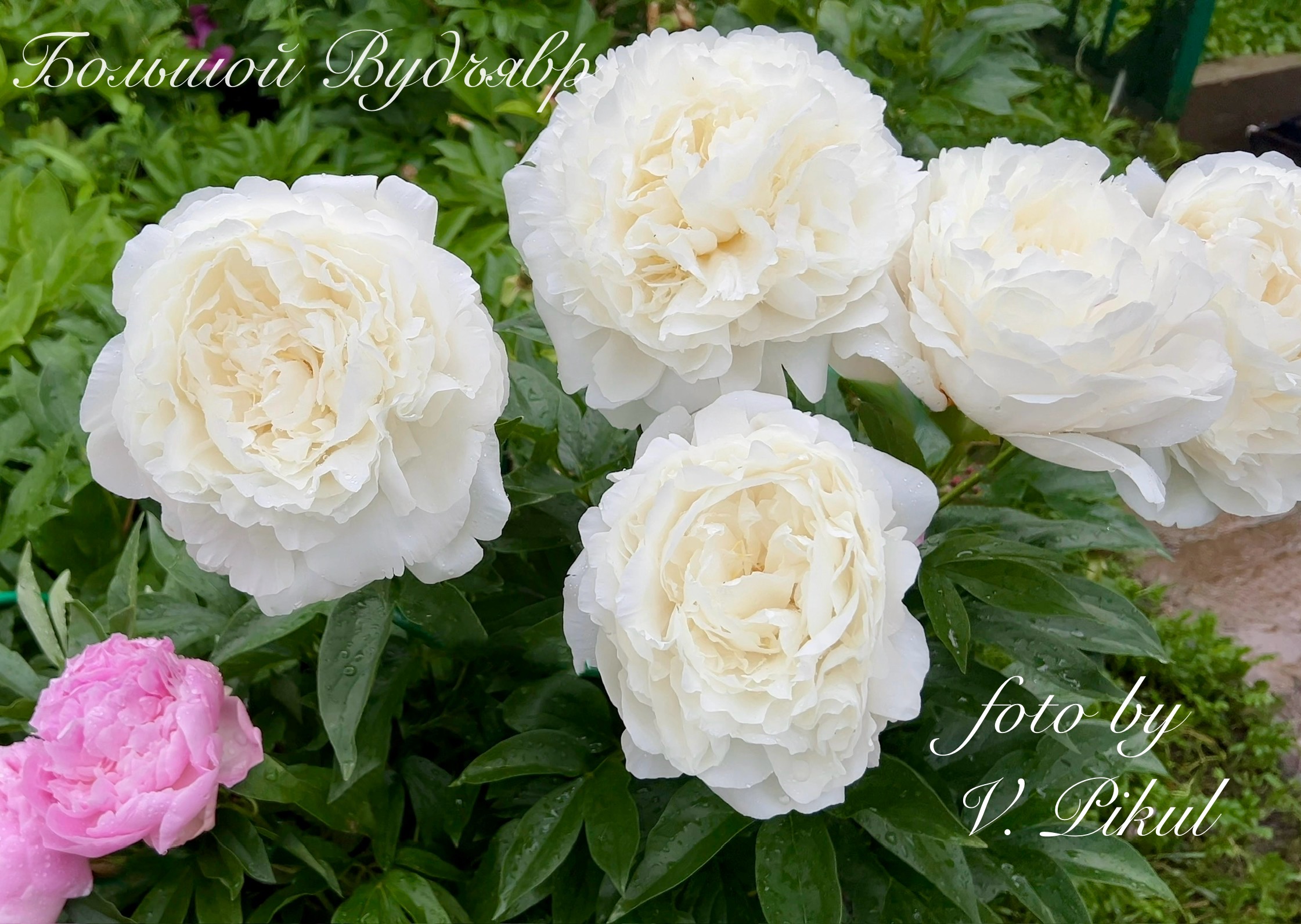
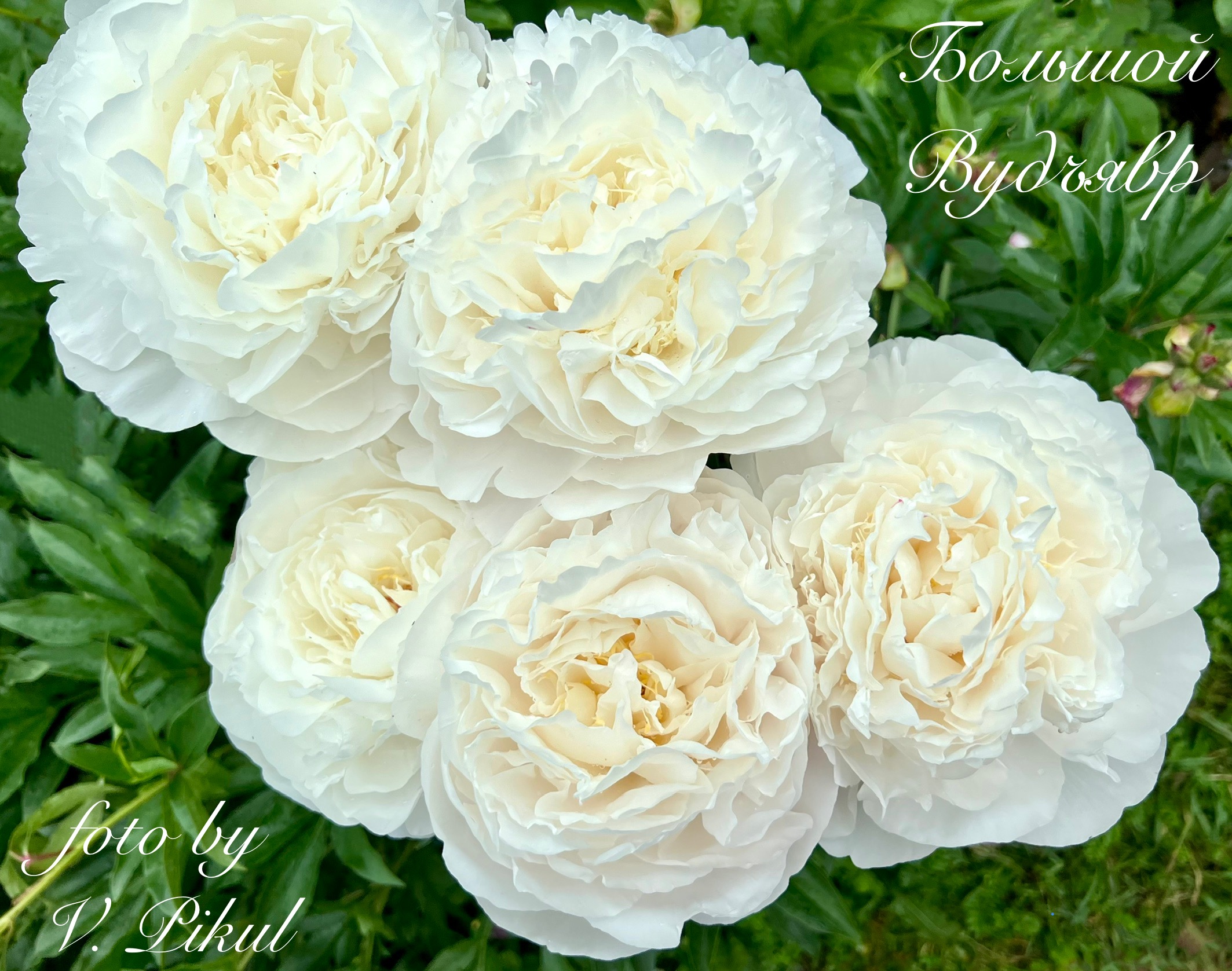
Большой Вудъявр (Bolshoi Vudyavr) (Pikul Viktoriya). Bolshoi Vudyavr is a lactiflora seedling. It first bloomed in 2023. The inflorescence is 20 cm in size. This peony has a very pleasant, intense fragrance. It opens with a delicate peach glow, then turns white. The inflorescence has a very interesting arrangement of petals. Instead of stamen filaments, it has delicate white petaloids with pollen, which give the flower a delicate appearance. This 90 cm tall bush with thick shoots has demonstrated incredible resilience in rain and bright sun and does not require staking. It is resistant to bacterial wilt. It contains pollen and sets seed.
-

- Сергей Есенин (Sergey Yesenin) (Pikul Viktoriya)

-

- Сергей Есенин (Sergey Yesenin) (Pikul Viktoriya)

-

- Сергей Есенин (Sergey Yesenin) (Pikul Viktoriya)

Сергей Есенин (Sergey Yesenin) (Pikul Viktoriya). Sergey Yesenin is a seedling of a herbaceous hybrid. It first bloomed in 2024.
The inflorescence is 17 cm in size. Fragrant. The petals, overlapping each other, curl in golden wavy strands around the central “navel,” forming a densely double, curly shape. The apricot color of the petals and the coral glow from the depths of the inflorescence create an orange-hued effect. Fading in the sun, the seedling takes on a “light-blond” appearance. A medium-height bush with strong flower stalks and perfect, boat-shaped leaves. Named in honor of the great Russian poet Sergei Yesenin on the 130th anniversary of his birth.
-

- Сиреневая роза (Lilac Rose) (Pikul Viktoriya)

-

- Сиреневая роза (Lilac Rose) (Pikul Viktoriya)

Сиреневая роза (Lilac Rose) (Pikul Viktoriya). Lilac Rose is a lactiflora seedling. It first bloomed in 2024. The photo shows its first bloom. The inflorescence is 17 cm in size. It has an intense, pleasant fragrance. This peony has a double inflorescence and a beautifully structured central part. The bush height is 60 cm. It is resistant to bacterial wilt.
-

- Зелёный ландыш (Green lily of the valley) (Pikul Viktoriya)

-
- Зелёный ландыш (Green lily of the valley) (Pikul Viktoriya)

-

- Зелёный ландыш (Green lily of the valley) (Pikul Viktoriya)

Зелёный ландыш (Green lily of the valley) (Pikul Viktoriya). Green Lily of the Valley is a seedling of a herbaceous hybrid. It first bloomed in 2024. The inflorescence is 20 cm in size. It has a lily-of-the-valley scent. The inflorescence has a lime hue. The base of the petals is tinged with pink. The green, ovoid bud is very reminiscent of a rosebud. When half-open, it forms a pyramid with petals arranged in a spiral. When fully open, the peony transforms into a double disc with wavy petals and a funnel-shaped, slightly indented center. The tips of the short central petals have a delicate, bright red border, as well as a pink stroke at the base of the petals.
-

- Мраморная вуаль (Marble Veil) (Pikul Viktoriya)
-

- Мраморная вуаль (Marble Veil) (Pikul Viktoriya)
-

- Marble Veil (Viktoriya Pikul)

-
- Мраморная вуаль (Marble Veil) (Pikul Viktoriya)

-
- Мраморная вуаль (Marble Veil) (Pikul Viktoriya)
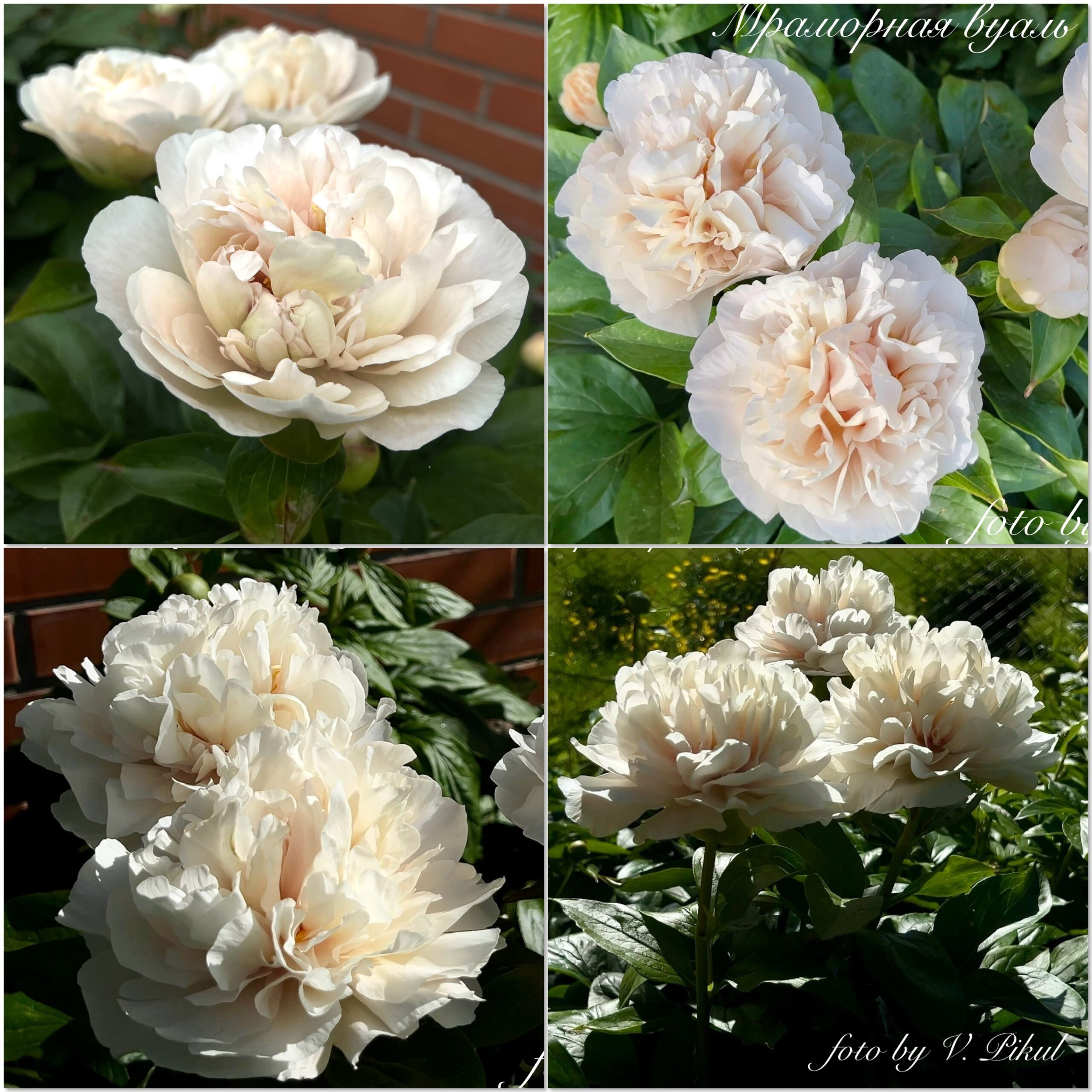
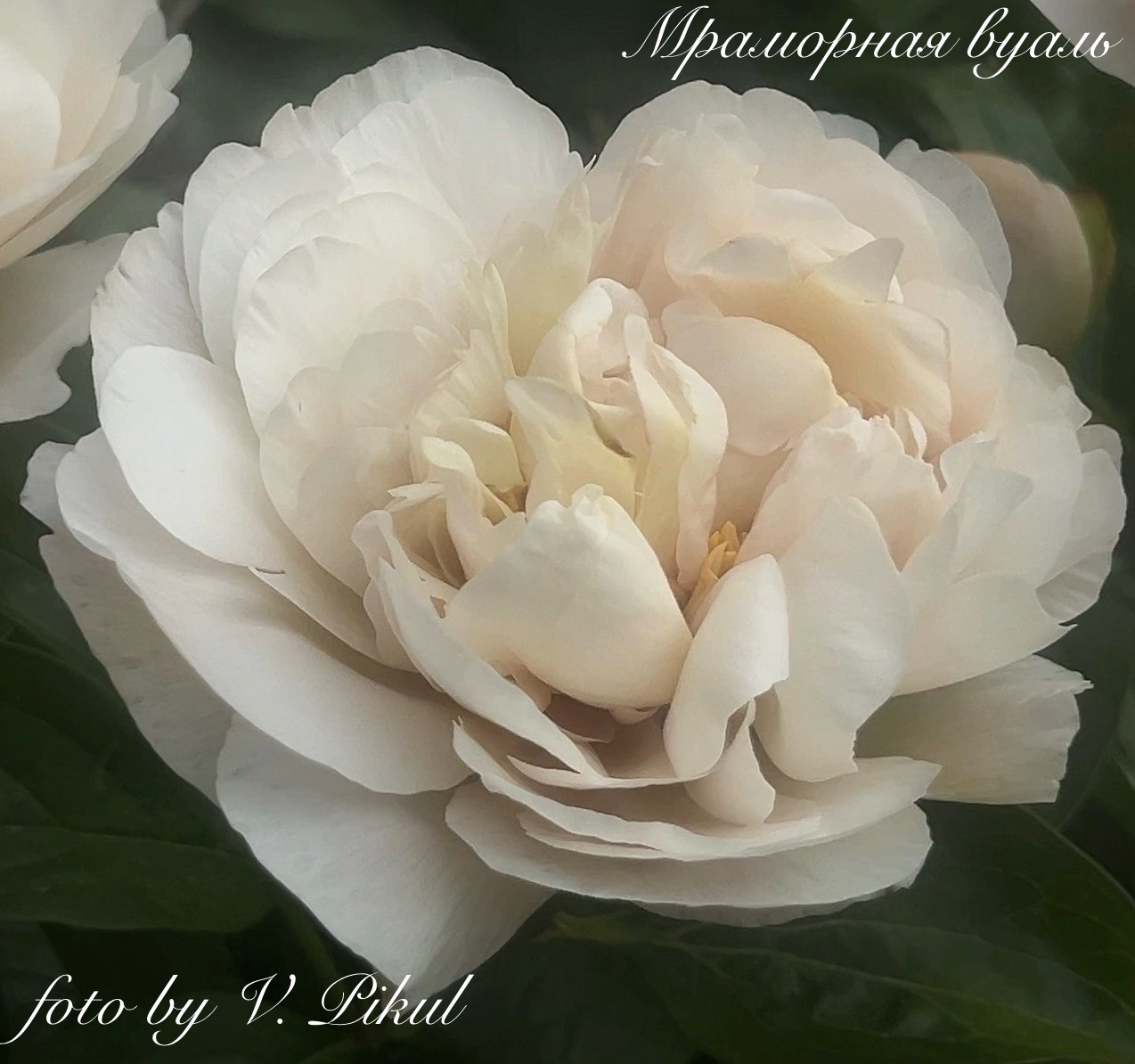
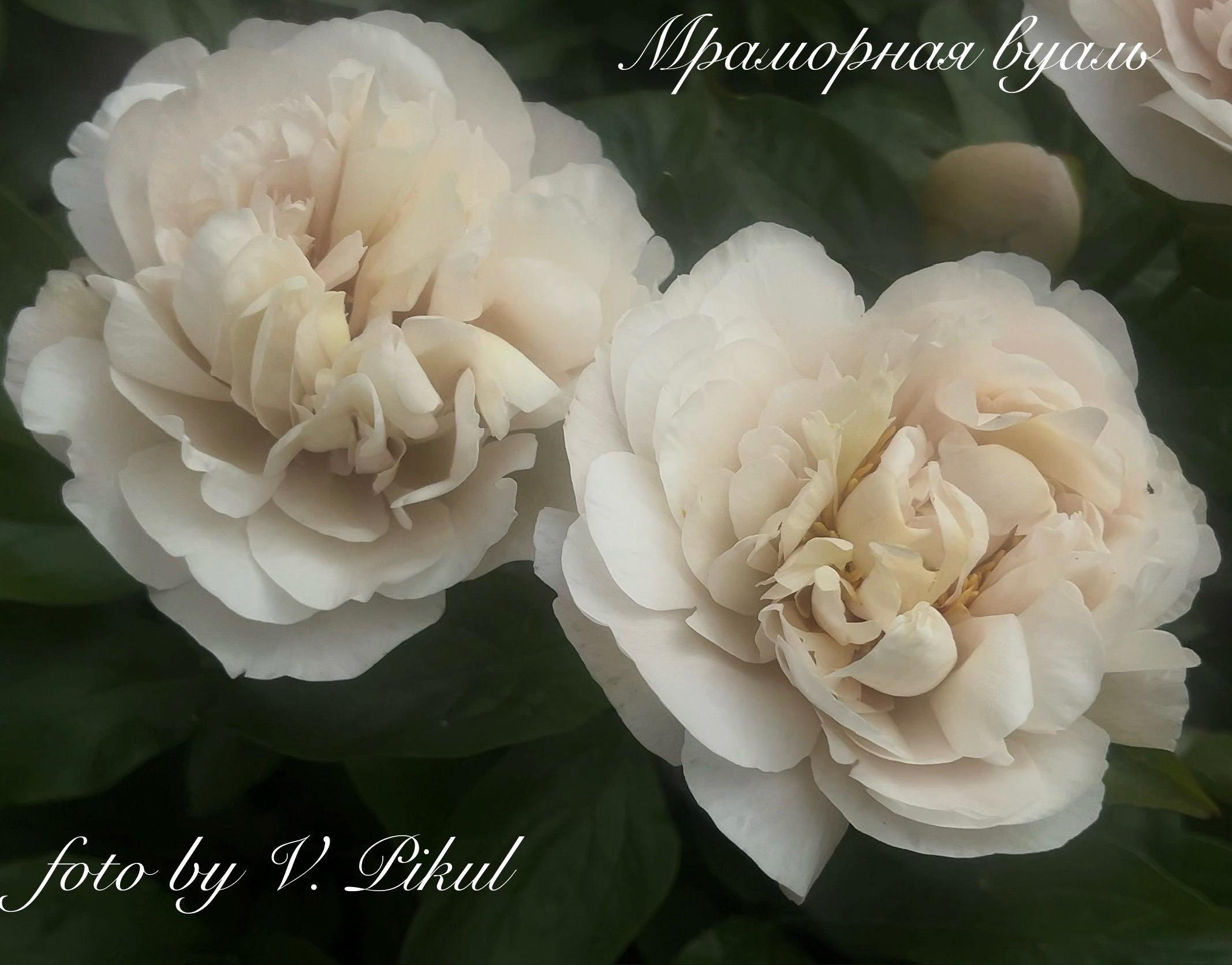
Мраморная вуаль (Marble Veil) (Pikul Viktoriya). Marble Veil is a hybrid seedling that first bloomed in 2025. The inflorescence size is 18 cm. The double shape of the inflorescence is surprisingly symmetrical for a first bloom. The complex shade of this light peony is very reminiscent of the white marble of park sculptures, with gray-lilac undertones and hints of coffee, beige, and green. A lilac glow emanates from the center of the inflorescence. A tall, harmonious bush with resilient stems and beautiful large leaves. Good growth characteristics. Fertile in both directions.
-

- Сеянец L3 лактифлоры (L3 Lactiflora seedling) (Pikul Viktoriya)
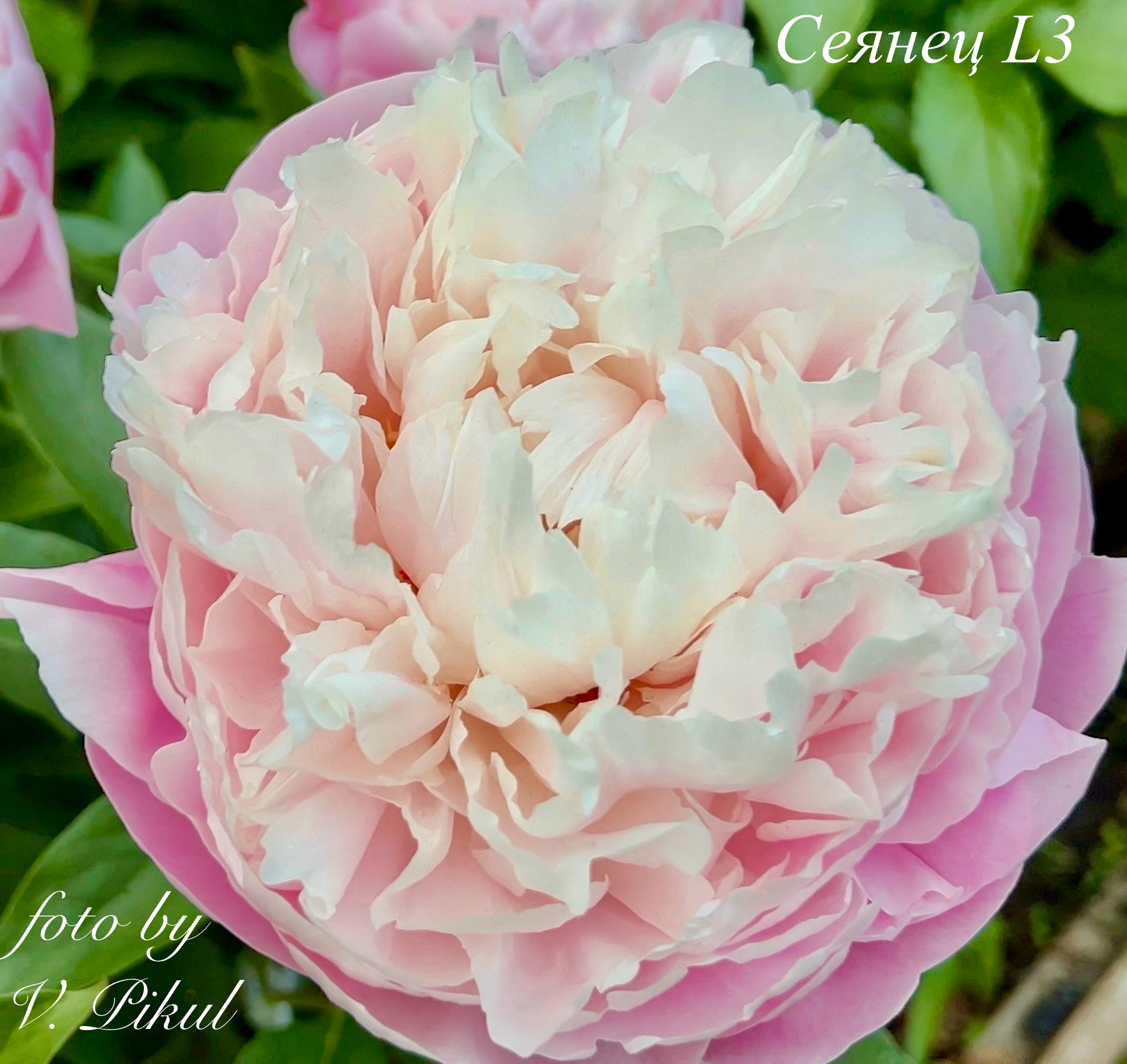
Сеянец L3 лактифлоры (L3 Lactiflora seedling) (Pikul Viktoriya). L3 lactiflora seedling. It first bloomed in 2024. The inflorescence size is 18 cm. This fragrant seedling is interesting for its two-colored blooms. Two rows of outer petals are lilac-pink, while the central petals are vanilla-colored. The center of the inflorescence has an intense peach glow. The flower structure is very beautiful. The bush height is 60 cm. The seedling is resistant to bacterial wilt and maintains its beautiful foliage until late autumn.
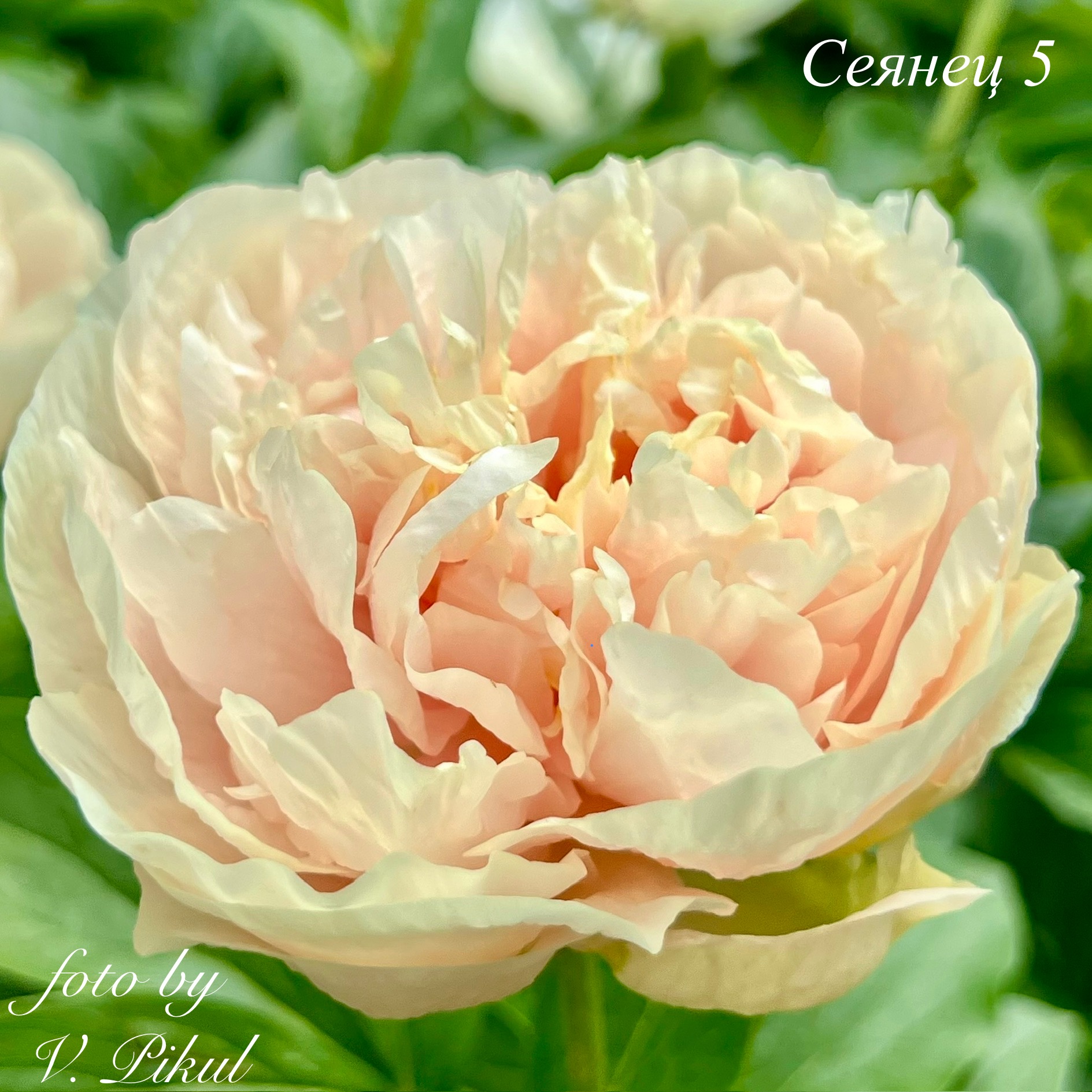
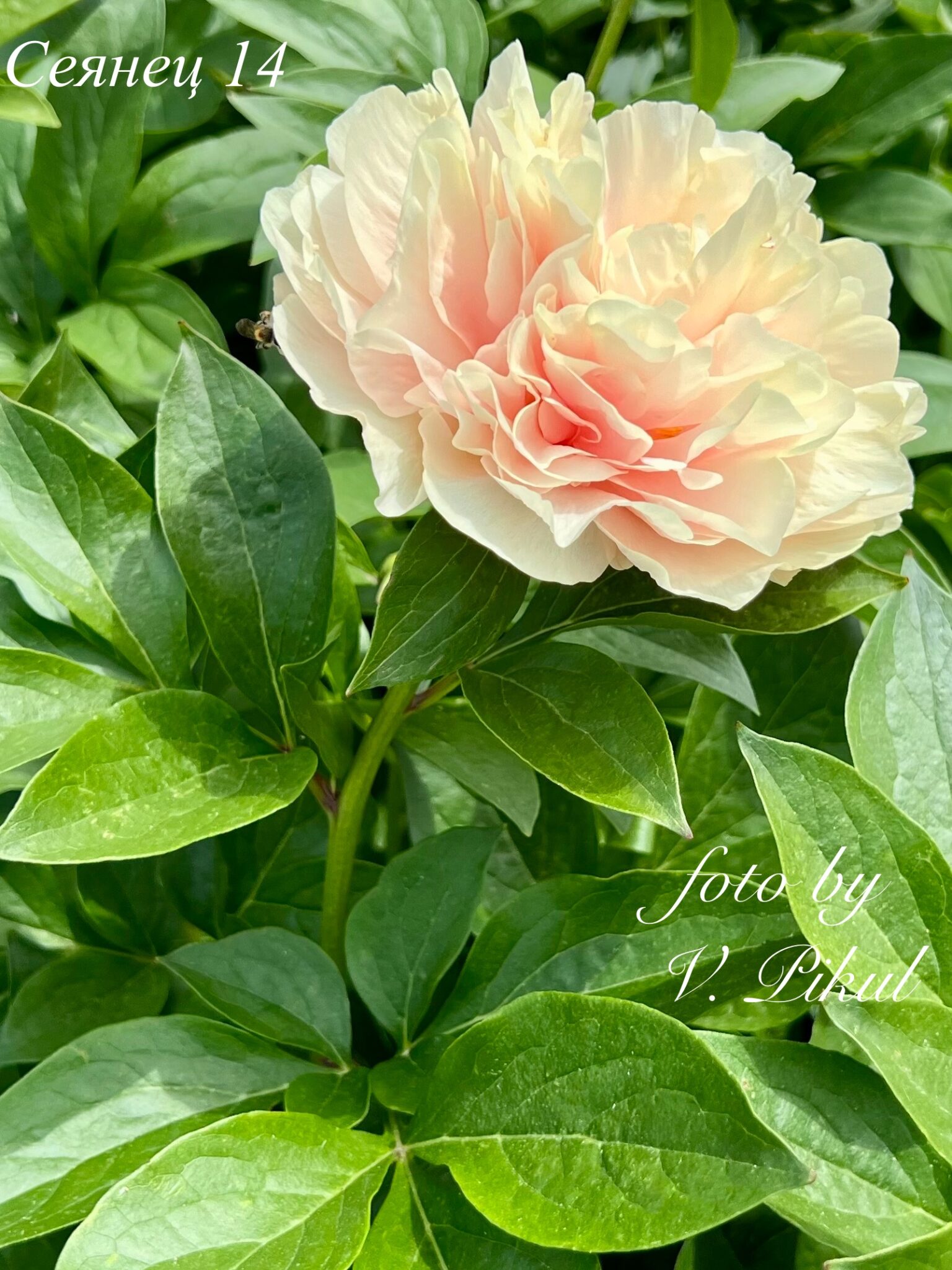
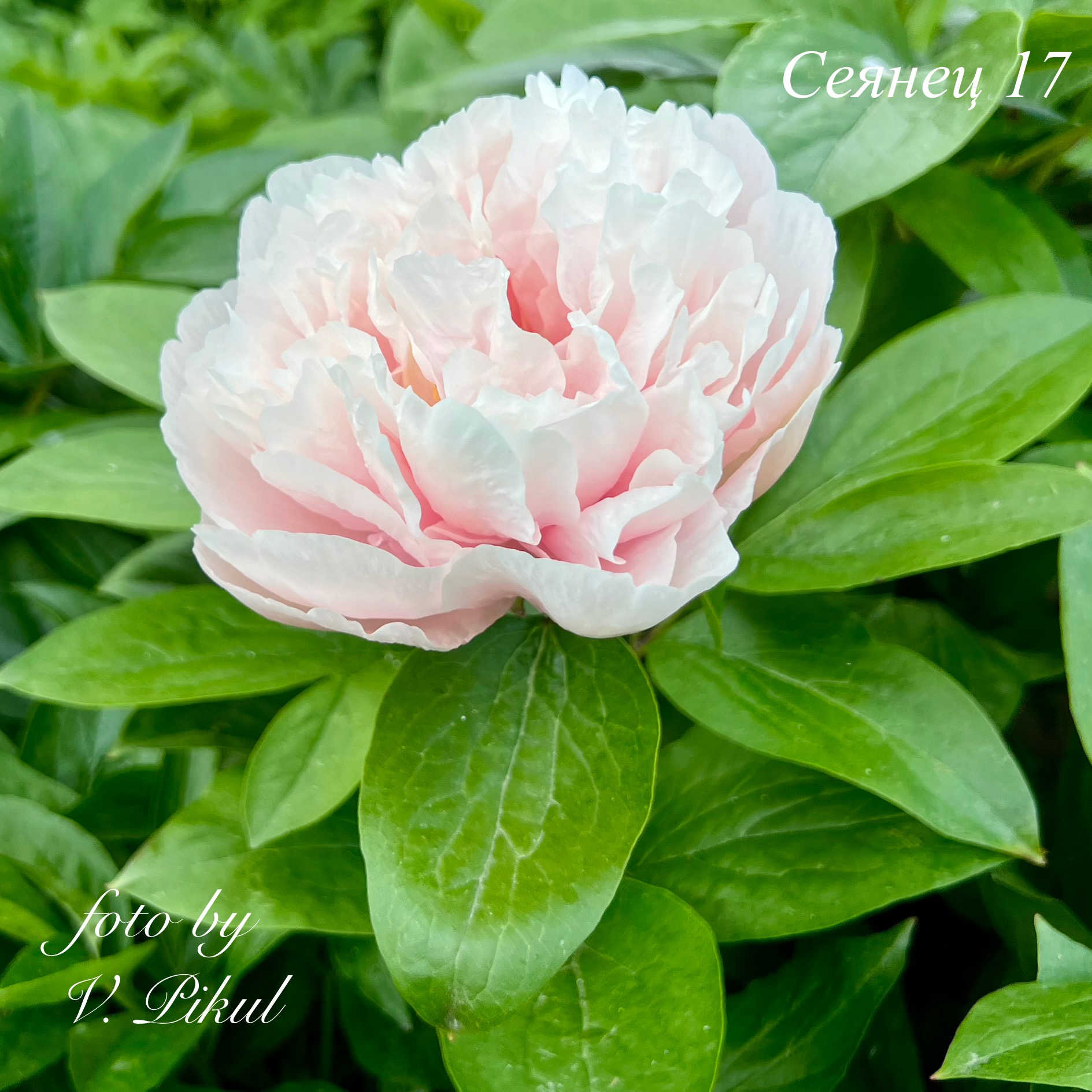
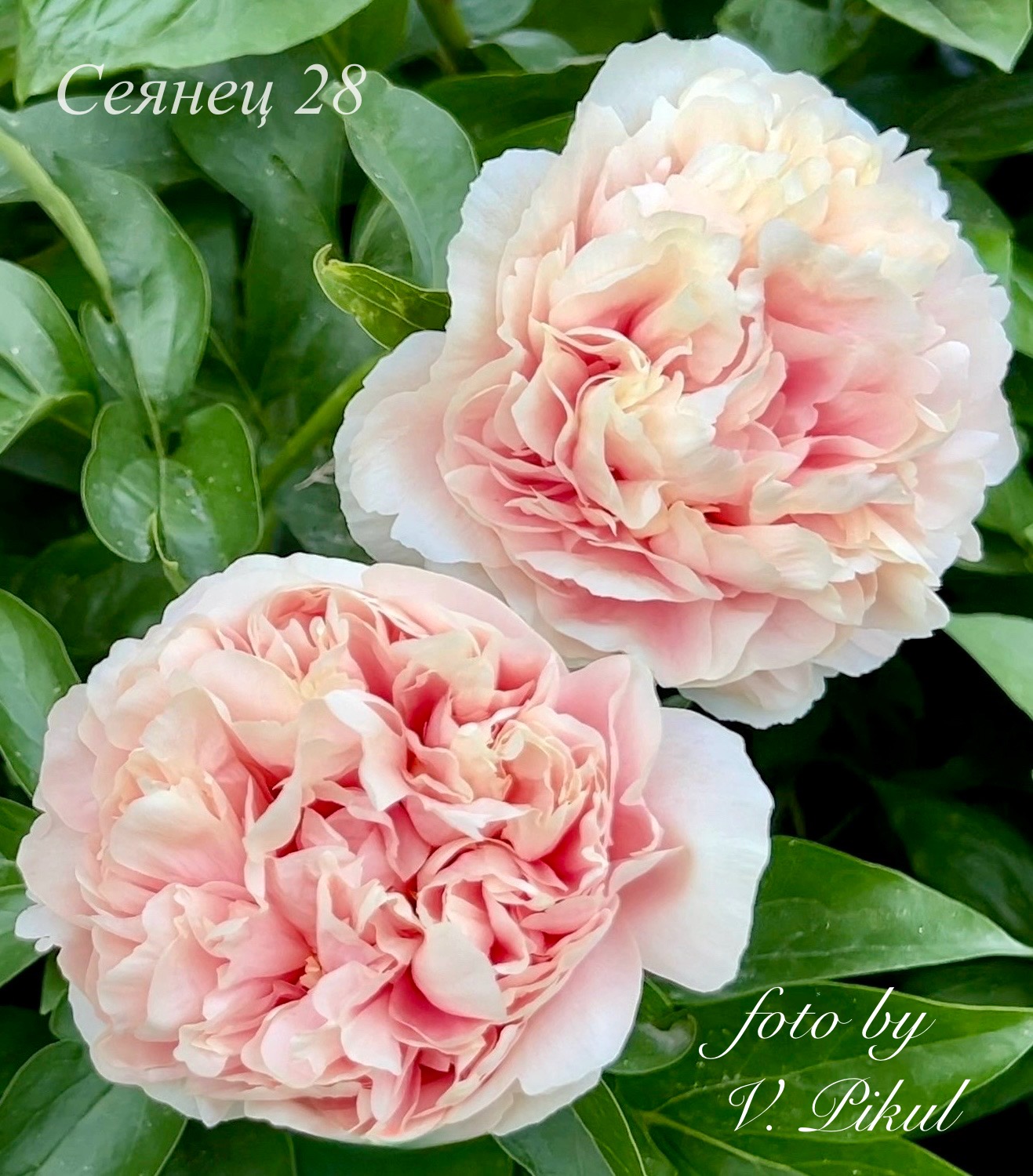
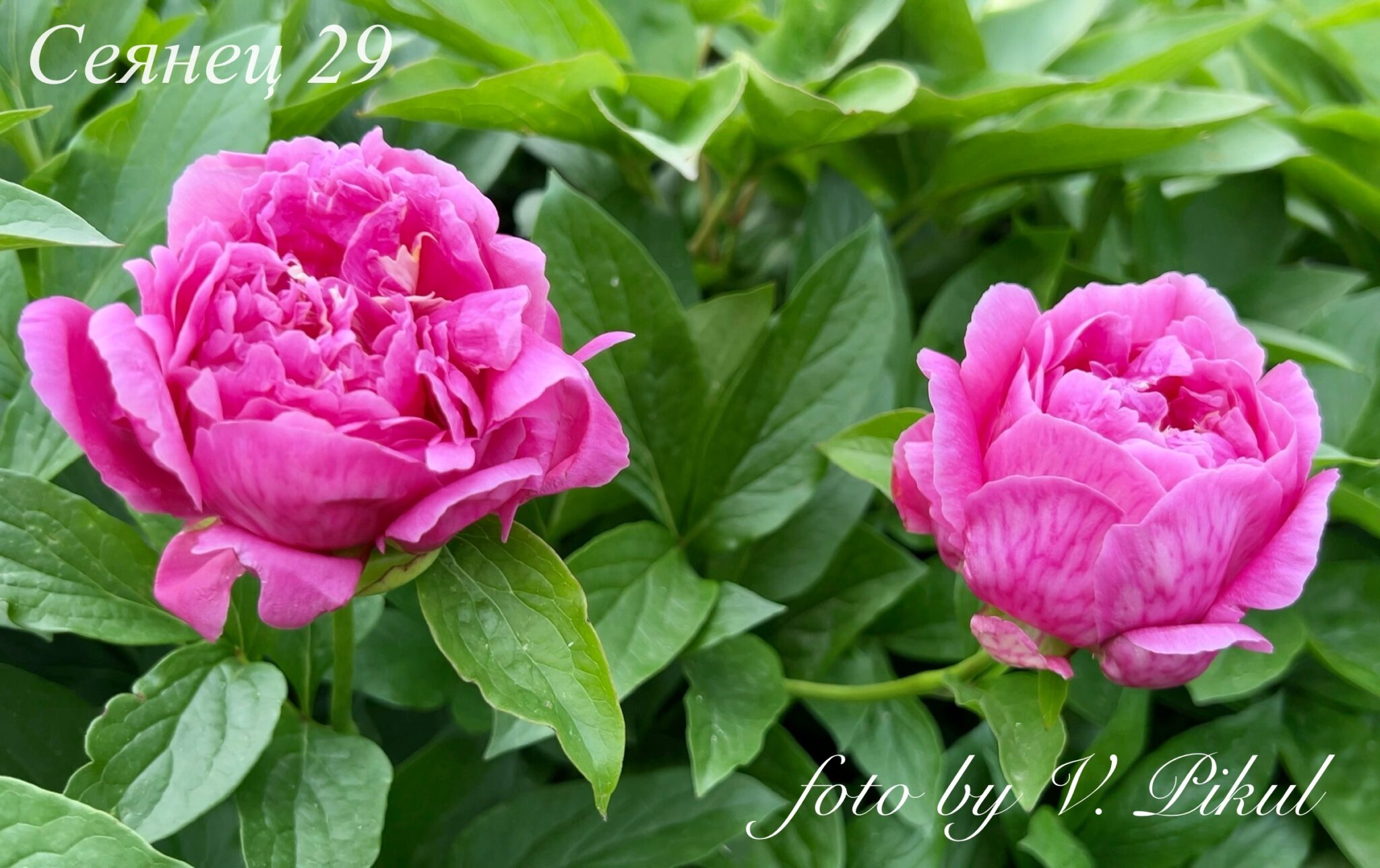
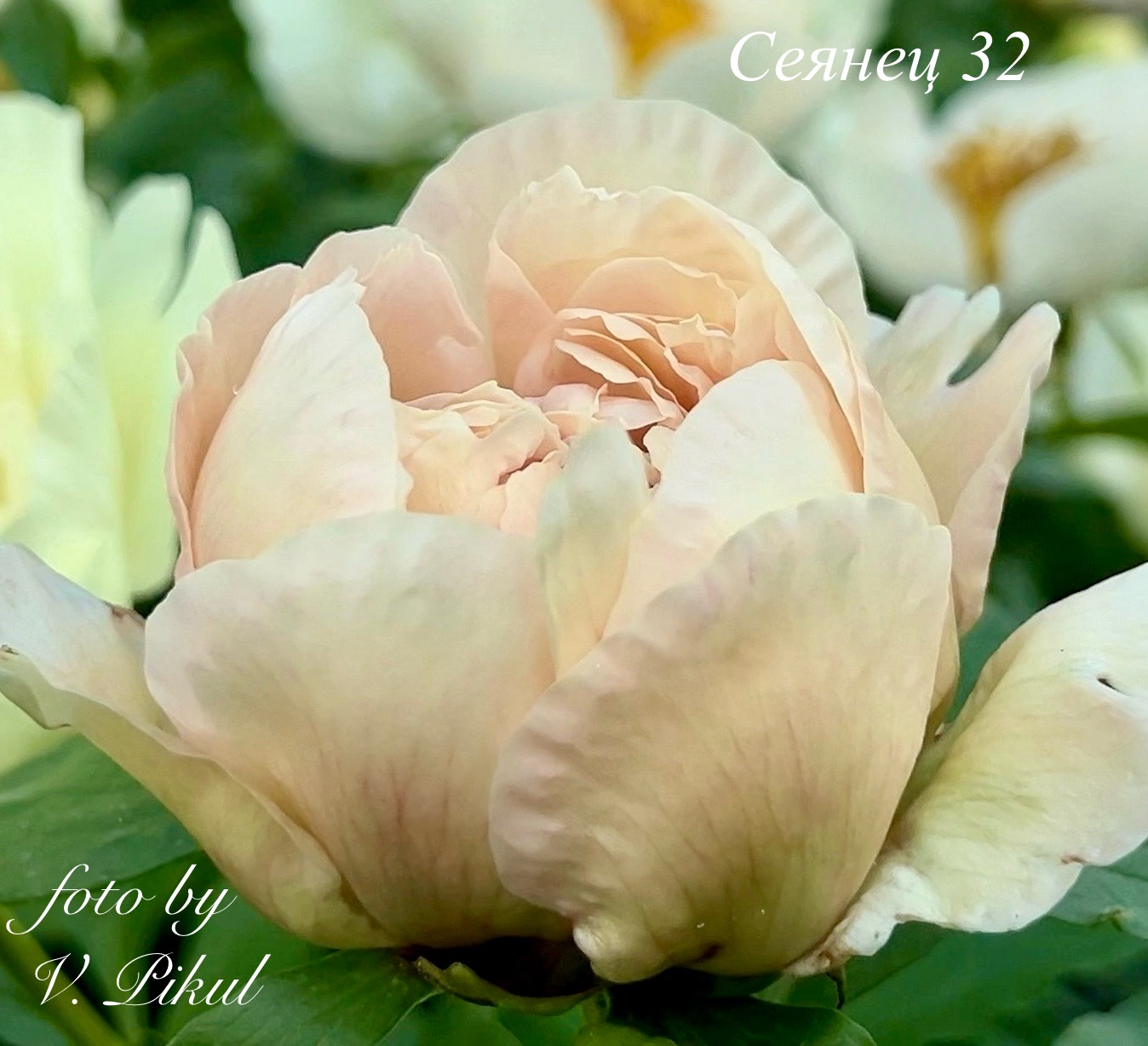
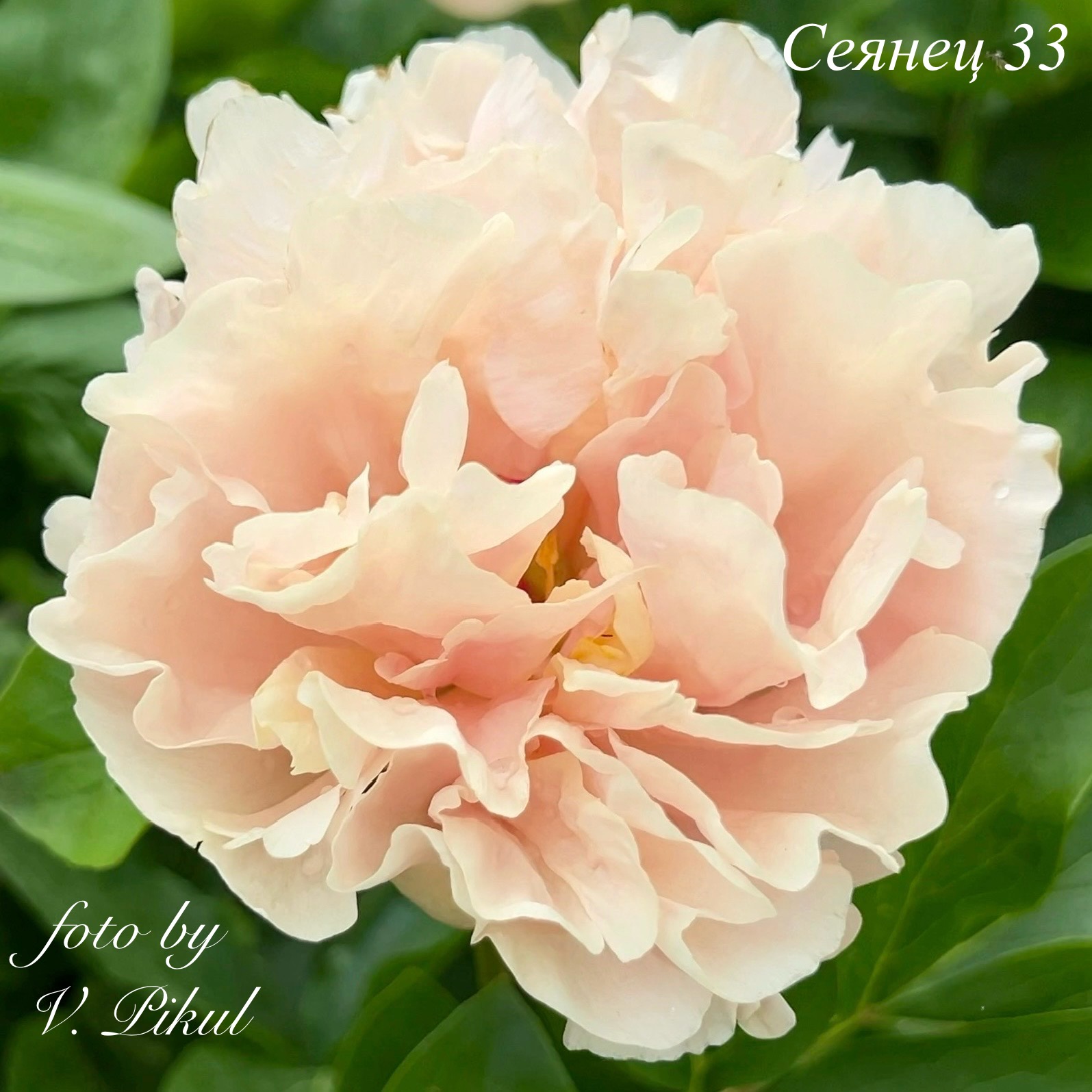
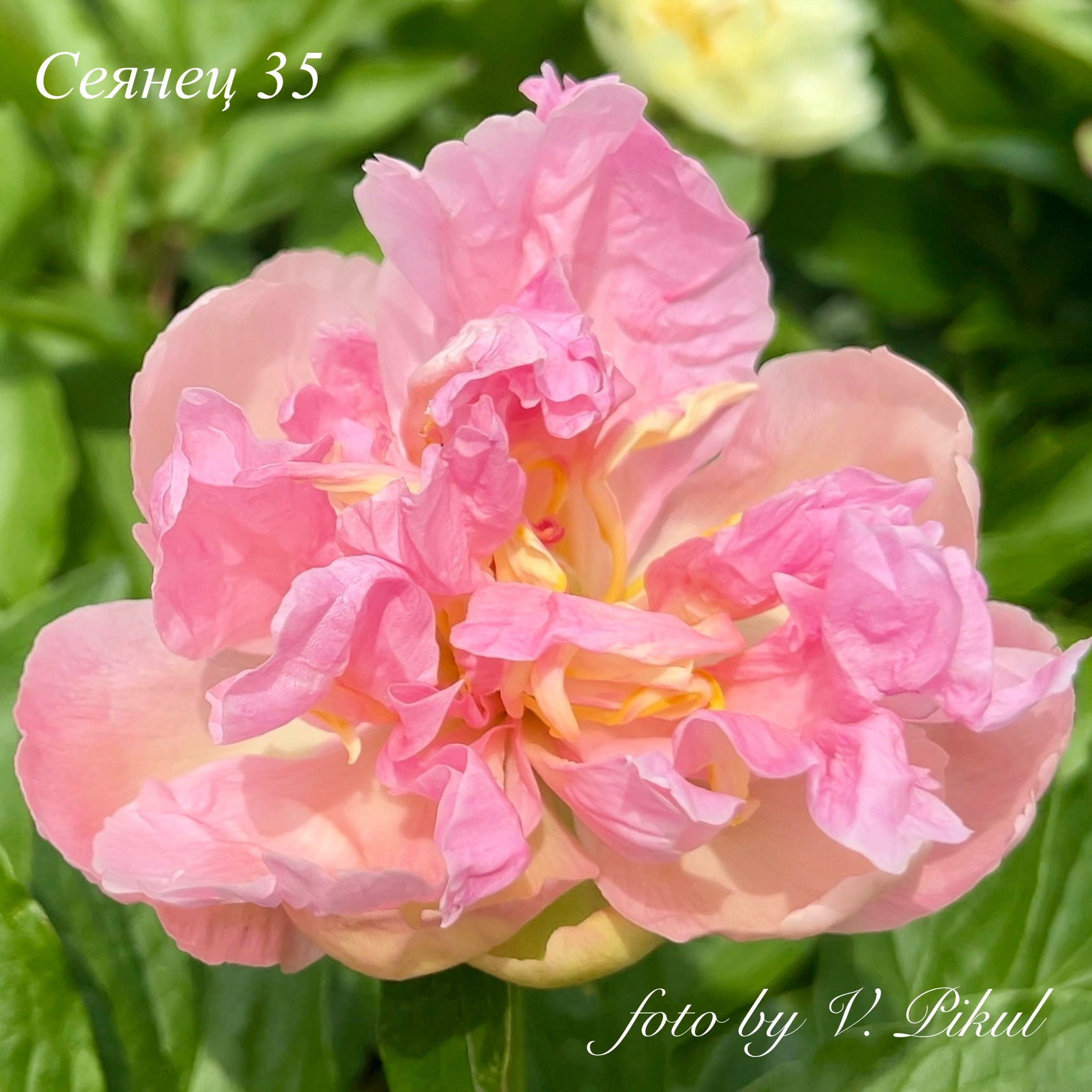
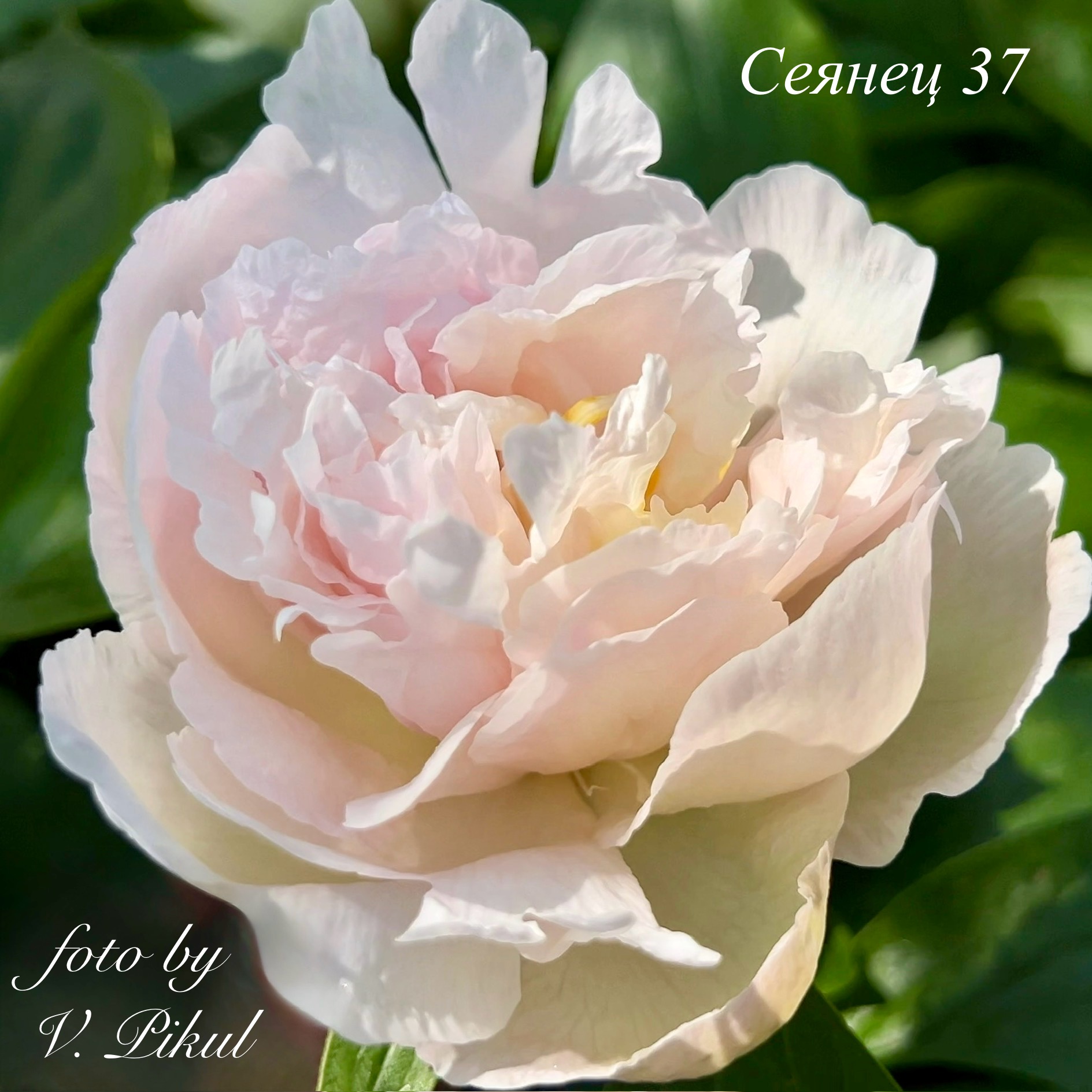
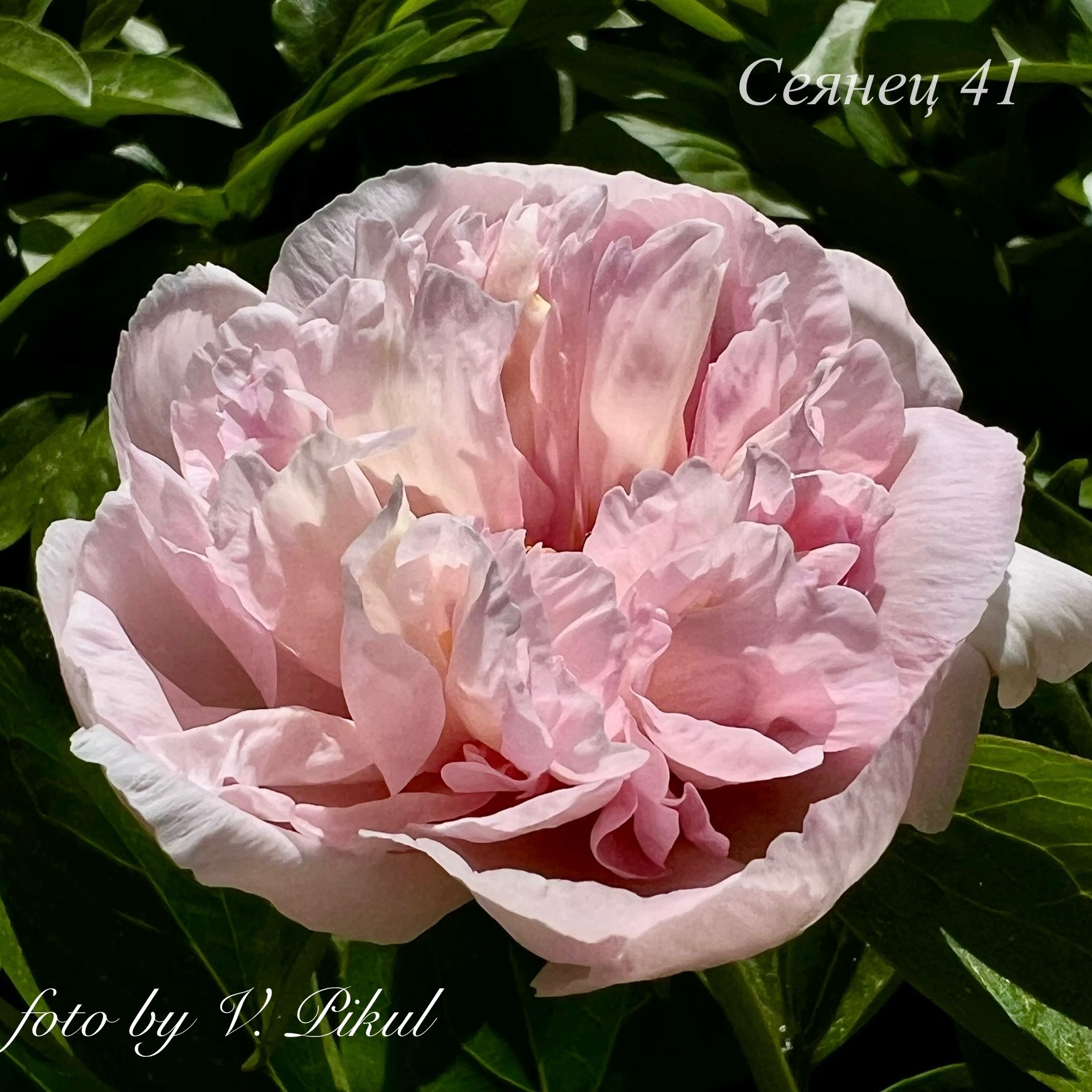
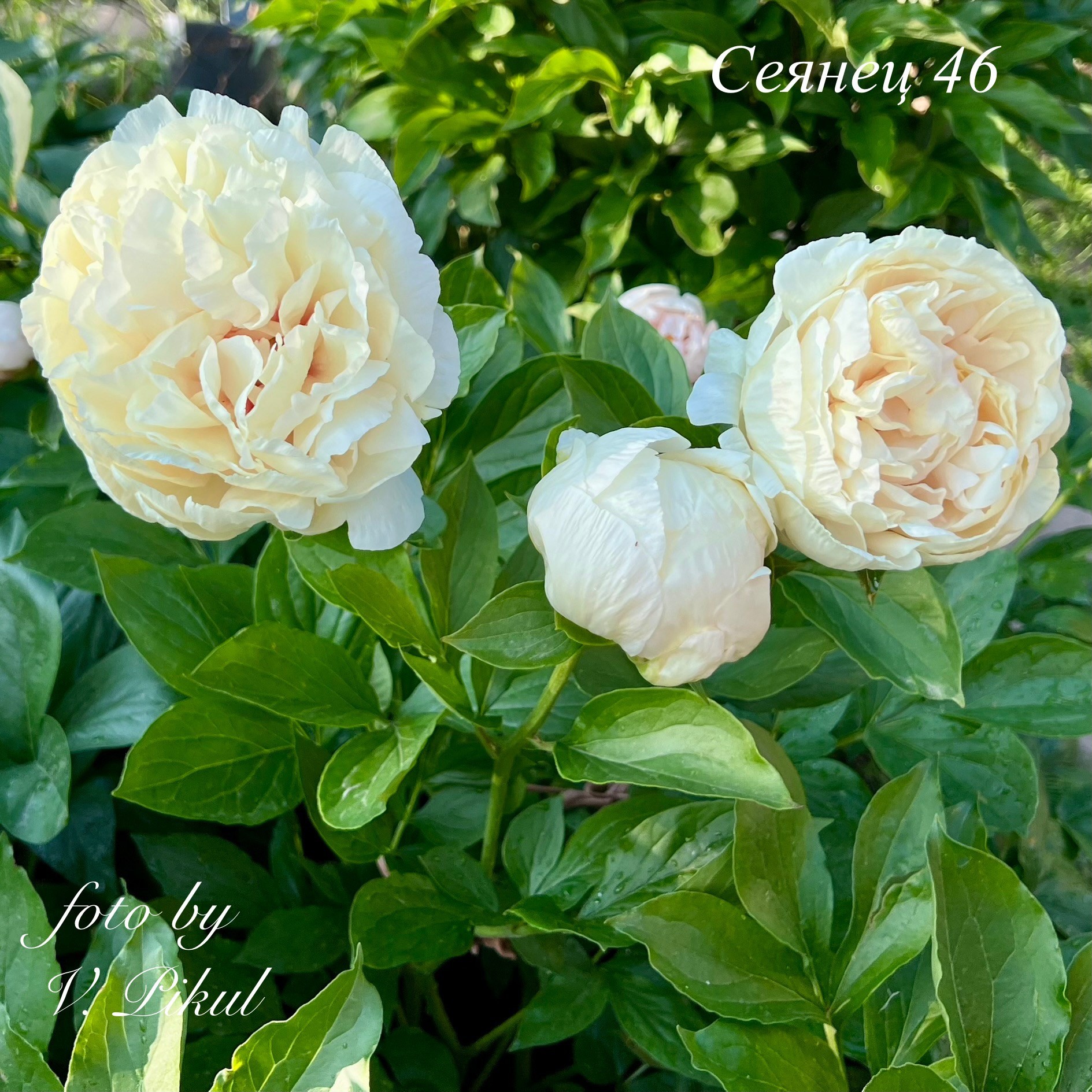
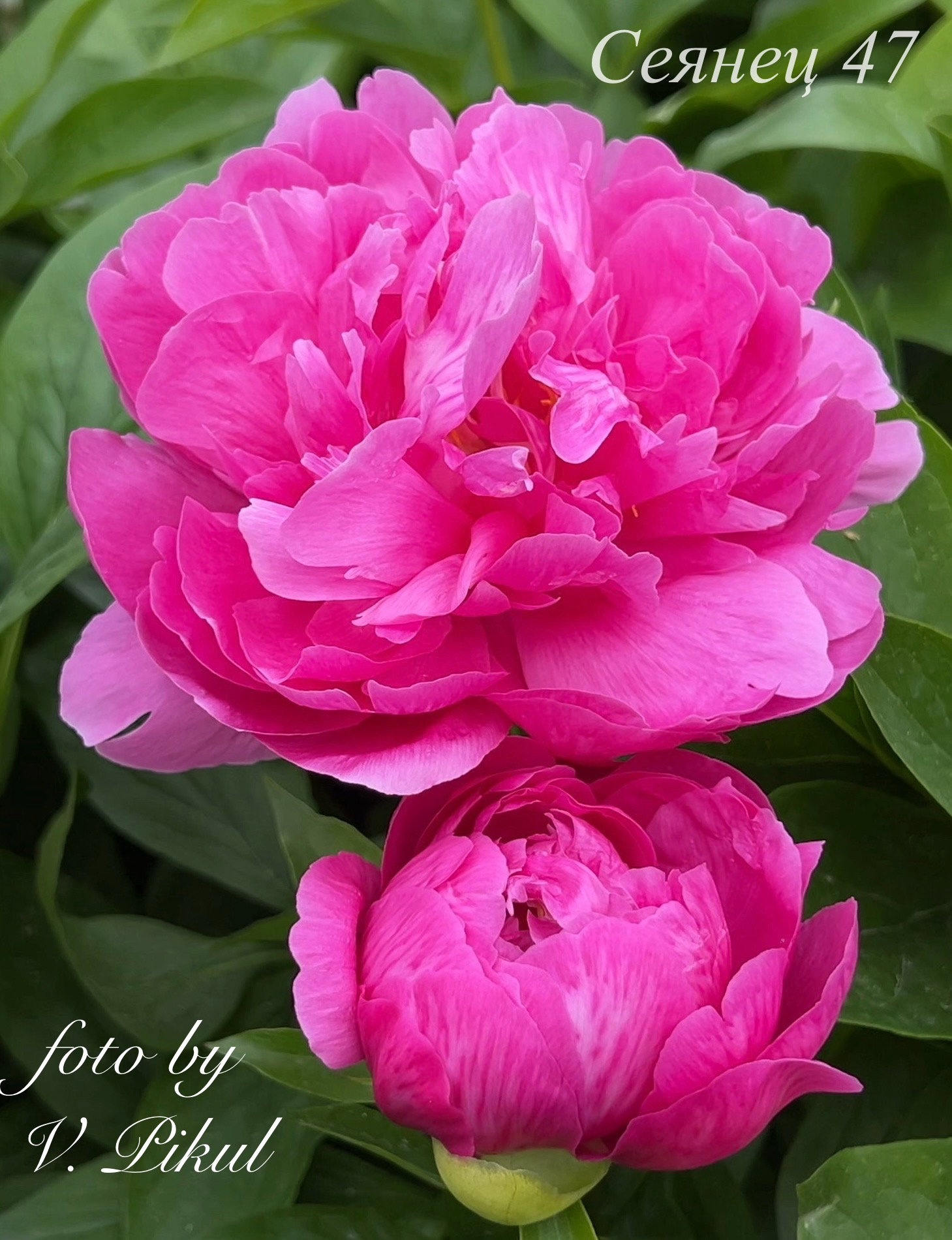
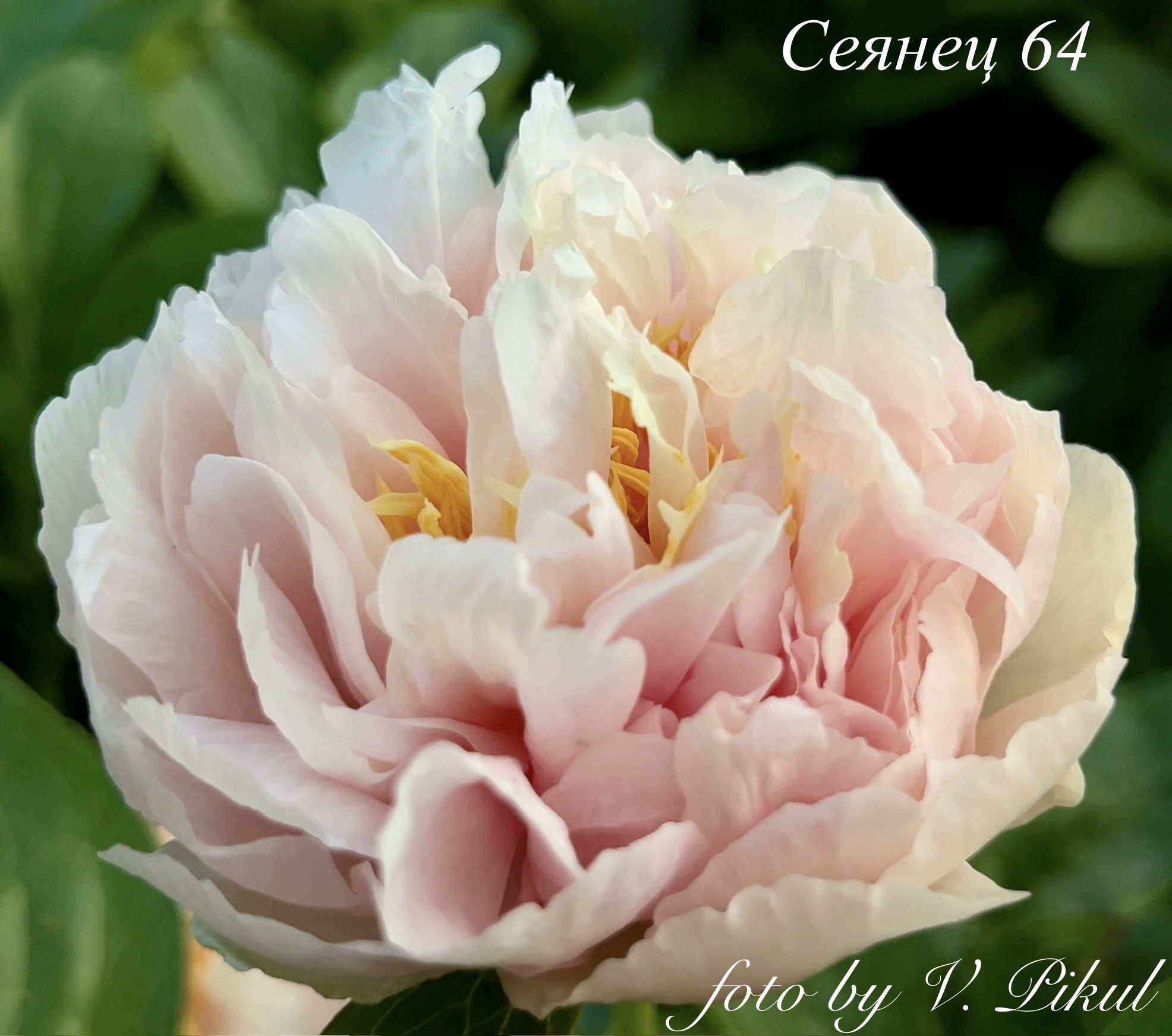
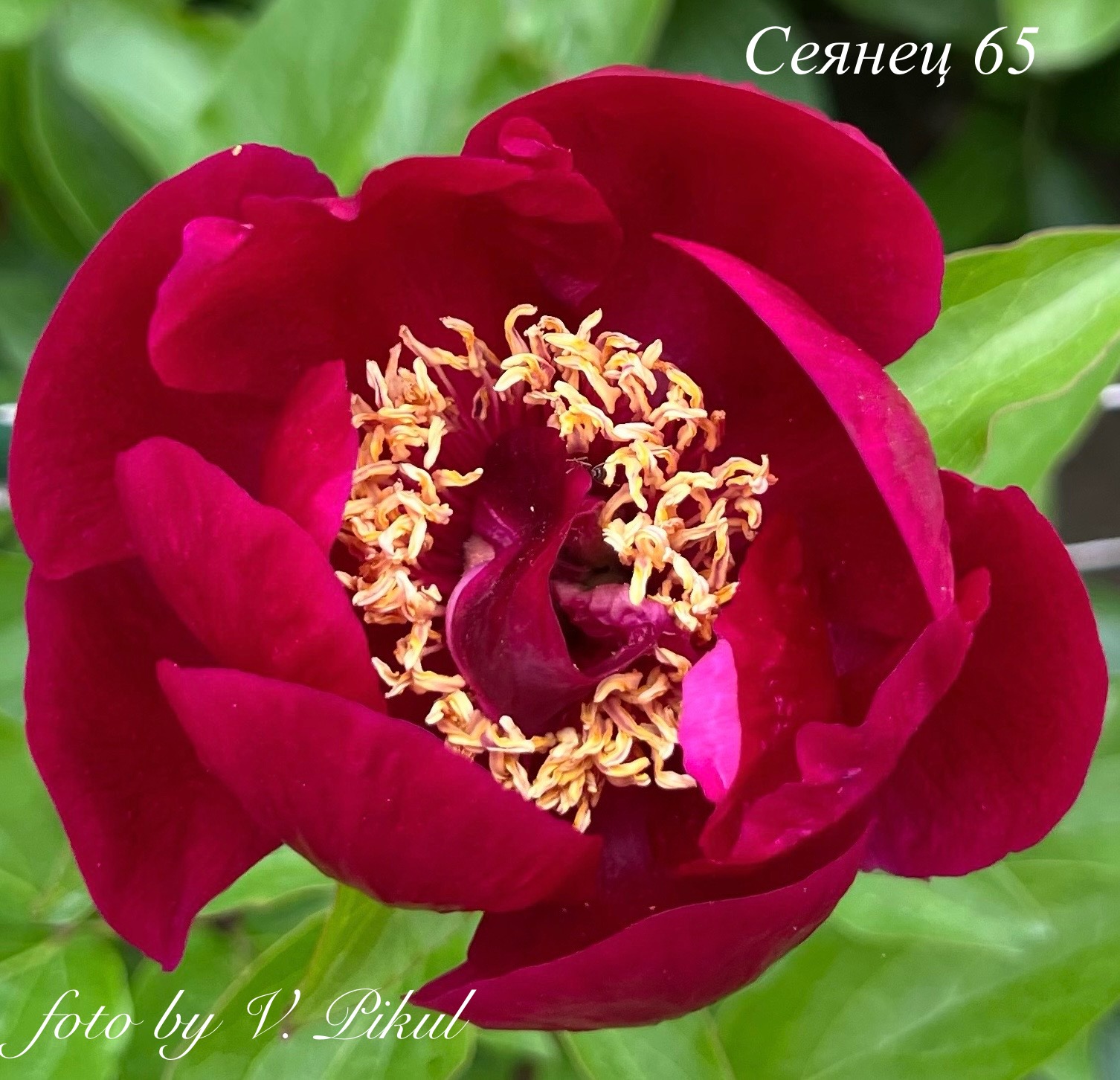
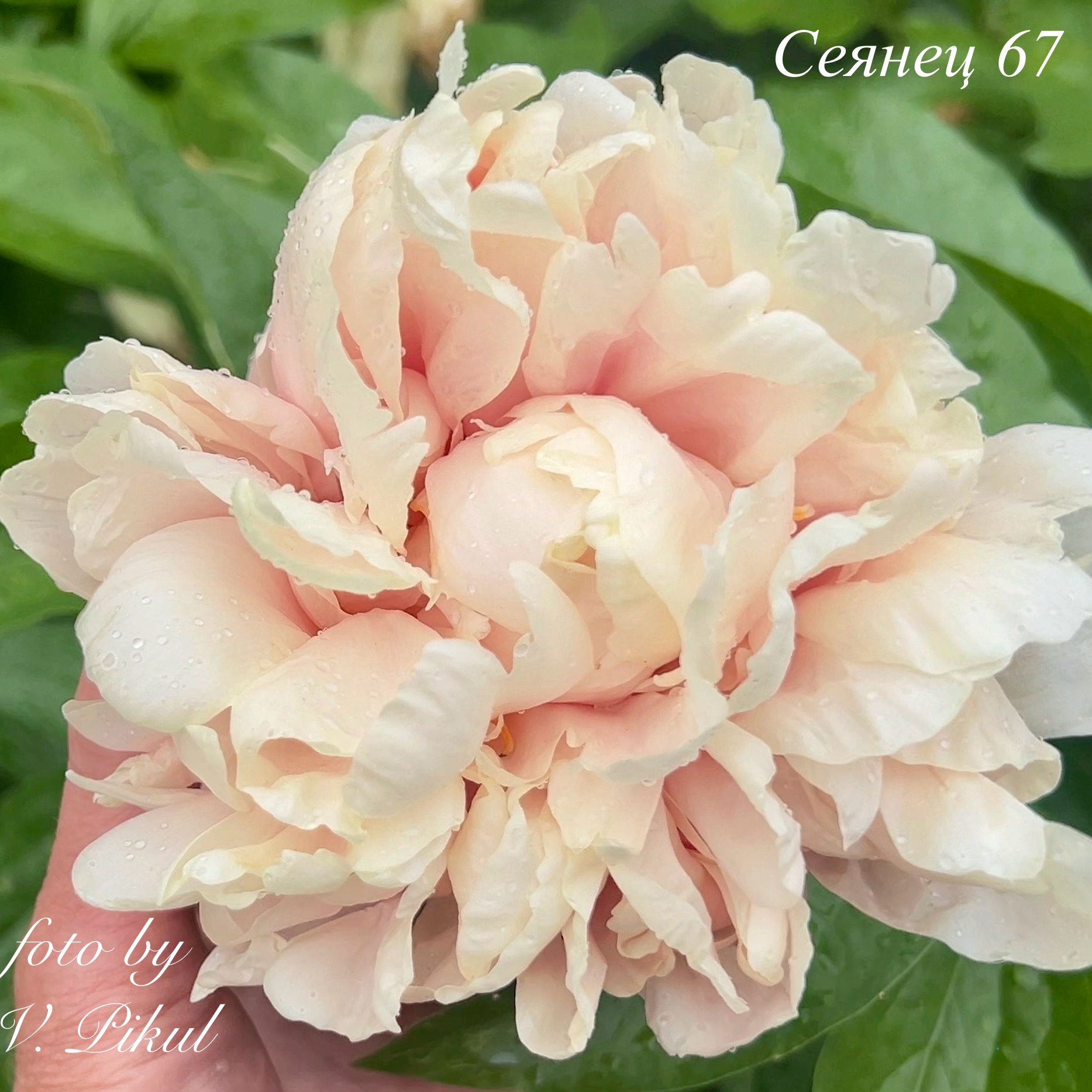
Some more seedlings:















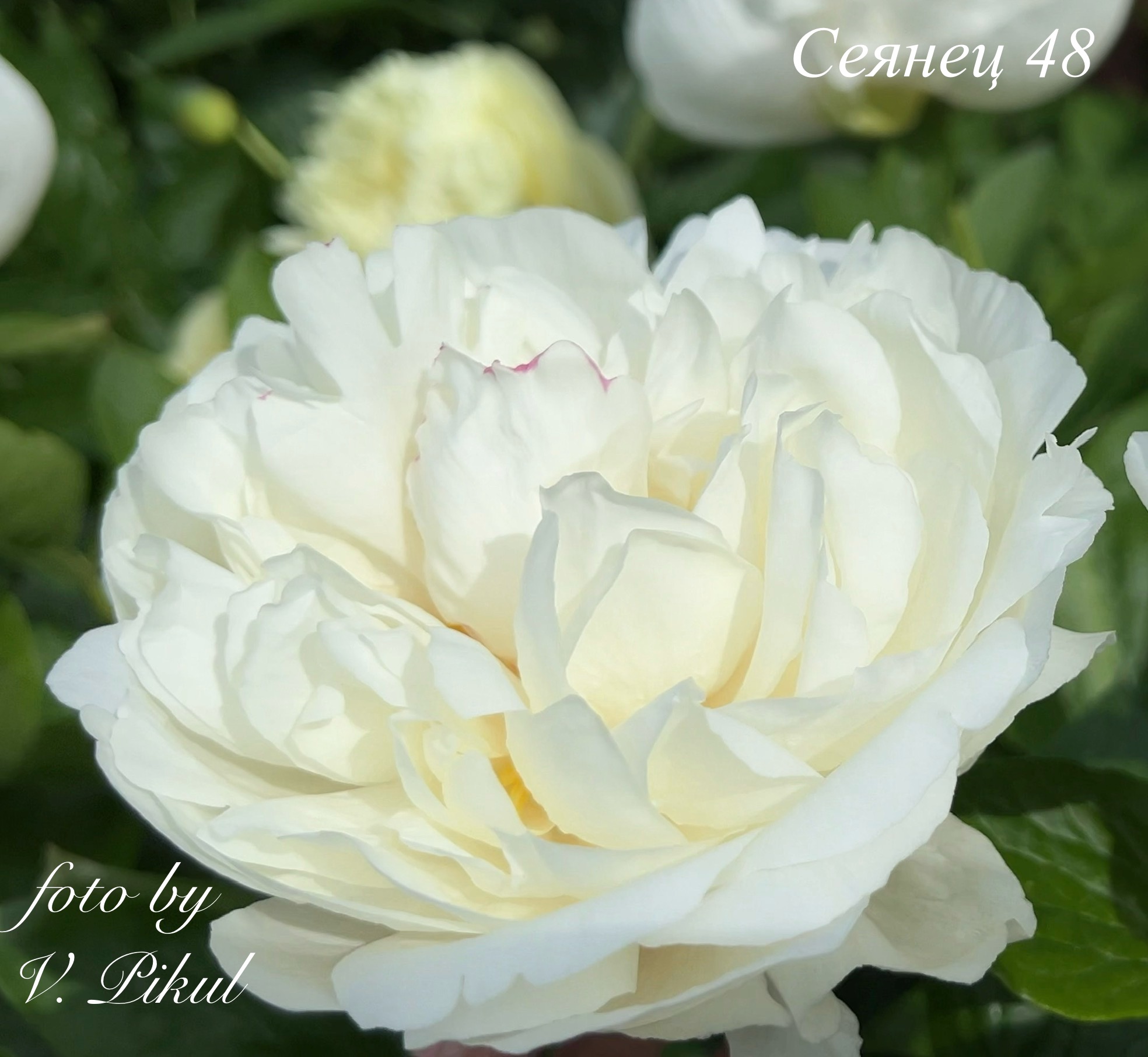


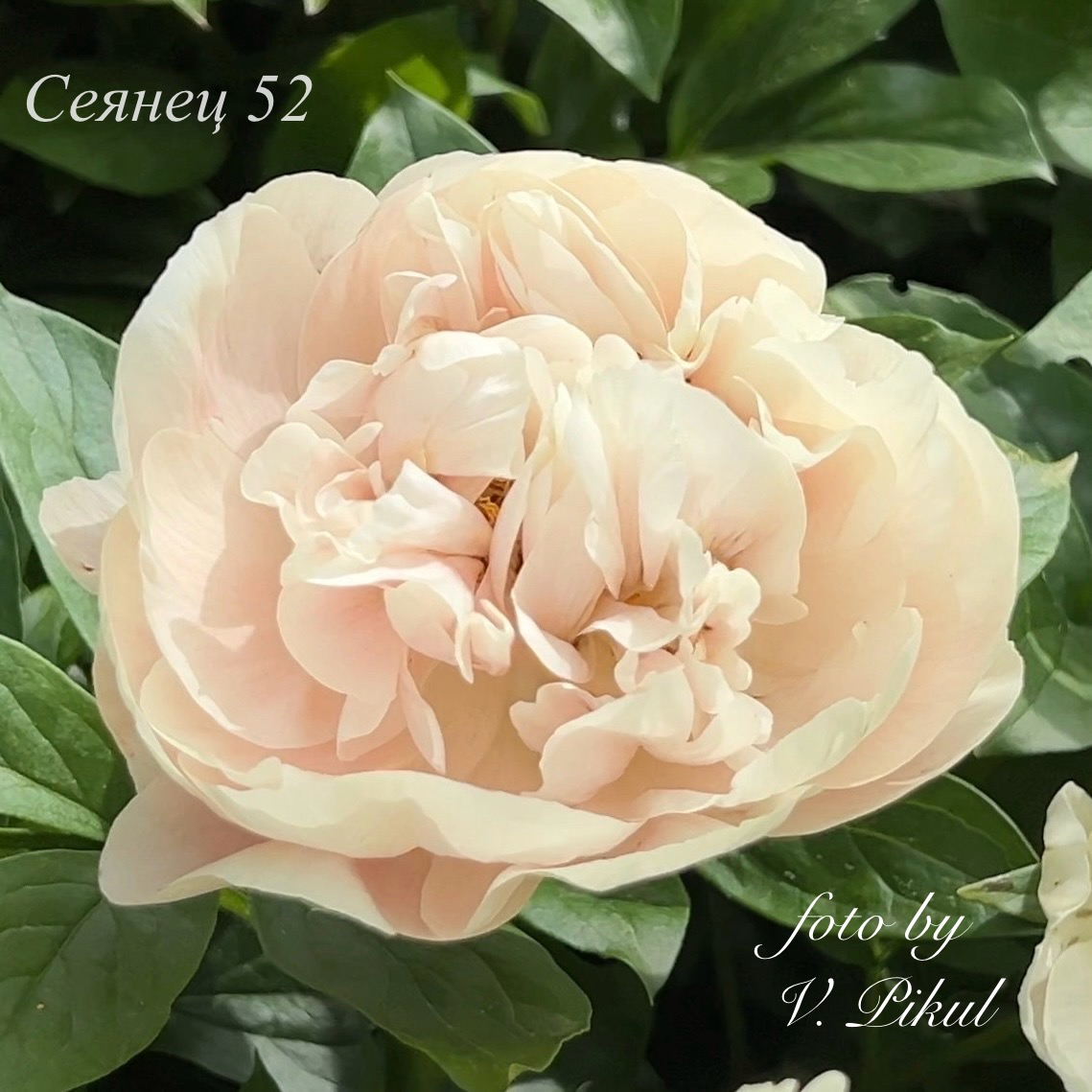
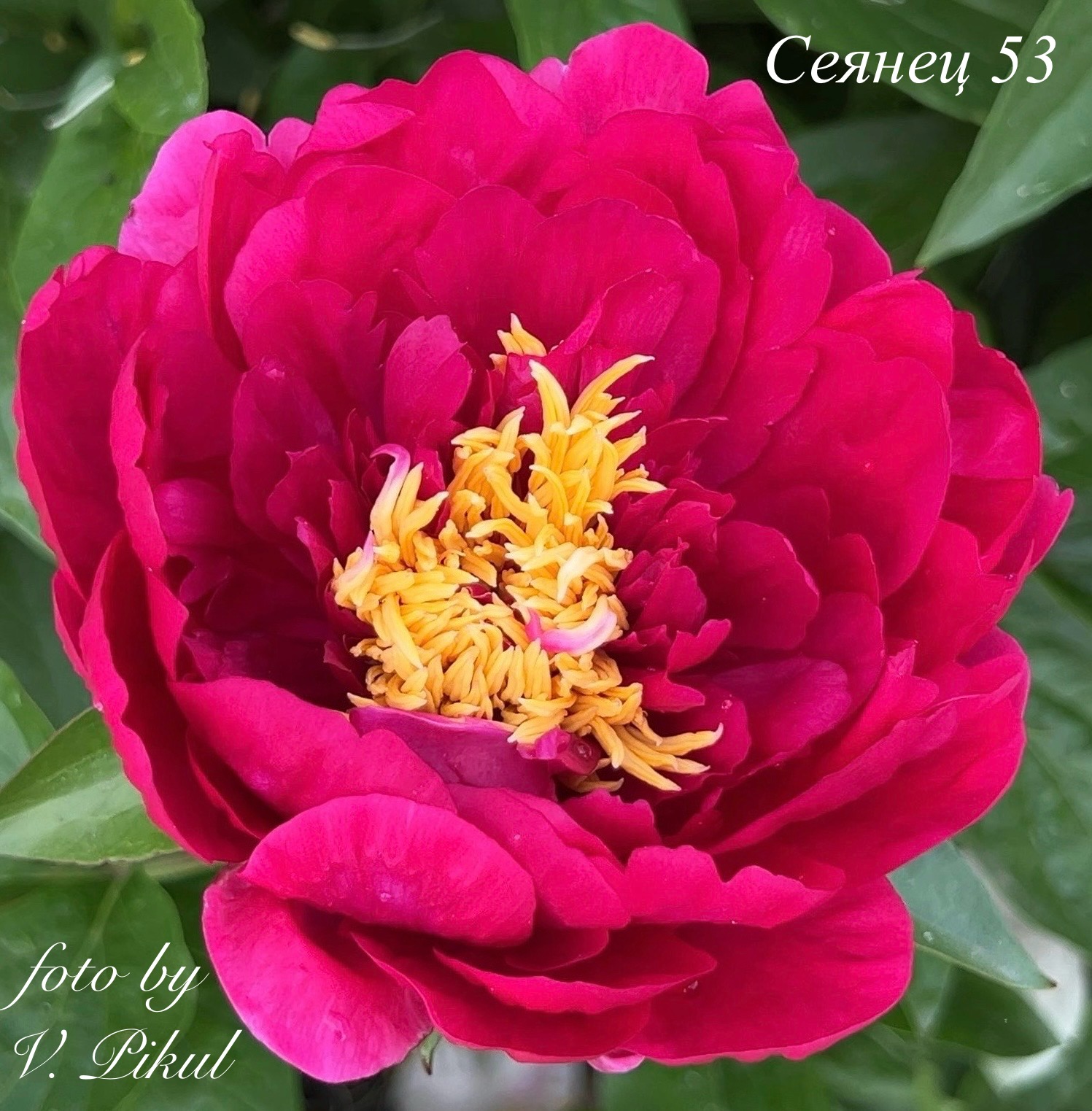

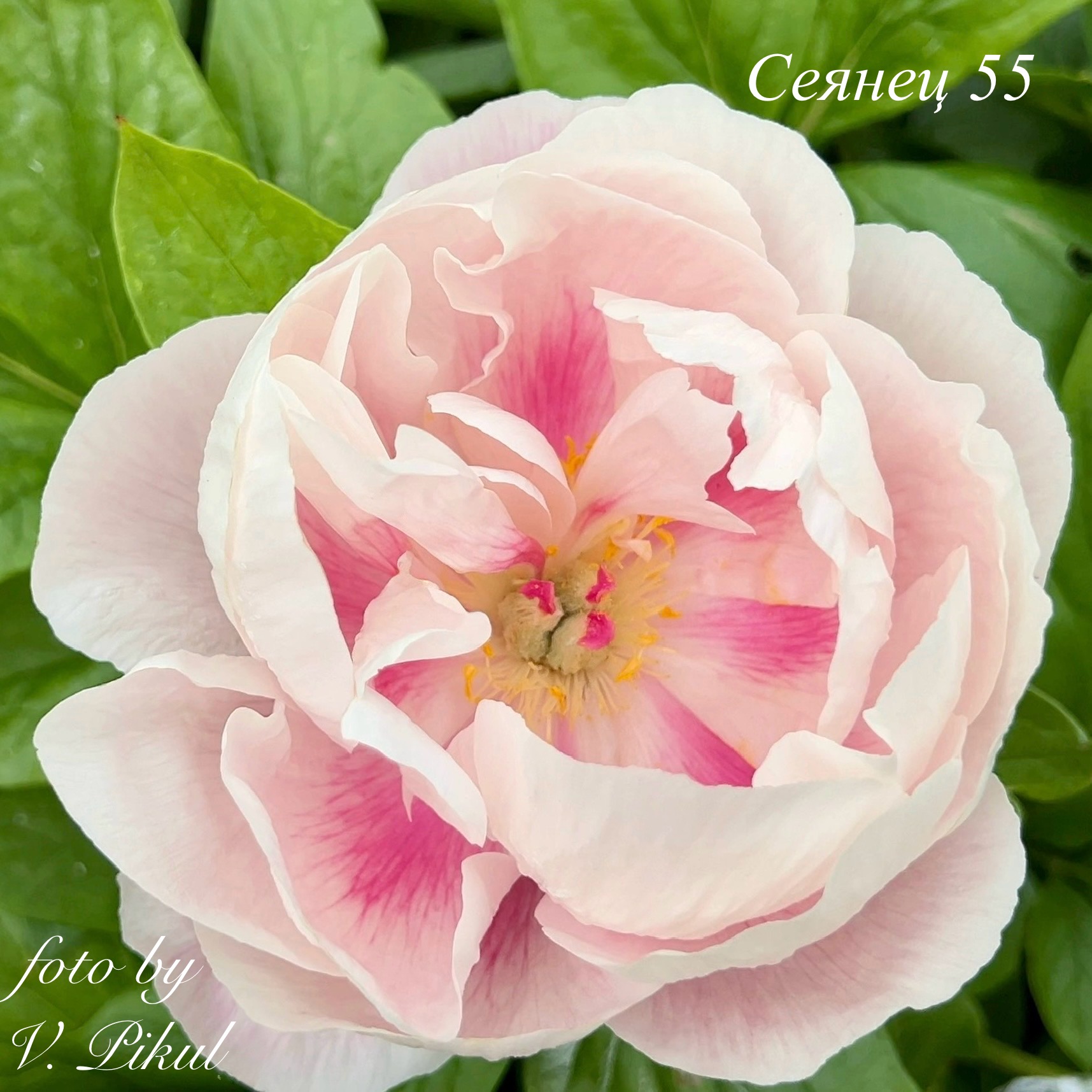



Are you in contact or working together with other peony hybridizers?
I maintain contact and exchange information and pollen with Russian breeders.
Do you have unregistered plants that are not good enough to introduce but have something ‘special’?
I have not yet identified any such “hybridizing plants” from my seedlings.
Name a few peony varieties from other hybridizers which you especially like?
My favorite varieties are:
Maly Semyachik (Fawkner), Bjorn-Olof (Krupke), Elsa Von Brabant (Miely), Origin of Serenity (Bremer), Lustiger Harlekin (Steffen Schulze), Bridal Bouquet (Johnson/Adelman), Pastelorama (Seidl/Bremer), Callisto (Bremer), Blonde Vision (Hollingsworth), Rose Heart (Bockstoce/Landis), Anatoly Skakodub (A. Skakodub), Mrs. J.H. Neeley (Neeley J.), and of course the list goes on…
Maly Semyachik (Fawkner, 2015): I love literally everything about this peony: its’ magnificent, tall bush stands out in the garden; its’ perfect, large, heart-shaped leaf with distinct veining; its’ large, double flower heads on thick stems; an extraordinary flower color that’s difficult to describe in one word (cream with lilac-pink and lemon-green).

Bjorn-Olof (Krupke, 1999): an extraordinary fragrance (a blend of old rose and lily); a magnificent bush shape with perfect velvety foliage; extraordinary flower color (from dusty pink to pearlescent with hints of lilac); consistent and dense double blooms; extraordinary petal undulation and shape; consistent, annual, uniform blooming.

Origin of Serenity (Bremer, 2019): an intense fragrance; a white color with hints of rosé champagne; a pronounced peach glow at the base of the petals (I really love the complex white color in peony inflorescences); a gradual opening of the petals from the outer to the central petals; symmetry in the shape of the inflorescence; elegant undulation and ribbed petals; long-lasting stems.
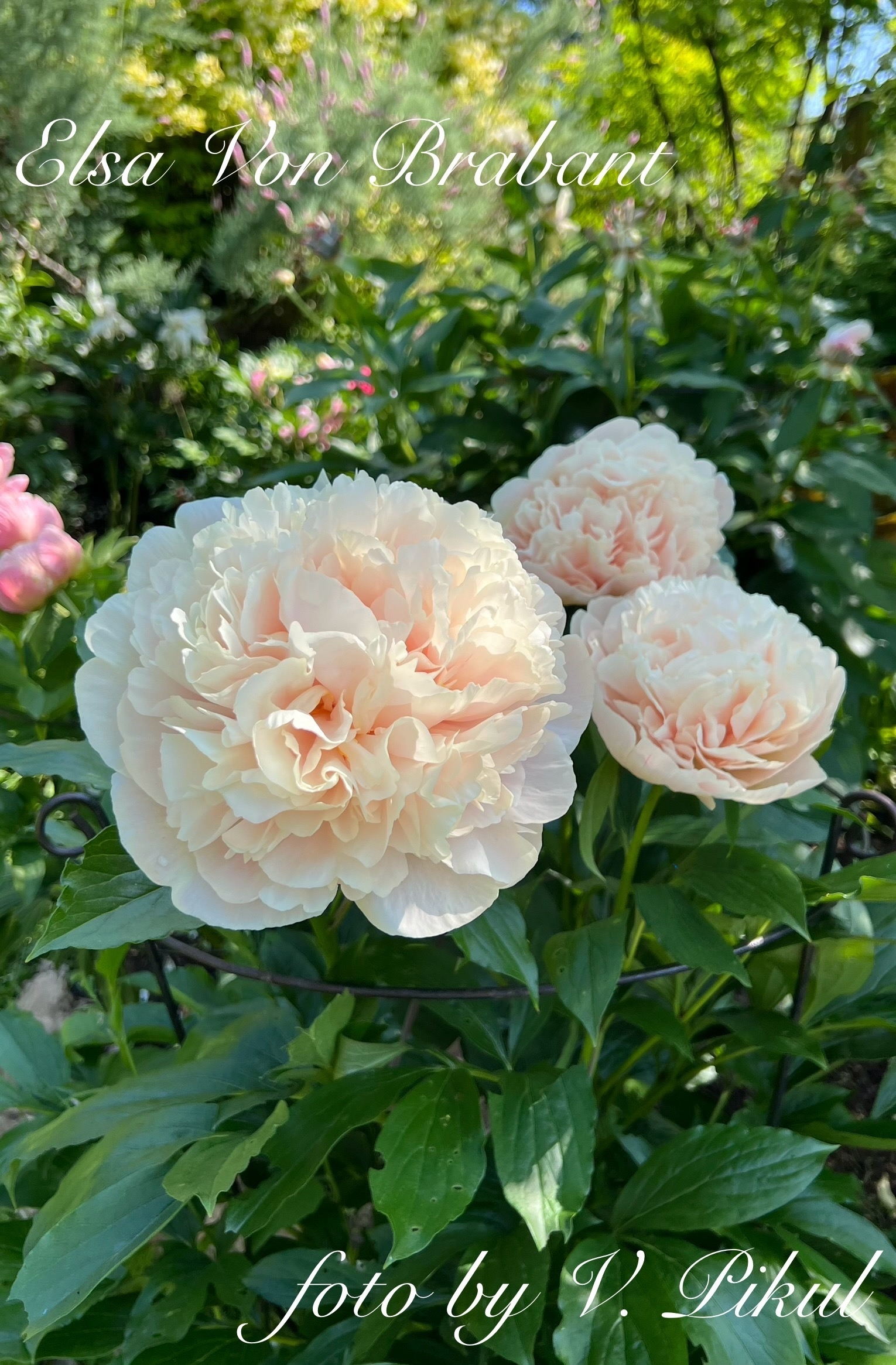
Elsa Von Brabant (Miely, 2019): extraordinary pastel shades of orange, salmon, and apricot; unique inflorescence shape and petal undulations; and fragrance.
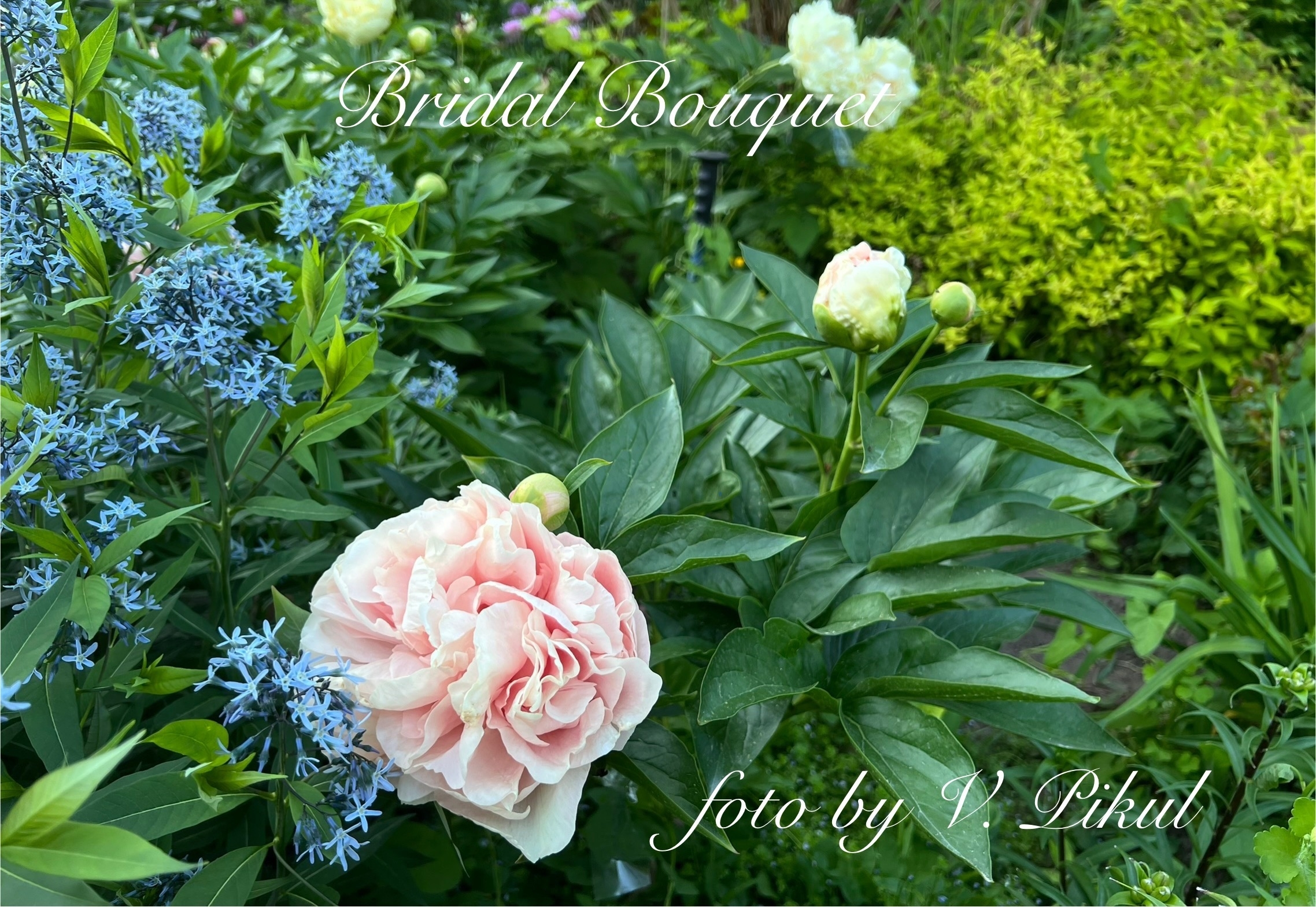
Bridal Bouquet (Johnson/Adelman Peony Gardens, 2023): the shape and color of the peony inflorescence—an elongated bud reminiscent of a rose; the inflorescence shape with large, wavy, spirally arranged petals; the dusty pink inflorescence, fading to a complex two-tone coloring with pale pink outer petals and a richer pink center.
Lustiger Harlekin (Schulze, 2020 (unregistered)): bright raspberry-pink inflorescences with hints of coral on the outer petals unfold into large, symmetrical spheres; as it fades, the peony becomes a chameleon, acquiring a complex, multi-colored hue with hints of coral, lemon yellow, salmon, and pink; a very beautiful bush with sturdy stems.

Lustiger Harlekin
Callisto (Bremer, 2017): the pearlescent, soft pink color of the peony, with touches of white, cream, and lemon yellow; the wavy petals; and the shape of the bush.

Rose Heart (Bockstoce/Landis, 1974): the shape of the inflorescence; the two-colored bloom as it fades (a bright, rich, raspberry-pink center and a pale pink-coral (whitening) halo of the outer petals); the clear demarcation between the colors of the central and outer parts of the inflorescence.
Blonde Vision (Hollingsworth, 2010): the curly shape of the inflorescence and the richness of the creamy-beige color of the inflorescence (shades of ivory, vanilla, and champagne) with green and pink notes at the beginning of flowering; coral glow at the base of the petals; one of the most beautiful early hybrids.
Anatoly Skakodub (Skakodub, 1984 (unregistered)): tall, stately bush; size and shape of the inflorescence; pearly white-pink color with hints of peach and green at the beginning of the bloom; late flowering; delicate fragrance.
Mrs. J.H. Neeley (Neeley, 1931): extraordinary peach glow and a more contrasting pink center; very beautiful rose-shaped inflorescence.

The list goes on. There are many more old varieties that should be in the garden.
E-mail of this person is known to the author. If you want to contact this hybridizer, we can forward your message.