Different taxonomic ranks: japonica as a variety of obovata, a species in its own right, a subspecies of obovata, or a synonym of obovata?
I will go through these taxonomic ranks in chronological order.
Makino found a white-flowered peony on the Japanese island of Honshu in 1898 and named it P. obovata var. japonica. He therefore regarded the Japanese woodland peony as a variety of the woodland peony. The red-flowered woodland peony (P. obovata Maxim.) had already been described by Maximowicz in 1859 from the Amur region of the Russian Far East.
Miyabe and Takeda raised the white-flowered peony to species rank in 1910 and published a description of it. Their names appear as the authorities, i.e. the name-givers, so the Japanese woodland peony goes by Paeonia japonica (Makino) Miyabe & Takeda. This name is used in the Japanese-authored Flora of Japan and, for example, in the name database of the Finnish Biodiversity Information Facility (Laji.fi). According to these, P. japonica, the Japanese woodland peony, is a species in its own right. The Helsinki herbarium holds one such sheet from 1956. F. C. Stern also treated japonica as a separate species and described it in detail. Huxley et al., in their four-volume work on garden plants, cover peonies in volume three. For P. japonica the entry reads, among other things: “as P. obovata except that the leaves are glabrous and the flowers white. Difficult to grow.”
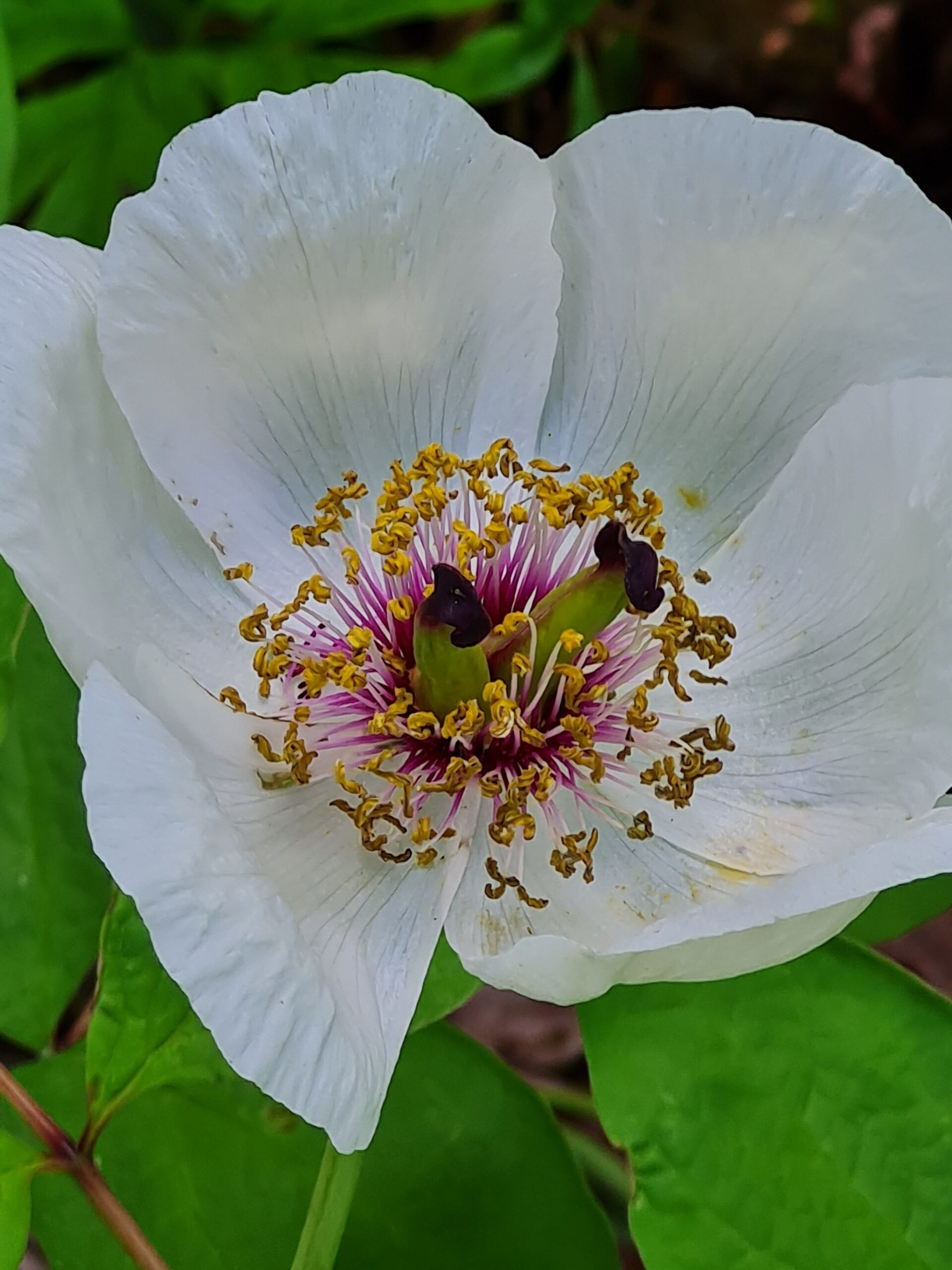
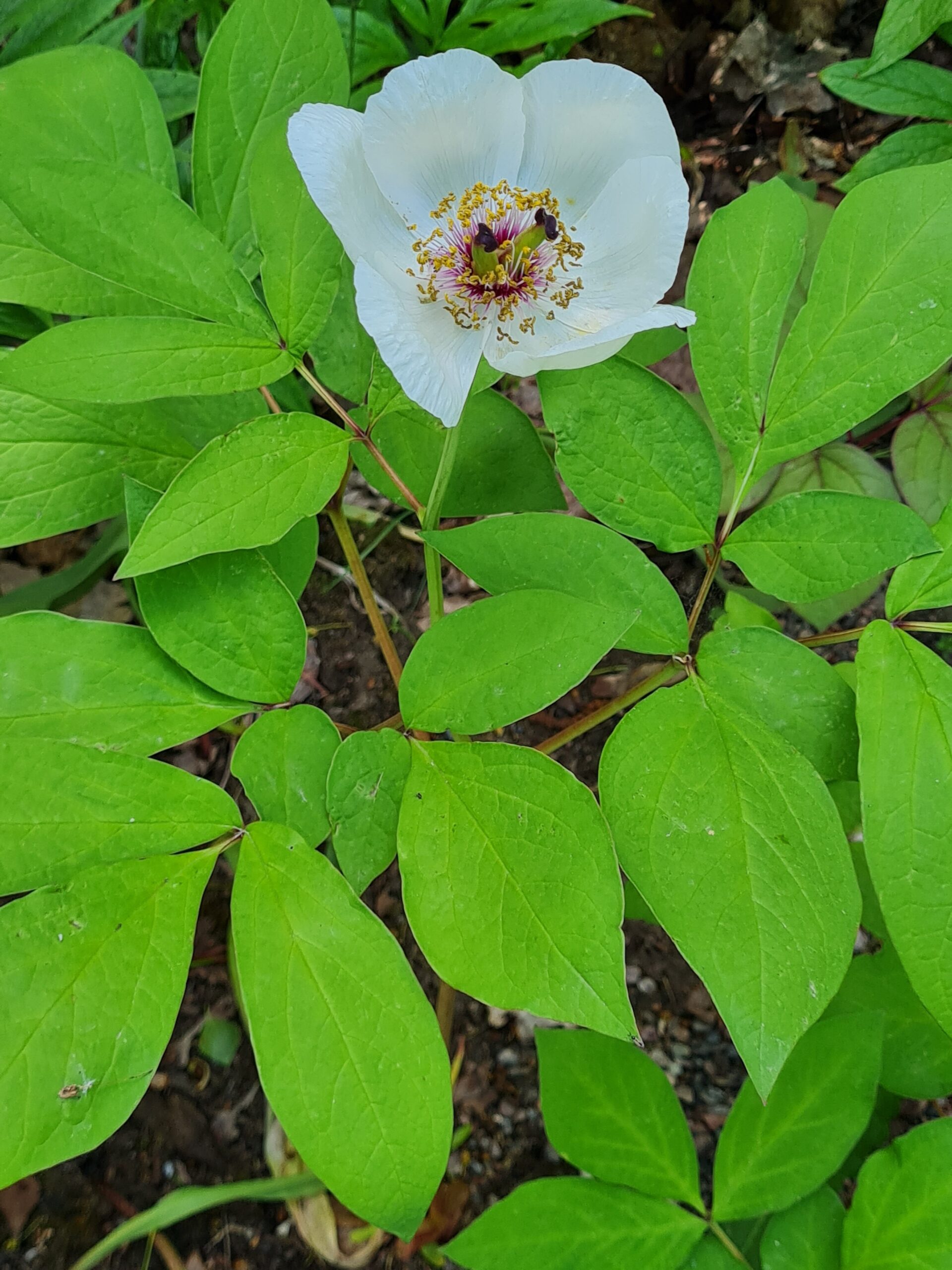
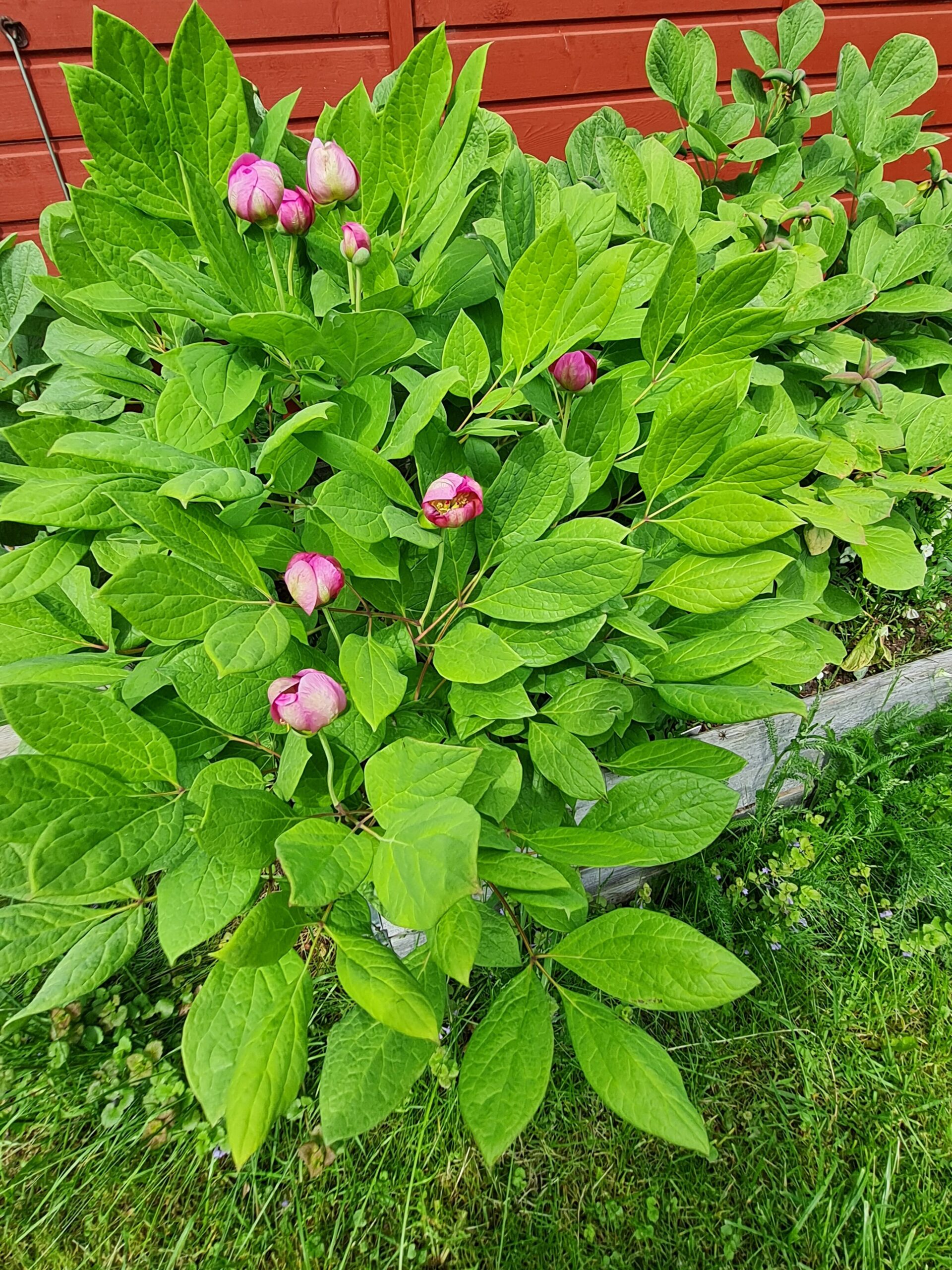
Other researchers regard the Japanese woodland peony as a subspecies of the woodland peony, ssp. japonica (Halda & Waddick, also WFO). This name was given by Halda in 1997, so the Japanese woodland peony with its authorities is Paeonia obovata Maxim. subsp. japonica (Makino) Halda. Halda and Waddick describe ssp. japonica as follows: smaller, about 50 cm, leaves glabrous (also underneath), flowers white, carpels glabrous, flowering earlier than ssp. obovata. They characterize ssp. obovata as larger, 70 cm, leaf undersides grey-green and hairy along the veins, flowering later, flowers white or reddish, carpels glabrous. (In my own plants, all of these held true; compare photos 1–3.)
The Chinese botanist D.-Y. Hong, in turn, considers that the nominate subspecies of the woodland peony, P. obovata ssp. obovata, also includes japonica (the Japanese woodland peony). In his view the names var. japonica, ssp. japonica and P. japonica are synonyms. The reasoning can be read in his article or book. Hong compared the morphology of field and herbarium specimens (japonica / obovata) and reached this conclusion. I will not go through the arguments in more detail, but anyone who wants to understand his reasoning can look them up in the sources mentioned.
I searched the Species Paeonia Group Facebook group (using the keyword japonica) to see what is written there about the Japanese woodland peony. Several people criticized the view of the Chinese professor (D.-Y. Hong) that japonica = obovata. This conclusion, that they are the same species, was generally considered a mistake. I found opinions such as: the flowering time is different; obovata grows and emerges slowly while japonica is already flowering (this was the case with my plants too); the leaf shape is different; and the leaves of obovata grow larger after flowering, which japonica does not do (this, among other things, was also noted by Page).
What do the Japanese think and write about this species / species pair?
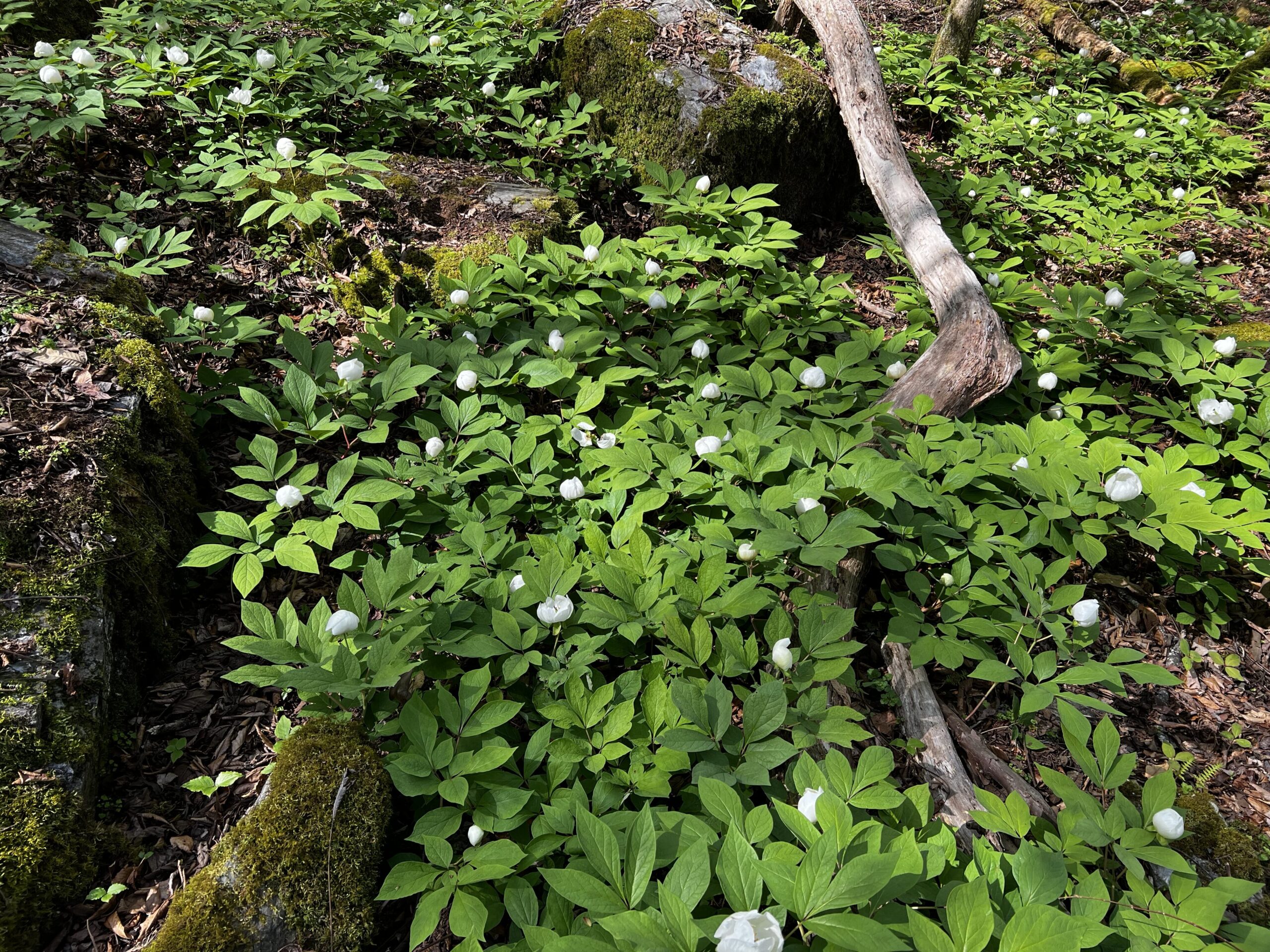
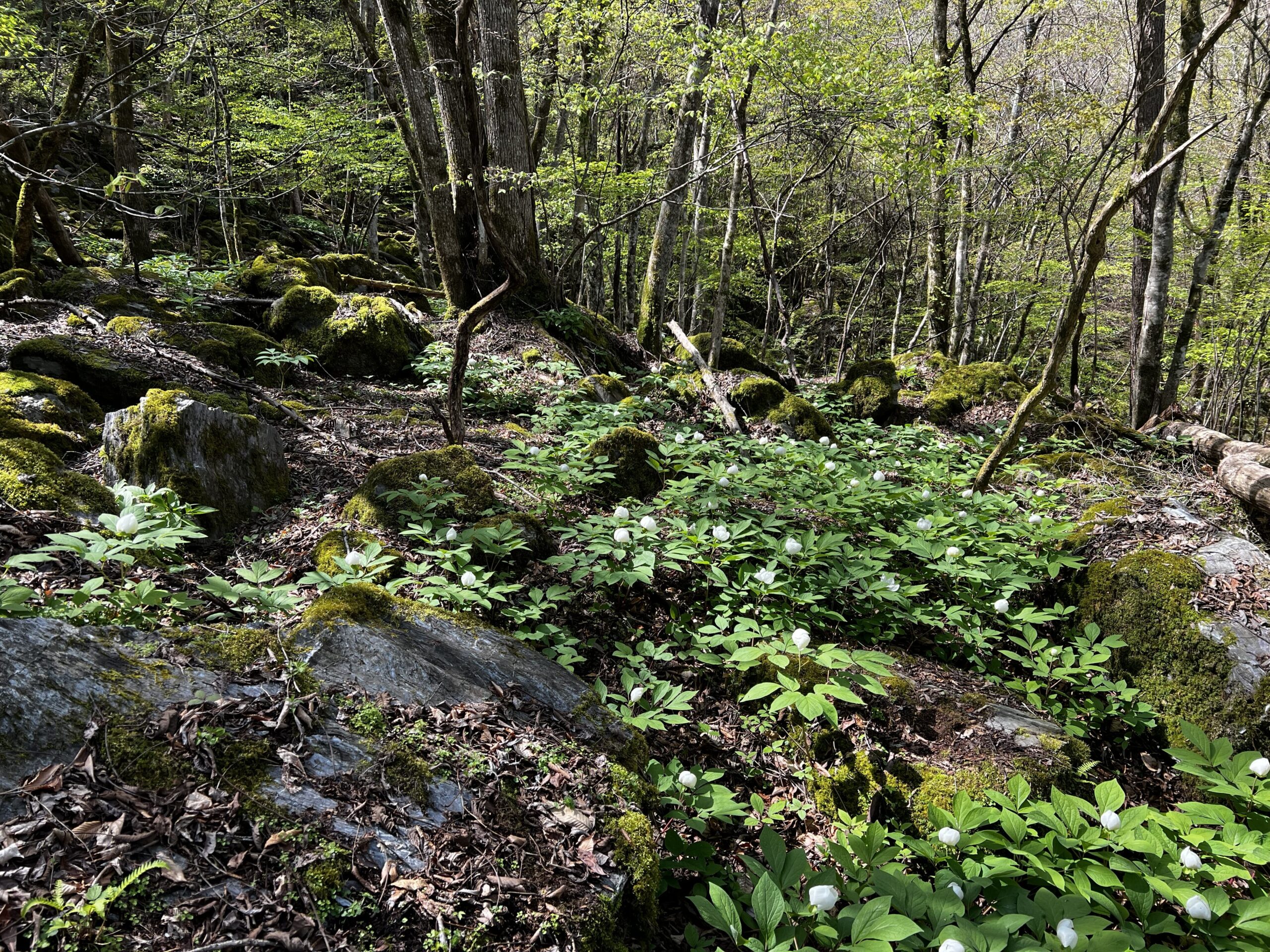
In the Species Paeonia Group I found a Japanese peony grower (Seiichirou Hayashi). I sent him two pictures of my plants (see photos 1 and 3) and asked for his opinion. I asked whether they look like the corresponding plants in Japan. He replied that my plants (that is, the Japanese woodland and woodland peonies) look exactly like theirs in Japan. He commented on the differences in flowering time in Japan: japonica flowers a month earlier there than the other peony species, obovata. He sent me fine pictures of the natural habitat of japonica (photos 4 and 5).