
![Profile picture of khurtekant]()
khurtekant wrote a new post
2 Comments![Profile picture of khurtekant]()
From these last series, they’ve received a long warm period and will now go into cold storage. Here the two extremes in seed size: P. ludlowii (or a hybrid with P. lutea/delavayi) versus P. tenuifolia (P. biebersteinia). The latter one is quite prone to rootlet rot is my experience, but no problem this time.
![]()
![Profile picture of khurtekant]()
khurtekant posted in the group Species Peonies International Network (SPIN)
March 1st, some species are already growing strong outside. P. emodi has lots of stems, but experience from years past tells us that some cold harsh weather along the way to blooming will heavily damage them again. But before that happens they always look very promising. The second image shows P. triternata, or P. daurica ssp daurica as it is…Read More
![]()
![]()
![Profile Photo]()
 liked this
![Profile picture of khurtekant]()
khurtekant posted in the group Species Peonies International Network (SPIN)
For those wanting to read more about peony species, and more specifically about those growing on Russian territory (or nearby in the Caucasus). Sergey Banketov has written several interesting articles about them. It’s in Russian, but if you use chrome or another modern browser you’ll get instant translation so you’re sure to learn a…Read More

OF never makes good carpals at my house, so the method I used was to use OF as a pollen parent. Which means knowing a friend who lives somewhere where the season is much earlier than in my (quite late) area where I can get pollen, and then use it on earlier varieties.
You are right though; strong stems are the goal here, and in the long run I believe will be the ultimate goal of all work with the herbaceous hybrids, even if not all of our wonderful new varieties have them yet.
Bob
- Load More Posts
Share Profile


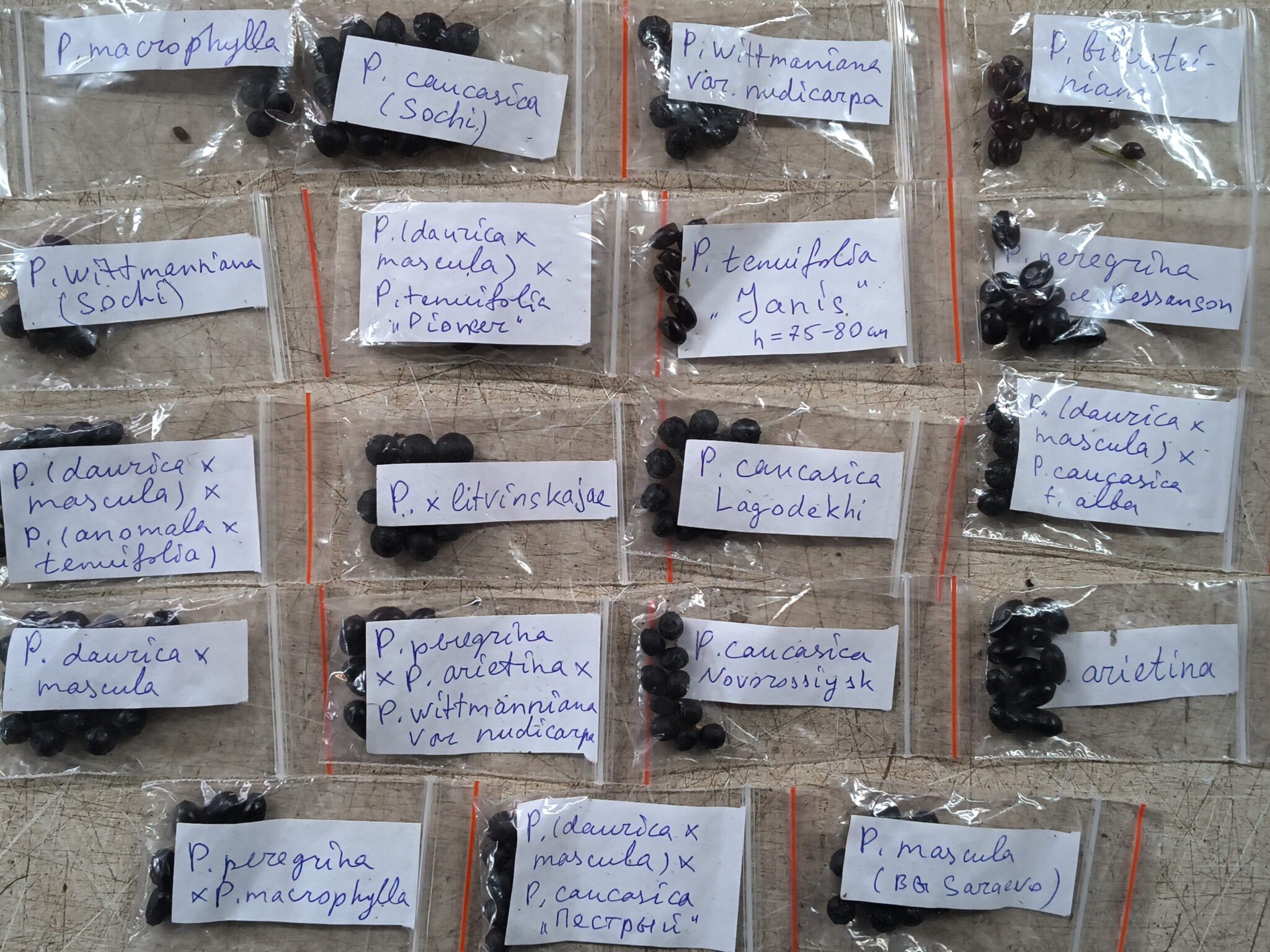




Worked like a charm this time. Rooted seeds of nearly all ‘difficult’ samples and almost all of them looking perfectly healthy.