Where Did Yellow Itoh Peonies Get Their Colour?
Aulikki Salmia
Aulikki Salmia
“Where did that yellow colour come from?” exclaimed a woman in the village when she saw my yellow ‘Garden Treasure’ peony (photo 1). I told her it was an Itoh peony, and she was satisfied with that. I could also have answered: from some Lutea hybrid. But what are Lutea hybrids?
The name refers to the woody species Paeonia lutea, discovered in China in the 1880s. In his research, however, Hong has merged it with P. delavayi (the nodding shrubby peony). Delavayi peonies are small shrubs, usually under 1.8 m tall. They grow at 1,900-4,000 m in thickets or dry forests in Sichuan and Yunnan, in south-western China. In this article I speak of P. lutea and Lutea hybrids, because breeding and crossing work has been done under these names.
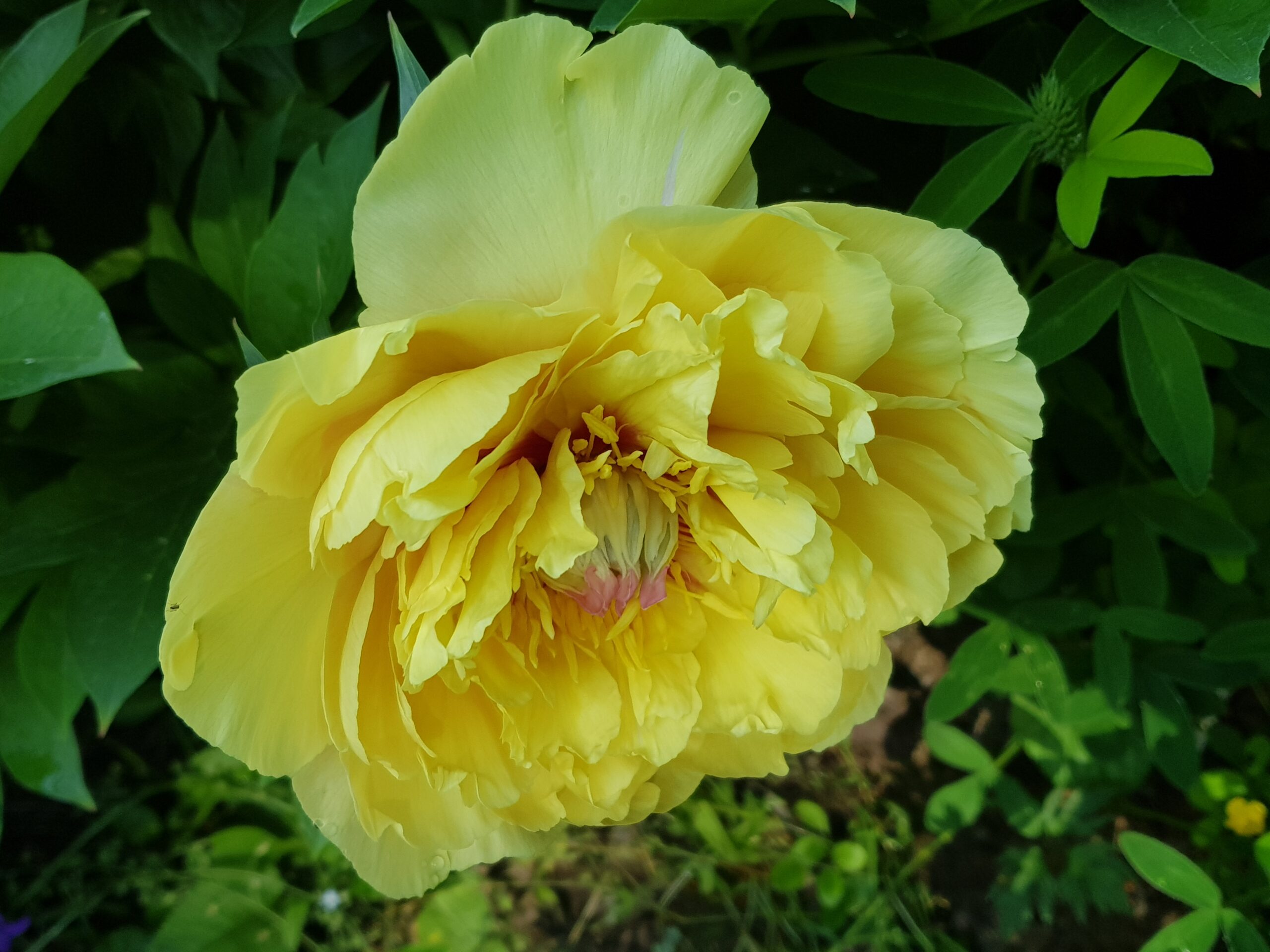
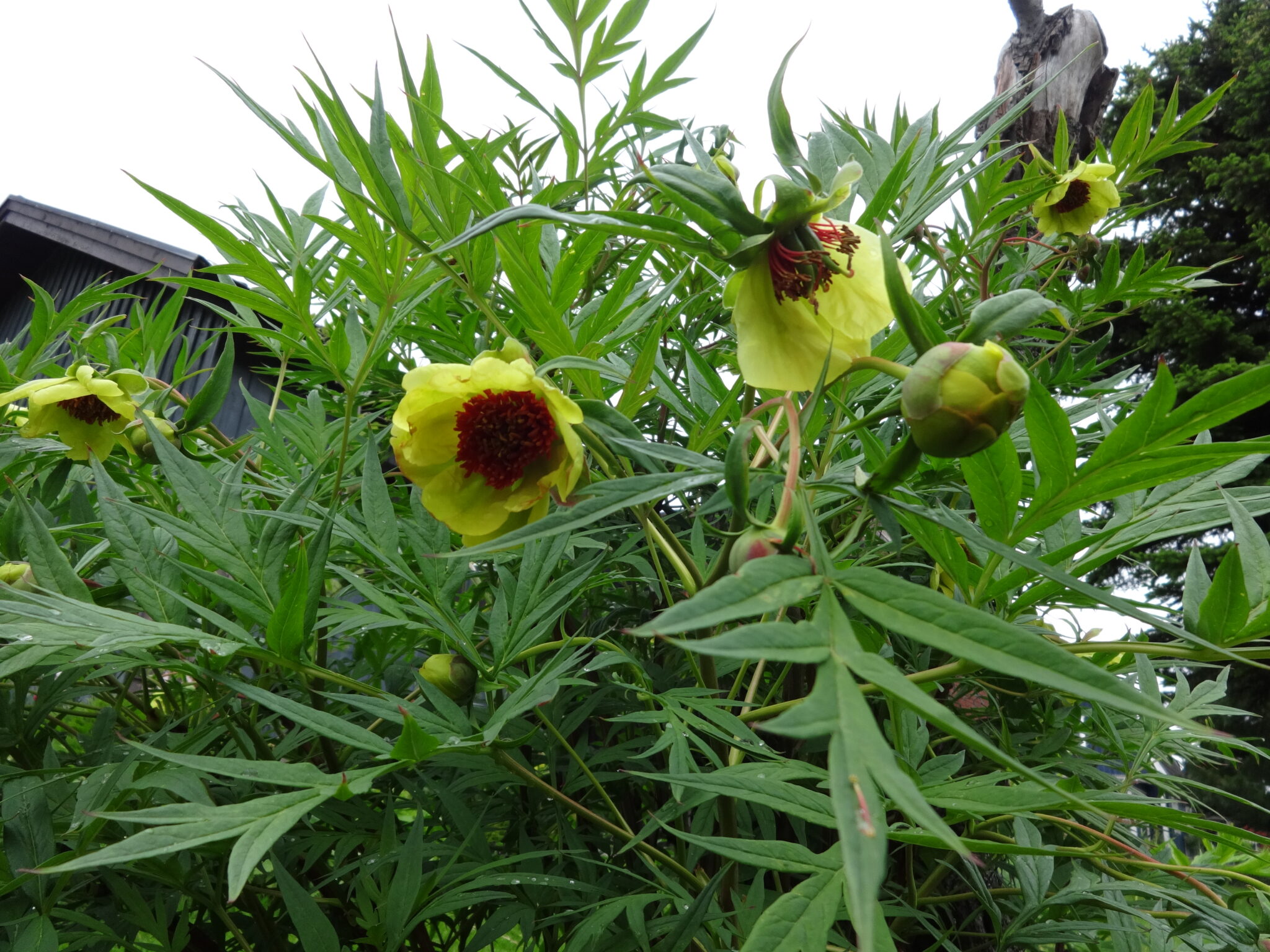
P. lutea is a fairly low, shrubby tree peony with bright yellow, nodding flowers about 7 cm across (photo 2). It usually has 7-11 petals, which may have a red or purple-red blotch at the base. There are dozens of stamens, which can be yellowish or reddish (photo 3). Lutea hybrids have arisen many times, through different stages over decades, by crossing P. lutea with other tree peonies. There are dozens, if not hundreds. The most important for Itoh peony breeding are ‘Alice Harding’ and ‘Golden Era’, which I cover first.
Photo 1: Itoh ‘Garden Treasure’, photo Aulikki Salmia
Itoh hybrids have mostly been produced with a tree peony as pollen parent and a herbaceous Chinese peony (P. lactiflora) as seed parent. But we need to go back to the beginning, the 1940s.
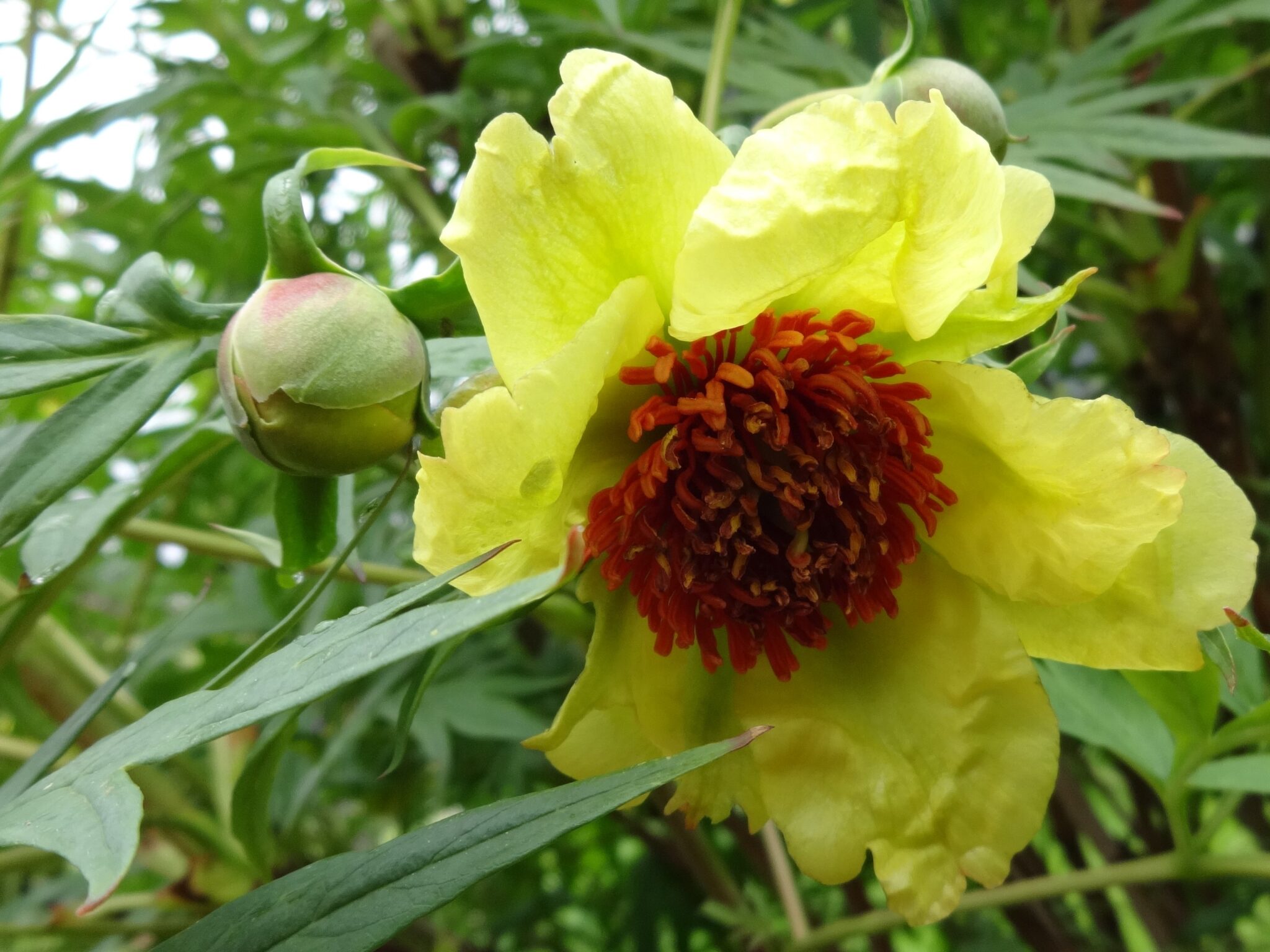
The Japanese breeder Toichi Itoh set out to create a yellow-flowered herbaceous peony, one with a bright or deep yellow colour. Yellow was entirely missing from the colour range of herbaceous peonies. He made the impossible possible by crossing a yellow-flowered tree peony with a white-flowered herbaceous Chinese peony. As pollen parent he used the P. lutea hybrid ‘Alice Harding’ (photo 4), registered by the Frenchman Lemoine in 1935. As seed parent he used a white, double-flowered Chinese peony called ‘Kakoden’. What interests us now is what this yellow-flowered ‘Alice Harding’ is like.
‘Alice Harding’ arose from the cross P. lutea x ‘Yaso Okina’. The latter is a Japanese peony of the Suffruticosa group (moutan tree peonies), thought to have originated before 1893. ‘Alice Harding’ has pure yellow (or, per another source, bright lemon-yellow) double, fragrant flowers with ruffled petals and yellow stamens. It is low-growing and can be propagated by division, which is exceptional for tree peonies. Lemoine produced several other similar species hybrids, which also appear in the literature as P. x lemoinei, the garden shrubby peonies (P. delavayi x suffruticosa).
Toichi Itoh died in 1956 and did not live to see the seedlings from these herbaceous x tree peony hybrids bloom, which happened in the 1960s. He never learned what a huge achievement this was. He had created yellow-flowered intermediate peonies that grew like herbaceous ones, with lemon-yellow petals and red blotches at the petal bases. The American L. Smirnow brought Itoh’s plants to the United States in the late 1960s. In 1974 the first four Itoh/Smirnow peonies were registered, including ‘Yellow Crown’ (photo 5). That is how Itoh peonies got their name.
‘Alice Harding’ has been the pollen parent in several later crosses that led to Itoh peonies. These include several developed by Hollingsworth, such as ‘Border Charm’ (1984), the already-mentioned ‘Garden Treasure’ (1984, photo 1), ‘Prairie Charm’ (1992) and ‘Prairie Sunshine’ (2005). The same is true of the Itoh peony ‘Hidden Treasure’ (Seidl, 1989).
‘Garden Treasure’ is considered one of the best Itoh hybrids. Its seed parent was a pale anemone-type Chinese peony. It got its yellow colour from the pollen parent, the ‘Alice Harding’ Lutea hybrid. This Itoh peony has large, bright yellow, semi-double flowers with bright red blotches at the petal bases. The plant is large and can carry several flowers on a stem. Its leaves are glossy dark green. ‘Garden Treasure’ was the first Itoh peony to be awarded the APS Gold Medal (1996).
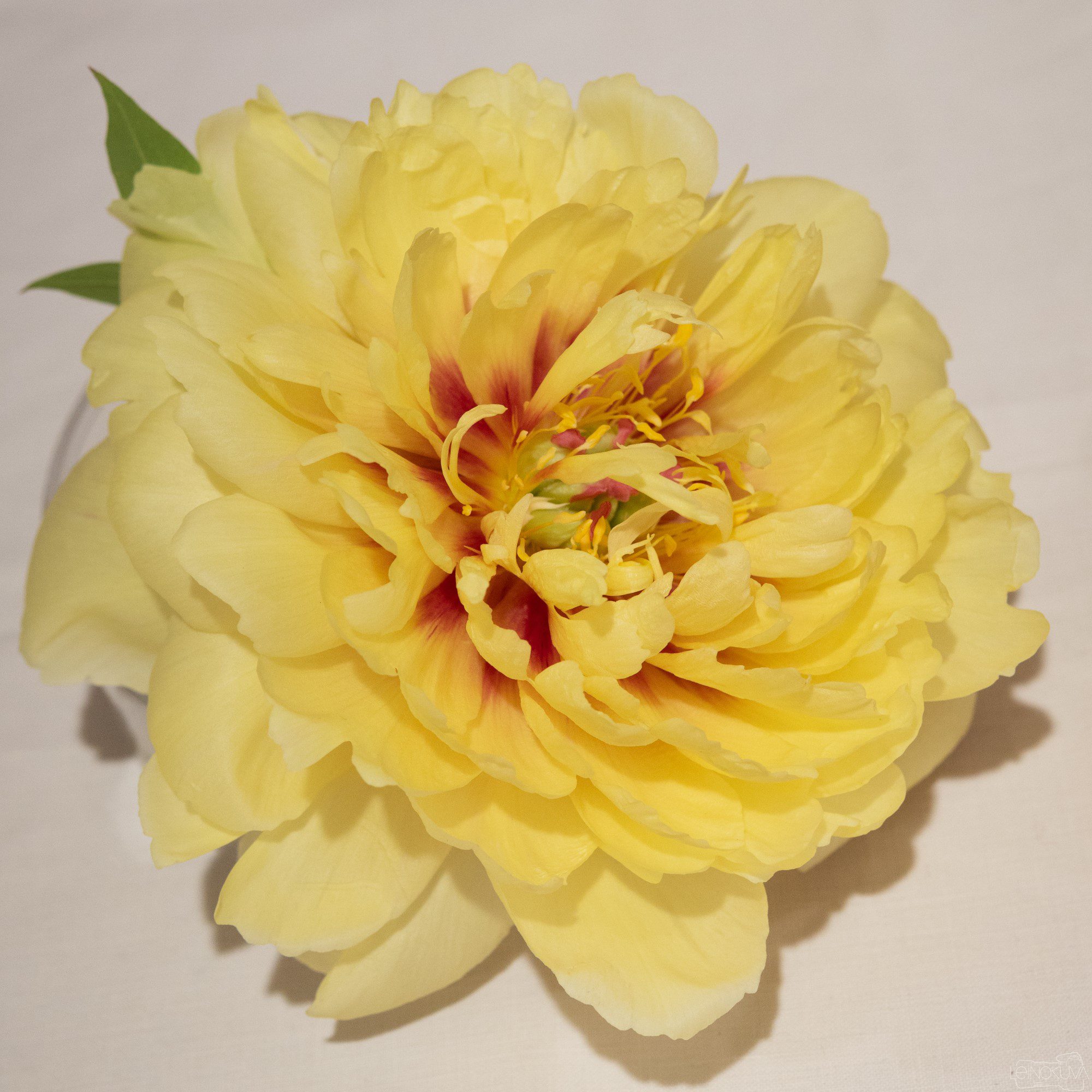
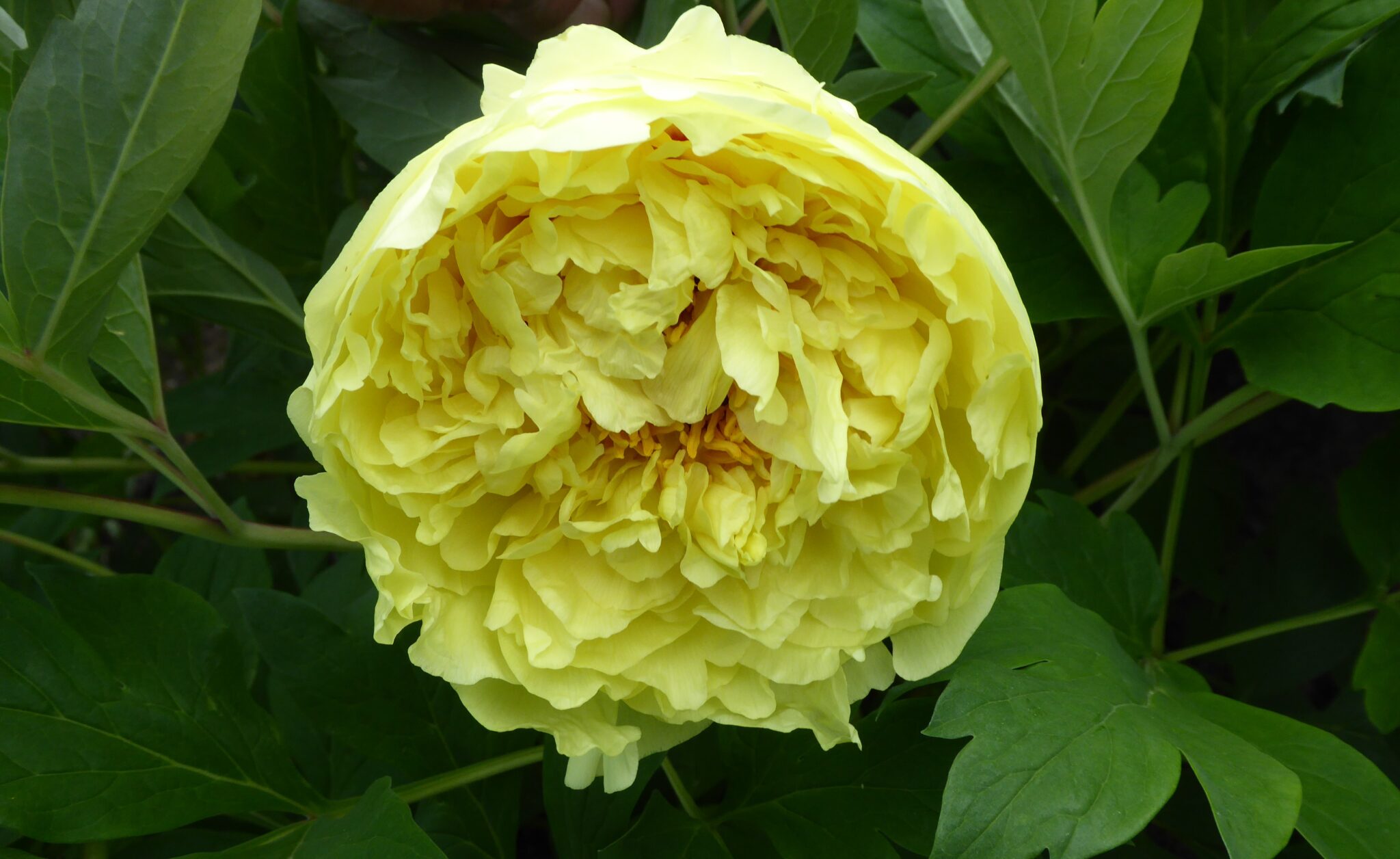
Another successful pollen-parent Lutea hybrid is the tree peony ‘Golden Era’ (photo 6), bred by David Reath in 1984. Its parents are listed as ‘Golden Isles’ and Daphnis pollen (“Daphnis fertile pollen”). We have to go back in time, because ‘Golden Isles’ is a Lutea hybrid created by Saunders in 1948. It has canary-yellow double flowers with dark wine-red blotches at the petal bases, and additional petals between the stamen clusters.
The other parent of ‘Golden Era’ refers to a breeder named Nassos Daphnis, who produced several Lutea hybrids. We do not know more precisely which of them was used as the pollen parent in breeding ‘Golden Era’. ‘Golden Era’ is therefore a second-generation Lutea hybrid. It is regarded as one of the best Lutea peonies David Reath created.
The flowers of ‘Golden Era’ are fragrant, pale yellow and semi-double. The blotches at the base of its beautiful round petals are chestnut brown. The anthers are yellow and the filaments purple. The plant is a little over a metre tall, with 1-3 flowers per stem and, most importantly, functional pollen in its stamens.
‘Golden Era’ has been involved (as pollen parent) in numerous crosses behind yellow-flowered Itoh peonies. Examples include ‘Lemon Dream’ (photo 7), bred by R.F. Anderson in 1999, and many yellow-flowered peonies bred by D.R. Smith, such as ‘Golden Delicious’ (2002) and ‘Singing in the Rain’ (2002, photo 8), as well as the yellow-flowered ‘Sonoma Apricot’ and ‘Sonoma Welcome’ bred by Irene Tolomeo in 1999 (photo 9).
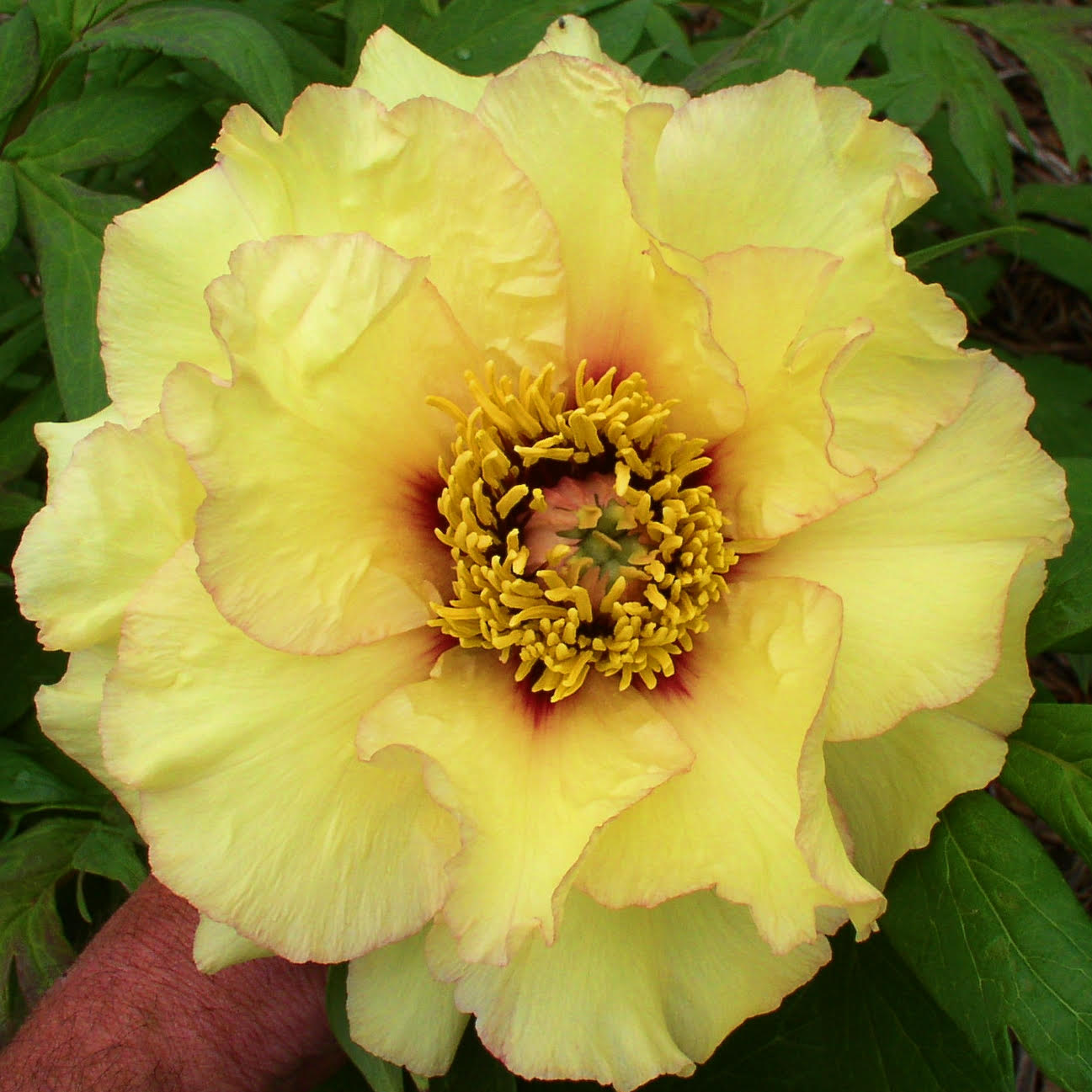
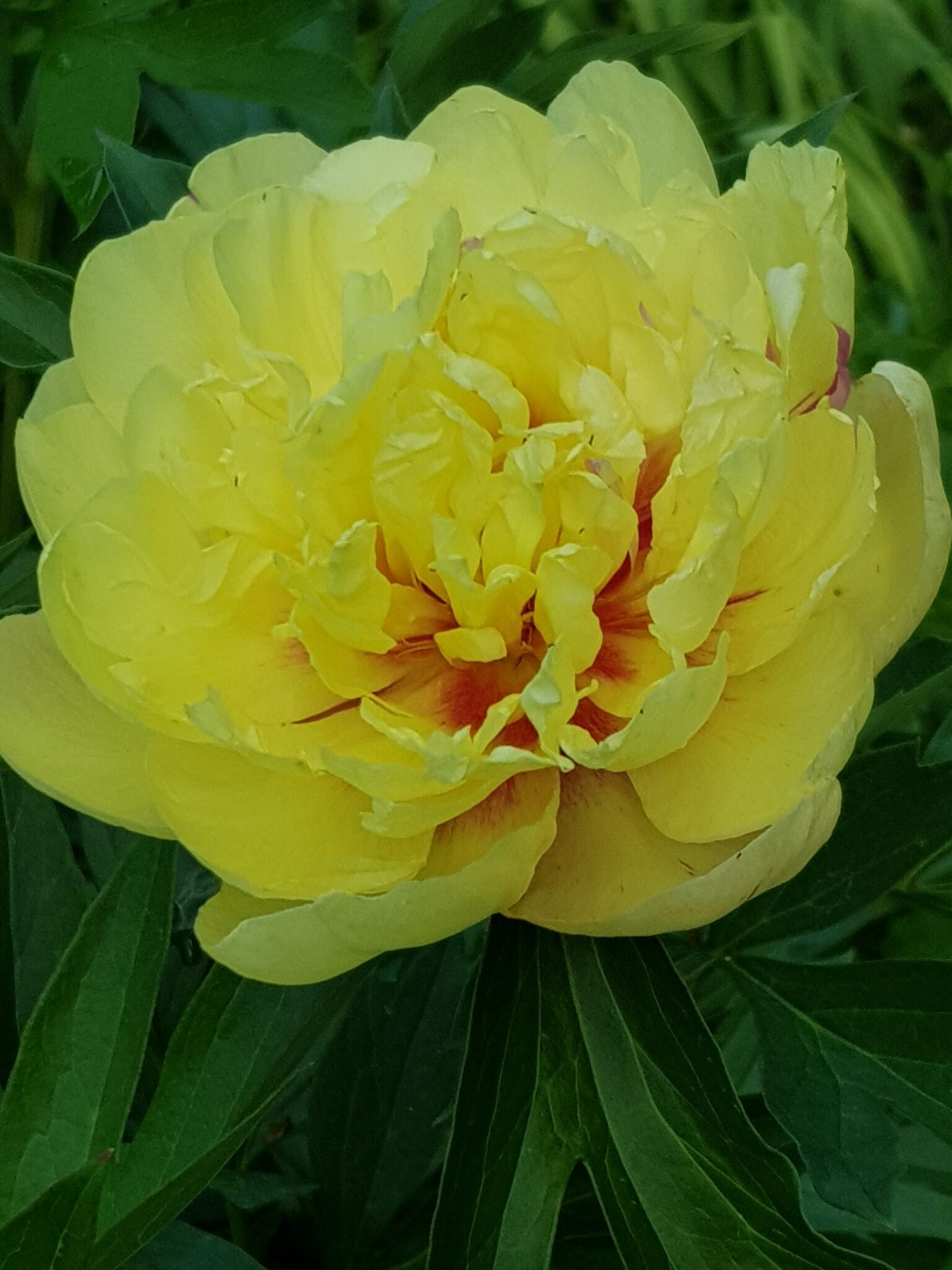
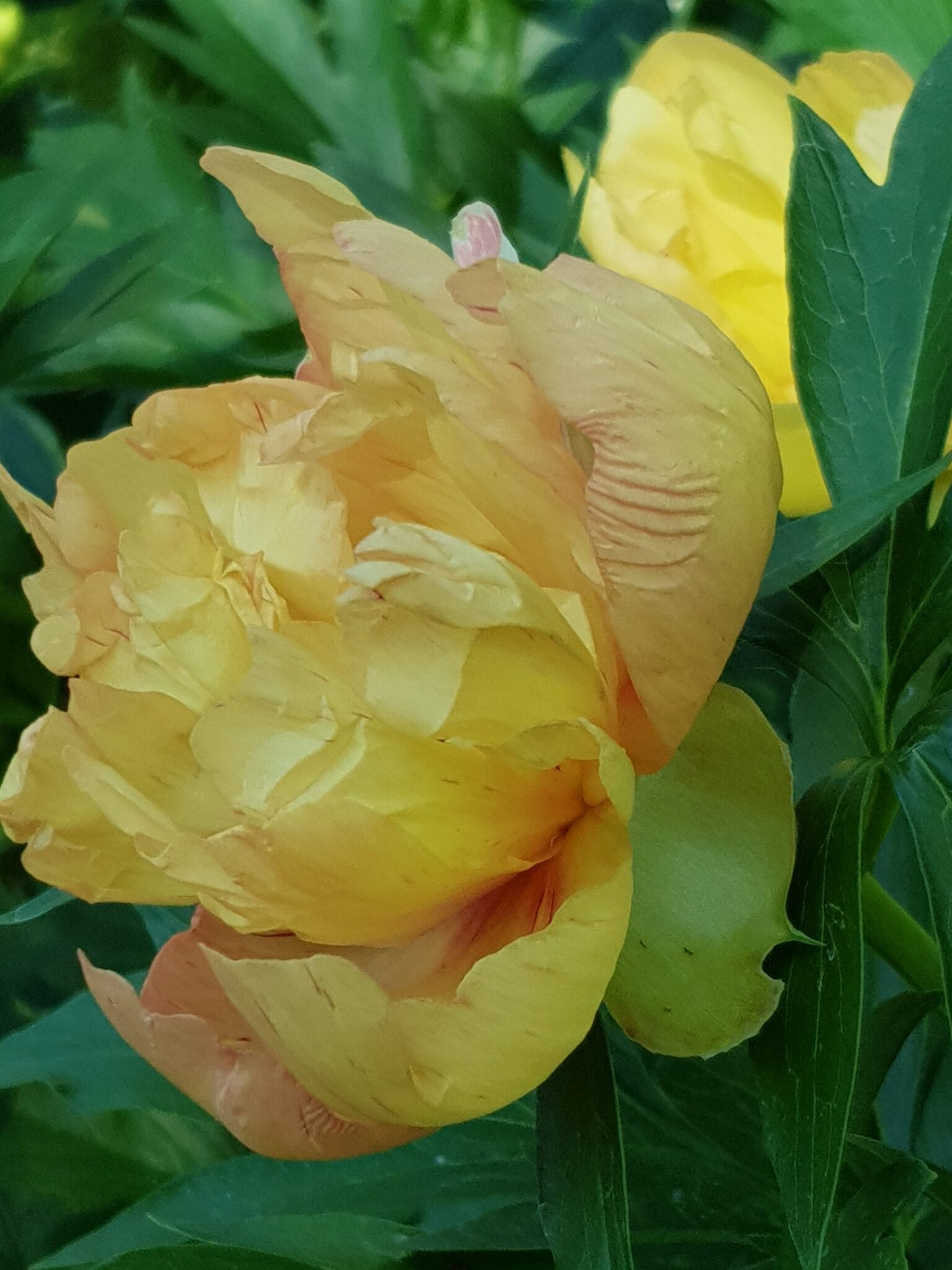
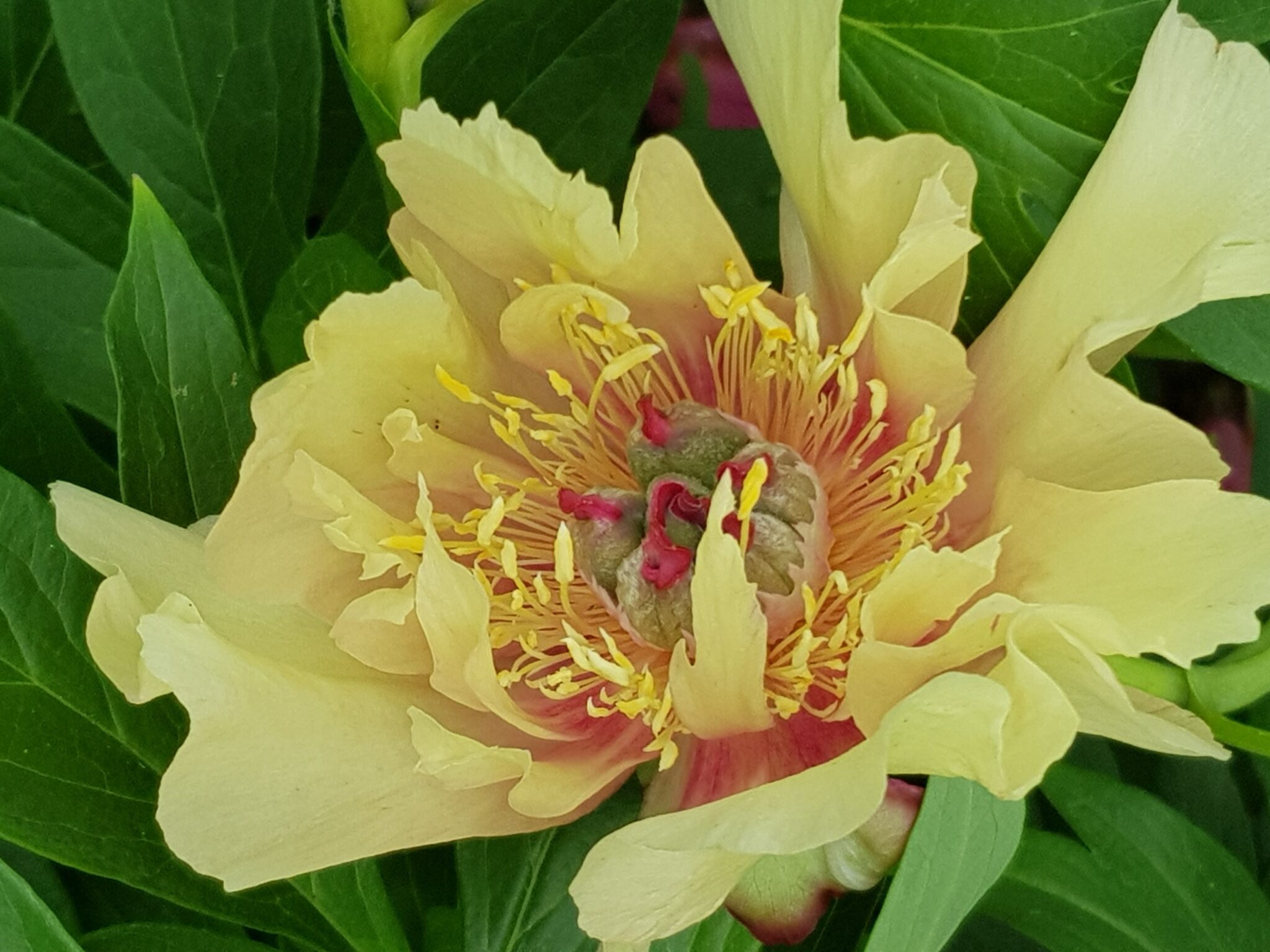
But what about the Itoh peony ‘Bartzella’ (photo 10), known to everyone and bred by R.F. Anderson in 1986? Where did it get its bright yellow colour? The pollen parent was a Reath hybrid tree peony, about which all we are told is that it was Lutea hybrid A-198. This A-198 was also the pollen parent of, among others, Tolomeo’s ‘Sonoma Yedo’ of 2010 (photo 11), considered the most double-flowered yellow Itoh peony. The plant got the name ‘Yedo’ (yellow, double) precisely from these properties.
Not all bred Itoh peonies have their parents recorded, however. I would personally like to know where the Itoh peony ‘Going Bananas’ got its pure yellow colour (photo 12). No information about it can be found, except that it too was bred by Anderson but is unregistered.
The mysterious D-74, D-75 and D-79 also belong to the group of Lutea hybrids, and refer to the tree peony breeder Nassos Daphnis mentioned above. These D-group peonies arose from crosses of the ‘Gold Finch’ Lutea hybrid (bred by Saunders, 1948). There are a few Itoh peonies whose pollen parent was a Daphnis, or D, peony. Examples include Anderson’s ‘Canary Brilliants’ (photo 13) and ‘Lollipop’, both bred in 1999.
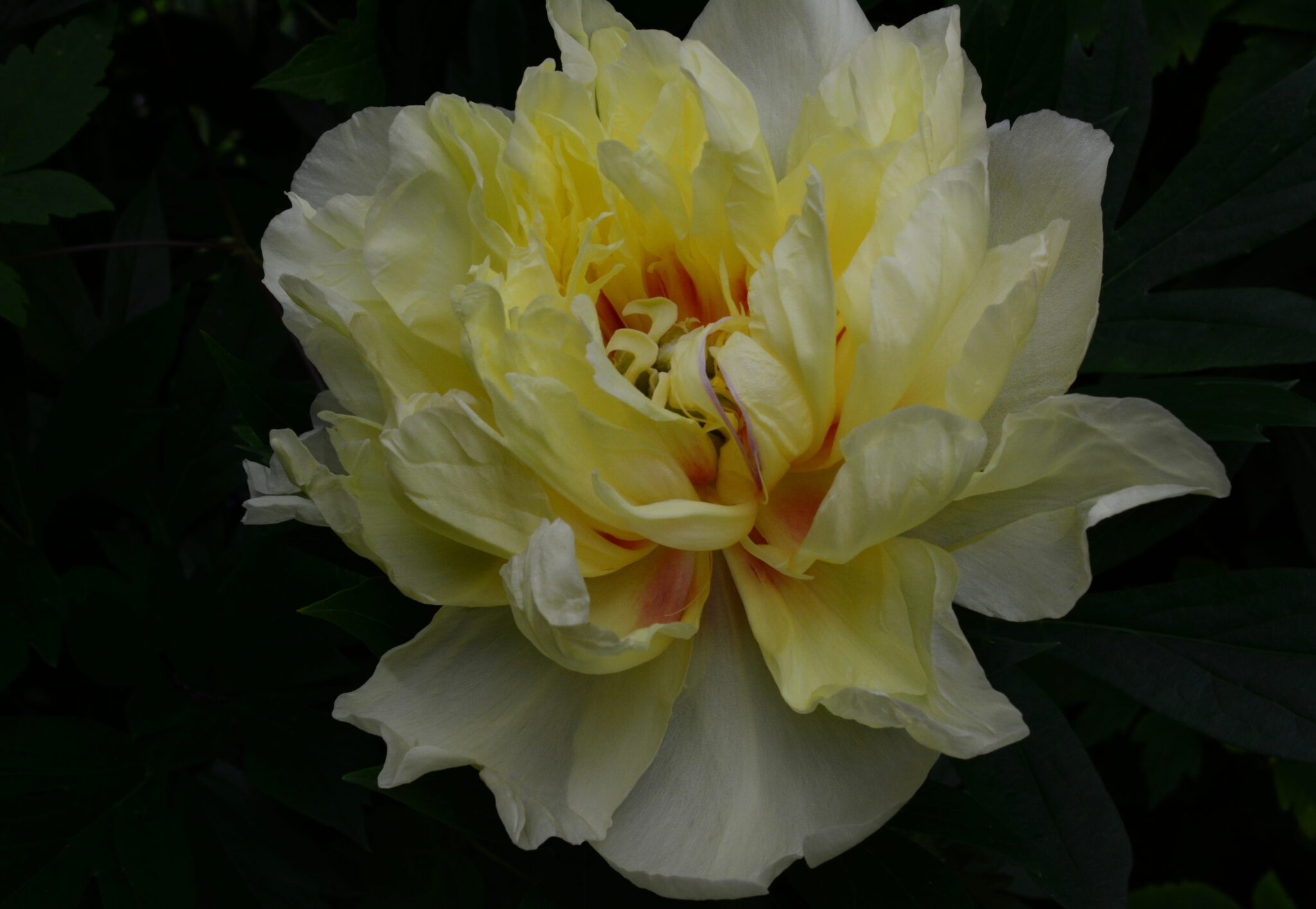
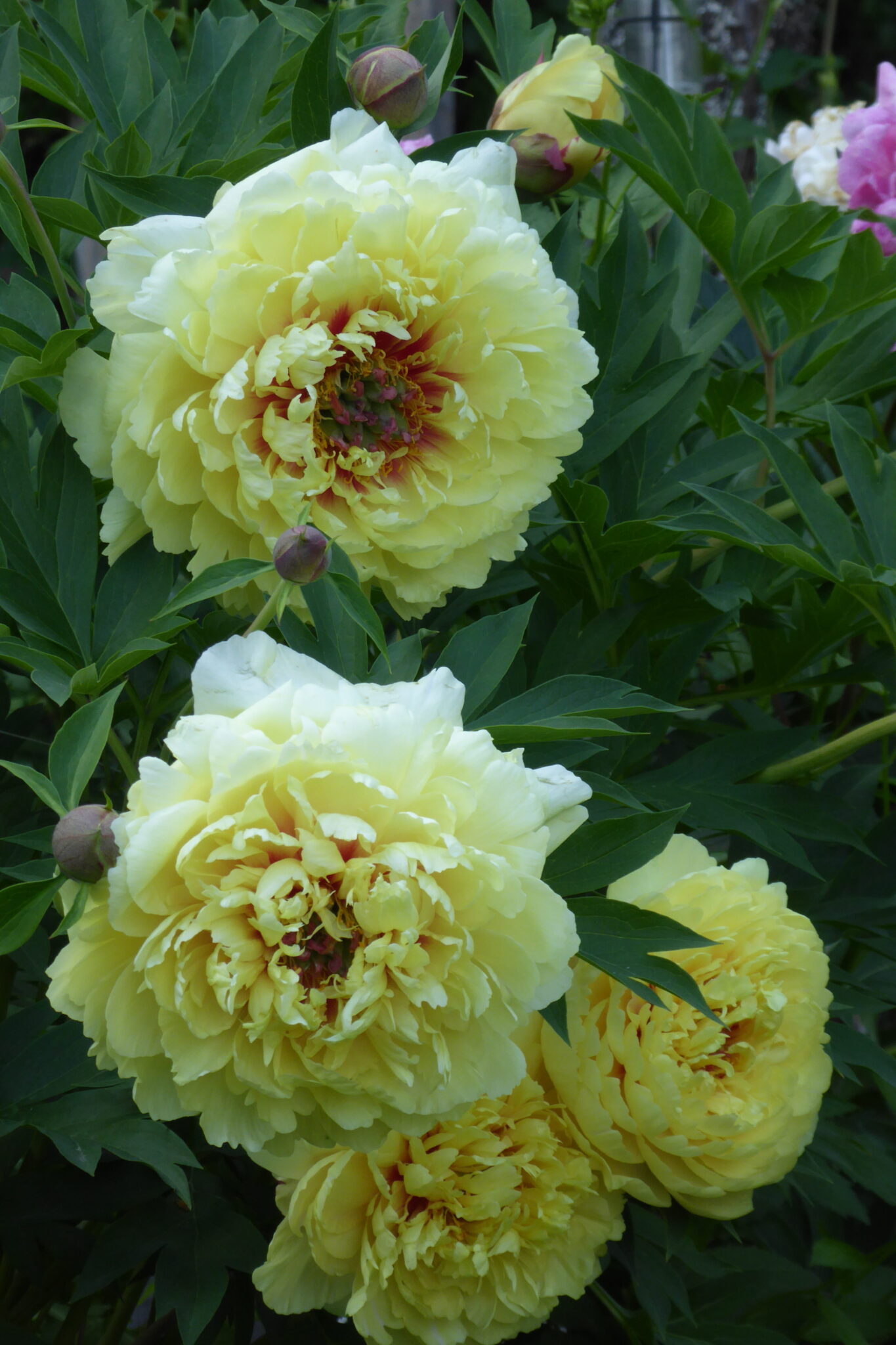
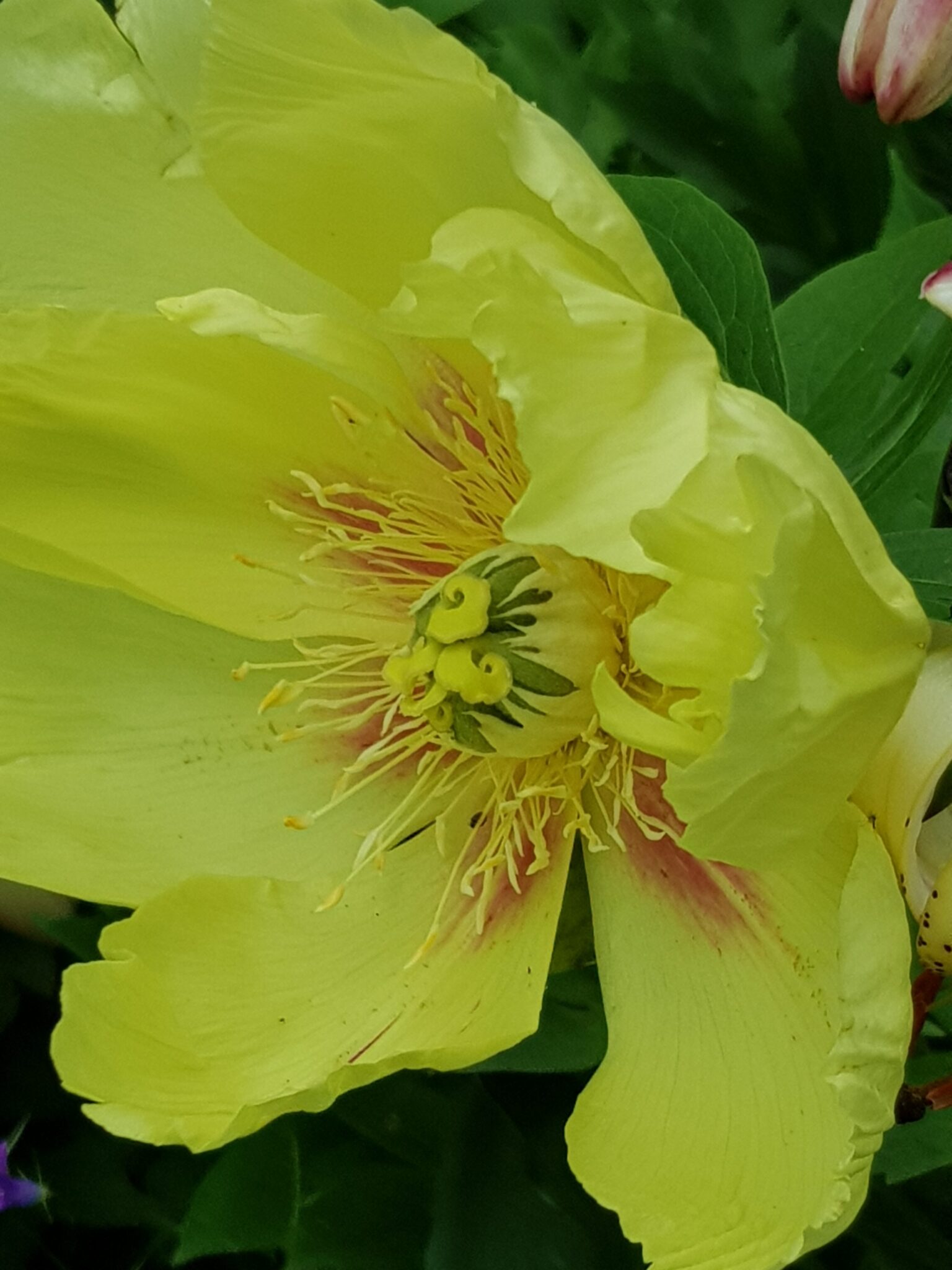
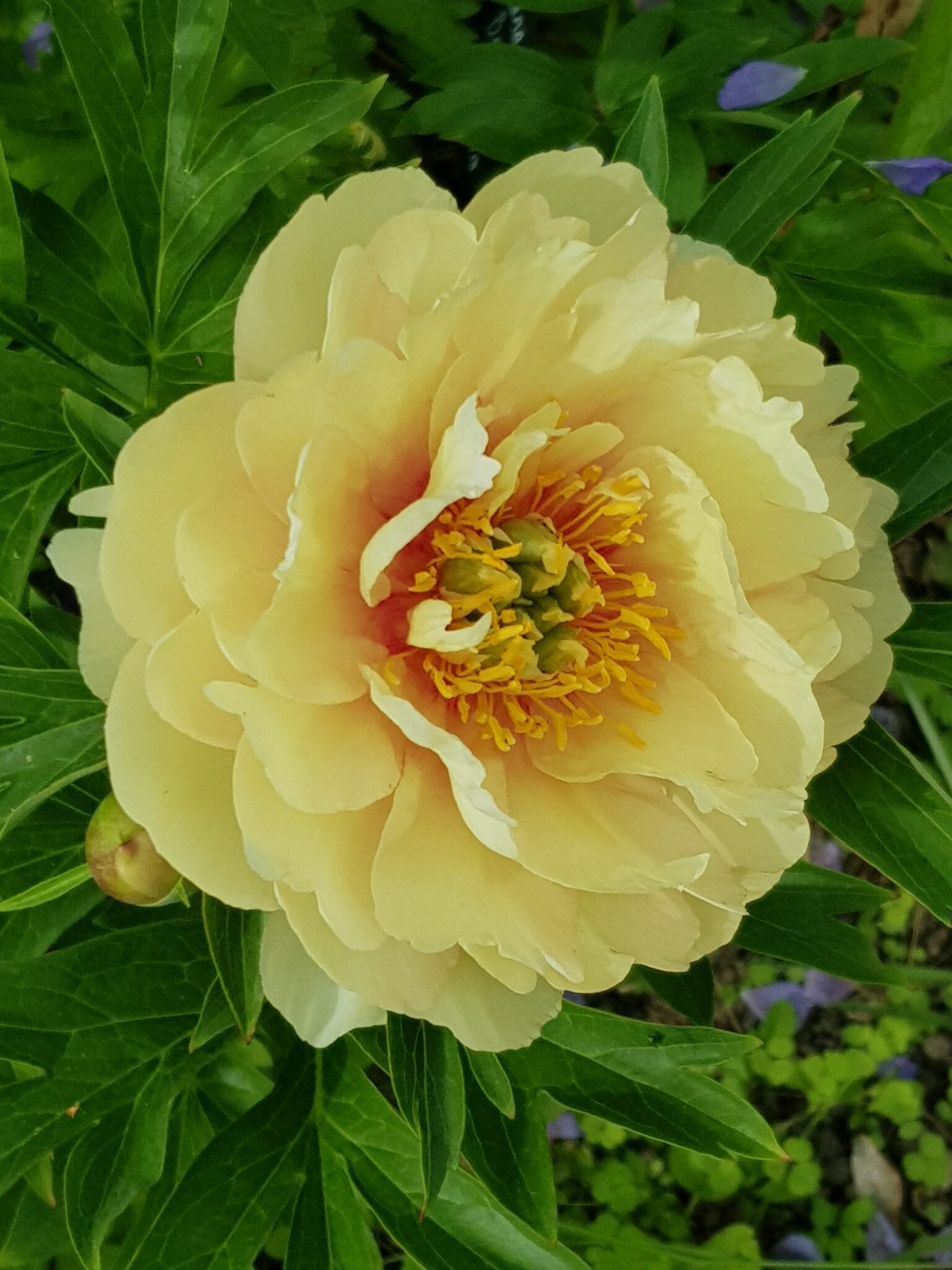
Itoh peonies are herbaceous hybrid peonies whose flowers can be many colours. Their leaves resemble those of tree peonies and stay green late into autumn. Another excellent trait is their good resistance to peony mildew. They bloom abundantly and for a long time.
In this article I mainly went through where the yellow comes from. The answer is: from a tree peony, more precisely a Lutea hybrid. Yellow flowers can be single, semi-double or double. There may be a reddish blotch at the base of the petals, or none. Flowers can be large, even over 15 cm across. They can be fragrant or unscented, and there can be one or several per stem.
The Chinese peonies used as seed parents have naturally influenced these many characteristics. There are many shades of yellow: golden, bright, lemon, deep, pale, canary or peach yellow. Peach-coloured flowers occur, for example, on the Itoh peony ‘Momo Taro’.
Sources:
Photo credits: Nate Bremer, Margareta Breitholz Nash, Antti Leino and Armi Irene Seppälä
 Prairie Peonies HortAlaska Peonies
2026, The Peony Society