Irmtraud & Gottlob Rieck
Country:
Germany
Short biography:
More information:
Peony hybridizers series
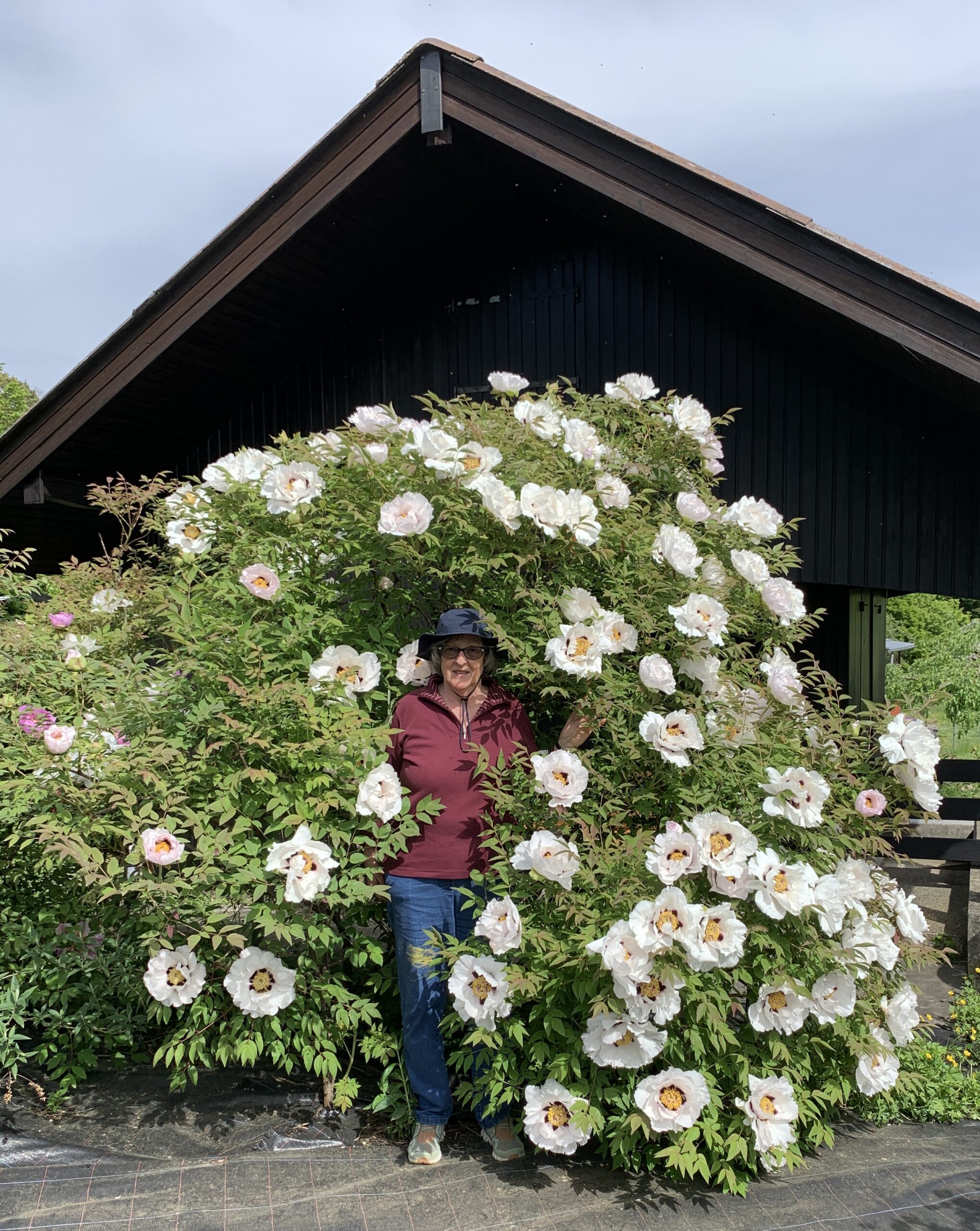
Irmtraud Rieck
The Rieck family has kindly given us permission to re-use the pictures from their website. Some information was given through e-mail, most comes from their website and part comes from an article they wrote for the APS Bulletin (338 – 2006 June).
How did you first get involved in peony hybridizing?
I was born in 1947, worked as a teacher at a mentally-handicapped school for 30 years. When my husband Gottlob and I bought our house in 1975 there was plenty of space around, but no money left over for creating a garden. We therefore started to raise many plants from seeds, also peonies, which we received through the seed distribution program of the German Perennial Society. It took us several years to find out this was a waste of time, as most of the seeds were wrongly labeled. On the other hand it was a good training and taught our eyes to look very carefully for each detail in the shape of the seedlings. At that early time there was a great lack in German language information about peonies, so we started to look abroad. I joined the APS in 1982 and became a Life Member in 1991. My interest in the species led me to the Species Peonies International Network (SPIN ), which I joined in 1987 and where I contributed as coordinator for Europe from 1995 to 2002. My husband and I were able to do a bit of fieldwork in some Mediterranean countries, China, California and Georgia (Caucasus), but could not spend as much time as we would have liked to do.
Do you have any plants in the market?
The Gießler family in Groß Rosenburg propagates the selected varieties through grafting and has included them in their product range under their registered names.
https://www.giessler-paeonien.de/

Do you know the American Peony Society (APS)? Are your plants registered there?
We registered 4 herbaceous and 25 tree peonies in the USA with the American Peony Society (APS).
-

- Mme Coutant (Rieck & Schmitt, 2011)
-
- Mme Coutant (Rieck & Schmitt, 2011)
-

- Mme Coutant (Rieck & Schmitt, 2011)

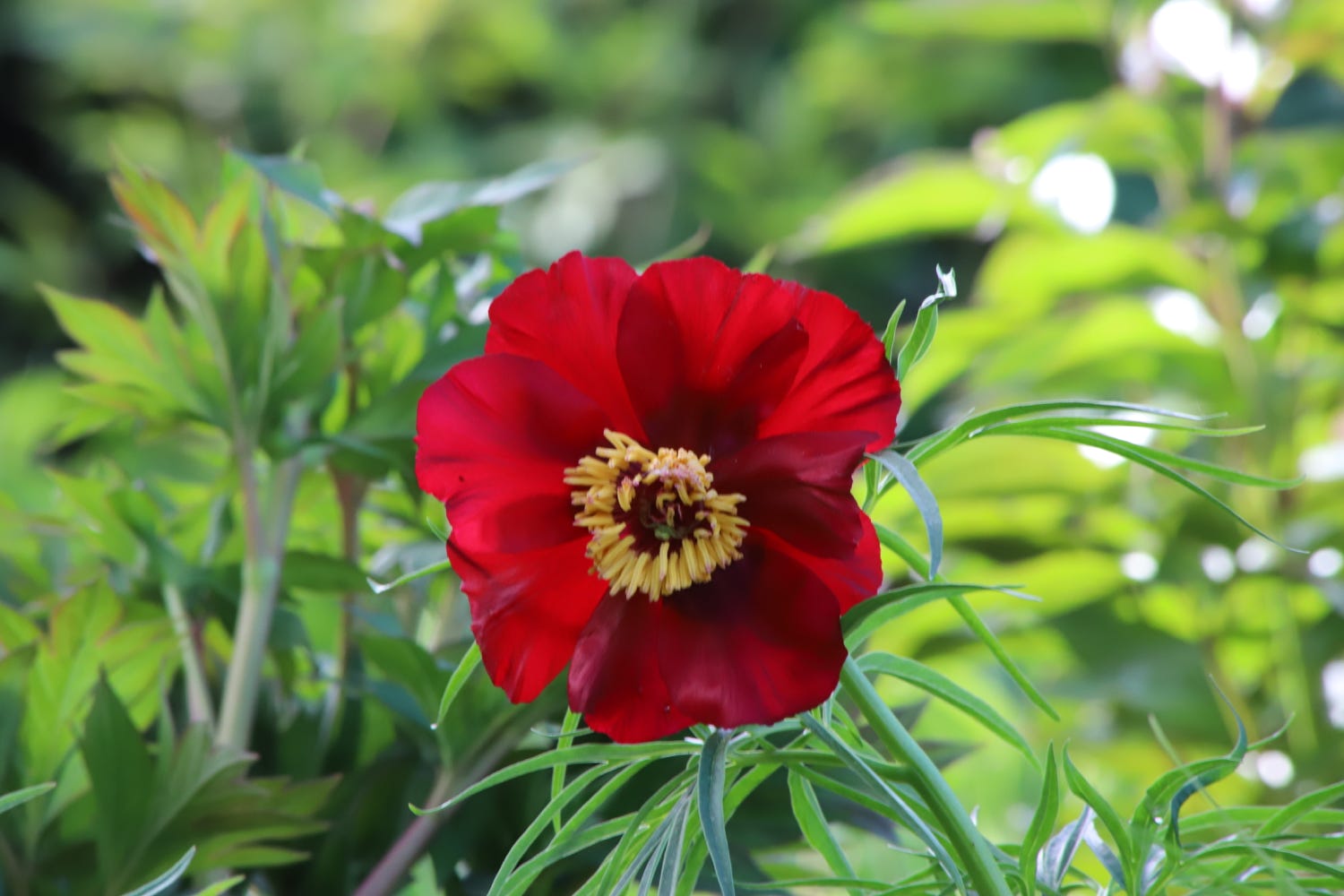
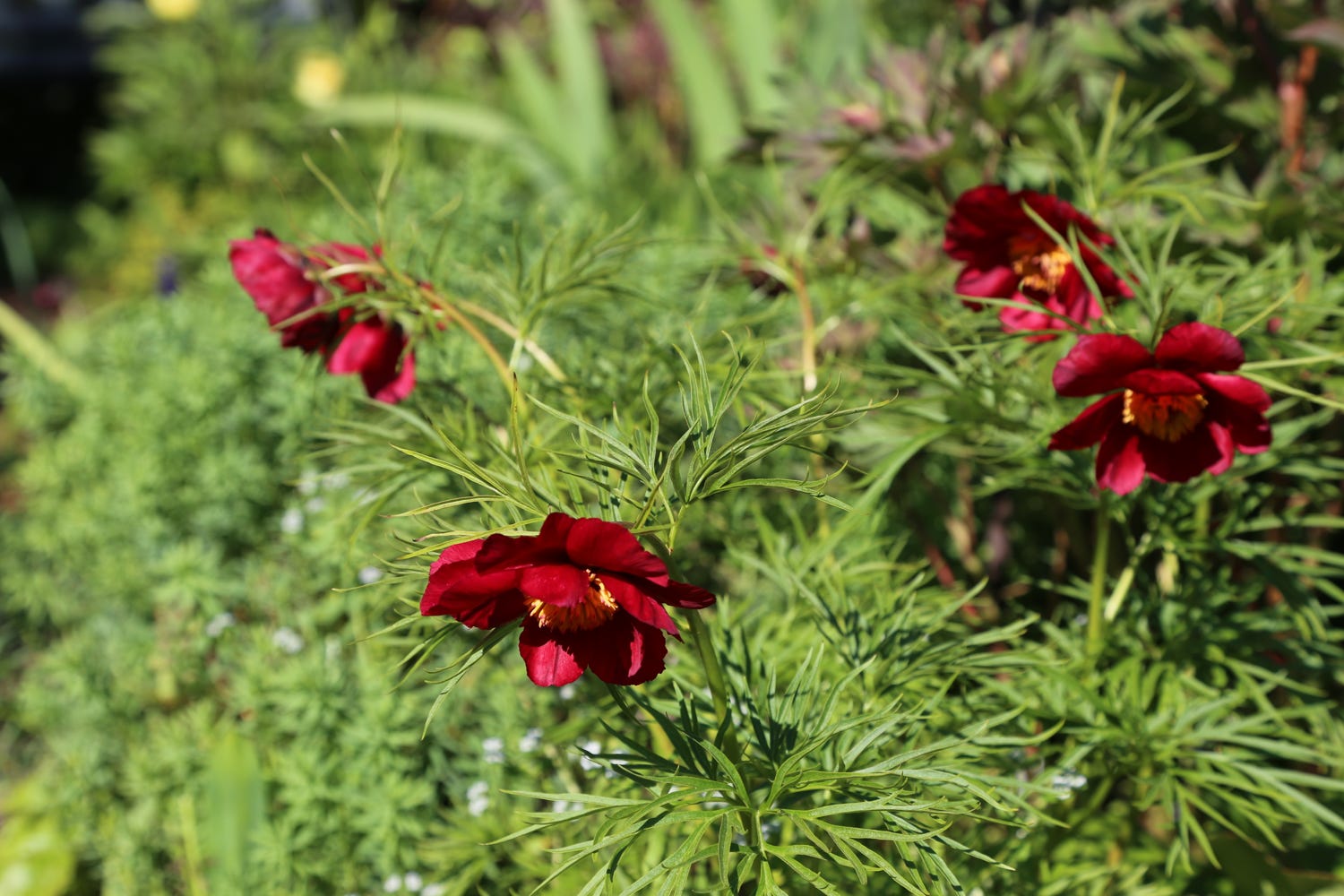
Madame Coutant (Rieck & Schmitt, 2011). Herbaceous peony. Parents: P. tenuifolia x unknown father. Single flower in clear red (RHS CC 53 A) lacking any purple undertones often found in P. tenuifolia hybrids. Flowers 6 to 7 cm in diameter, blooming slightly sideways (not nodding), one flower per stem. Carpels 3-5, red with red stigmas. Stamens are red, pollen yellow. Plant height 50 cm, foliage finely lobed, but coarser than in P. tenuifolia. Healthy, vigorous plant that flowers regularly. The plant was propagated from presumed species seed by Madame Coutant, Paris, France, and was named in her honor. Eric Schmitt saw this plant in Madame Coutant’s garden and received a root division. He sent the plant to us for examination and has since received a division back. Propagated by Wolfgang Gießler, Groß Rosenburg, since 2013.
-

- Bad Rappenau (Rieck, 2019)
-
- Bad Rappenau (Rieck, 2019)

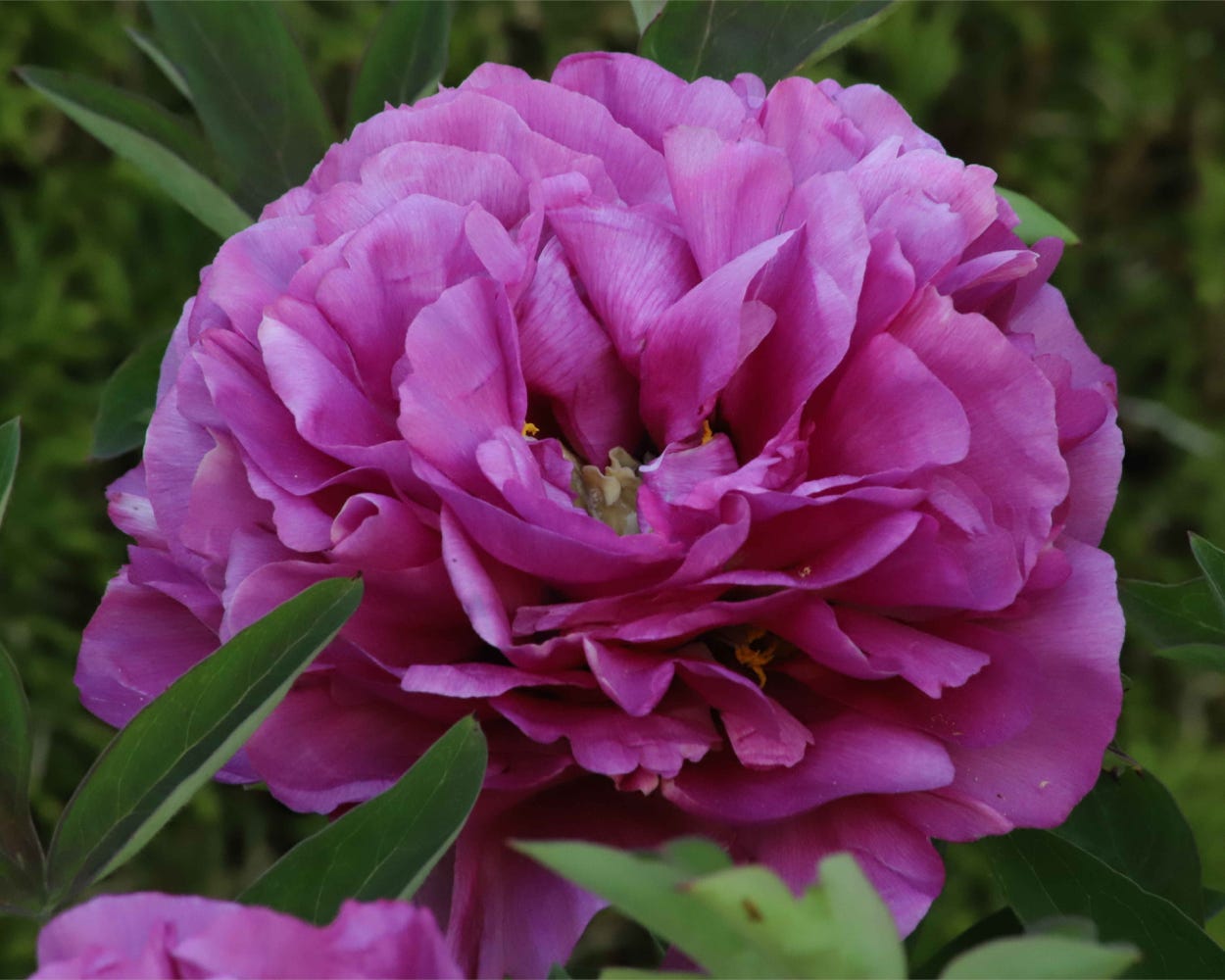
Bad Rappenau (Rieck, 2019). Shrubby peony. Parentage: P. rockii, pollen parent unknown. First bloomed 2008, first propagated 2018. A rounded DOUBLE. Petals a lilac color (RHS: CC 75A) with black flares extending 20-30% of their length, ruffled and somewhat twisted, both of which add fullness to the flower. One flower per stem. Flowers 4¾-6 inches (12-15 cm) in size. Five carpels, pale greenish-yellow, and moderately hairy. Stigmas whitish, with normal anatomy. Stamens interspersed among the center petals, filaments white. Staminodes also present, of linear shape, white topped with pink. No fertility observed to date. Sheath only partially developed, white. Early Midseason bloom. Fragrance. Upright growth habit, somewhat spreading, with typical Gansu Mudan foliage. Expected height at maturity 32-40 inches (80-100 cm).
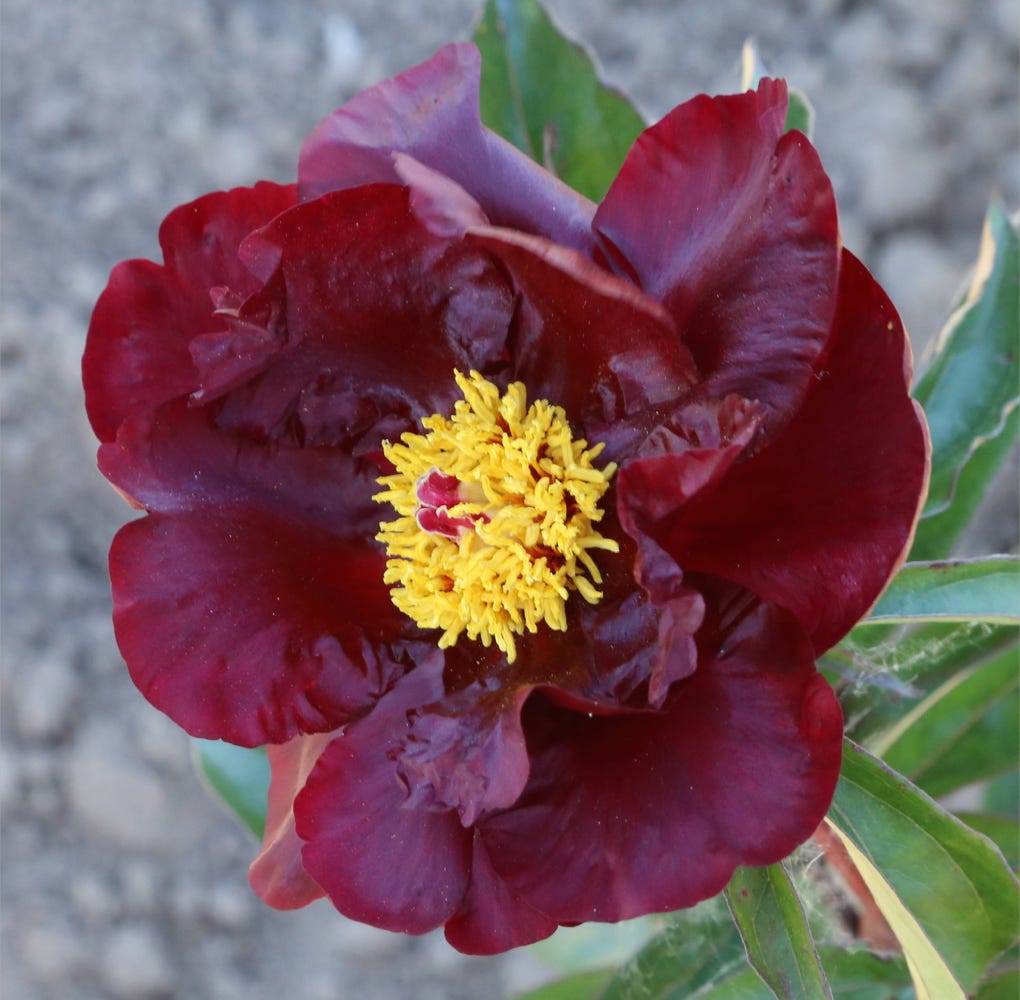

Nachtigall (Nightingale) (Rieck, 2017). Lactiflora. Herbaceous peony. Open sowing of ‘Obsidian’. The seedling’s working name was always Nachtigall, which is how the plant received this name. First flowering in 2008. Propagated since 2015 by Wolfgang Gießler, Groß Rosenburg. The flower has two rows of petals. One or two flowers per stem, 12 cm in diameter. The cup-shaped, dark red flower can be described by RHS CC 187A. The smooth carpels are pale green when the flower opens and turn dark red as it fades. The stigmas are red and normally developed. The stamens are abundant with pollen and are red at the base and yellow at the tip. Fragrant. Late flowering season. The leaves are red when they first emerge, become a metallic red, and turn green during the flowering period. The stems retain their striking deep dark red color. The stems don’t need support and stand upright up to 70 cm. In our garden, ‘Nachtigall’ seems to be even more vigorous than its parent. It’s slightly shorter than ‘Obsidian’ and has more stamens and filaments. The side buds extend the flowering period.
-

- Nachtmusik (Night Music) (Rieck, 2018)
-

- Nachtmusik (Night Music) (Rieck, 2018)
-

- Nachtmusik (Night Music) (Rieck, 2018)
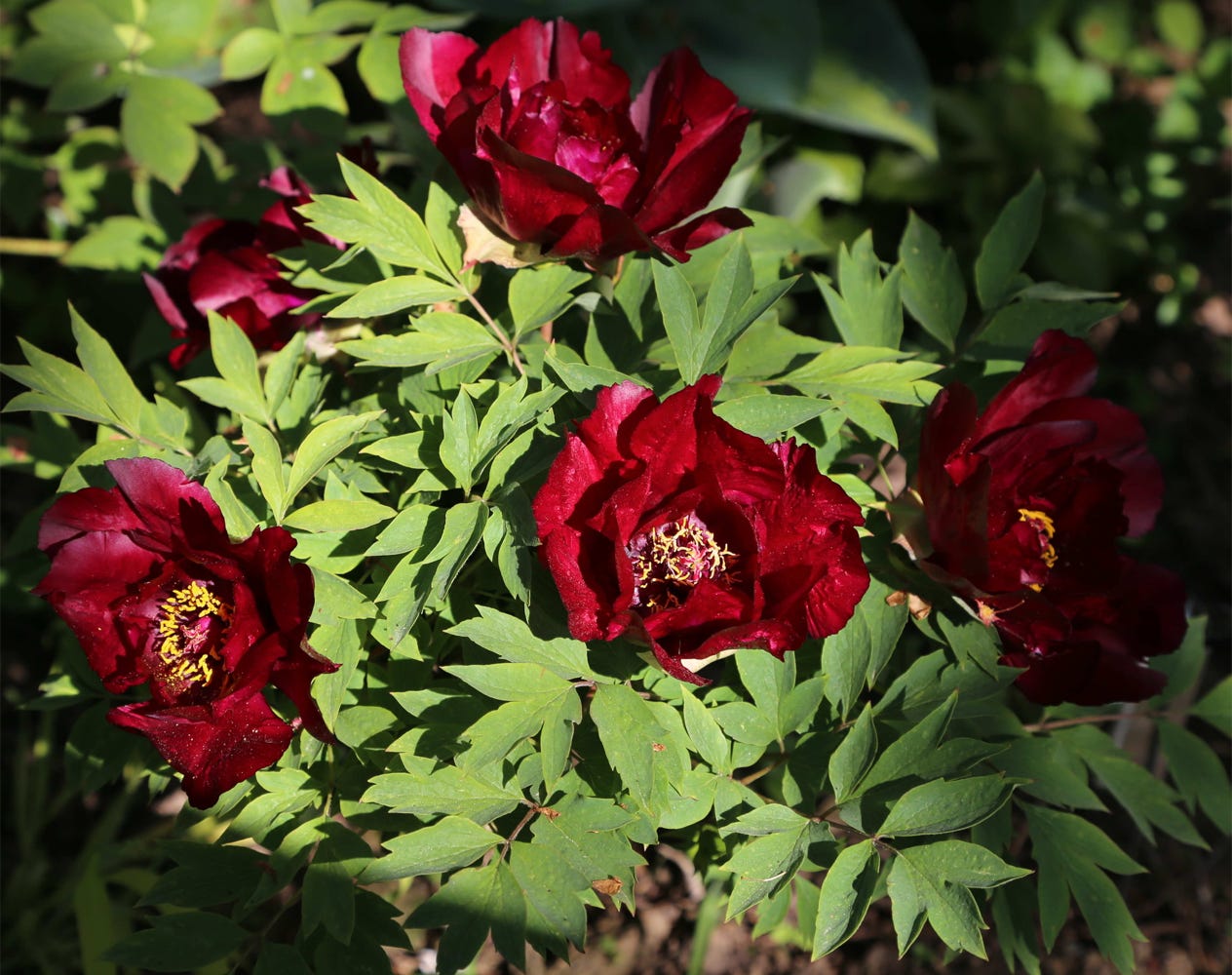
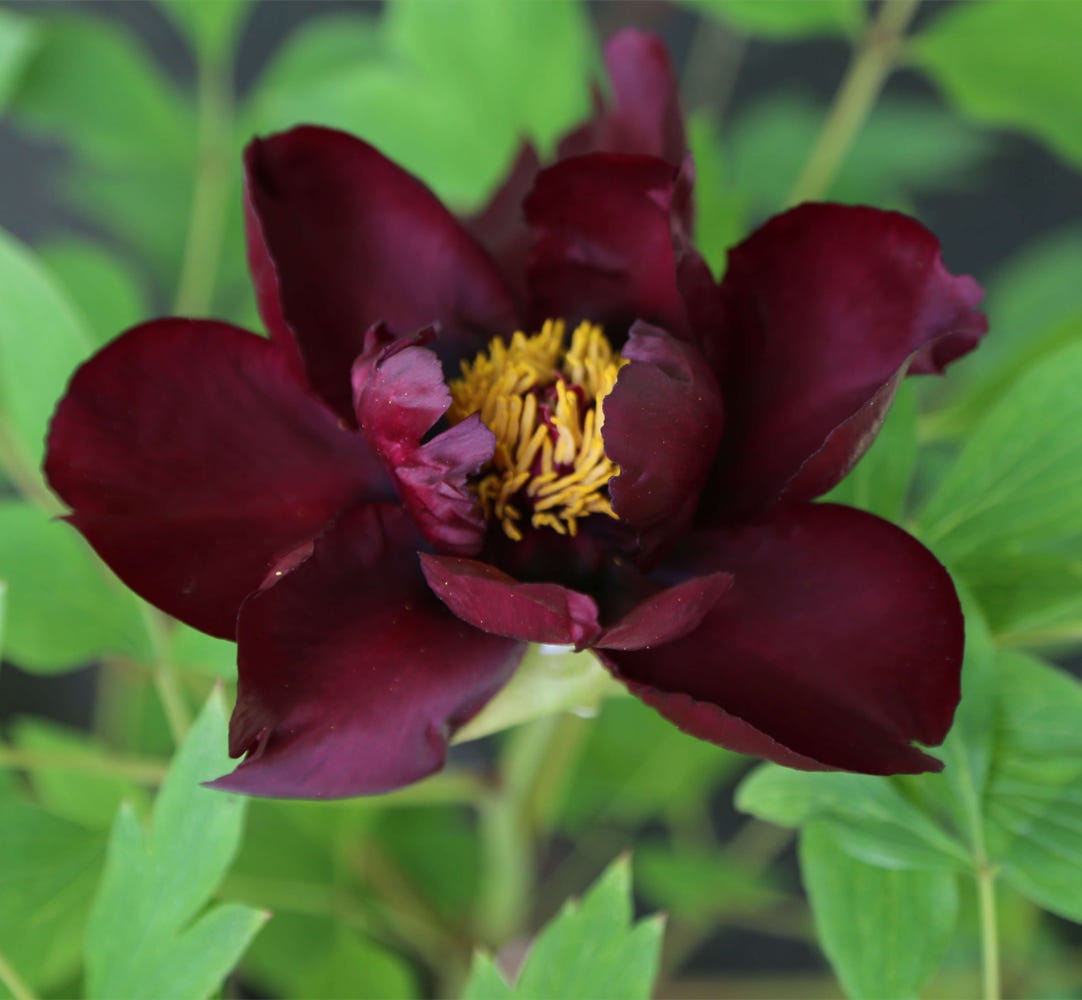
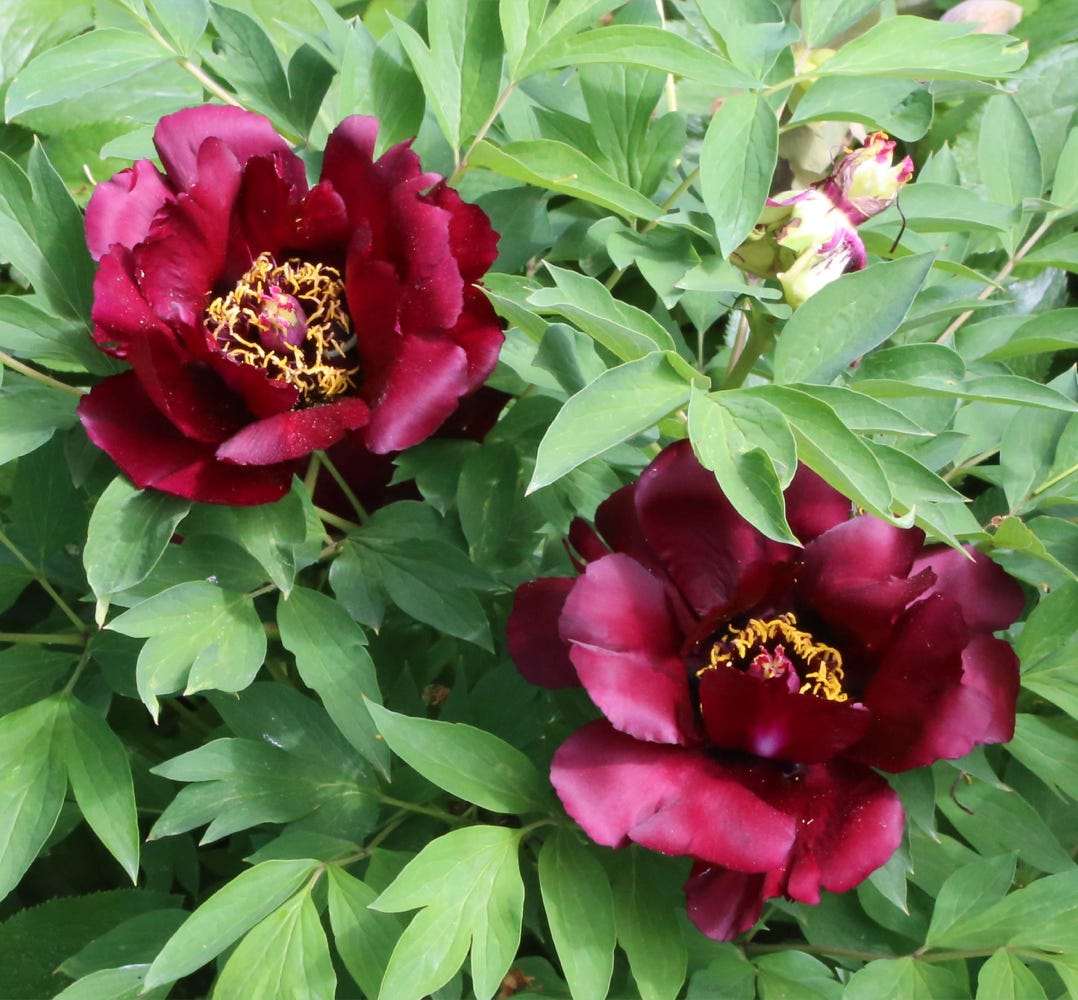
Nachtmusik (Night Music) (Rieck, 2018). Tree peony. Parentage: ‘Hei Xuan Feng’ x open. First flowering in 2014. Single, two-row petals, the outer row of normal size, the inner slightly narrower. One cup-shaped flower per stem, 12 cm in diameter. The color is a dark red (RHS CC 187A) and corresponds to the color of Lactiflora ‘Obsidian’, but is darker than the parent ‘Hei Xuan Feng’. Black, tapering basal spots. Pollen-bearing, continuous, uniformly red stamens. Five yellowish, sparsely hairy carpels surrounded by a red sheath. Stigma red. Fragrant. Early to mid-flowering season. Typical foliage of Gansu Mudan. Upright, somewhat spreading growth habit, relatively small at 100 cm.
-
- Turmalin (Rieck, 2002)
-
- Turmalin (Rieck, 2002)

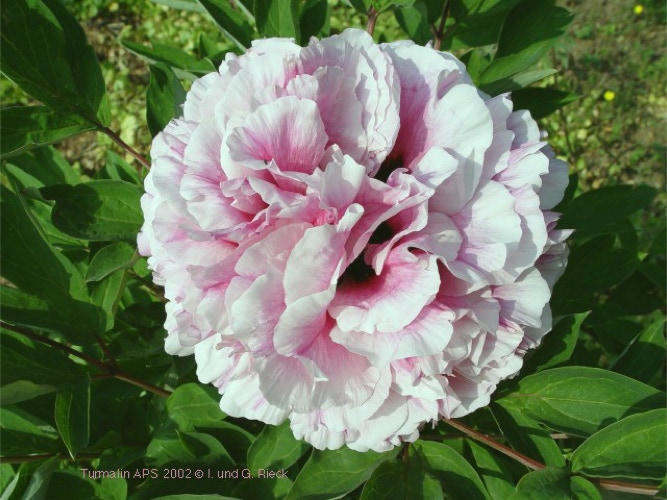
Turmalin (Rieck, 2002). Shrubby peony, P. rockii hybrid. We received the seeds from Leo Fernig, the founder of SPIN (Species Peonies International Network), where, during a visit to Geneva, we were allowed to select four seeds from a “surprise package.” The seeds themselves originated from Lanzhou University, Gansu Province, China. The P. rockii hybrid first flowered in 1998 and immediately produced a ball-shaped, double bloom. In this flower, most of the stamens are transformed into petals. Carpels are still present. The flower displays various shades of pink and white. The rounded, blackish-red basal spots typical of Paeonia rockii are often reduced to mere linear black “needles,” which is why we named it ‘Tourmaline,’ as they resemble tourmaline needles in rose quartz. The plant is robust and healthy and exhibits good growth. It reaches a height of approximately 1.80 m, flowering upright. Unusual for Rockii hybrids, this one has more than one flower per stem.


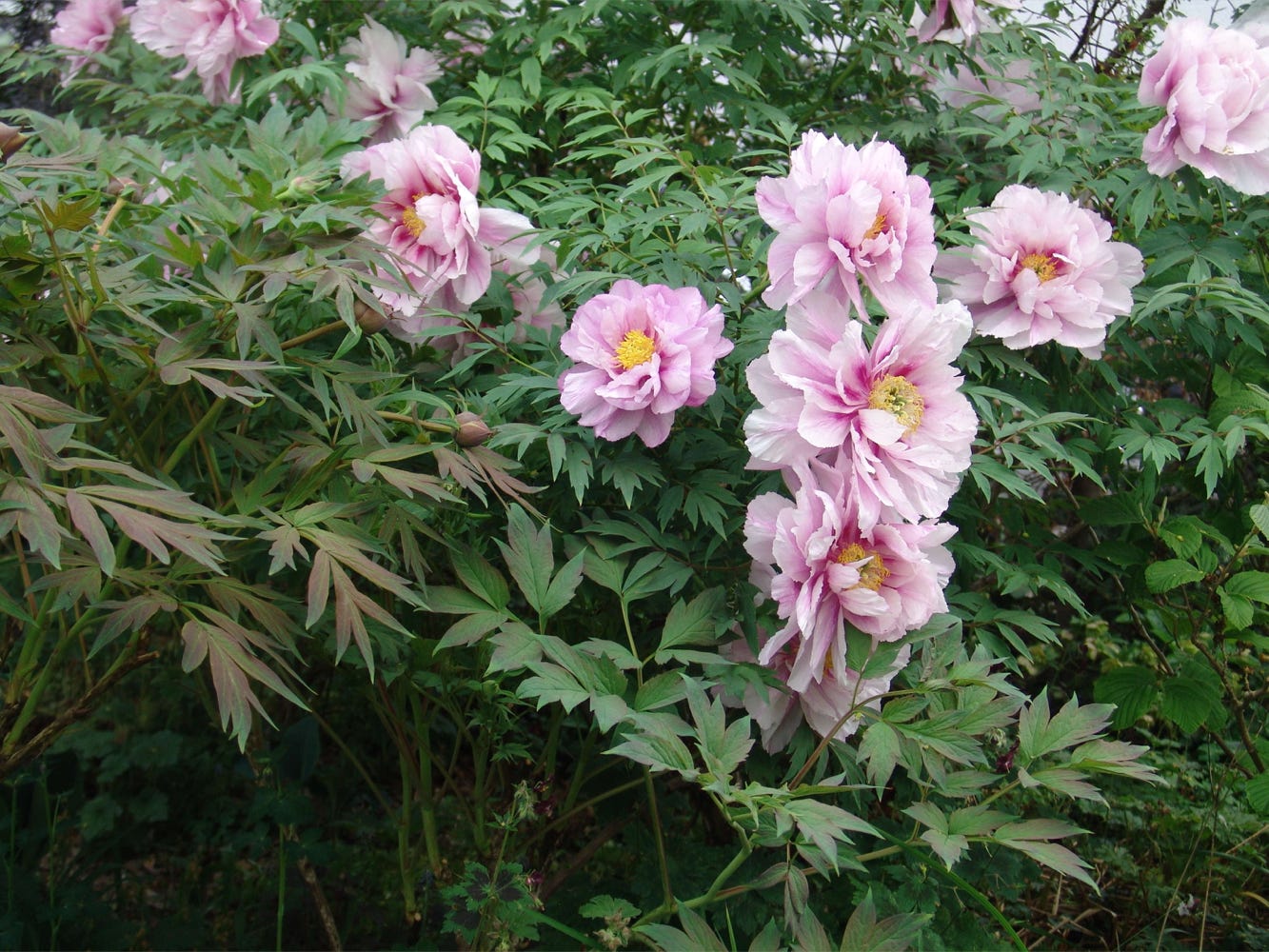
Sichuan Princess (Rieck, 2011). Shrubby peony. P. rotundiloba hybrid from open pollination. The mother plant originated from a graft at the Peace Peony Nursery in Gansu, China. Father unknown, presumably a Japanese tree peony. First flowered in 2010. Semi-double flowers, 20 cm in diameter, 1 to 2 flowers per stem. Fragrant. Petals light pink, RHS CC 75 C with red spots RHS CC 74 C extending over one-third of the petal length. Wavy petal margins. Carpels 5 or more, slightly hairy. Stigmas white, stamens with pollen, filaments white. Produces seeds. Upright growth up to 1.50 m tall, extremely vigorous and healthy. Planted in partial shade, as the mother plant did not thrive in full sun. Propagated by Wolfgang Gießler in Groß Rosenburg since 2013. The only registered P. rotundiloba hybrid shrubby peony.
Final question. Any remarks or suggestions you may have…
Wisdom that came with senior age: we realized that pollen of peonies is a festivity for insects. Especially the bees need the pollen in Spring. If humanity were to loose the bees, this would be catastrophic for our survival: no fruits, no vegetable oil, no honey and so on.
E-mail of this person is known to the author. If you want to contact this hybridizer, we can forward your message.